
Amid increasing gentrification affecting areas of East London, residents of Brick Lane risk having the same fate of their ancestors: leaving.
Building, that’s what bricks are for. Since their invention, prior to 7500 BC, bricks have become a viable alternative in construction. But they have also gained a poignant meaning in history that is synonymous with peoples, families. Arrivals, departures, encounters. Because, with bricks, dwellings are built, bridges are erected, markets and community centres are created, roads are levelled, connecting and putting a place on the map, giving it life, presence, relevance.
On Brick Lane, and in the areas of Spitalfields and Tower Hamlets in East London, bricks have become the idiosyncratic allegory of centuries of traditions, communities. Growth, blended with stability. A stability achieved through inclusivity, acceptance, and a flow of transformations that, in the course of its existence, marked it to the point of becoming a crossroads open to all and in the heart of everyone.
“I have always been here,” said Rahad Miah, who works at the popular Bengal Village, while listening to traditional Bengali music in the background. “I was used to coming when I was a kid and I am still here.”
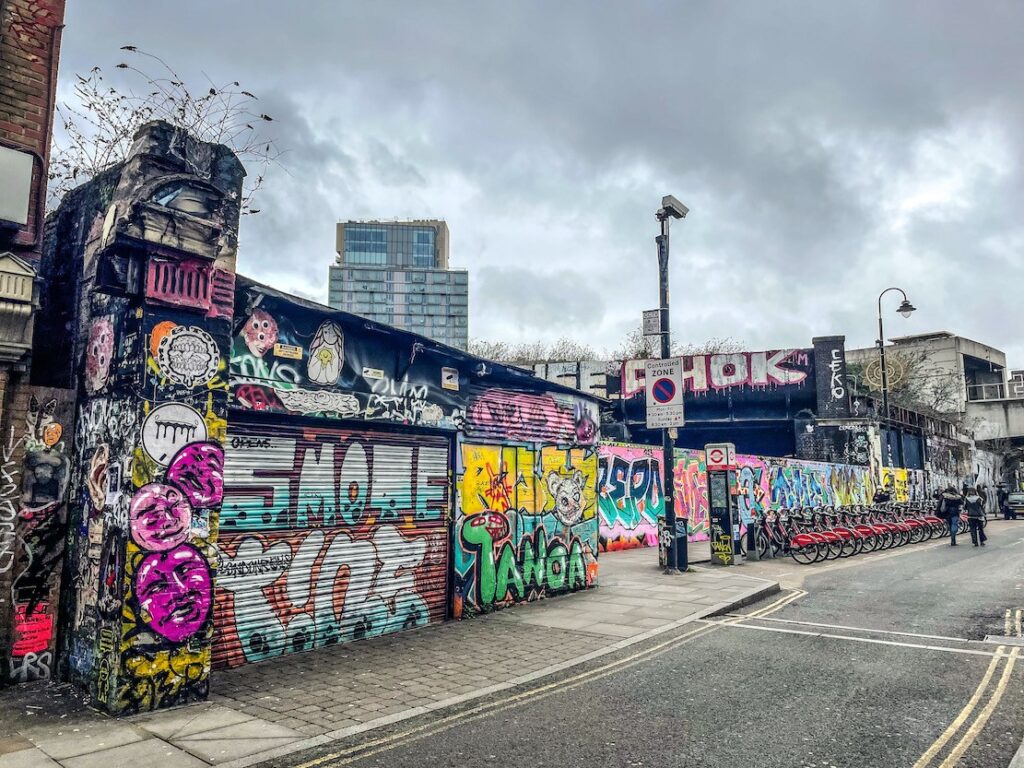
A field path in the countryside outside the City of London in 1500s, the street welcomed early Flemish settlers, whose brick kilns gave it its characteristic name. But it was not until the second half of 17th century, when other roads were laid out, that the area started developing and taking its modern, urban appearance.
Among other buildings, breweries popped up prosperously. The largest site, extended over the centuries, was bought by Joseph Truman in 1676 and kept actively producing beer until the end of 1990s.
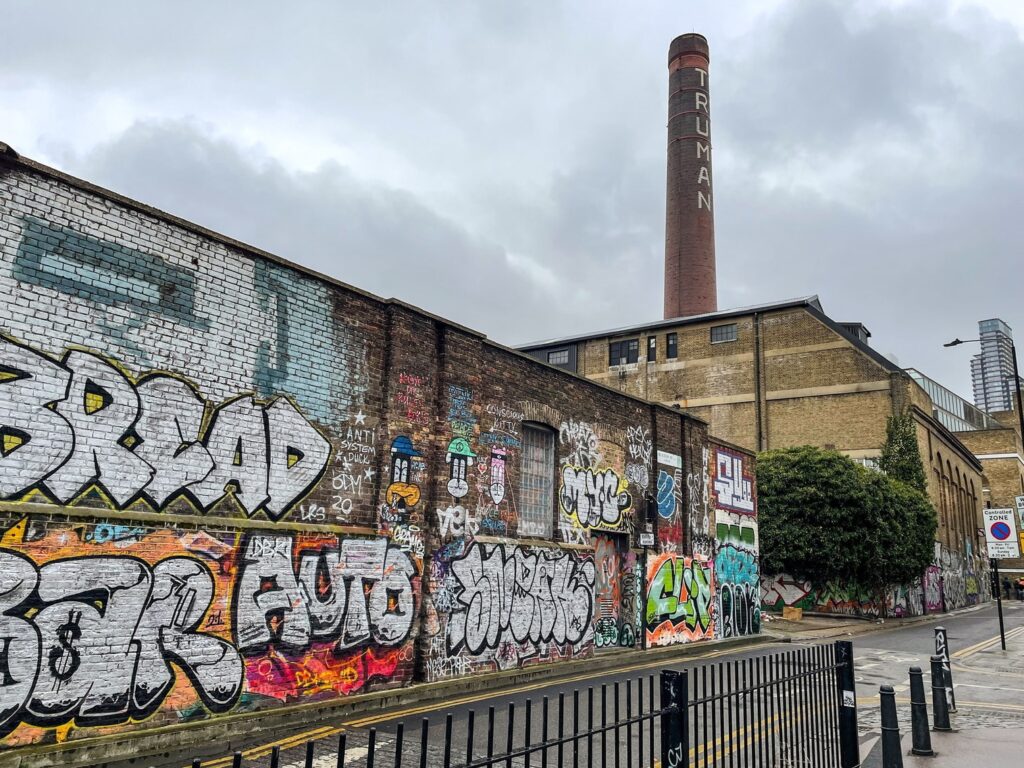
Currently owned by the Zeloof partnership, the complex has been used by small independent businesses as well as grassroots creative and cultural organisations.
In September 2021, the latest chapter of a long story of mutations began. A local committee approved plans for a 5-story development that would replace part of the Old Truman brewery with offices and brand-name chain shops.
For years, the area suffered corporate developments spreading from the richer City of London. This affected local communities with rising living costs and consequent displacement, as if the place their ancestors created took them back to their initial, mutual condition: leaving.
From 1680s onwards, a large community of Protestant Huguenots fleeing from persecutions in France moved to the area. Their textile skills and the fabrics brought from cities such as Nantes and Lyon enabled the district to emerge in weaving and garment making.
Their religion, which finally found relief in Huguenot Church on Brick Lane, co-existed with Anglicanism professed in the nearby Christ Church on Commercial Street.
These two faiths were joined first by the Jewish community of Ashkenazi and Yiddish-speaking Russian Jews sheltering from the wave of anti-Semitic pogroms in 19th– and 20th-century Eastern Europe and, more recently, by a large number of Muslim Bangladeshi Bengalis.
The latter, who left their land at the height of the war of independence from Pakistan, would work in the thriving local tailoring industry or open some of the iconic curry restaurants that even led to informally call the area ‘Banglatown’.
Not surprisingly, bricks would keep changing their face as time went by. They would take on the colour of the graffiti that would often cover them, the scent of the fumes that would reach them from the kitchens, the taste of a pint of beer brewed in the district and spilled on the ground.
“It changed a lot,” said Miah. “Many of Bengalis left the area, many restaurants closed and the choice is not that diversified anymore.”
According to a survey conducted by Centre on The Dynamics of Ethnicity and Runnymede Trust to gauge the current state of Brick Lane and its ethnical diversity, 17 restaurants have closed since 2014, leaving only 22 eateries open.
Ironically, it is as if the action of building has also inherent its own contradiction. While it is true that bricks are employed to erect bridges, they are also used to raise walls, to establish watchtowers from which to flush out the enemy and, as in the case of Brick Lane, to feed the dangerous greed that might turn ‘building’ into the equivalent of ‘demolishing’.
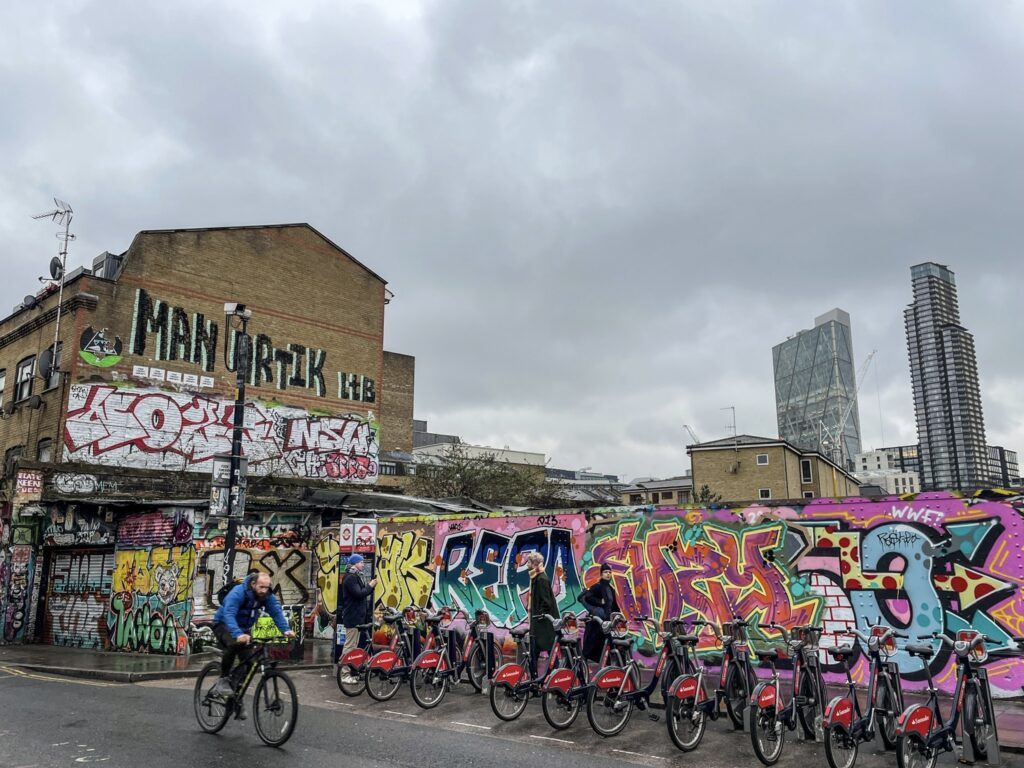
Although the process, deemed soulless by critics, followed the more common paradigm of what is described as gentrification, it also jeopardised the particular urban character of the district, and caused the loss of meaningful places.
According to research conducted by Centre for Labour and Social Studies and Runnymede Trust, the borough of Tower Hamlets was among those which gentrified most between 2010 and 2014.
In Brick Lane, “there are common dynamics of gentrification in increasing profits by improving the building stock and upgrading their usage for higher-rank users,” said Dr Ryan Centner, who is Assistant Professor of Urban Geographies in the Department of Geography and Environment at LSE. “But its gentrification has been influenced by a form of tourist-ification, in turning the place into a touristic attraction.”
Prior to the pandemic, more than 18,500 pedestrians walked along the street on an average day, according to data provided by Tower Hamlets council, making it one of London’s main cultural destinations.
In a statement released in April 2021, Jason Zeloof, on behalf of the partnership, had denied that the site would be transformed into a shopping mall, and had declared that his association would offer 20% of space to independent stores.
If some wait for an uncertain future with hope, many other residents decry the institutional carelessness for their concerns over the plan, which were repeatedly raised through protests and campaigning on social media.
A shopping centre would let Brick Lane become a “much more congested place” and lose its unpretentious nature, said Rahad Miah.
Mahbuba Sultana, who works in her family business in the Upmarket space of the Old Truman Brewery, seemed to disagree.
“A shopping mall would help us see more faces,” she said. “It would be like Westfield, where people have everything in one place.”
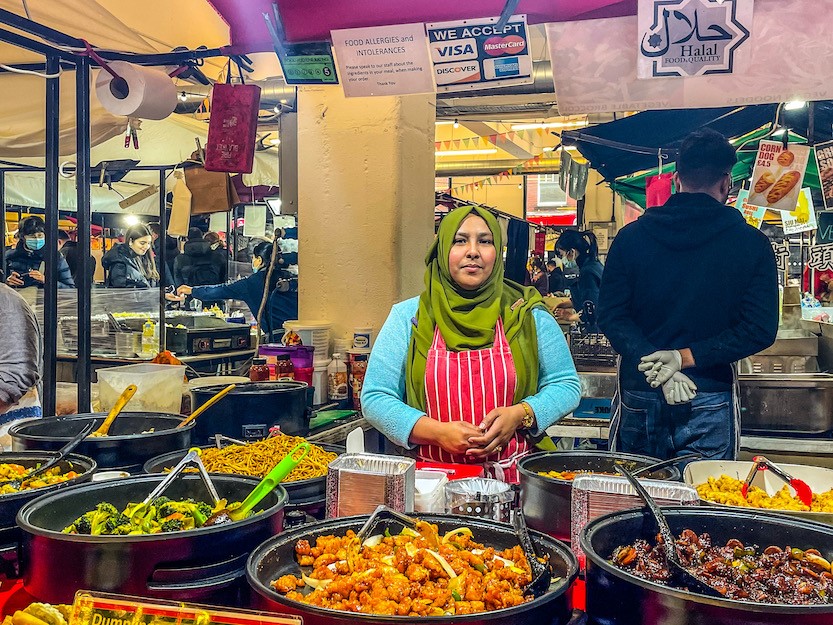
With living costs already sitting at record high levels, the new development would further revamp the population of the area.
“The mall inevitably would bring a change in the demographics of residents, more businesses, like premium brands, an increase in local jobs, and a surge in rent and prices that will likely be slightly higher than the average growth in London,” said Austin Walker, who is a Sales Negotiator for real estate services provider Savills.
While the project got approved, its progress will depend on the outcome of a judicial review that campaigners from the Save Brick Lane coalition, created to fight the threats of gentrification for the local community, have been granted by the High Court.
The group even started a crowdfunding initiative on CrowdJustice to cover costly legal fees and sustain their action against Tower Hamlets council. At the time of writing, donations topped £10,000.
On top of the burden that gentrification put on local residents and businesses, the backlash of Brexit might be the finishing blow. Curry houses were reportedly forced to close, as visa rules were toughened amid a general clampdown on immigrants.
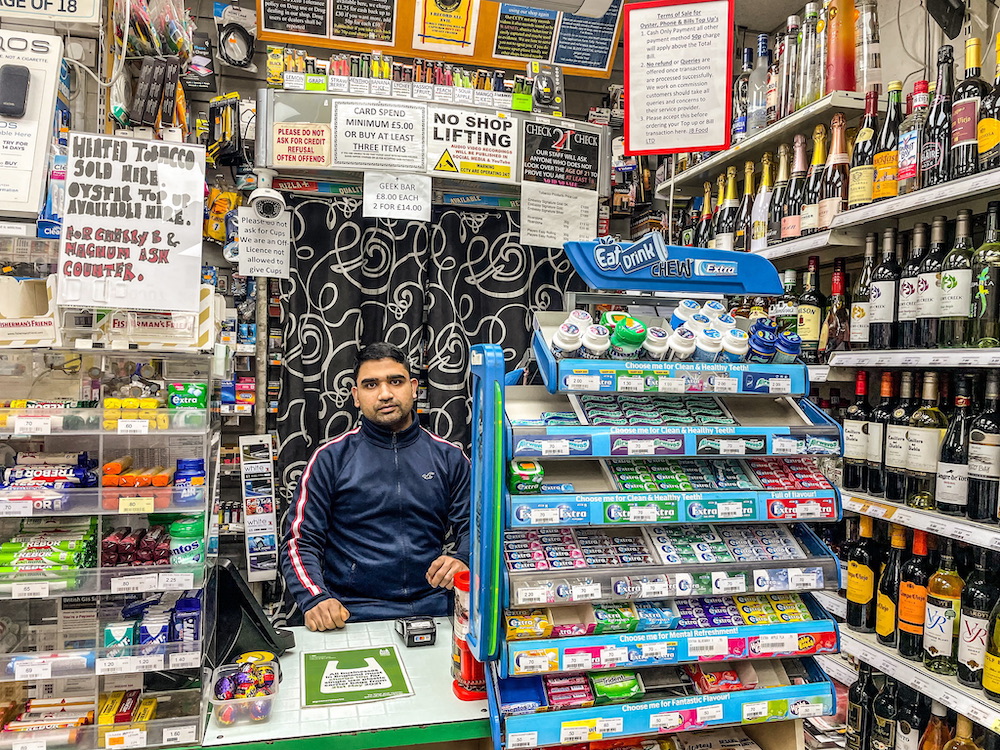
“Everything got expensive and it became very hard to survive,” said Forhad Ahmed, who manages an off-license on Brick Lane. “Brexit forgot the foreigners of this country.”
*
The Spitalfields Trust regularly hosts events to inform locals and visitors about the threats to the historic environment of Brick Lane. Their battle can be funded through a donation here.
If you want to help Nijjor Manush and the Save Brick Lane coalition cover their legal fees, you can donate here.