
An old man who persists in feeding pigeons in Elephant & Castle once said to me: “London is big, so big that you are invisible.”
In my own case, it’s my second year in London. As an extremely introverted foreigner, any slight sign of unwelcome sends me scurrying back into my shell and consoling myself with the inherent “outsider” status. But the pandemic had me rethink my way of living and eager to get to know the city, the other side of the city.
Who is in the street in the dead of night? Who are these people that are, in a factual sense, unseen by most people? What are they doing?
I took a night stroll to see it myself. My journey started at 2:50 am, from elephant & Castle, on March 13th.
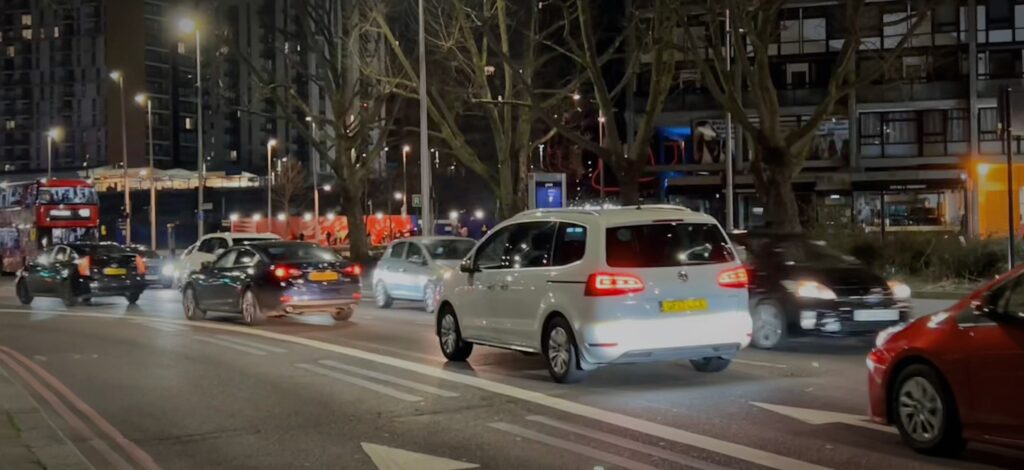
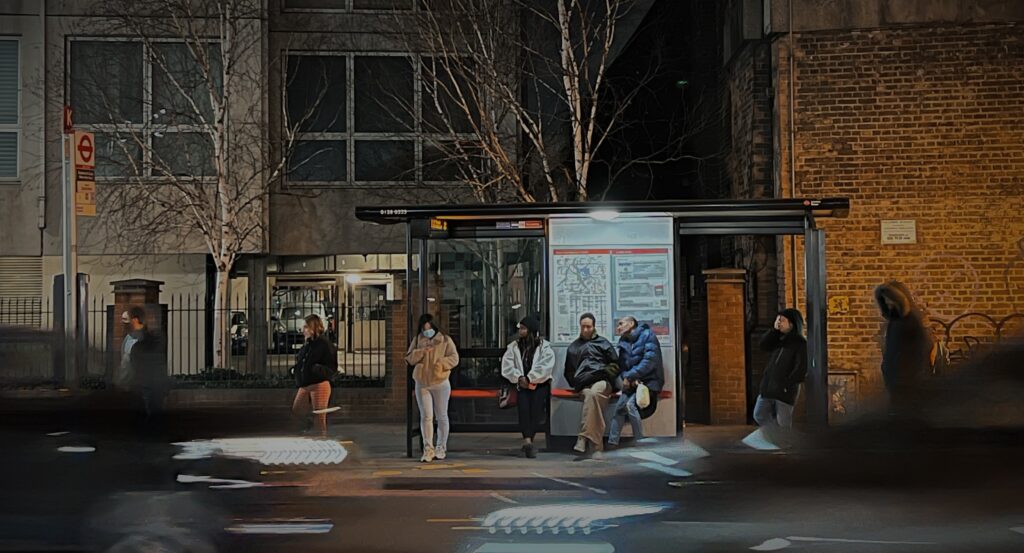
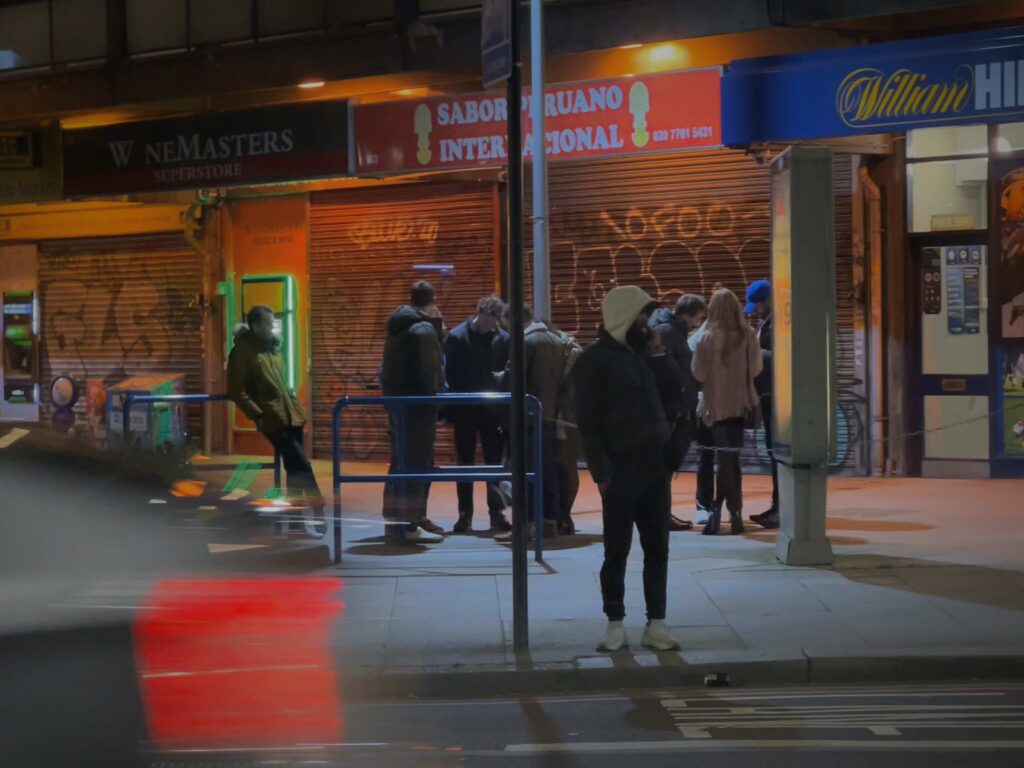
2:54 am. I was greeted by two full streams of traffic. Cars came one after another incessantly. Pavements were scattered with people.
The melancholy I had just laid out for the anticipated lonely night walk was shattered by the spectacular flow of traffic in front of me.
There were still many pedestrians around, and the bus stop was as crowded as it was during the day.
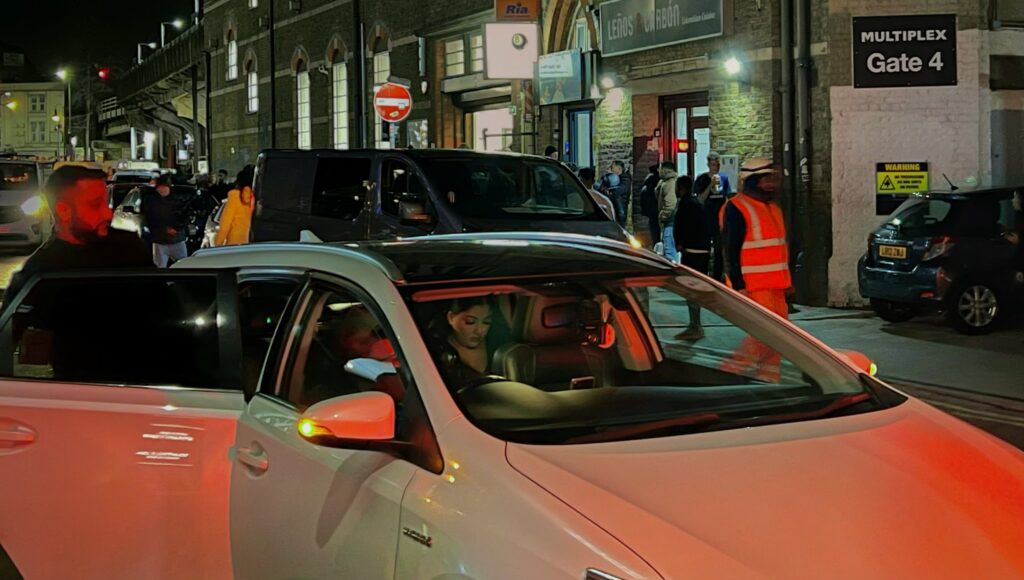
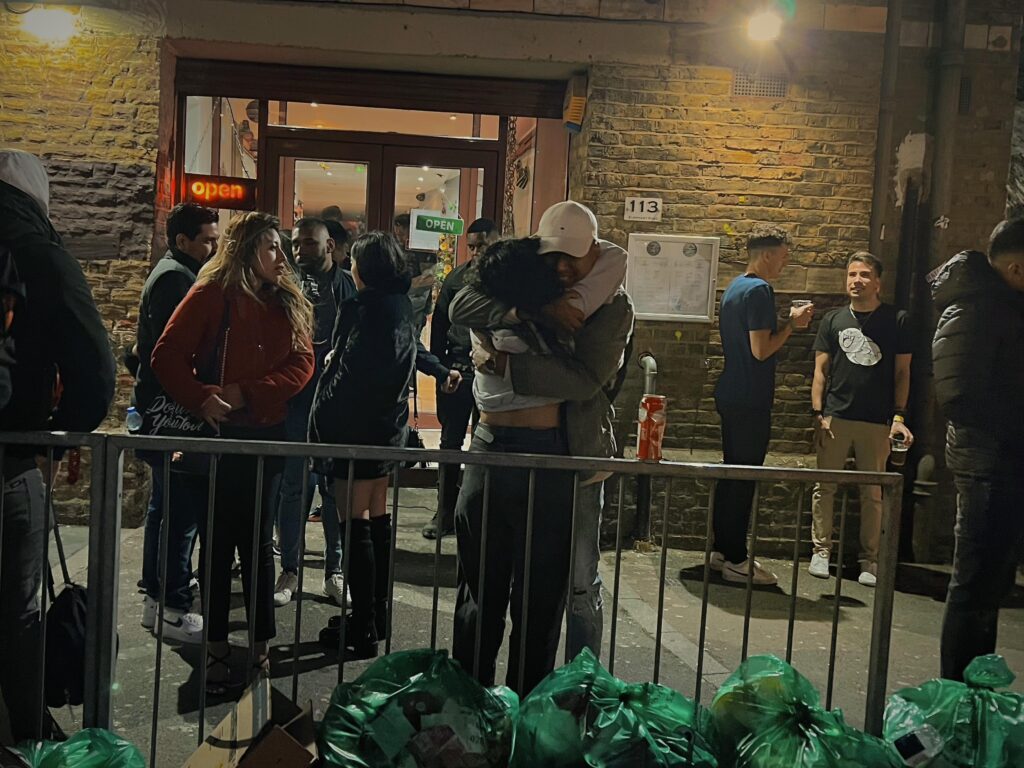
3:05 am. I turned to the small path, the Elephant Road, that cut through the roundabout, where the train station was. If the traffic just now could be described as busy, this place was simply bustling. Crowds were outside the Latin nightclub, The Pool Lounge. The brickwork filtered out the music but not the drumbeats — thumping your eardrum in rhythm, with occasional horns rang up and indistinct chattering bursting out laughter.
It made me wonder if it was really at late night?
But you would notice that despite the richness of the sounds, you could clearly identify where they were coming from — it was quiet enough for the superimposition of these sounds to stay as a multi-part ensemble, rather than a brain-rattling muddle like in the daytime.
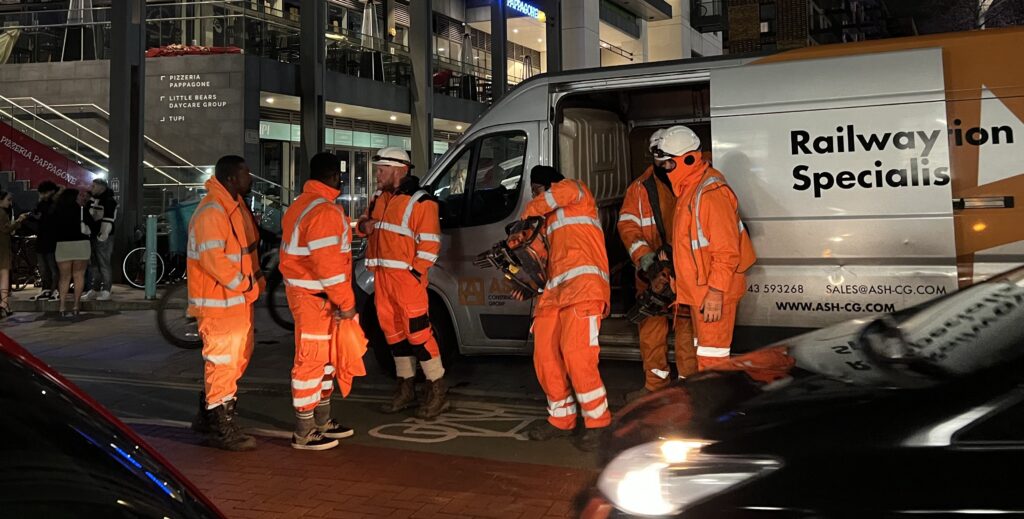
A van arrived, a team of orange-clad railway workers filed out. Marching to the muffled drumbeat, they set to work.
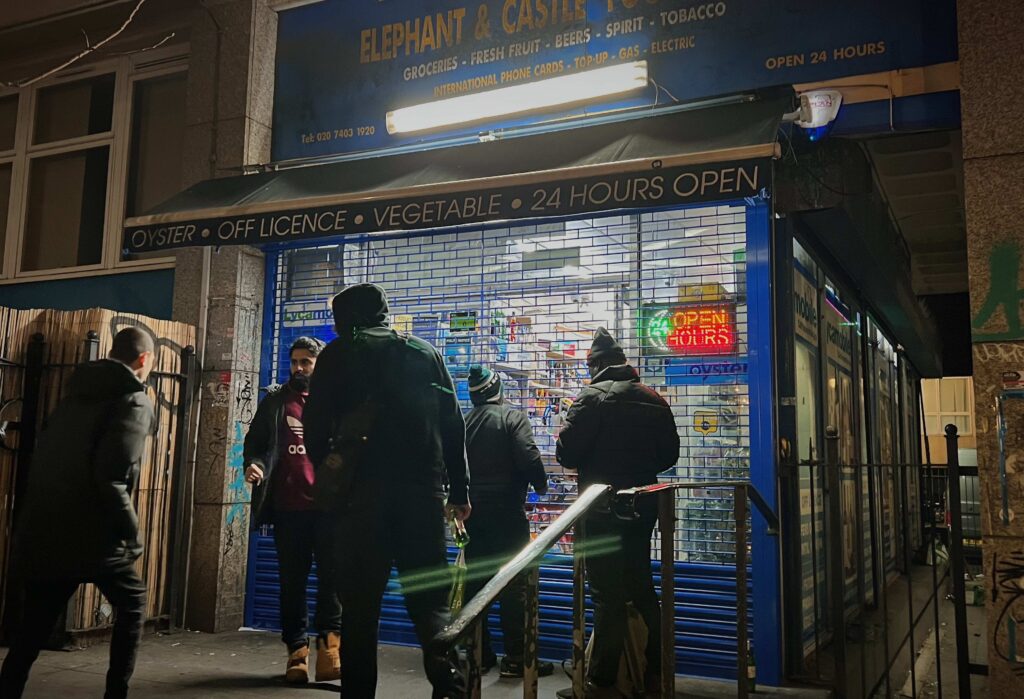
3:12 am. Though the shutter was down, the shop was open 24 hours a day. A customer was buying cigarettes through the fence.
As soon as you leave the Elephant & Castle roundabout (where bus stops, train station, underground station and vehicles were all located), pedestrians dwindled and the traffic changed from dizzying streams that made u doubt the time to the occasional car or two.
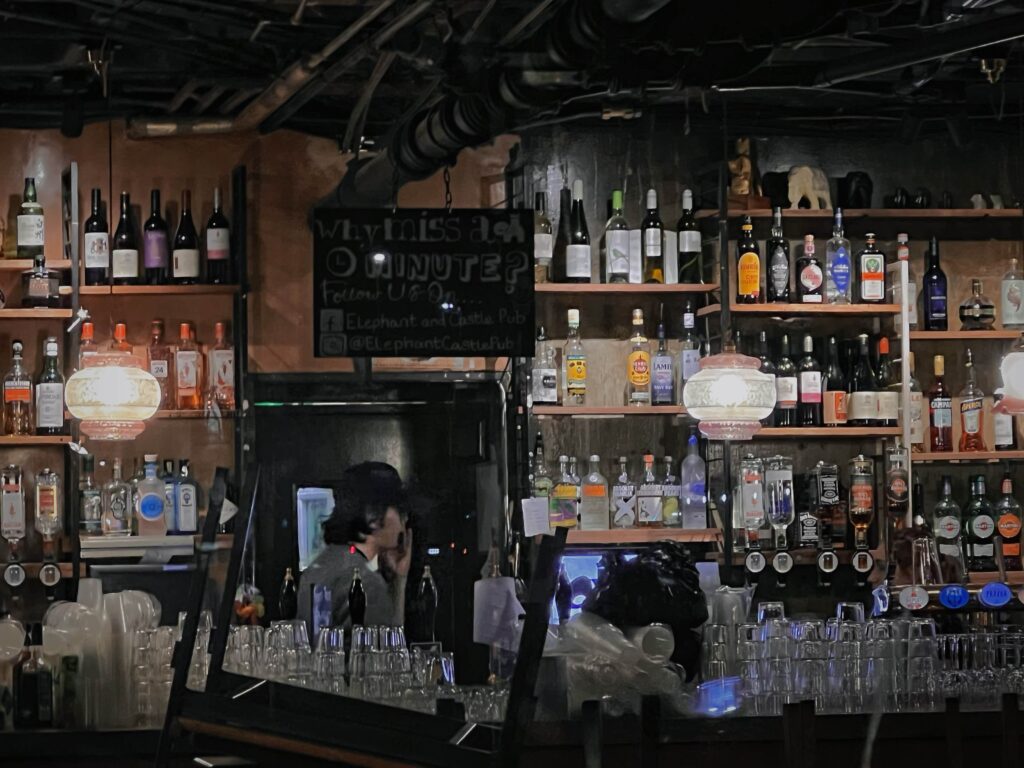
3:13 am. Except for nightclubs and corner shops, most places were closed. An empty pub had just been cleaned — the chairs were placed upside down on the tables. The lights were off, leaving only the counter light to illuminate a waiter tidying up the bar.
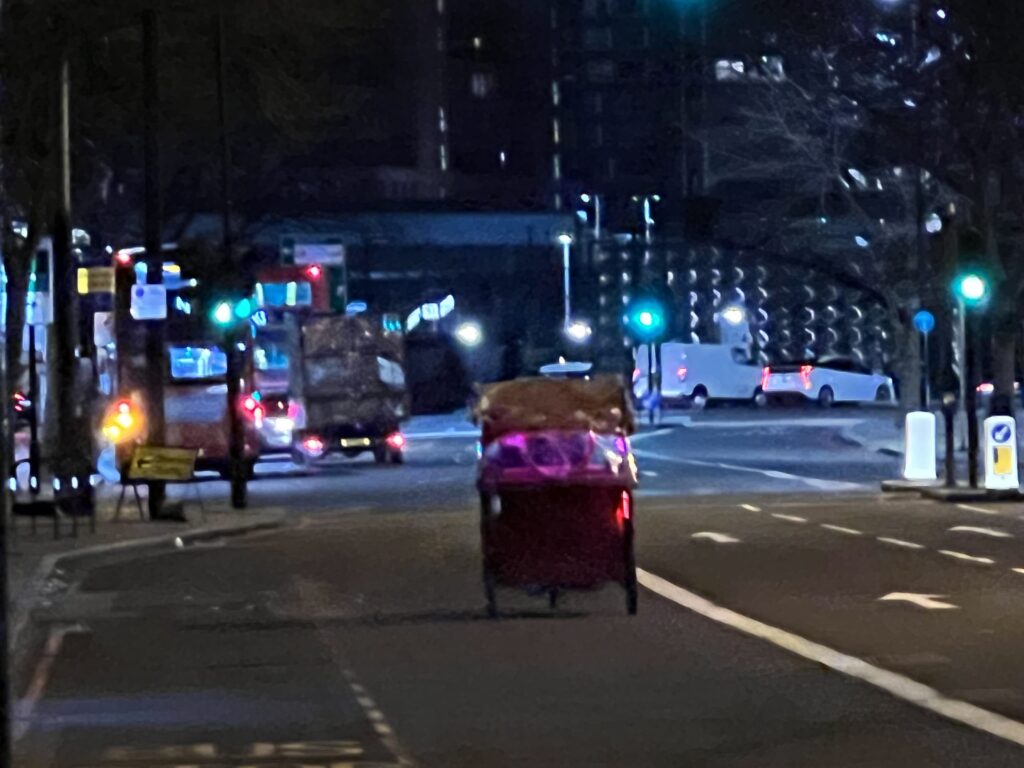
3:18 am. Away from the main roads, the night sank into lonesome gloom broken by a singing red rickshaw.
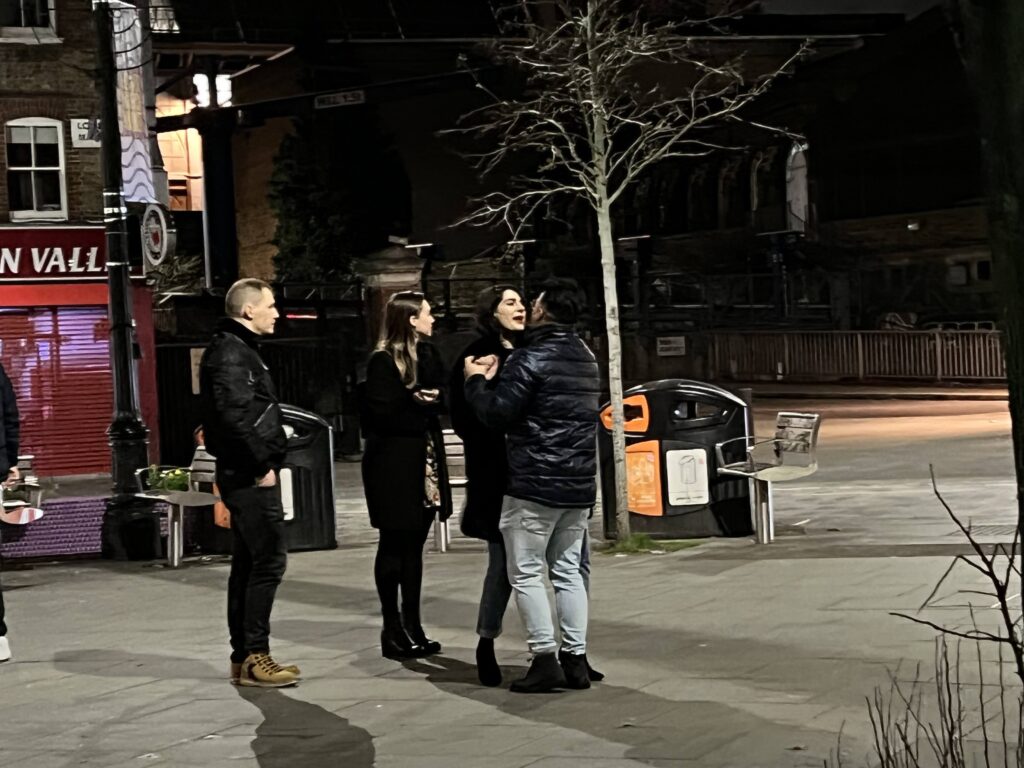
3:28 am. People were waltzing in front of the bar.
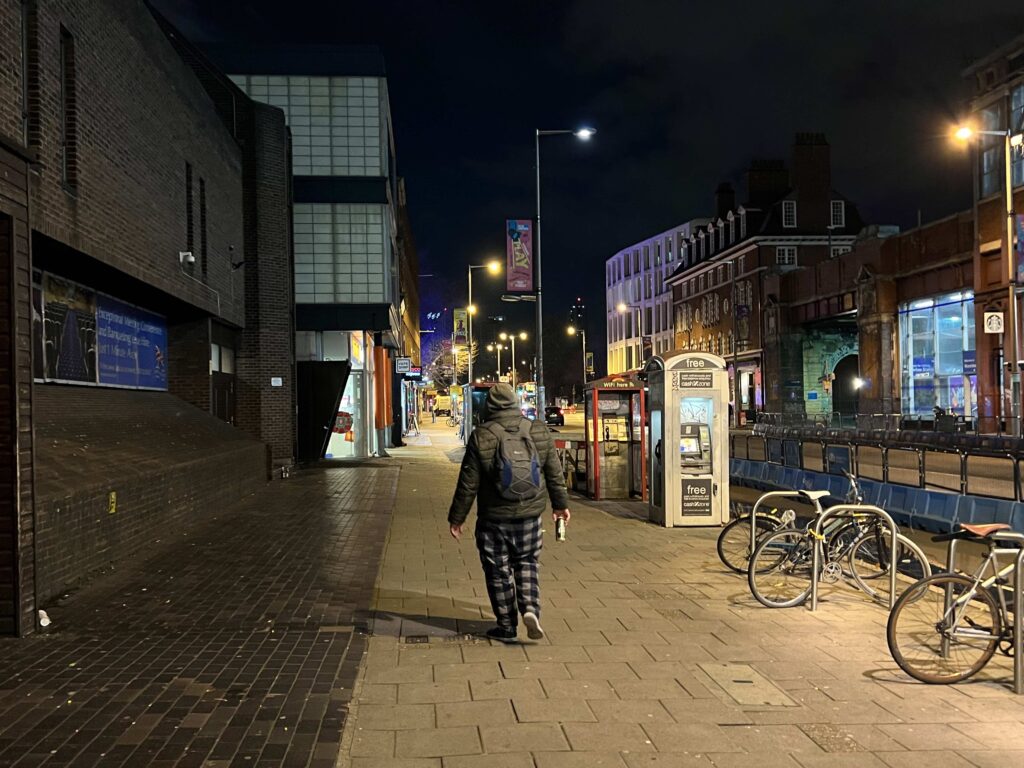
3:33 am. A man staggered up and down the street, taking sips and sips of liquor. The street was not quiet, but no sound was heard from him.
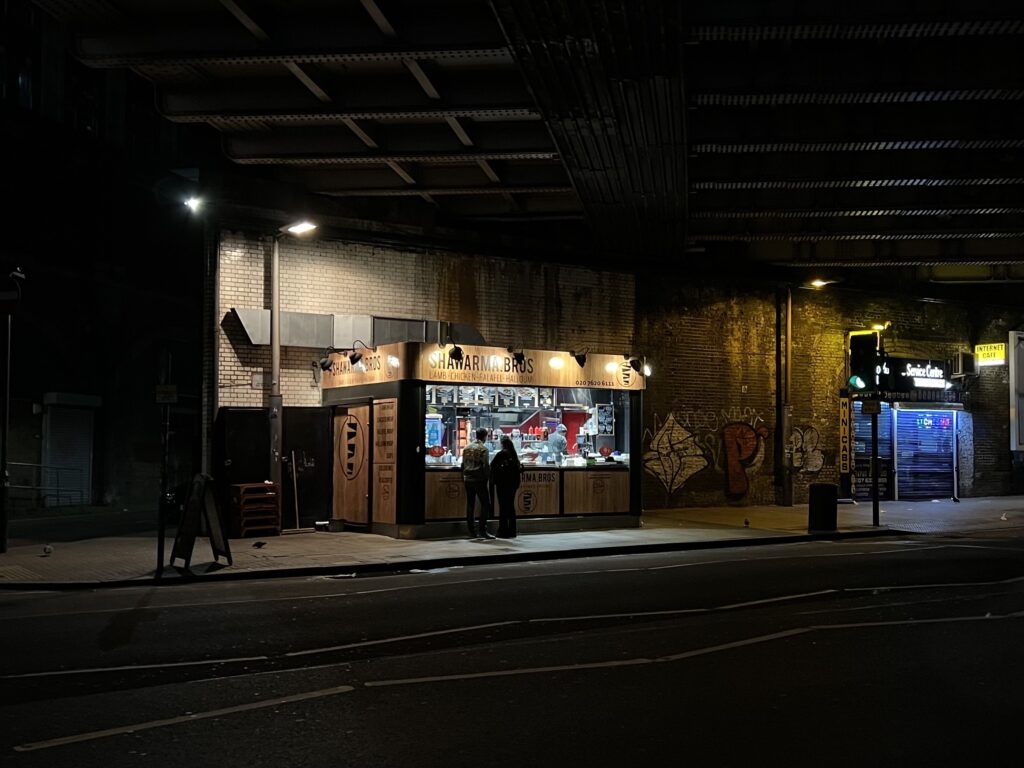
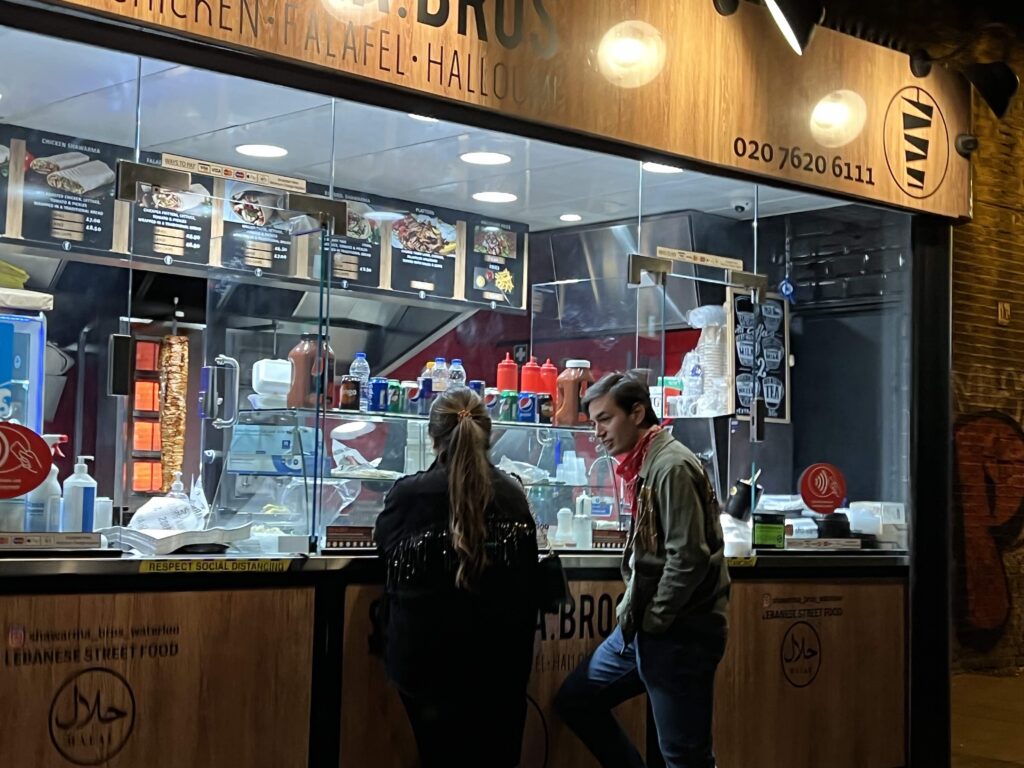
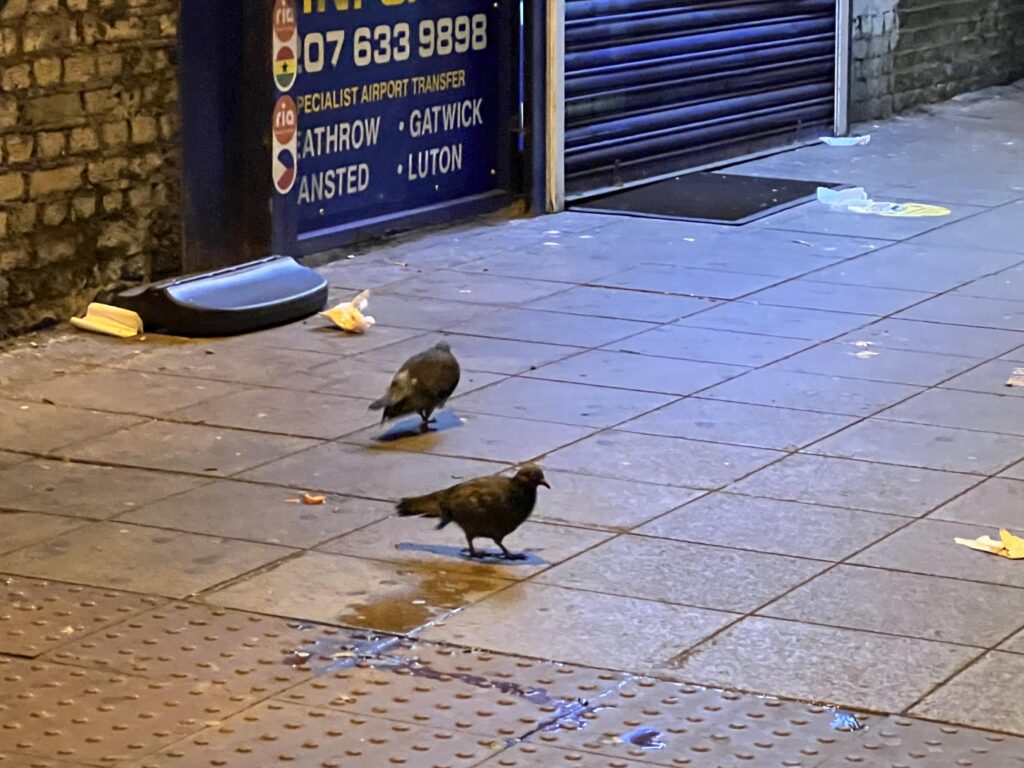
3:35 am. The kebab stall next to the Waterloo station was still open, shedding a warm light in the dimness under the bridge, with the smell of meat and oil sizzling away the chill.
Two or three pigeons landed in the light, pecking at the scraps on the ground. It seemed like pigeons had adapted so well to urban life that they could live against their nature — going straight from diurnal to the night owl. A true Londoner in every sense of the word.
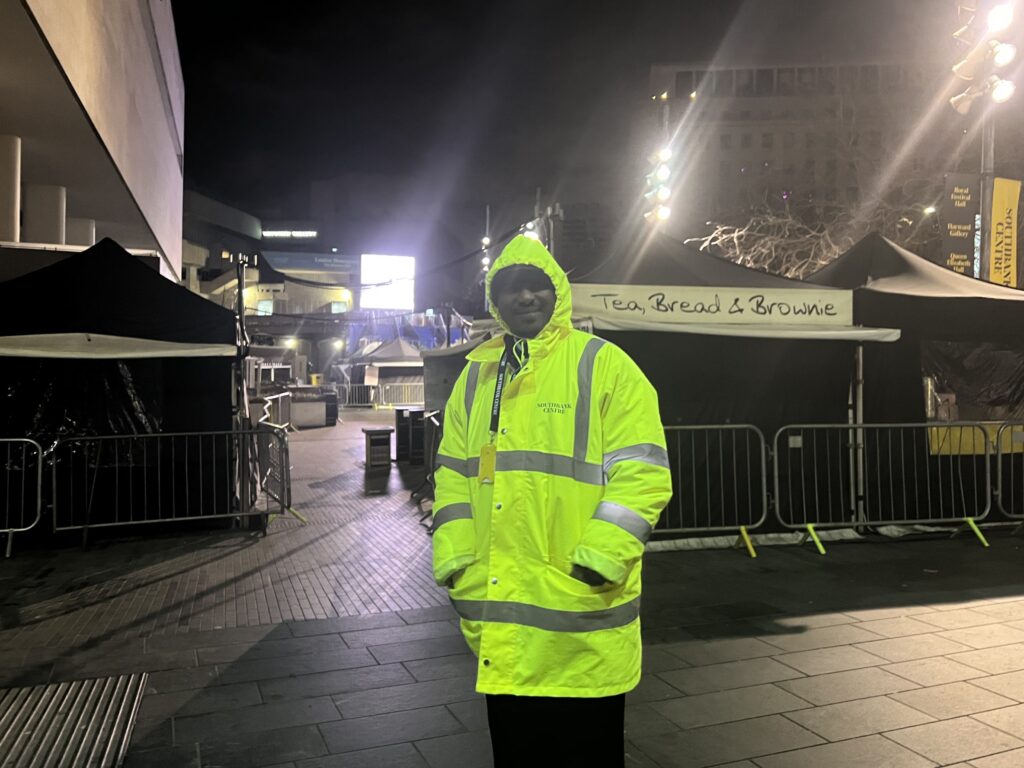
3:47 am. A man was standing guard at the Royal Festival Hall market to prevent pickpockets. This job extends from 11 pm. to 7 am. He paced for a while, but more often just standing still with an erect posture. The place was brightly lit, but there were very few people there.
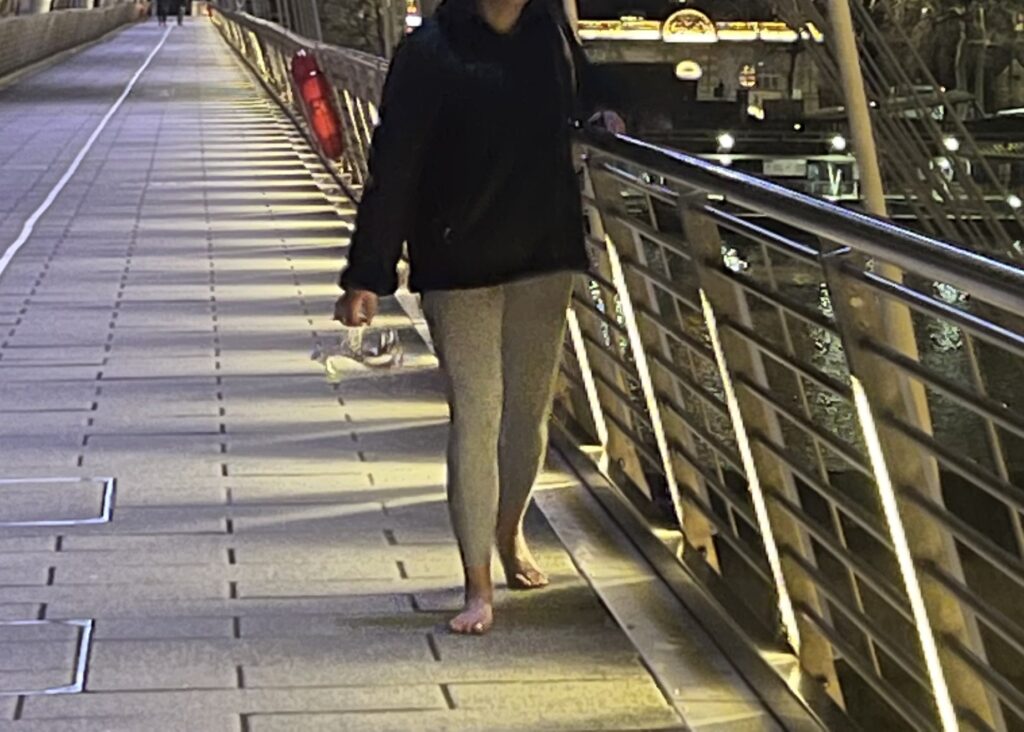
3:51 am. On the Golden Jubilee Bridge, a woman paused, took off her high heels and started walking languidly barefoot.
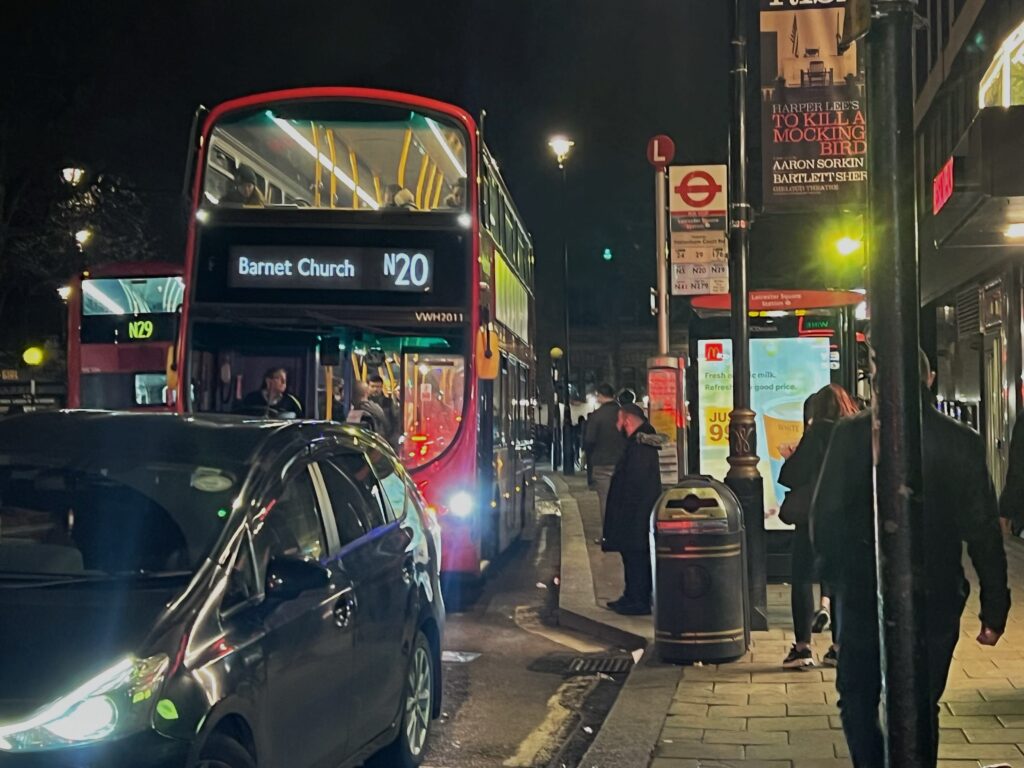
4:00 am. After crossing the river to Charing Cross, the familiar traffic flow and human flow that made you murmur to yourself “London is a 24-hour city” was back.
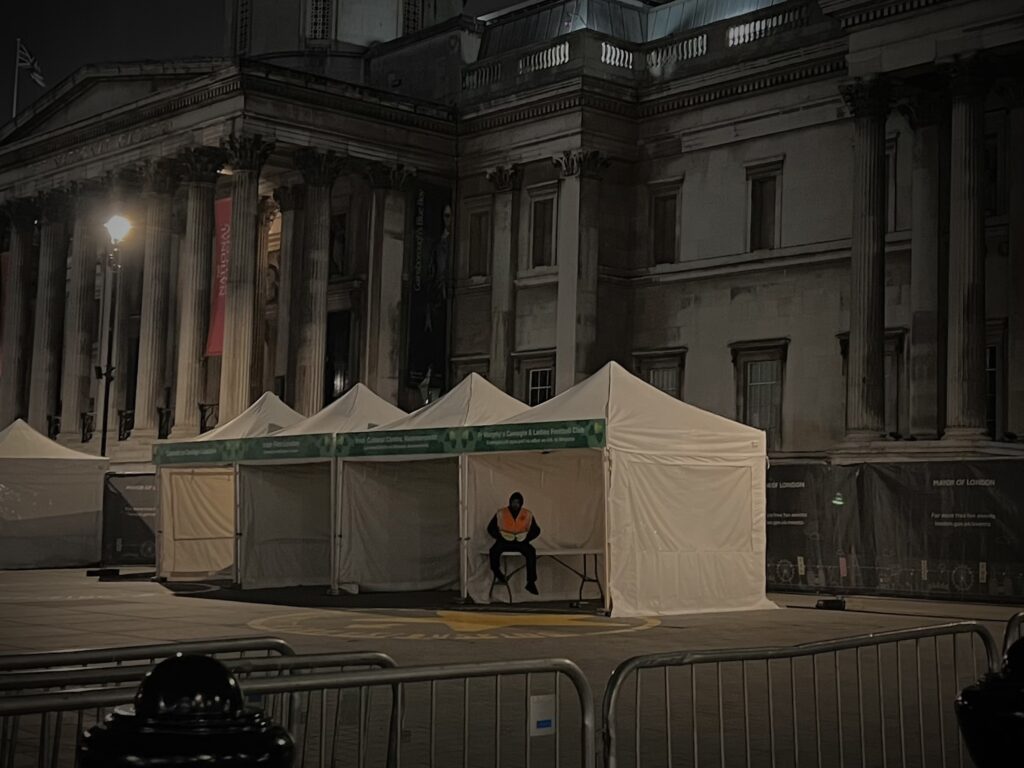
4:08 am. On Trafalgar Square, white booths were in place for the market celebrating St. Patrick’s Day, guarded by another watchman.
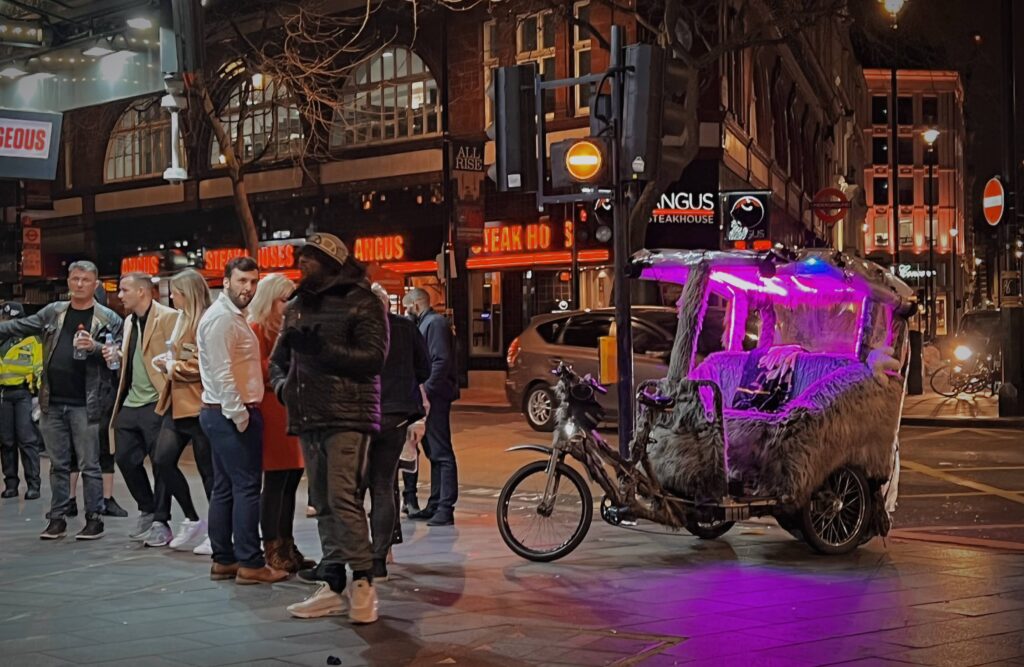
4:21 am. Outside The Hippodrome Casino in Leicester Square appeared to be the ‘headquarter’ of rickshaws.
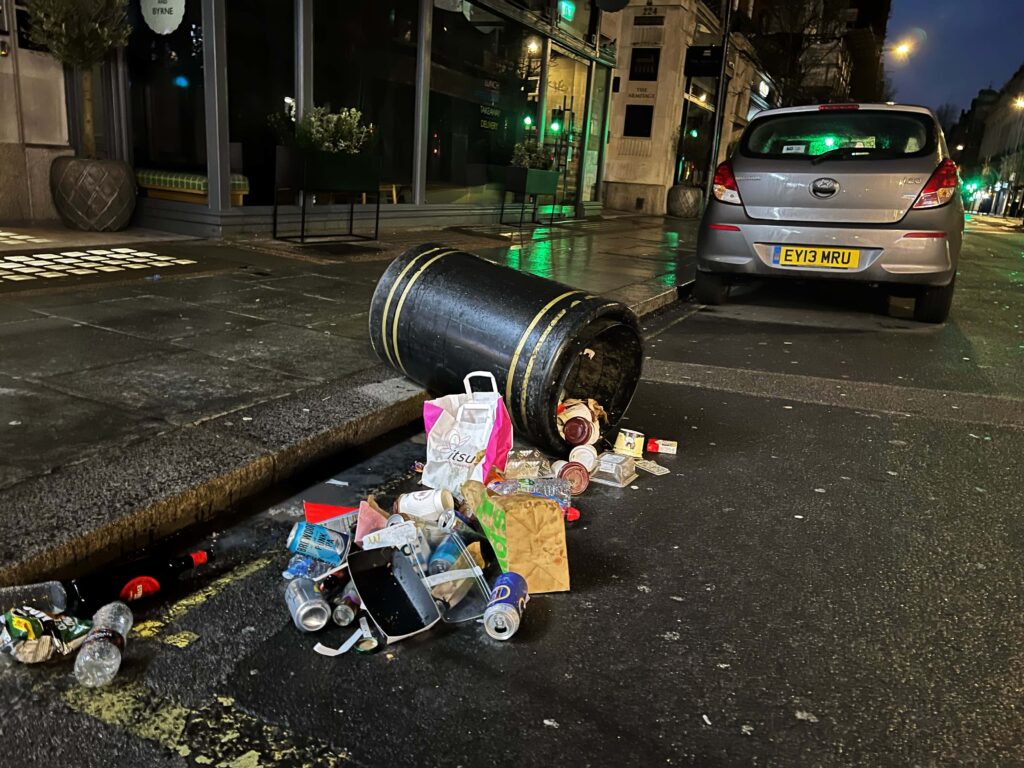
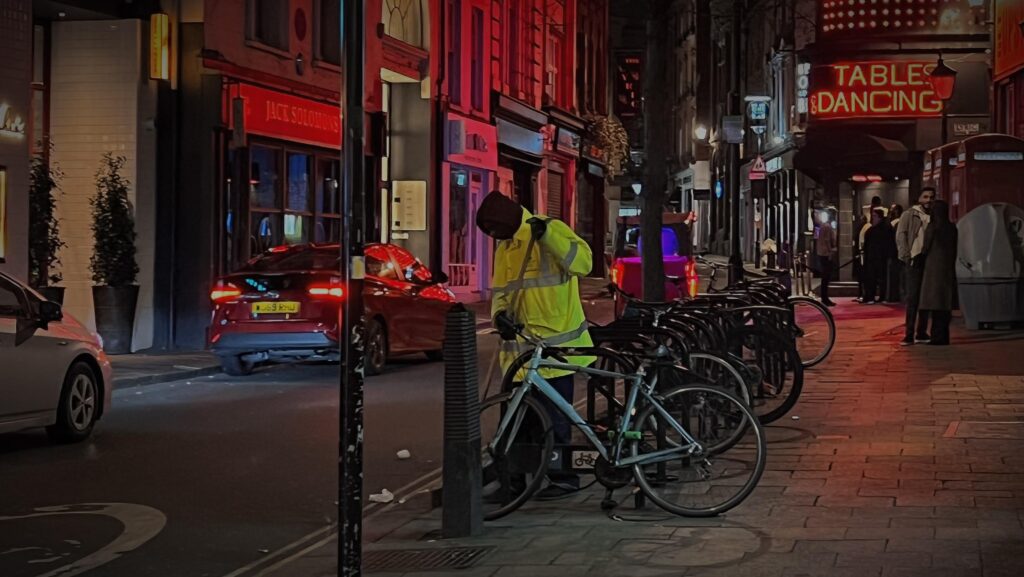
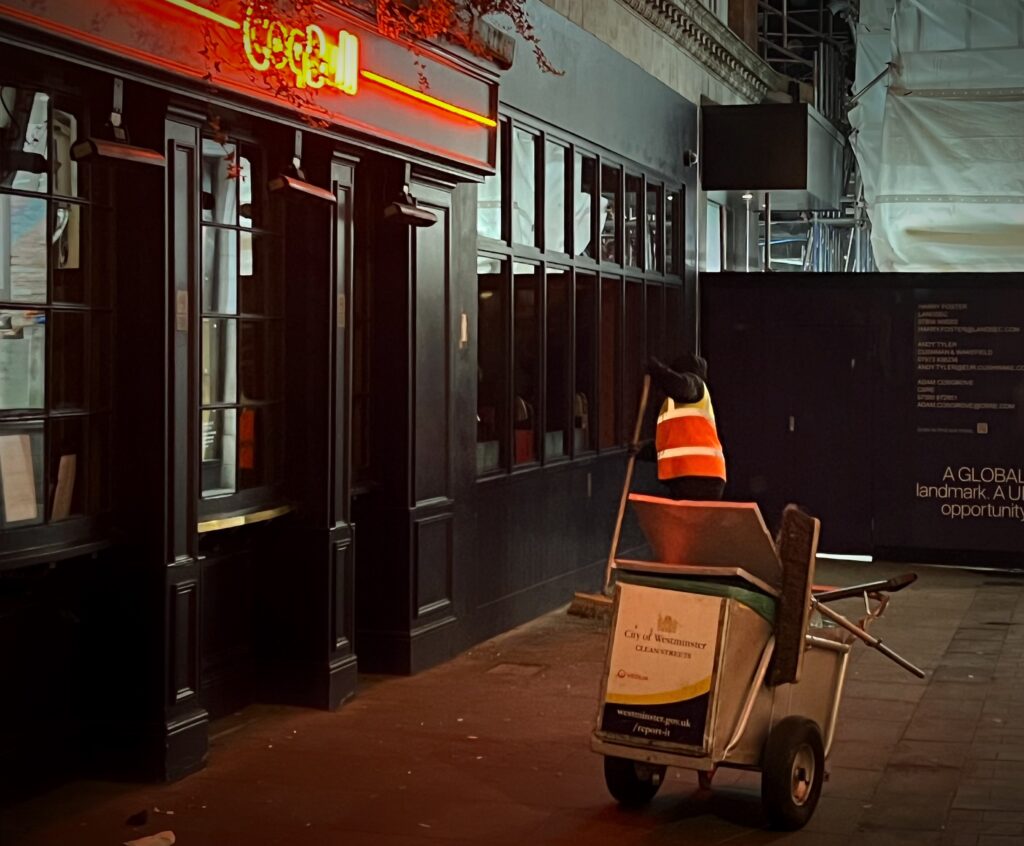
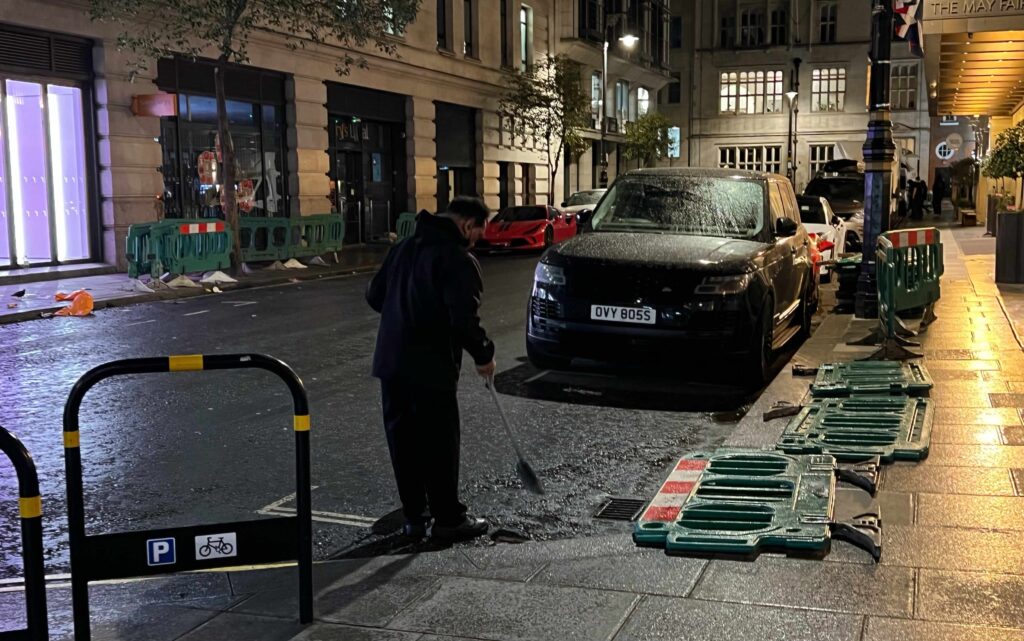
4:28 am. Empty bottles filled almost every bin. Some bins were knocked over, rubbish was strewn about. By the time daylight comes, they will have been mysteriously cleared away and central London will be tidy again.
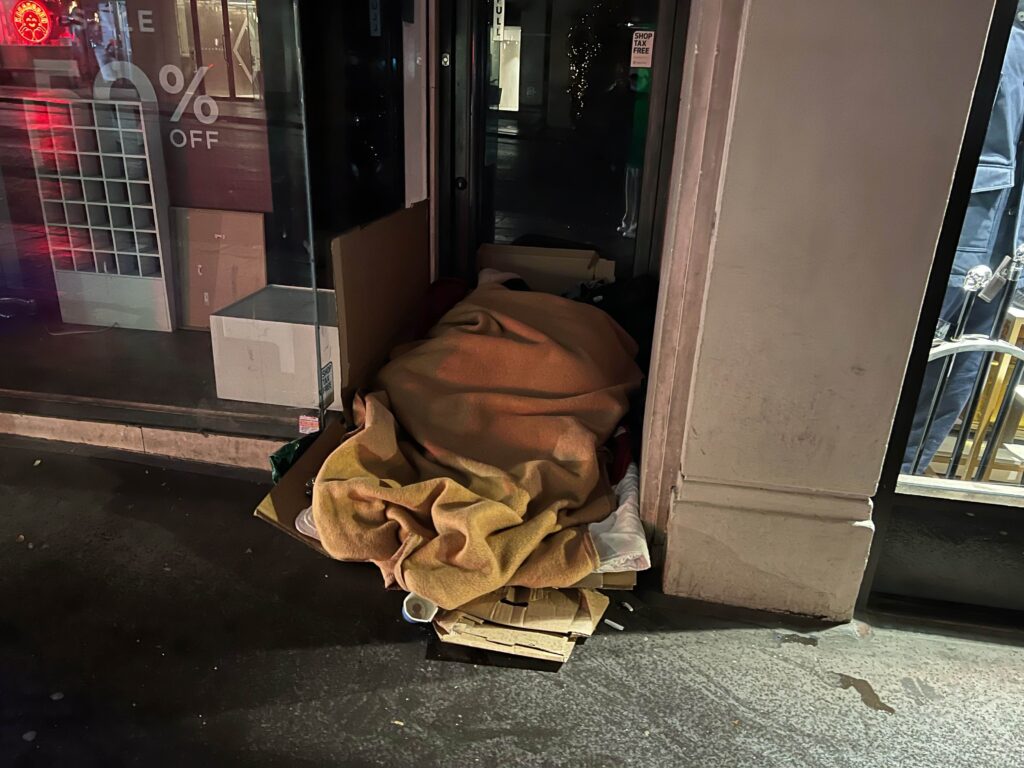
4:53 am. An intermittent rain began to fall and the coolness gradually seeped into your clothes, sending a shiver down your spine. Quiet corners, especially the raised ground took in homeless people huddled up and sleeping.
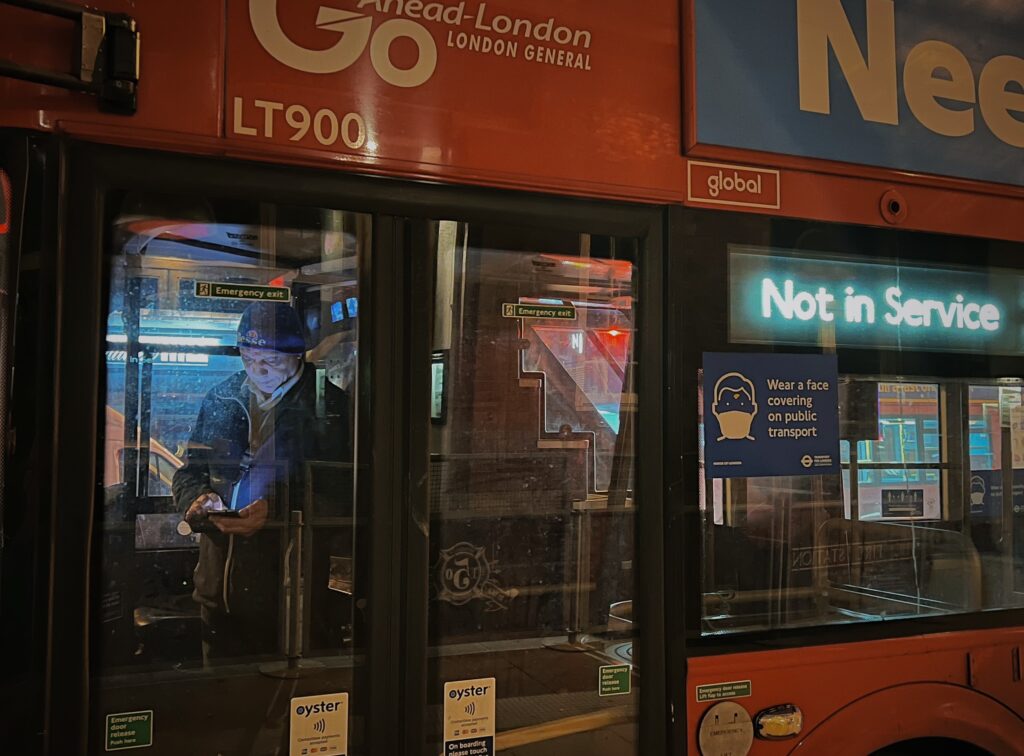
5:33 am. I was going to hop on a random bus to escape the rain. This time the bus was empty. But before I could get on board, the sign turned into ‘Not in Service’.
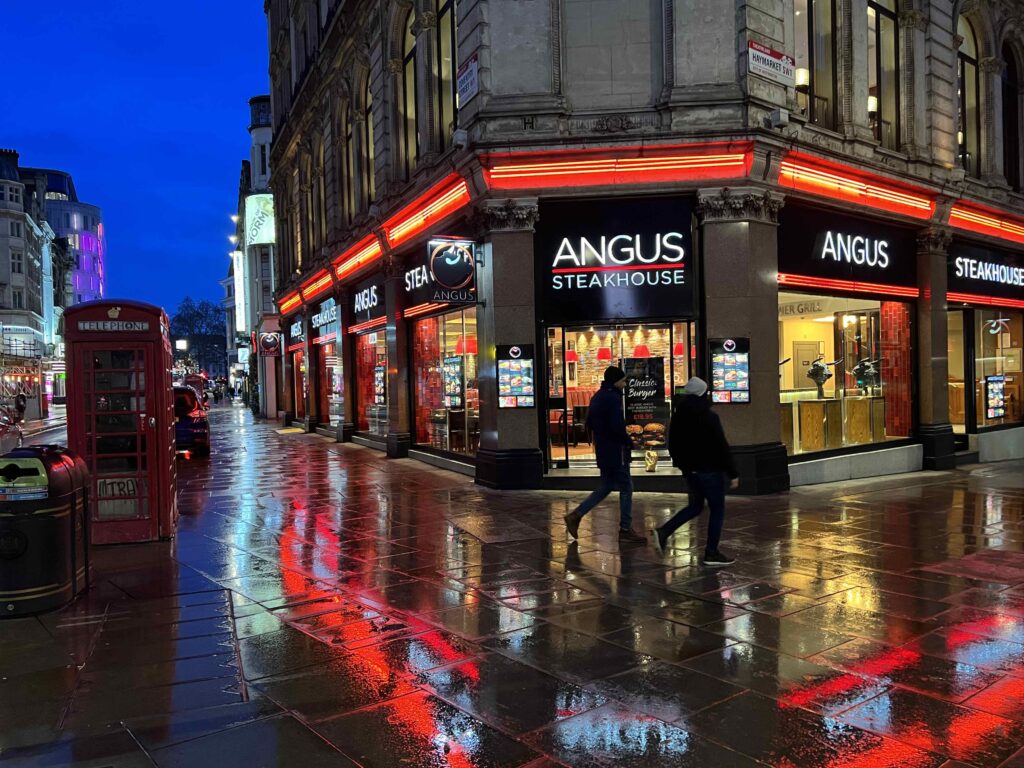
5:54 am. The sky faded from inky black to indigo.
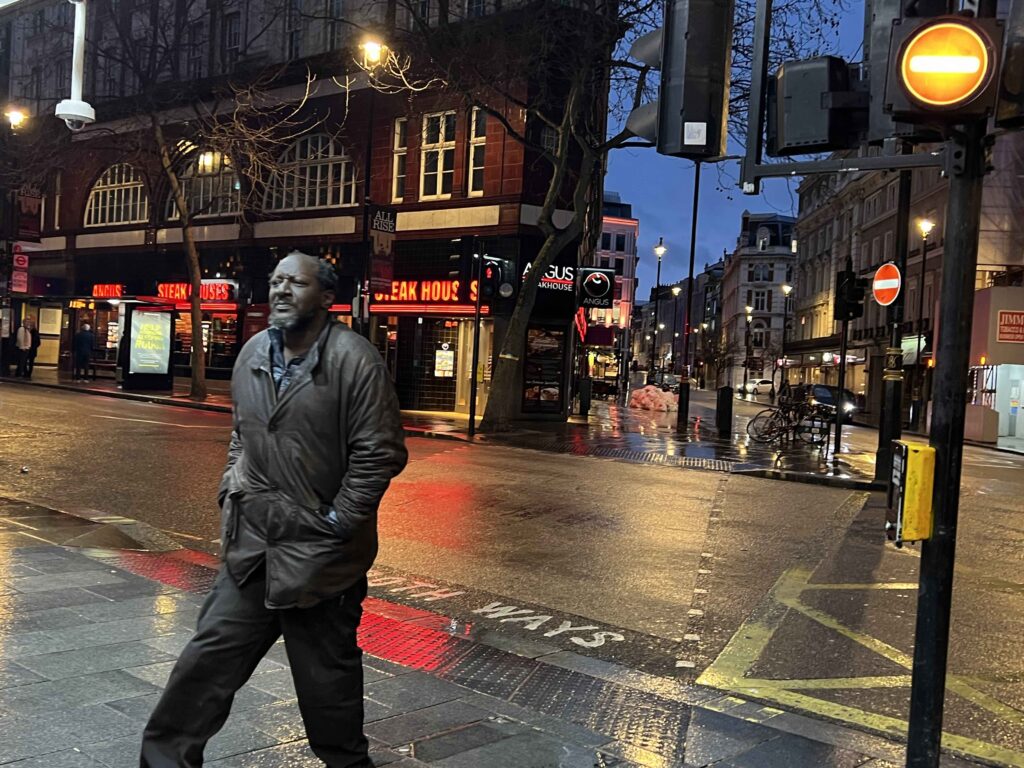
5:56 am. The street finally truly became deserted. It was slowly dawning. In this highly unreliable observation experiment, I found that between 5:40 am. and 6:10 am. was the least crowded time in London.
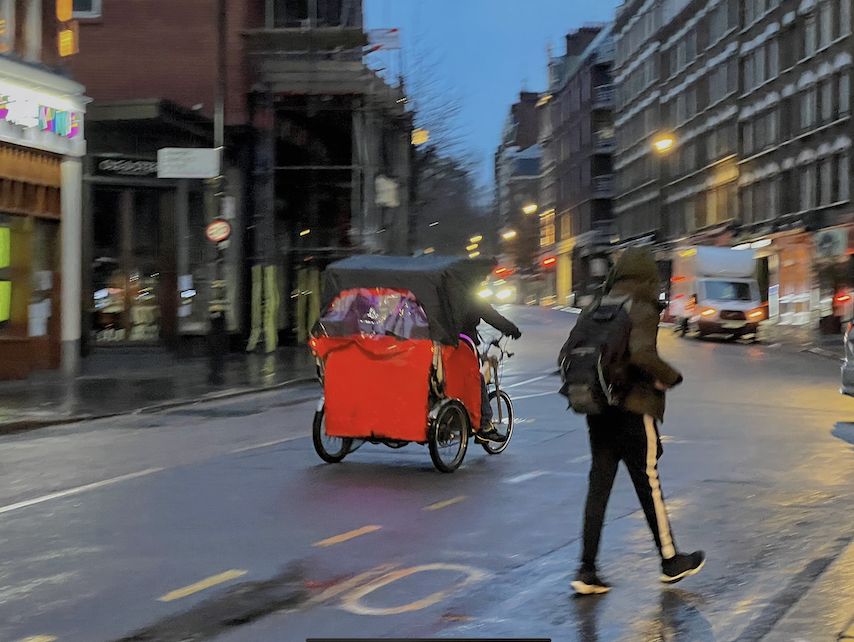
6: 13 am. A rickshaw just started ferrying, this time without music. It was completely light out. A new day had begun.
(photos taken by myself)