
POV: You don’t have the time, nor the money to take a 6am yoga class followed by a tall glass of celery juice and a ridiculously photogenic slice of sourdough.
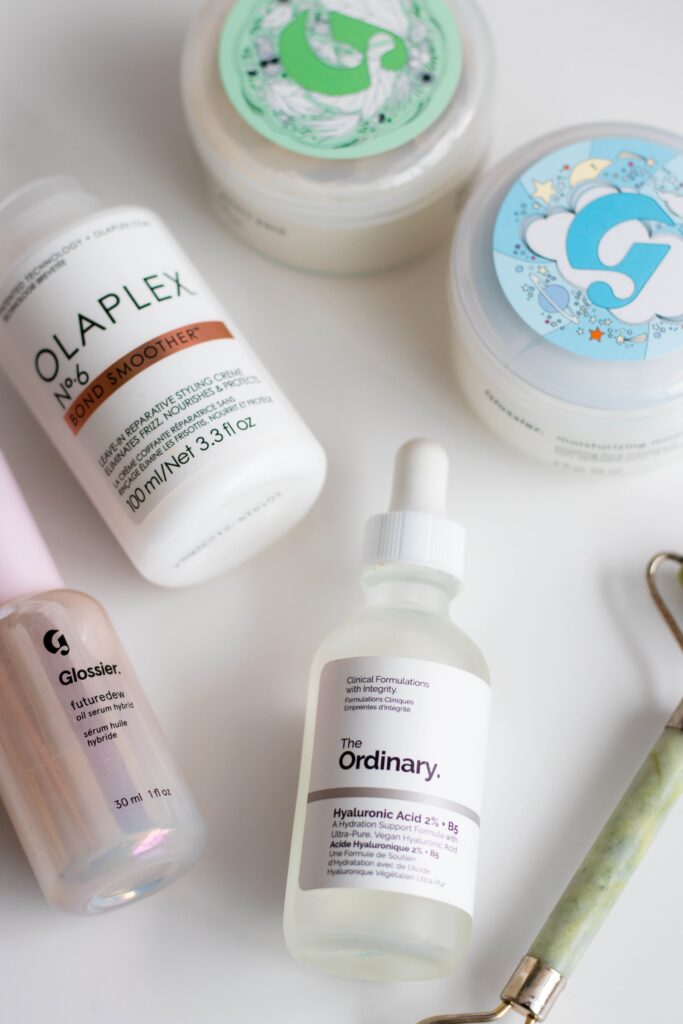
Do you wake up at sunrise to meditate and recite affirmations? Are you devoted to a 10-step skincare routine decked in Aesop and Glossier? Is your pantry stocked with dark leafy greens, vegan protein powder and a cornucopia of superfoods?
For the vast majority, the answers to these questions are no. For ‘That Girl,’ however, it’s a yes, yes and yes.
Since April 2021, TikTok has been saturated with video titles in the vein of, ‘THAT girl morning routine,’ ‘This is your sign to become THAT girl’ and ‘How to become THAT girl.’ Obscure as the phrase is, these videos follow a uniform format that involves early mornings, daily workouts and plant-based meals.
Unlike the usual fashion-centric trends that have emerged from the short-video sharing app, That Girl allegedly favours health and wellness over aesthetic appeal. It has become a Gen Z trope, portraying quintessential self-care techniques as catalysts for productivity. But when self-love and success are exclusively promoted by light-skinned women with 23-inch waists and £80 workout leggings, how healthy is this health trend for its young and impressionable audience?
Some TikTok users deem That Girl as motivational. Others question its unrealistic glamourisation of health and wellness and posted more authentic depictions of their everyday lives. Australian TikToker, Hannah Powell (@the_peoples_princess), for example, shared a video emblazoned with the message: ‘When the aesthetics are immaculate, but you’re also depressed.’ The video features classic That Girl elements, such as a well-decorated bedroom and a fetching outfit, before revealing piles of dirty clothes that would otherwise be hidden behind the camera. Hannah wrote the caption, ‘Everything is a lie ! 🤡’
@the_peoples_princess Everything is a lie ! 🤡 #depressionroom #fyp #lockdown #artoktiktok
♬ original sound – crack baby
For users like Hannah, That Girl is a quixotic trend that treats wellness as a one-size-fits-all pursuit. In this sense, That Girl belongs to the minority. She constitutes the 1% of society, who can afford weekly Pilates classes and Whole Foods paraphernalia. Personally, I have never had enough energy to make an Instagrammable quinoa salad after my eight-hour work shift.
In a 2021 study on digital food cultures, wellness was described as being, “driven by the market and consumer culture as opposed to medical necessity.” Both physical and spiritual health were typified as “moving targets” that can never be fully actualised. With that, wellness is subsumed in the matrix of capitalism. Instead of a means to cure disease, it is a never-ending journey of reigning the mind and body through consumption. The more expensive a product is, the healthier it must be, right?
In theory, That Girl expresses self-love through a healthy lifestyle. In execution, it basks in the glory of name-brands and aesthetic appeal. And what is aesthetic appeal if not a crisp image of the newest MacBook Pro atop a Lululemon yoga mat? Even the bright and modern living spaces in which That Girl videos are set allude to a degree of wealth that many viewers can only romanticise from afar.
@kaylieestewart part 1 of becoming the best version of yourself in 2022 🤍🥬 #motivation #thatgirl #healthylifestyle #healthylifestylechange #fyp
♬ this is what falling in love feels like – JVKE
Don’t get me wrong, people are free to share the luxuries they have online. But as soon as a video compilation of material possessions is tagged #ThatGirl, the wellness trend becomes problematically conflated with financial status. For now, the closest I’ll ever get to a penthouse apartment is by watching a That Girl video.
“I really think That Girl is a toxic trend because it’s represented by rich women, who, to be honest, are usually white and thin. So there are social barriers that prevent other people from becoming That Girl,” 21-year-old Ciara told me. Our conversation about health swiftly transformed into a conversation about money. Being an art student working a part-time job, Ciara articulated the struggles of having to strictly budget her rent, food and transportation. She explained how she is left with little money for herself, which she is often forced to spend on art supplies for university.
At 5am, Ciara has just arrived home from her bartending job. Meanwhile, That Girl has just woken up and is now using a jade roller to depuff her face – or at least that’s what we see on TikTok. The distinction between the two has caused Ciara to feel nonplussed and excluded from the trend. The problem with That Girl is not the fact that she engages in generic notions of self-care. The problem with That Girl is the fact that she is a singular prototype devoid of nuance. She is a standard to be abided by. Girls who innately possess privileges inaccessible to most are favoured over girls like Ciara who face the less alluring side of self-improvement.
Ciara expressed her desire to see a wellness trend that is detached from social class. “Even before That Girl became popular, wellness was always promoted by influencers. They would talk about colonics and other over-the-top procedures that aren’t necessary to being well,” she explained. “It would make a world of difference if they used their influence to give practical health tips that everyone can do whether or not they’re rich.”
That Girl how-to guides tend to trivialise wellness by offering esoteric advise. For instance, in a TikTok posted by @angelxadvice_, viewers were urged to “stop posting crying selfies” and to “make a sad playlist so you’re prepared for anything.” As well-favoured as an Instagram feed bereft of crying selfies may be, it does not exactly coincide with the ethos of self-help.
https://www.tiktok.com/@urfavadv1cepage/video/6912776433475652865In an article published by i-D, Carl Cederström, a professor at Stockholm University and the co-author of The Wellness Syndrome, defined contemporary notions of wellness as ideological, yet directionless: “Our culture of self-help generally has no purpose. You very rarely find a book on why you should lose weight. It’s always how you should lose weight.” This highlights how wellness is clouded by aspirations so ill-defined that they appear to be purely superficial. Instead of looking within ourselves, our attention is diverted to the social currency that is physical beauty.
Social media is notoriously effective in idealising the good and hiding the bad. The That Girl trend is emblematic of this, collating videos of feigned perfection. Users have, however, become increasingly sceptical of the media. In a survey conducted amongst 42 students from Goldsmiths, University of London, 47.4% of participants agreed that That Girl was unrealistic. When asked if they deemed the trend harmful, 30% voted yes. One student wrote, “It puts a lot of pressure on girls” and another stated, “TikTok isn’t the place to become a better person.”
That Girl presents glimpses of reality, but depicts them as the full truth. Watching a mere 30 seconds of a rigorous morning routine can quickly be misinterpreted as a full 24 hours of someone else’s picturesque life. I, myself, fall prey to That Girl’s endless hustle. I know I’m not alone in saying that I’m tantalised by her good looks and effortless sublimity. It’s easy to simply want to be her, but becoming her is a different story that glosses over social inequalities.
The good news is that research shows that hustle culture isn’t the only path towards self-optimisation. By redefining That Girl in your own terms, wellness can be extended beyond capitalistic structures. Instead of succumbing to external pressures, success should be approached with self-compassion, mindfulness and fortitude. Outside of social media, That Girl exists everywhere. She is Ciara, who manages to conquer the day no matter how sleep-deprived she might be. She is Hannah, who confidently defies That Girl’s picture-perfect bedroom. She is every girl resolved to be the best version of herself through the ups and downs of a life that isn’t always Instagram-ready.