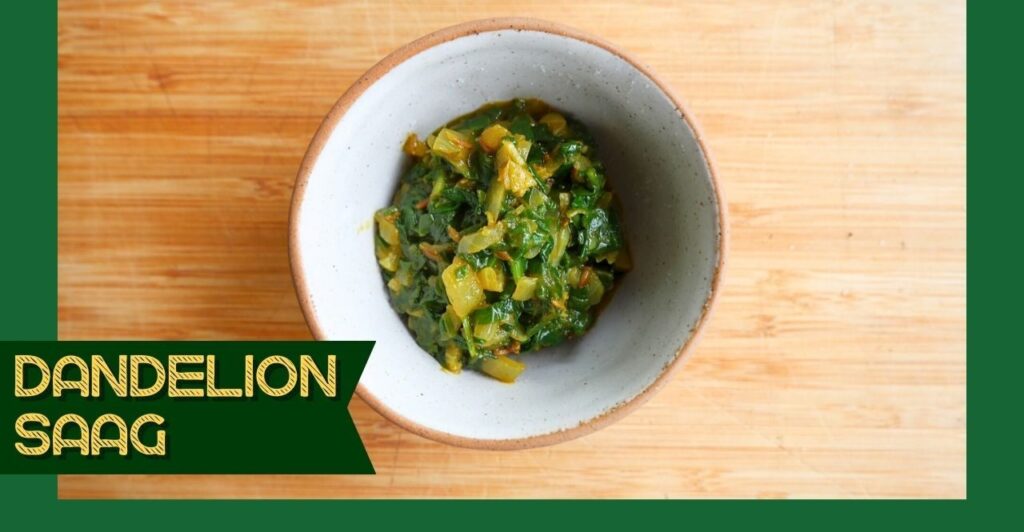
Wild Harvest Dandelion Saag for Two
Saag is a South Asian dish based on spinach with garlic and onion. It is the quintessential foraged dish because it is traditionally made with zero-waste, foraged greens such as mustard greens and fenugreek leaves, which are found across the Punjab region. This leads to a wonderful complexity of flavour and a very forgiving dish. Many families also toss in young leaves from the tops of turnips, beetroots and carrots.
It is traditionally served with a dollop of ghee and makai ki roti (cornmeal flatbread), and increasingly dominates menus with paneer, similar to cottage cheese. At Briar, we love it as a catch-all and malleable dish to help us reinterpret and celebrate our foraged bounty.
Serves – 2
Foraged Ingredients
- 2 handfuls of fresh dandelion greens (the young, tender leaves)
- Optional: wild spinach, mustard greens, or wild garlic if in season
Other Ingredients
- 1 small bunch of spinach (more if not using any of the foraged versions above)
- 1 generous dollop of ghee – may substitute with olive oil
- 1 pinch of cumin seeds
- 1 small onion, finely chopped
- 2 cloves of garlic, minced
- 1 green chili, finely chopped (adjust to taste)
- 1 pinch of turmeric powder
- 1 pinch of ground cumin
- Salt to taste
- A splash of water
- A squeeze of fresh lemon juice
- A small handful of chopped coriander (optional)
Method
- Gather young, tender dandelion leaves and rinse them well by swishing them in water until it runs clear. If you’ve managed to find wild spinach and mustard greens, wash them as well.
- Chop the greens roughly and set aside. Roughly mash the stalks using a rolling pin, pestle and mortar or two rocks if you are cooking outdoors. Set aside.
- In a wide pan, heat ghee or olive oil over a medium heat. Add a pinch of cumin seeds and let them sizzle for a few seconds until fragrant.
- Add the turmeric powder, ground coriander and ground cumin in the oil. Let them “bloom”. This means they cook in the oil/ghee and may even stick to the pan. If that happens, just add dribbles of water and stir to release the spices.
- Toss in the finely chopped onion, letting it soften and turn translucent. Add minced garlic and green chili, sautéing until the garlic is lightly golden. Turn the heat low.
- Now, it’s time to introduce the star of our dish – the freshly foraged dandelion greens and spinach, along with wild spinach/mustard greens, if using. Add them to the pan, gently wilting them down with the aromatic base. Use your spoon to roughly mash them and ensure the spices are evenly distributed.
- Dribble in more water to help create steam, and stir frequently. Depending on how mushy you like your saag, you can cover the pot and let it cook down with around a cup of water all together, or cook with the lid off, stirring frequently and adding water as you go.
- Once it is of a consistency you like, season with salt to taste. It helps to add salt at this point instead of earlier to help get a more accurate idea as quantity can vary depending on how long you cook it down. Depending on the freshness of your leaves, this can take from 15-25 minutes.
- You know the saag is ready when there is some oil on the side of your pan and separating from the saag mixture. Turn off the heat.
- Finish off with a generous squeeze of fresh lemon juice to brightening up the flavours. If you have garam masala in your pantry, add a pinch. For a more decadent touch, you can add a pat of butter or ghee, and chopped coriander on top.
- Serve your dandelion saag hot, as either a nutritious side dish, explosive dip or a comforting main course accompanied by nan, bread, steamed rice or rustic, cornmeal or oat-based bread.
Expert’s Tip
Briar’s Aysha Imtiaz says parboiling the greens first and selecting the most tender leaves helps reduce the bitterness in saag.