Author: Bisila Batapa Noha

  • How consumerism affects your mental health 

    How consumerism affects your mental health 

    For some of us, shopping is a hobby and a way of showing our expression however, it can sometimes be a bit addictive. Consumerism is the constant of buying more and more than you should. Having access to buy items around the world and consuming them as a form of therapy is all fun and games until you are spending more money than you earn and become obsessed with materialism. This has become normalised in the modern world where it can be seen as a coping mechanism, social norms, self-worth and personal identities. Consumers feel short-term satisfaction during shopping and when getting their product, however, it can create stress and distress. 

    The stress and pressure to be up to date with the latest items can create financial stress as spending often can go on the route of affecting your mental health in the long run. This will make you have low self-esteem as the media is promoting unrealistic expectations to make you feel different. The cycle of buying new things only brings short-term happiness which will likely make you go through the pattern of buying more. 
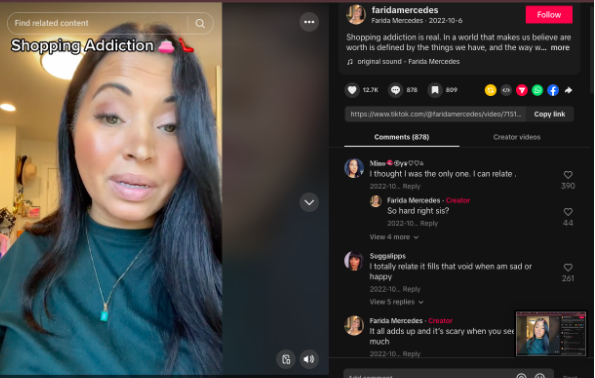
    Screenshot of Farida Mercedes on TikTok explaining about her addiction to shopping

    A social media user, Farida Mercedes, has announced how she has a shopping addiction and the struggles she battles. She said it is a “coping mechanism” when she is sad, mad and happy, when she feels like she deserves it and many in the comment sections discussed how Farida is not alone, and they are also on the same boat as her. Shopping addiction is an obsession and many people may be stuck in the same trap such as Farida and use it as a coping mechanism.

    When people shop, they may feel a temporary satisfaction when purchasing but the feeling does not last long. For others, they feel the guilt because they know what they had purchased what they cannot meet financially, except they still feel the urge to shop. Compulsive buying happens when an individual has an addiction to shopping but it is uncontrollable. According to the National Library of Medicine, the group of people who are clinically diagnosed with Compulsive Buying Disorder (CBD), 80% are women. 

    Many people in this modern generation have become materialistic where it can affect their mental health because they believe that their personal wealth is tied to their possessions. It can also lead to comparison which can make consumers have low self-esteem and envy the people and influencers who are promoting the products. 

    We live in a consumerist society where we are all judged by the things we wear, the number of vacations we fly to, the newest tech you currently own. Consumer goods can make individuals feel vulnerable and the resentment to not be able to meet societies expectations. 

    clothing haul | tik tok compilation

    It is not something new where we have seen advertisements on all social media platforms and TV showcasing the idea that buying particular items is an important and essential way to fulfil yourself. With the work of social media and personal data, brands can now market to their target audience using demographic data. As the app TikTok is mainly flooded by young people it promotes extreme spending, and this attracts individuals who are not financially aware. Many influencers work with brands to promote their products to their audiences and those viewers are likely to feel the pressure to buy the products. 

    Weekly and monthly hauls where you purchase items just for the purpose of sharing them on social media are not normal. Many influencers spend extravagant amounts of money on clothes, makeup, and skincare which is harmful for the viewers, especially to the impressionable audiences as they will tend to promote unhealthy spending habits and compare their lives to the influencers on social media. Fast fashion is bad for the people, animals and the planet.

    Social media promotes trends that becomes popular for a short time and then forgotten which causes fast fashion. With quick delivery, it makes consumers stay up to date with the newest trends which provokes them to continue consuming. 

    To limit you from buying often, you can: 

    1. Find a hobby which would be great for distractions,  
    1. Remove all notifications, adverts or remove the app 
    1. Practice mindful spending if it is worth the money 

    Consumption itself may not be dangerous but when the world prioritises materialistic health over important values, it can lead to depression and anxiety. 

  • Is the gym a toxic place for your mental health? 

    Is the gym a toxic place for your mental health? 

    Long walks and home workouts were “old” way of staying fit however, in this day in age, gyms are becoming a part of modern fitness culture. You would see people pumping to the heavy music, sweating and the gym would be crowded where people come to challenge themselves. Some say they join the gym to tackle illnesses, their new year resolution and for others, to be ready for summer.  

    Screenshot showing the benefits of showing up to the gym

    The gym offers an opportunity for social interaction and the chance for personal development. However, even though the gym can improve physical and mental health, they can sometimes be an environment where you do not feel positive and comfortable.  

    New trends and things have been portrayed in the gym for instance, body dysmorphia, fake nutritionists, recordings in the gym, and negative self- comparison. So, can the gym play a part in toxic mental health outcomes, specifically for the populations who are more vulnerable to eating disorders, body image issues and new gym goers? 

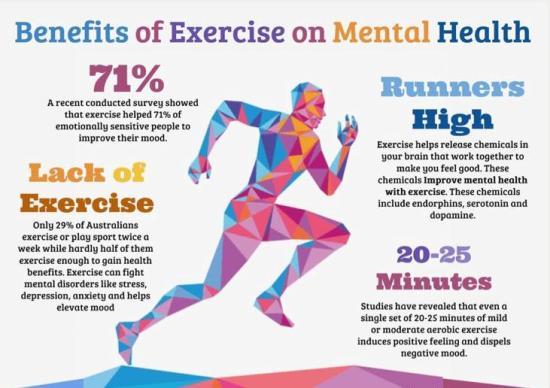
    Studies have shown that exercise supports mental health with endorphins stress hormones, coping ability, and can cause the brain to release ‘feel good’ chemicals that help improve your mood. Attending the gym or just simply exercising often can help with managing stress, memory and brain functioning, heart, muscle and bone health and reducing the risk of developing long term health conditions. More benefits such as having more energy, increase of self-confidence, exceptional quality of life, and better memory are advantages from the gym. 

    Below, Jonathan and Samuel will quote about their experiences in the gym. They are gym goers and I kindly asked them to tell me their experience in the gym.

    Jonathan said, “So, I started going to the gym because the gym is such a great escape for me, I’ve learned so much about life and understanding and seeing just, a lot of different things. Gym is like my second home, I go 7 days a week, 2 hours a day, it’s all I really do. I study it in my spare time, I research it, it really helps to be calm as well”. 

    Samuel mentioned, “The gym makes me improve my confidence and, I feel like I have gained more confidence after going to the gym for a month. My diet has been pretty good now, I usually eat just junk food like chicken and chips everyday but now I eat salad, roast chicken, eggs and all sorts of that. I think that you should go to the gym as well cause, you know it’s very good for your mental health and your physical health.” 

    A photo of Sutton Gym

    Regarding the advantages of gyms, they can furthermore tend to construct environments that aggravate mental health struggles. Many factors are included such as: 

    Body Image Pressures and Dysmorphia 

    The gym is mostly portrayed as a safe space to build your “perfect” body which can produce unhealthy standpoint when it comes to one’s appearances. Much research has shown that the gym can also rise body dissatisfaction, body dysmorphia, especially when it comes to women as they feel more pressure to fit into beauty standards and keep in shape. With this mindset, it can cause people to have eating disorders. Many people who attend the gym feel as if they are constantly comparing themselves to others, in person and on social media and with this, it can make the individual feel like they have gym anxiety. Social media has turned the gym into a reckless clout chase. We are in a mental health crisis where we individuals want to be in spaces for escape on the other hand, trends, and influencers on apps such as Instagram and TikTok have encouraged and energized numerous young people to start attending the gym but also doing unhealthy methods and expecting unrealistic goals.  

    Toxic and Competitions 

    There are certain gym categories — such as bodybuilding and weightlifting — where that may eulogise and applaud to extreme discipline, aggression, and domination. This can create a toxic environment where people will over push themselves to do more than their limits just to fit into something that is becoming “popular” in the gym world. Other individuals arrive in the gym with the mindset as a form of “guilt” after eating a certain amount of food to “burn off” the calories which reinforces disordered eating patterns.

    Nutrition and Supplements 

    Gym supplements and fake nutritionists have become very popular in gym life. Exercise is important in everyone’s life to expand their health, however; the significant thing is how you do it. A lot of people don’t know how to spot misinformation when it comes to nutrition or exercise which can lead to damage because people would imitate these “fitness influencers” in the industries, they are not transparent and educated in their field.  

    Many people had announced how disappointed they were when they would model someone’s life, and they do not obtain similar results. To lower the toxicity in the gym, personal trainers, gym professionals and gym goers can devote themselves to accomplishing a broader psychologically safe environment and body positivity by representing and marketing different body types to show that they are all acknowledged and offering support in the community space. 

    To wrap it all up, the gym is not always toxic as it can also depend on the individuals’ personal factors. Creating a safe atmosphere and mentally healthy gym culture can make people committed to the gym as they know they will receive the support they need. 

  • Gen Z: the lonely generation 

    Gen Z: the lonely generation 

    You may think of older people as being the main group affected by loneliness, but recent studies show that generation Z is struggling with social isolation more than other generations. With the disconnect from the real world due to digital technologies, mental health issues among gen Z are increasing. Social media has given us an opportunity to connect with people online, however they lack face-to-face human interaction. 

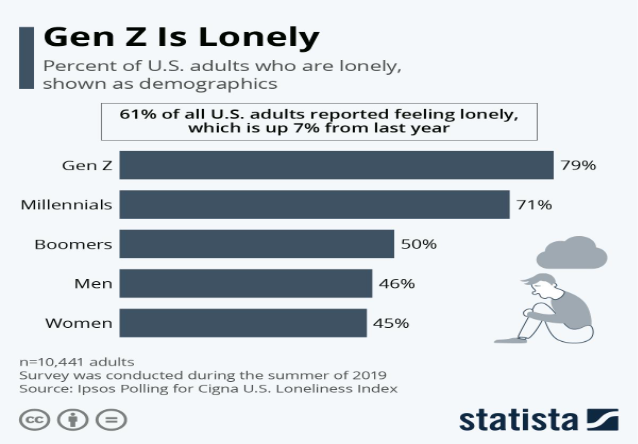
    Ipsos polling showed US gen Z adults are the most likely group to suffer from lonelieness. Credit: Statista

    Gen Z already experiences the highest rate in both anxiety and depression compared to previous generations, according to Ipsos polling of US adults, which is the factor why they struggle with social interactions and end up lonely. An article on the UC Davis blog, Cultivating Health, said social media use may increase feelings of anxiety and depression, specifically in teens and young adults. This can make them feel a sense of low self-esteem and the social anxiety which affects their own self-perception and makes it difficult to build relationships and maintaining them. 

    For many people in gen Z, social media is their escapism, whether it is Instagram or Netflix but, research has shown that constantly being online is not healthy and can increase the feelings of isolation and how it is sabotaging your mental health. Other than the sense of isolation, gen Z find it challenging to determine meaningful connections in the future which can create a high risk of self-harm and suicidal thinking. From the graph, we can see a 1% difference between men and women when it comes to loneliness. According to The Health Policy Partnership, men who may require support are less likely to talk about mental health than women. Women tend to have more networks around them and build strong connections and friendships when they need the support whereas men have fewer social connections to rely on.

    Effects of social media on mental health | Download Scientific Diagram
    Symbol showing the consequences and effects of social media

    People who grew up with smartphones and technologies at such a young age have less skills to develop strong social skills and emotional intimacy which makes them lack face-to-face interactions. Constant exposure to others’ lives on social media can make the individuals viewing possess Fear of Missing Out (FOMO) which according to the NCBI, during the Covid-19 pandemic elevated immediately. 

    COVID-19's Impact on Facebook and Social Media Advertising | GLG
    Image found from Google showcasing different social media applications

    We all know that loneliness is part of mental health which can: 

    1. Increase social withdrawal, depression and anxiety 
    1. Increase of isolation 
    1. Reduce in motivation 
    1. Reduce in confidence 

    No matter the age or your environment, there should be places individuals can receive support, someone to talk to in schools, workplace, community organisations and more. In schools, children should be taught about mental health and how to get the support so when or if they experience the signs and symptoms, they will know how to approach it. Gen Z can tackle loneliness by attending social events for prioritising face-to-face interactions, normalising mental health support, going to physical activities and more.  

    Social media and stress are all contributors to the anxiety, depression and emotional distress that gen Z faces. By prioritising mental well-being and face-to-face connection, gen Z are able to break the loneliness cycle.