London’s second-hand fashion scene preserves craft, memory and identity. We bring you the best shop to visit.

London exists as a city of layers. Beyond the physical skyline of steel and glass lies a more intimate map: one made of silk, wool and collective memory. While the modern fashion industry operates at a pace that renders garments disposable, a growing movement reclaims the value of the archive and easing the strain on out planet.
This aspect of the fashion scene relies on a network of designers, curators and historians who view clothing not as a product, but as a vessel of heritage. From the technical studios of north London to the luxury archives of Chelsea and the curated grit of Shoreditch, the second-hand economy has become a site of cultural resistance across the city.
It is a dialogue between the past and the present, where the act of dressing becomes a deliberate choice to remain grounded in an increasingly virtual world. To understand London in 2026 is to understand that what we wear reflects how we choose to remember.
Technical archaeology: Finding the maker’s ghost
The search for textile integrity begins with the details that modern production has largely abandoned. For Bunu, a design student immersed in London’s creative pulse, examining a vintage garment provides an exercise in technical archaeology. When handling a coat from the 1980s, her focus rests not on a passing trend, but on the ghost of the maker.
She identifies a vanished standard of craft, such as hand-stitched internal canvases and interior seams finished with the same precision as the exterior. For Bunu, the current industry has sacrificed this structural skeleton for mass profit, producing hollow garments that look correct on a screen but fail to provide the structural satisfaction a designer craves. This lack of substance in modern clothing is more than a technical failure; it constitutes a cultural loss of discipline and respect for the material world.

In a city increasingly flattened by the aesthetic uniform of social media, the archive offers a rare sanctuary for creative independence. To wear second-hand is to value personal resonance over the fleeting mandates of an algorithm. It is about identification rather than imitation. If a piece resonates, Bunu wears it with “a shield of confidence that no high-street copy can replicate”.
She notes that while famous hubs like Brick Lane have become more commercialised, the true modern nomad must look deeper. Whether searching through the Old Money elegance of Notting Hill or the bold, eccentric finds of the city centre, the goal remains the same: to find original design jewels offering a unique visual language.
This independence forms a discipline, a refusal to be part of the disposable cycle that defines 21st-century consumption. It builds a wardrobe possessing a weight – both literal and metaphorical – that modern garments lack.
The silent language of legacy in Chelsea
Moving westward, the narrative of heritage shifts from the experimental to the institutional. At the British Red Cross in Chelsea, manager Esther Oliva oversees a space functioning more like a high-end boutique than a traditional charity shop. Because of its location, donations arrive from some of the world’s most exclusive wardrobes, creating a fascinating bridge between high-end glamour and an altruistic mission.
This represents the power of kindness in action: a profit model funding humanitarian aid while making high-quality design accessible to a wider majority. In this context, the garment becomes a medium for social change, demonstrating that fashion carries moral weight beyond its aesthetic value. The shop operates as a filtration system, redistributing the wealthy’s excess to provide stability for those in crisis.

Quality, in this environment, acts as a ‘silent language’. Oliva’s customers do not seek the latest fad; they look for garments capable of surviving decades. Here, fashion is treated as “a legacy rather than a temporary purchase”.
This system ensures that beautiful objects remain in use, challenging the waste-heavy culture of the modern industry. It reflects a sophisticated understanding of value – one that prioritises the longevity of the object over the instant gratification of the new. For Oliva, the shop stands as a testament that true style is a permanent asset, not a fleeting trend. The tactile experience of the shop, where cashmere and silk are handled with due respect, reinforces the idea that clothing is a serious investment in craftsmanship.
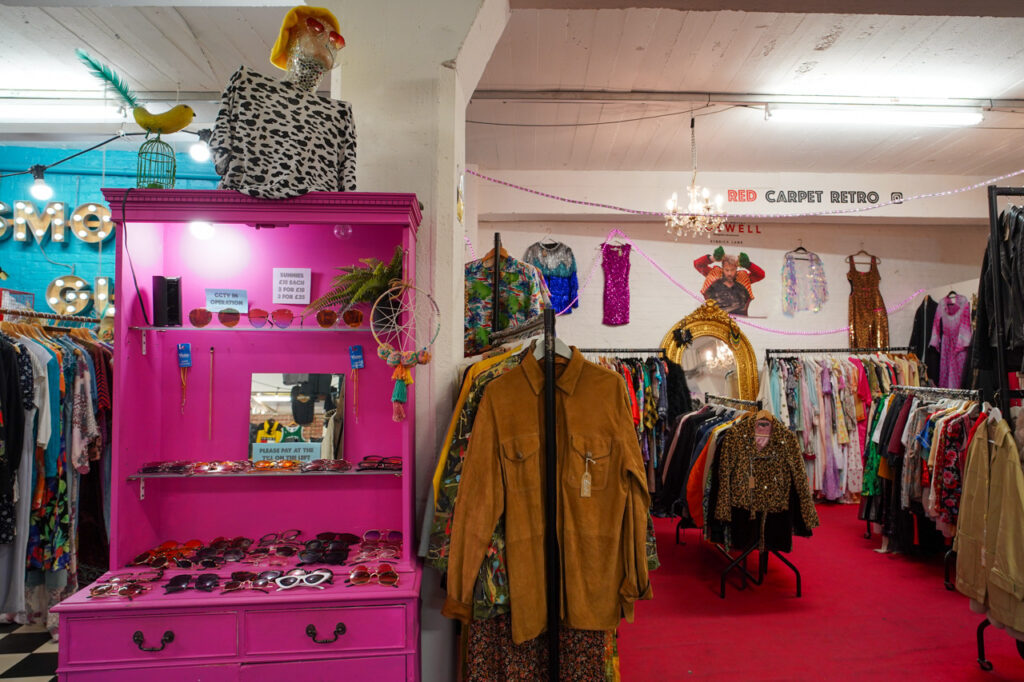
Nostalgia as a safety net in Brick Lane
In the kinetic environment of Brick Lane, the energy transforms once again. At Y2K Vintage, the focus shifts to a specific era that captures the imagination of a younger generation. The curators here observe a massive wave of nostalgia, describing it as “a safety net in uncertain times”. In a world of “aggressive minimalism and digital perfection”, the vibrant, often chaotic aesthetics of the early 2000s provide a sense of fun and safety.
For the young Londoner navigating a fast-paced and often alienating city, finding an original vintage piece represents more than a transaction; it offers a way to claim a sense of belonging. This act of grounding allows the framework of second-life clothing to provide a vertical structure to an otherwise fluid identity. The nostalgia here is not a desire to go back in time, but rather a search for the human touch in an increasingly automated era.
Brick Lane remains vital because it facilitates an intersection of styles existing outside the mainstream. Seeing others put effort into their self-expression through archival clothing serves as a source of inspiration for the community. This second life of garments offers perhaps the most honest reflection of London’s future. The city exists in a state of constant transition, yet the second-hand market offers a reassuring sense of permanence.
Knowing that a piece of clothing has survived the city’s relentless pace gives the wearer a sense of place. It becomes ‘the future of the past’ – a tool helping residents stay grounded even as the physical architecture around them shifts and gentrifies. The vibrant colours and textures found in these shops act as a sensory rebellion against the grey, polished surfaces of modern urban development.
Curated defiance and the archival speakeasy
The final pillar of this textile map stands at Nordic Poetry in Shoreditch. This is a space that requires intentionality; entry is granted only by ringing a bell, creating the atmosphere of a private archival speakeasy. Juliet, a curator at the space, notes that the role often feels more like working in a museum than in retail. At Nordic Poetry, the value of a garment is measured by the time, artistry and labour required to create it.
This approach directly opposes the mass-production model, where speed is prioritised over substance. Juliet’s perspective represents curated defiance against a market encouraging constant, mindless buying. In this archival world, knowing the history of a British designer or the origins of a fabric serves as a form of cultural currency.
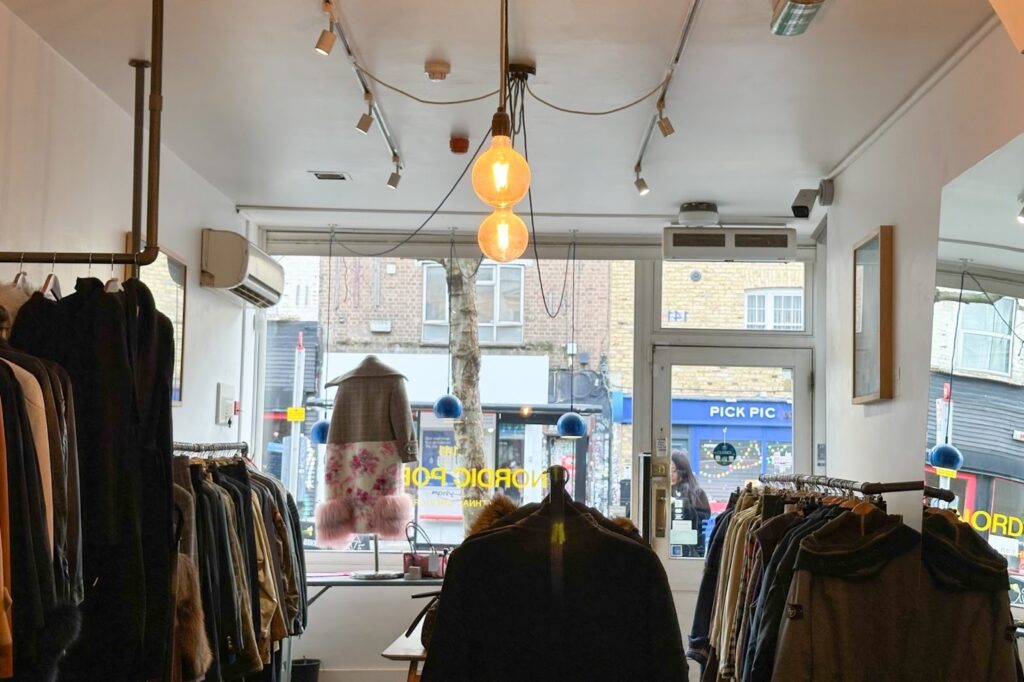
Juliet suggests that for the modern consumer, “the real luxury lies in the story, not the logo”. She encourages a shift in financial perspective: rather than consuming multiple low-quality items that will inevitably end up in a landfill, the discerning Londoner should invest in a single archival piece. This approach proves not just more sustainable; it is “a more respectful way to engage with the art of design”.
An archival garment stands as a work of art, retaining its value and identity over time, allowing the wearer to build a wardrobe that functions as a personal museum. The curation at Nordic Poetry is an intellectual exercise, filtering the noise of the global fashion market to find the few pieces that truly matter. It provides a sanctuary for those who believe that clothing should be as meaningful as the literature or art they consume.
Juliet also reflects on the geographical identity of the city. While the West End may offer traditional luxury, the archival scene in Shoreditch offers authenticity. The hidden nature of stores like Nordic Poetry ensures that those entering already participate in a specific cultural conversation.
It creates a private experience where fashion is discussed with passion and expertise, far removed from the cold, transactional nature of modern retail. This connection between the curator, the garment and the wearer keeps the soul of London’s fashion scene alive. It relies on a shared recognition of quality and a mutual respect for the history embedded in the fabric.
The link between the design student, the luxury charity shop and the vintage archive is one of deep intentionality. Identity in London builds upon what is hidden: the hand-finished lining, the history of a donation and the memory of a rare find. These objects serve as anchors in a city of constant change. By valuing the stitch, the story and the second life of clothes, the art of being a Londoner – independent, disciplined and connected to heritage – remains intact.
Through this lens, the archive functions not merely as a collection of old garments, but as the blueprints of who we are. It reminds us that in a world of digital copies, the original still holds the most power. The ghost in the textile is not a haunting, but a presence – a reminder that quality, when treated with respect, is immortal.
Methodology
This feature was developed through immersive on-site research and primary source interviews conducted across four key London locations: Nordic Poetry (Shoreditch), the British Red Cross (Chelsea), Y2K Vintage (Brick Lane) and independent design studios. The research methodology focused on qualitative observation and sensory analysis, documenting the physical properties of archival garments alongside the lived experiences of their curators. By examining the intersection of the circular economy and urban identity, this study decodes the social and architectural significance of second-hand clothing in 2026. The findings are based on direct dialogue with industry professionals and students, ensuring the narrative is grounded in the current reality of London’s textile heritage.