How supporting Chelsea helps newcomers find friendship, identity and community in London
Chelsea Football Club occupies a prominent position in English football as a major club in the capital. Based in Fulham, the club’s influence extends far beyond the city through its global reach. Chelsea operates as more than just a football club; it forms a community that encompasses people from across countries and continents. This shared identity among supporters, regardless of distances and differences, allows them to feel that they are part of something bigger than themselves.
This is especially true in the UK, where the sport dominates. So it should come as no surprise that when non-native Chelsea fans arrive in the UK, they use the club to integrate into a new country and culture. This shared support brings them together with others, fostering deeper connections through the sport.
Feeling truly blue at Stamford Bridge
Being Half-German, I naturally supported the national football team growing up. Despite never having lived there, I felt this choice connected me to the country and its culture in some way. When I moved to the UK for university, I chose to become a Chelsea fan for that same reason. The fact that the club had several German players at the time did not make my decision difficult at all.
Arriving at Stamford Bridge – the club’s home stadium – for the first time, I felt I had earned the opportunity to experience a Premier League matchday. When I pledged my allegiance to the Blues in early 2022, the team was in the midst of a period of transition. The club struggled both on and off the pitch. This difficult period tested the fans’ resolve to maintain their support while the club faced intense public criticism. Even though it was difficult, I felt that it would eventually all be worth, and it was.
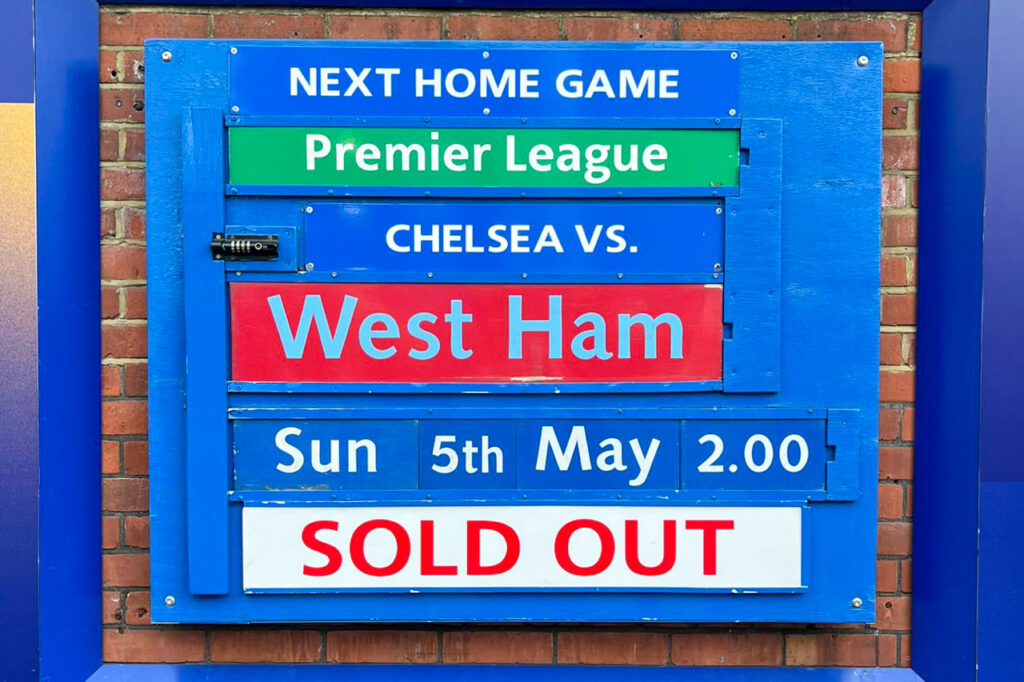
When I finally attended a match at the Bridge, I felt proud to stand with the club through those troubling times. Facing another London-based team, West Ham United, I anticipated an electric London derby with fans arriving in large numbers to support their sides – and the atmosphere delivered.
As Chelsea ran away 5-0 winners in a dominant display, the stadium stands witnessed a much different contest, with the home crowd taunting the away fans over their team’s poor performance. The travelling crowd attempted to retaliate, but to no avail; they could not unnerve the Chelsea supporters.
From the 15th minute onwards, when Chelsea went 1-0 up against West Ham, the home fans made it their mission to mock those in the away end, emboldened by every goal. By the time the ball found the back of West Ham’s net for the fifth time, their supporters began to leave. However, the Chelsea crowd continued jeering, chanting “Where are you going? It’s only 5-0”, and “West Ham get battered, everywhere they go” as the visiting supporters exited the stadium.
Swept up in the atmosphere and wanting to fully experience the moment, I found myself joining the chorus of chants directed at the exiting away fans. This shared rivalry made me feel that I was a part of the club, as it was us against them.
Although the sport is inherently tribal, this experience at the Bridge made me realise that, regardless of what divides us as individuals, the beautiful game of football brings us all together. No matter if we win or lose, we remain collectively united under the blue badge.
Using Chelsea to make friends in a foreign country
Hailing from Hong Kong, Thomas Fung moved to the UK for university, soon befriending a local student who had also supported Chelsea. However, their first encounter was atypical of what he was used to. “Growing up in an Asian background, it is not common for us to start small talk with strangers,” he admits. But through their sharing a common interest and support for Chelsea, they quickly became friends and got over that initial awkwardness as strangers.
For Thomas, there wasn’t a language barrier between him and his friend, but certainly a cultural one. “As we come from different backgrounds, there are certain things that I didn’t understand at first,” Thomas says. The idea of supporting one’s local team, for instance, is an almost nonexistent concept in Hong Kong. However, according to research by British Future, nearly four out of ten people in the UK do so. Over time, he slowly began to comprehend the cultural and footballing norms of the UK. For example, he thinks that “in some way, listening to the interviews of players has let me learn some expressions of feelings and situations in an English context”.
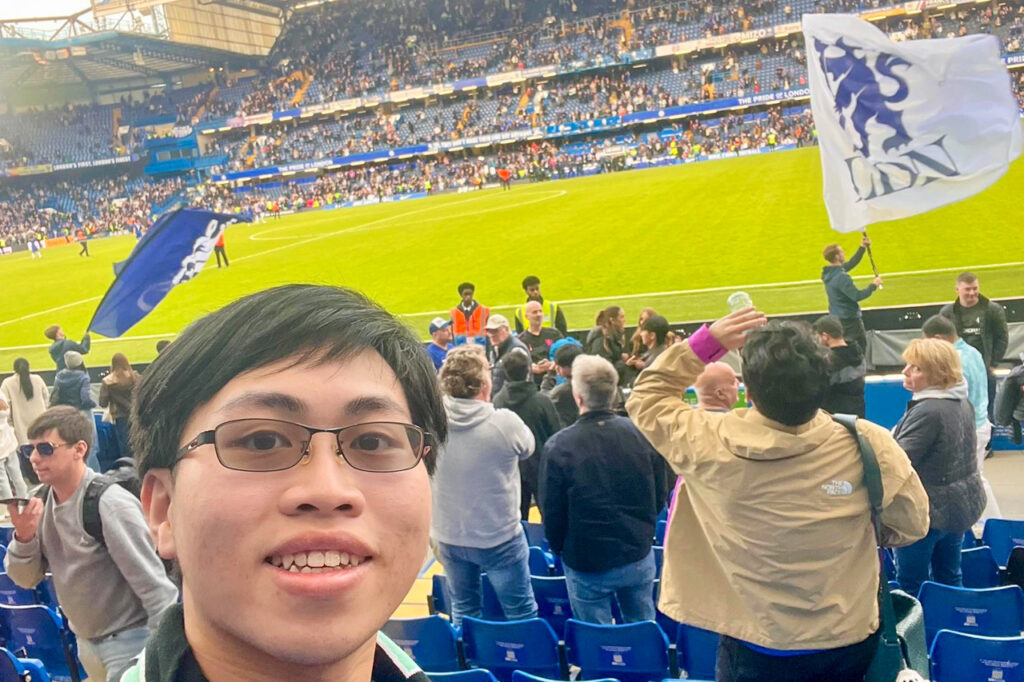
Being a Chelsea fan since primary school, Thomas’s connection with the club originated from a trial training session at their facilities. “Chelsea operates a football school in Hong Kong, and I went there twice a week for practice,” he says. It was the first time he had heard of the club, and he soon began to follow it.
Upon arriving in London, he would declare his allegiance to Chelsea as his standard introduction. Calling it his “key to open doors”, Thomas explains, “by telling others about my allegiance, and them doing the same, we know where we stand.” From that point onwards, banter begins, and bonds are built – a process he views as essential to shared identity in the UK.
According to the aforementioned study, the “tribal loyalties of football club identities can play an important role in helping bring people together across social divides”. “If Chelsea loses, rival fans will laugh at you,” Thomas adds, “While it is not a nice feeling, winning against them gives you a counter-argument”.
These interactions create community as they share common ground and together we move forward with the club through ups and downs. This kind of shared banter, he says, “overrides your cultural background and where you come from, making you feel connected with something much bigger than yourself”.
Expanding footballing horizons while keeping sibling bonds alive
Siblings Francesco and Sara Biatchinyi work for BIA Football Club, a women-first football collective hosting events across London and other European cities. Originally from Italy, the pair moved to London in 2023 and started supporting Chelsea. This provides them a common thread, as it’s something they can cheer about, debate, and celebrate together, even as Sara travels to Europe from time to time for BIA-related work.
The goal of the football club is “to create an environment that makes football fun and accessible to everyone,” Sara says. The idea is to “use the sport to bring people together, whether you are just getting into the game or are a football fanatic”. Sara and Francesco hope to make the collective welcoming, inclusive, and fun. “Some people might feel intimidated by football culture, so Sara emphasises that everyone is here to enjoy the game,” Francesco notes, “for women especially, she aspires to create a space where they feel comfortable joining in.”

Dividing her time between London and Europe, Sara uses Chelsea to stay close to Francesco. “Watching games or sharing updates over messages makes the distance feel smaller and keeps our bond alive,” Francesco says. In their daily life, Sara talks a lot about football with her brother, about matches, about players, whatever is related to football, they can always start a discussion for the whole day. “Whether it’s updates on our fantasy football league teams or transfers, it’s a great way for us to check in with each other,” she explains.
Ultimately, both brother and sister believe the club gave them a sense of belonging they struggle to find elsewhere in London. Moving to London as an international resident sometimes feels isolating,” Francesco says, “but the football community here gives us a sense of home.” Sara adds that “Supporting a London team while maintaining close ties to the city definitely helps build that bond.”
And because of BIA, that bond is extended, with it as the bridge for others to London. This allows a pathway for people, especially women, from all around the world to integrate themselves into the UK through football. “When you meet locals, discussing teams and leagues immediately makes you feel more integrated,” Sara notes. In doing so, they carve out their own space within the country, adapting to the culture and anchoring themselves in the local community.
Through their connection with Chelsea, supporters of the club who are not native to the UK have shown how they used the club to bridge differences and build bonds with others. In doing so, they can successfully integrate themselves into the country, culture, and local community.
If you want to figure out what club to support in London, check out It’s Time to Kick Off