We follow London’s wildest resident to learn how someone can find their place in a city that isn’t theirs
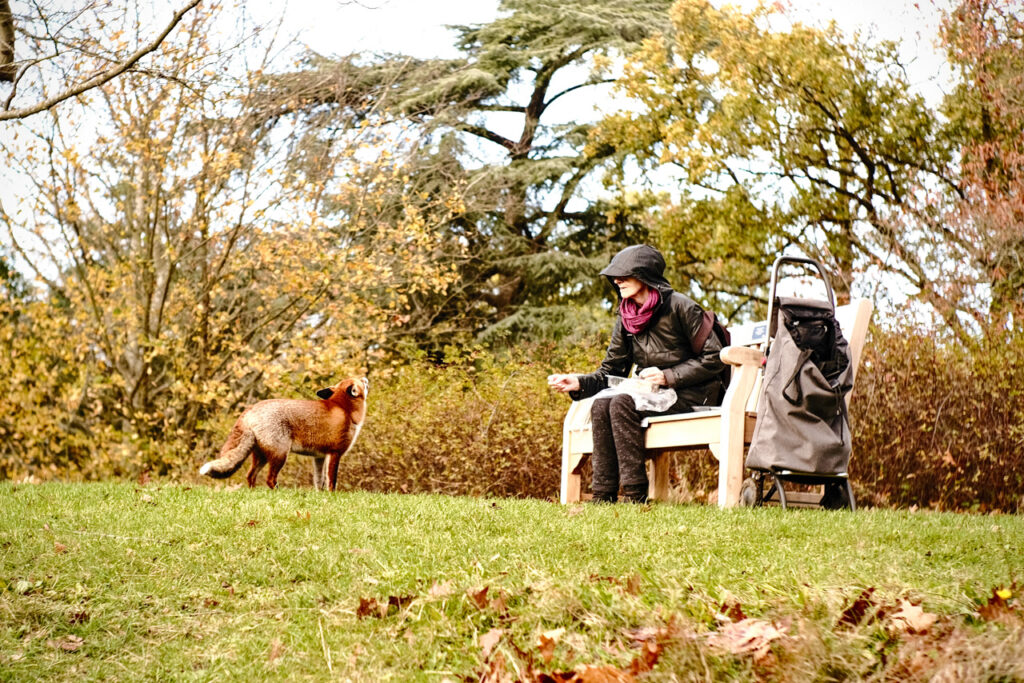
The first introduction to London often happens in silence. The boxes are still unpacked, the flat is unfamiliar, and the city outside the window feels like another world. We often orientate ourselves by reading guidebooks or asking colleagues how to fit in. But, if you were to look out into the twilight of the garden or the quiet street below, you may yet find yourself a quieter mentor: the urban fox.
It might be a moment of unexpected connection, a pair of eyes watching you with a cool, unbothered gaze. In the solitude of arrival, they are the first sign of life that welcomes you. More importantly, they are a mirror to your own experience. Like you, they are creatures operating in the environment; yet unlike you, they have mastered the art of adapting to this dense, concrete landscape.
According to Trevor Williams, founder of The Fox Project, a charity operating across London and the South East that treats over 1,000 urban foxes each year, this “first neighbour” is actually the most stable resident you will meet. “The most widespread misconception is that fox numbers are increasing,” Trevor explains. Across the UK, the urban fox population is now 43 per cent lower than it was in 1995. London, however, follows a different pattern: numbers peaked in the mid-1970s and have remained broadly stable since.
They aren’t taking over; they are simply here, woven into the fabric of the city. As you navigate your own arrival, look past the guidebooks. There is much to learn from a neighbour who mastered the art of belonging long before you got here.
Navigating the city system
To survive in London, people rely on tube maps, and the urban fox follows an invisible “shadow map”. Trevor notes that “railway lines certainly play a part in the lives of many foxes in terms of their usefulness for getting from A to B without encountering untoward human activities.” This is the quiet wisdom of the urban fox: rather than cutting through high streets or the tourist corridors, they travel along the margins, slipping through the gaps most of us never notice.
Besides, they are also experts in time management. Trevor’s observations show that foxes adjust their movement to the city’s daily rhythms – shifting their routes according to weekday and weekend traffic, and even syncing their routines with the seasons, appearing earlier in the brief glow of summer nights and later as the winter deepens the darkness.
The fox reminds us that true navigation isn’t about following the obvious path; it comes from observing how the city moves and finding lesser-worn paths that offer calm.
Drift with the social rituals
Londoners have a unique social etiquette – a kind of polite non-interference. This is not indifference, but a kind of wisdom that coexists in this crowded space.
The fox is well aware of this. “Generations of urban foxes have learned that humans are slow and seldom a direct threat,” says Trevor. Recognising this, Trevor notes that urban foxes are comfortable walking alongside humans, often coming within just five or six feet – an experience rural foxes will never have.
This tacit understanding of “seeing but not disturbing” is the key to integrating into London life. Like a fox, learning to maintain that elegant sense of distance can make you drift more freely in the city. You realise that belonging here does not require constant interaction – only a mutual respect for each other’s space.
Settle in the community
For those of us who have no property and are on a short lease, what is the definition of “home”? Trevor provides a philosophical answer while explaining the meaning of territory to a fox: “Territories are simply whatever a fox and its neighbours mutually accept them as being.” It is not a permanent land deed, but a dynamic contract.
This stability is not immutable. He adds that the territorial scope will change depending on the death of the neighbouring fox, changes in strength and weakness, the unpredictability of food sources, and various forms of interference. Even the city itself dictates these terms; physical interruptions such as roads, railways, and busy pedestrian areas define the boundaries of their world.
This tells us that settlement is not a fixed state, but an ability to adapt. When we accept that our “territory” is fluid, changing with our circumstances, and stop searching for a single place to define us, we begin to carry a sense of stability within ourselves – and that is what keeps us grounded.
Trace the legacy, respect the rules
Even temporary lives leave traces or inherit wisdom from our predecessors.
Trevor describes a vivid picture: an adult fox, because it used to be fed by someone’s family, will come with a litter of cubs in the middle of the season to show them where to get a reliable food source. It is the inheritance of urban survival knowledge.
This is perhaps the final lesson the fox offers us. We often worry about whether we are doing things “right” or intruding. But just as the mother fox teaches her cubs to read the landscape, we learn by observing those who came before us. By watching the fox, we learn to respect the distance, to navigate the shadows, and to find sustenance in unexpected places.
Tonight, when you see that flash of russet fur in the garden, take it as a quiet nod from one neighbour to another: you have arrived, you are navigating, and for now, you belong.