We shelter inside London’s famous gallery to discover how J.M.W. Turner’s chaotic canvases teach us to finally embrace the London Grey
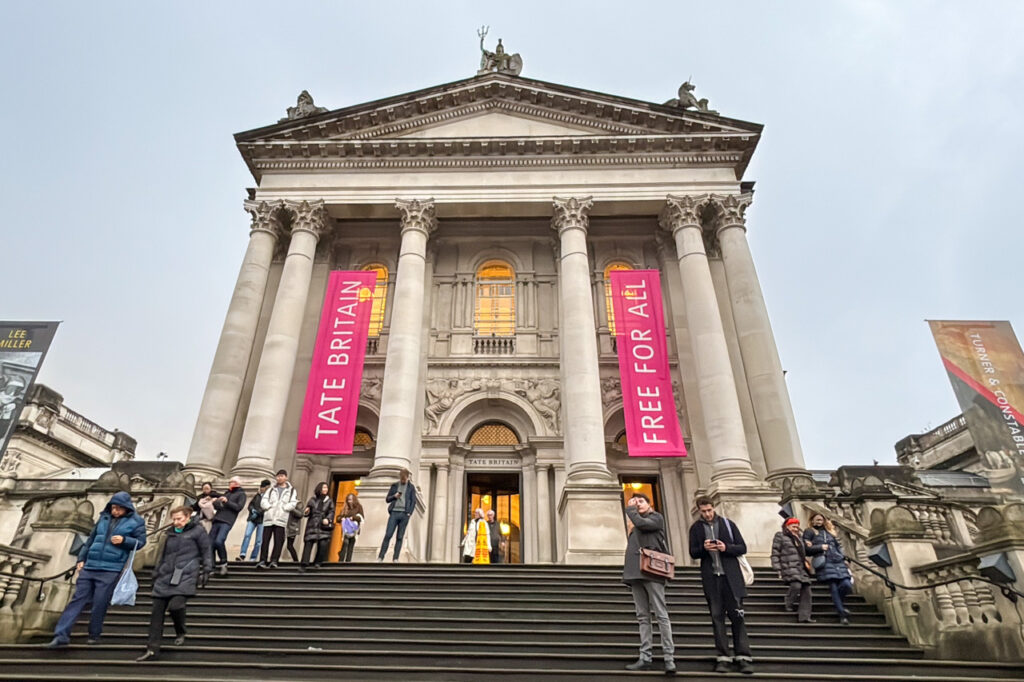
The British are famous for endlessly discussing the weather, but the longer you live in London, the more you realise it is not just small talk, it dictates the rhythm of life here. A sudden storm, blazing sunshine, and a thick, disorientating fog can all occur within a single afternoon.
The weather is unpredictable, and your mood often swings with it. Just when you think you are used to it, the next sudden downpour disrupts your entire day. Yet this same unpredictability also becomes a social shortcut – a shared language that instantly connects strangers.
When the rain catches you, and there is nowhere left to go, London has already provided the perfect shelter: Tate Britain. Step inside, and the storm does not disappear — it follows you in, reframed on canvas.
Walking into the gallery, you will discover an artist who never tried to escape the storm; he tried to understand it, painting a world that is forever shifting and entirely out of control.
Joseph Mallord William Turner (1775-1851) was one of Britain’s most iconic landscape painters, and few artists understood this island’s chaotic relationship with nature better. He spent his life studying light, fog, waves, and storms. His work helps you see London’s unpredictable weather not as disruption, but as part of everyday life in the city.
The painter of immediate sensations
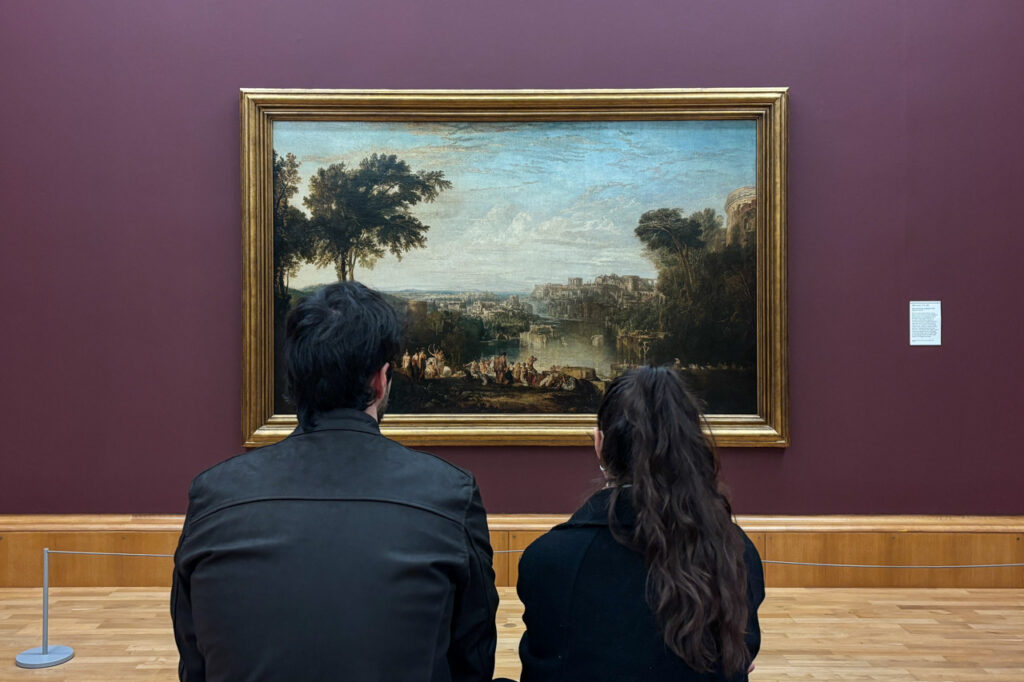
Tate Britain holds the largest collection of Turner’s works in the world. When these works were first shown, they caused a sensation – and not always a positive one.
Reactions to Turner’s changing approach were deeply divided. His use of vivid colours and sketchy brushstrokes drew much criticism. Yet, one critic perfectly captured why his work resonates so deeply today: “To do justice to Turner, it should always be remembered that he is the painter not of reflections, but of immediate sensations”.
For expats adjusting to London, this idea feels instantly familiar. When you are caught in a sudden downpour or a thick winter fog, you are not calmly reflecting on a landscape; you are reacting to a physical force. Turner painted the weather exactly as it feels.
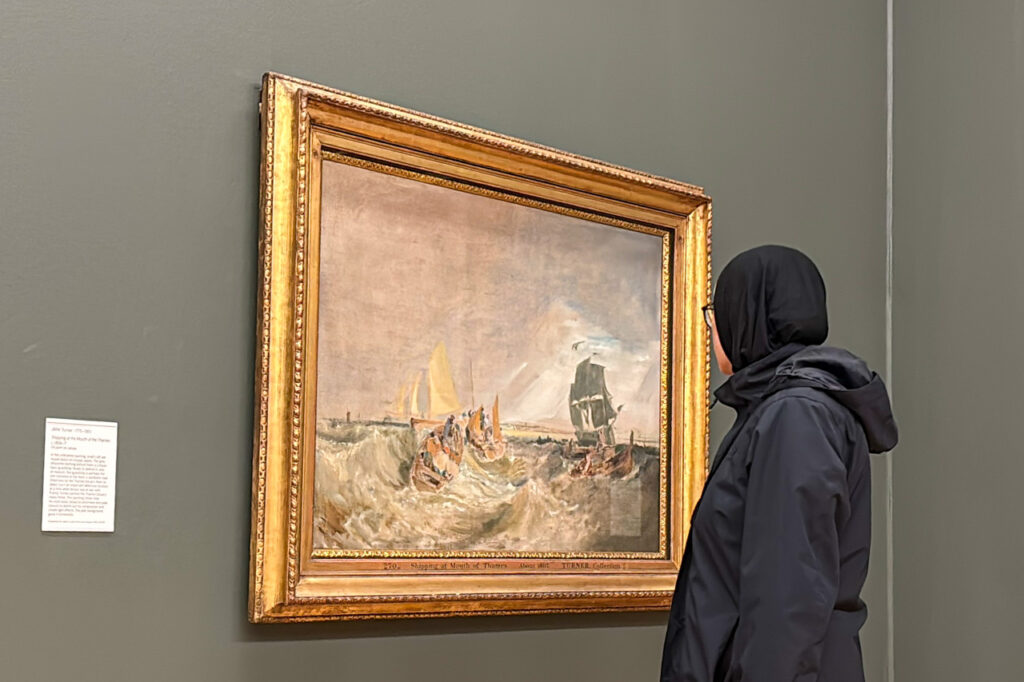
As you walk through the Clore Gallery on the ground floor, drop the habit of searching for perfect, realistic scenes. Instead, stand in front of Shipping at the Mouth of the Thames (c. 1806-7).
This is not a distant, mythological land; it is the reality of London’s own river estuary. Turner likely began this large canvas outdoors from a boat tossing on the water. You can feel the turbulent chop of the waves and the heavy, overcast sky pressing down on the laden boats. Through the sheer, oppressive weight of the grey atmosphere, he forces you to feel the chilling reality of being caught out on the open water.
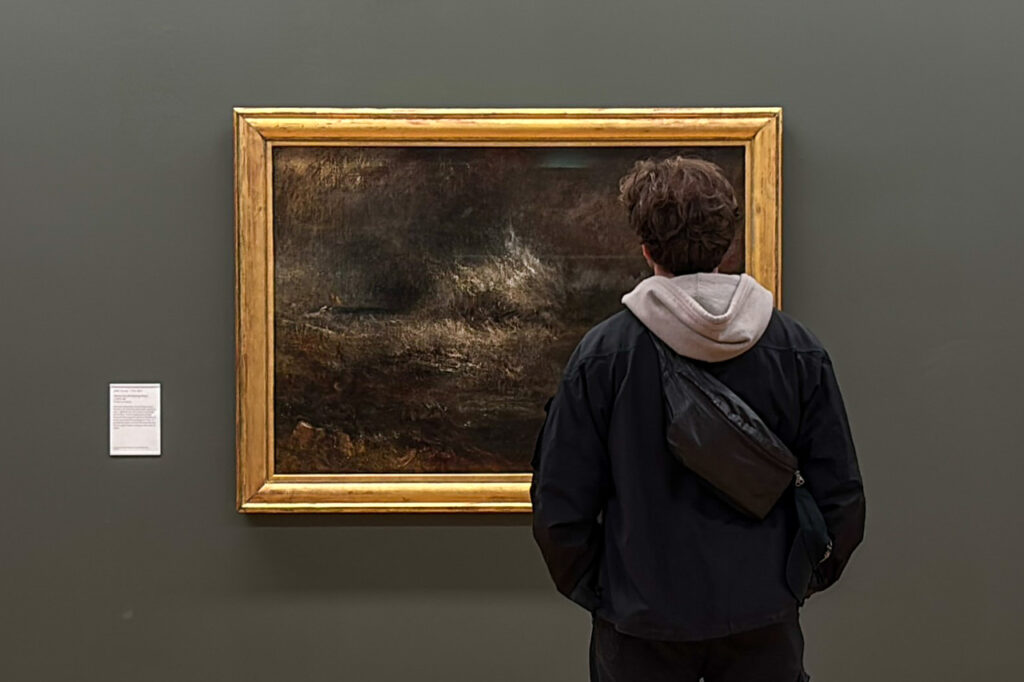
Move further into the collection, and the everyday struggle with the elements turns into a nightmare. In the unfinished Stormy Sea with Blazing Wreck (c. 1835-40), all order collapses. Thick, aggressive strokes of white pigment capture the violent force of the water, while the splintered timbers of a ship jut from the foam like the ribs of a giant beast. It leaves little doubt about who really dictates the terms of life on this island. These paintings are not just landscapes, they are emotional weather reports of Britain.
A different kind of compass
The grey sky, the river wind, and the glare of light breaking through the clouds suddenly carry a very different weight. Turner strips away the polite, postcard-perfect image of England, showing us a much rawer truth about the elements people face every day.
Inside the Clore Gallery, this island’s long conversation with uncertainty is captured in thick, aggressive oil paint. Nature is never fully controlled; it is only constantly negotiated. The storms, the fog, and the volatile light cease to be mere interruptions to your daily commute. They become the very rhythm of this island’s life.
So, the next time a sudden downpour catches you off guard, you know exactly where to seek refuge. An afternoon inside the Clore Gallery becomes more than just shelter. It offers a way to understand the city itself – by watching its storms unfold quietly on canvas.
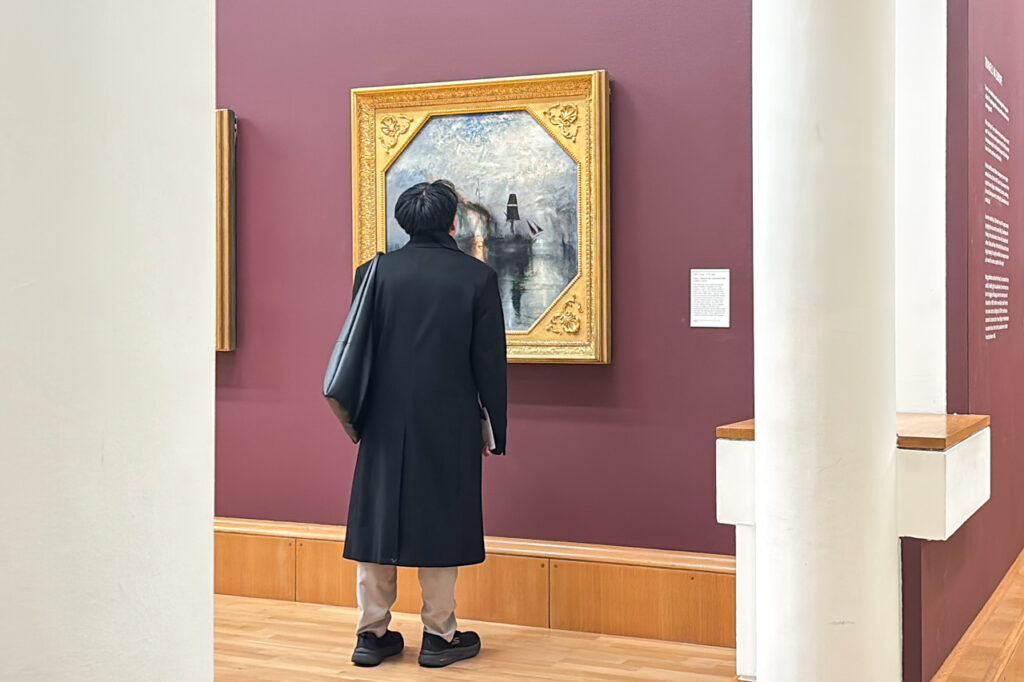
Tate Britain’s Clore Gallery explores JMW Turner’s legacy for his 250th anniversary
Location
Millbank (SW1P 4RG); a 10-minute walk from Pimlico or Victoria; open daily 10am-6pm
Highlights
- Turner and his Critics (Room 32): A permanent and free display featuring around 100 of Turner’s works.
- Cataloguing Turner’s Bequest (Room 33, until 28 June 2026): An intimate look at his sketchbooks, drawings, and watercolours.
- Turner and Constable (Room 38, until 12 April 2026): A comparative display featuring paintings by John Constable.