Three Jamaican women reflect on belonging in a restless city
When Leka Thomas arrived in London from Kingston, Jamaica, she did not unpack her suitcase for six months.
She moved for opportunity, for stability, for her son, and for something she felt was missing back home. But in those first weeks, London did not feel expansive. “It was too much for me, honestly,” she says. “I didn’t unpack because I felt I might go back home.”
The suitcase stayed half‑packed, a quiet hesitation in the corner of her new life.
Adjustment often begins in small moments: standing on the wrong side of the road while waiting for a bus, searching for familiar food, and softening an accent so others can understand you.
Three Jamaican women, at vastly different stages of their London lives, illustrate this tension: one who arrived just over a year ago, another who has been here for 25 years, and a third who joined her parents in 1965 as a child. Across generations, their stories show how belonging shifts over time.
The first shift: being understood
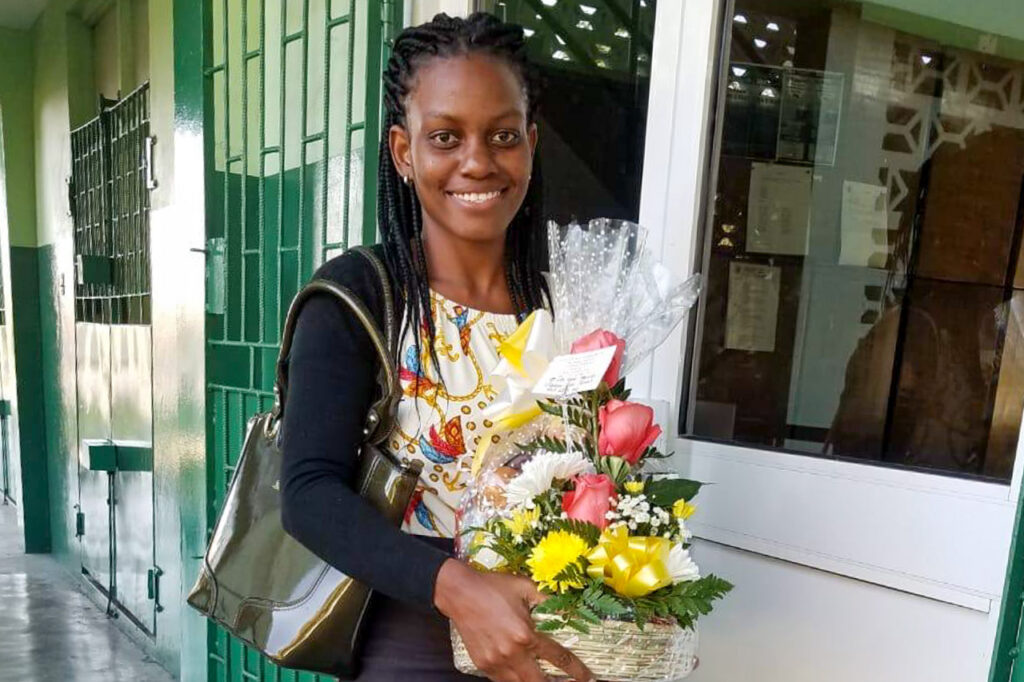
Leka’s early months in Sutton were defined by disorientation. She’d arrived in London from Kingston on a work visa, in search of better opportunities for her family, particularly her son, but the adjustment was not immediate.
Navigating buses and trains proved confusing. She found herself standing on the wrong side of the road, unsure which direction to face. “There was really no one that I could ask for help,” she says, describing the isolation of not yet knowing how systems worked.
“I was always on the wrong side of the road trying to find the buses or trains,” she says. “Sometimes I felt like I was going crazy.” Small frustrations quickly gathered weight. Finding Jamaican food proved unexpectedly difficult; everyday terminology felt unfamiliar, and simple conversations began to require fatigue‑inducing levels of concentration. Over time, those practical misunderstandings became emotionally exhausting.
Language became central to that experience. Her accent, once simply part of her, now felt like something she had to manage. “My accent led to people not understanding me.” In response, she adjusted her speech and paid closer attention to gestures and expressions. “I did have to adjust how I spoke, as I don’t want to be looked down on.” It wasn’t about abandoning her identity. It was about being taken seriously.
The first moment she recognised change did not happen in public transport or in shops. It happened in her classroom. As a secondary school mathematics teacher, clarity is part of her role.
The change was subtle. The path there required constant modification of her tone, delivery and pace. This initial shift was immediate and practical — a recalibration of voice simply to move through daily life. “When my students started to fully understand me, even nonverbally,” she says, “that’s when I realised something had shifted.”
The long adjustment: settling into place
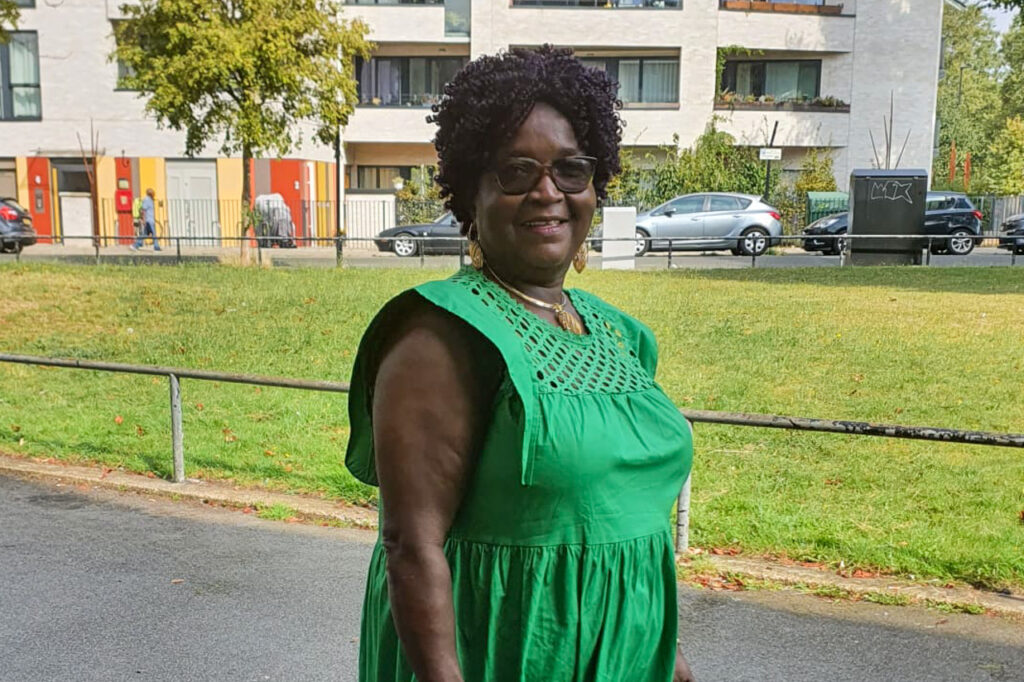
“During my first weeks in London I felt like I was in prison,” says Dorothy Johnson‑Lilly, who first came to the UK from Jamaica in January 2001 to visit her daughter and newborn grandchild. After returning to Jamaica, she came back a few months later on a six‑month visa and later settled in London.
She now lives in Brixton and works as an early‑years childminder. She describes the area as “friendly and welcoming,” though that familiarity took time to develop. “Taking an escalator down, I feel lost and confused,” she says, giving a glimpse into how deep the unfamiliarity was.
In those early months, she adjusted how she expressed her confidence in certain spaces. She changed how she dressed to suit the weather. The first moment she recognised herself shifting came when she began her first job in the United Kingdom. “I would say softened and amplified to fit in,” she reflects.
When asked whether there were more subtle changes over time, she is clear: “No.” In her view, the person she is now is not fundamentally different from the one who arrived. “I think the same as before, because I don’t think I have changed that much.”
Belonging, she explains, emerged gradually – around five years after her arrival. “With the different cultures of people that I met every day, I felt like I belonged.” In Brixton’s diversity, coexistence created a sense of comfort.
Guarding the self: growing up between worlds
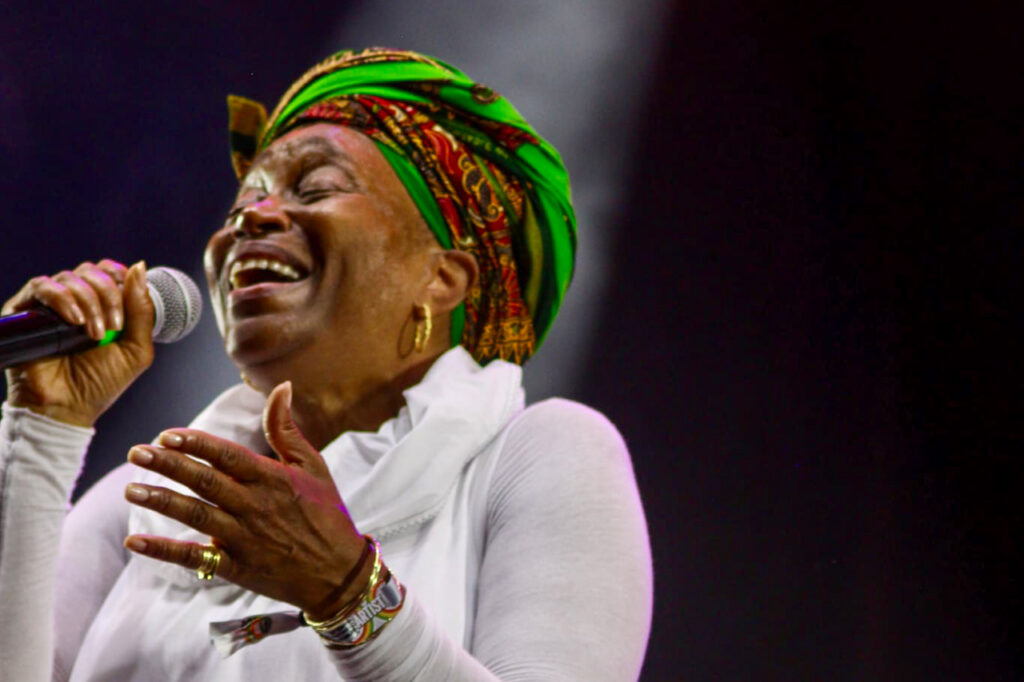
Angela Wynter, an actress and singer who now lives in southwest London, was born in Kingston, Jamaica, and moved to London with her parents in 1965. She was eight years old. The move was not an adventure. “I was not happy to be ripped away from my grandmother,” she says, describing the separation as traumatic. For four years, she had lived apart from her parents, and when she arrived in England, even they felt unfamiliar to her.
The physical environment made it harder: the cold weather, the joined‑up stone buildings, heaters inside the house, and the absence of the freedom she had known — to play and wander within a close‑knit Jamaican community. “I was traumatised by the move, and felt out of place,” she says.
Pressure to assimilate came quickly. Her mother would instruct her to “speak English” when addressing neighbours. At first, the request confused her. Later, she understood it as protection – an attempt to help her integrate linguistically into English culture.
Around her parents, she complied. Away from them, she reclaimed herself. “Speaking Jamaican whenever I wanted to assert who I was. This was my rebellion.” She remembers switching between languages, depending on who she was speaking to.
While Ieka notices her voice shifting through repetition, and Dorothy softened into her environment, Angela rejects the premise of transformation altogether. “I never changed. I had no desire to.” As a child, she says she dwelt within herself, quietly guarding her identity. What others saw as withdrawal, she saw as preservation.
In her early teens, that preservation became confidence. As she learned more about African history, slavery and colonialism, she consciously strengthened her sense of self. “I consciously amplified my identity and was happy having peace in my skin.” Rather than shrinking to fit her new environment, she chose to expand her understanding of her place within it.
There was, however, one moment that revealed a subtle shift. At 15, an English woman told Angela, unexpectedly, “You speak very well.” She recalls thinking the comment was absurd. She had lived in England since childhood; of course she could speak standard English. Later, she recognised that her fluency reflected her love of words and oratory, and perhaps the success of her parents’ insistence that she “speak English” in certain contexts. Yet she remains equally fluent in Jamaican patois. It didn’t replace her identity; it simply added to it.
“There is only one version of me,” she says. “No matter what the code switch.” Belonging, for her, is not tied entirely to geography. “I belong in my skin.” Having lived in London most of her life, she sometimes feels at home and sometimes does not. She does not like the winter and admits she has never adjusted to it. Still, when there is “peace and love among people,” London can feel expansive.
If she were to return to Jamaica, she believes many would describe her as a foreigner. Yet she does not interpret that as a loss. “Adapting to a place does not require you to become someone else,” she says. “You make adjustments that do not compromise your well‑being or integrity and live at peace with yourself.”