
Written by Olie Ma
In 2026, it’s time for the world to learn more about asexuality. We speak to the stories of three aces in different situations.
“It may sound hard to believe, but the question I fear most these days is ‘What is your relationship status?’ ” says Eve, a 21-year-old fashion student. And Eve is not alone. For people on the asexual spectrum, the problem is not simply that these questions are awkward; it is that they often arrive with an assumption already built in. People never believe her when she tells them she has never felt sexual attraction, Eve explains. “They think I’m pretending,” she says.
“They think I’m trying to be different. Some of them just do not believe me. Someone even asked me if I’m sexually repressed”
For Eve, the pressure is not only the question itself, but also the disbelief and the push to explain herself on terms she did not choose.
“Feminist and queer studies have often operated with a universal sexual assumption that ignores the possibility of asexuality as a viable lived experience,” says asexuality scholar KJ Cerankowski, co-editor of Asexualities: Feminist and Queer Perspectives. He links everyday disbelief to a wider structure of “social marginalisation and pathologisation” directed at people, based on the preference not to have sex.
The assumption that sex and romance are the centre of adult life shows up in what can, on the surface, feel like normal small talk: Are you seeing anyone? Do you want to date? When will you settle down? These questions can sound neutral, but they often point in the same direction. They suggest that intimacy must revolve around sex or romance, and that a life without those needs explaining.


Eve currently defines herself as quoisexual, a term some people on the asexual spectrum use when sexual attraction feels difficult to pin down or describe, and when the “why” of attraction remains unclear.
She is not sure if she will ever feel sexually attracted to others and is not in a hurry to give a fixed answer. But it is this uncertainty that leads her to encounter doubts in her daily life frequently. During a casual dinner conversation with schoolmates, when Eve said she had never felt sexual attraction towards anyone of any gender and did not know how to define her sexual orientation, the responses came almost immediately. Some joked and said, “wow so cool, that is my first time seeing a real asexual in real life.” Others simply did not believe her, even asking if she was sexually repressed.
“I felt my boundaries were crossed instantly. They think I’m pretending. They think I’m trying to be different. Some of them just do not believe me,” says Eve. “When someone asked if I was sexually repressed, I felt really offended. It was like they needed an explanation for me, or they wanted to fix it.
“It felt like my asexuality was being treated as a disorder, No one really respected what I was saying.”
“I keep seeing the same pattern,” says KJ Cerankowski, “People treat sex as the normal centre of adulthood. So when someone says, ‘I don’t want sex’, it gets read as a problem that needs explaining.”
“That is what asexuality studies keeps trying to name,” he adds. “It is not just awkwardness. It is a culture deciding whose relationships count.”
Cerankowski points out that this way of thinking also leaves little room for uncertainty. “We act as if sexual orientation has to be clear, stable, and definable,” he says. “But real experiences do not always work like that. Grey areas are real. Fluidity is real.
When someone cannot give you a neat label, that does not mean they are immature. It usually means they are being honest.”
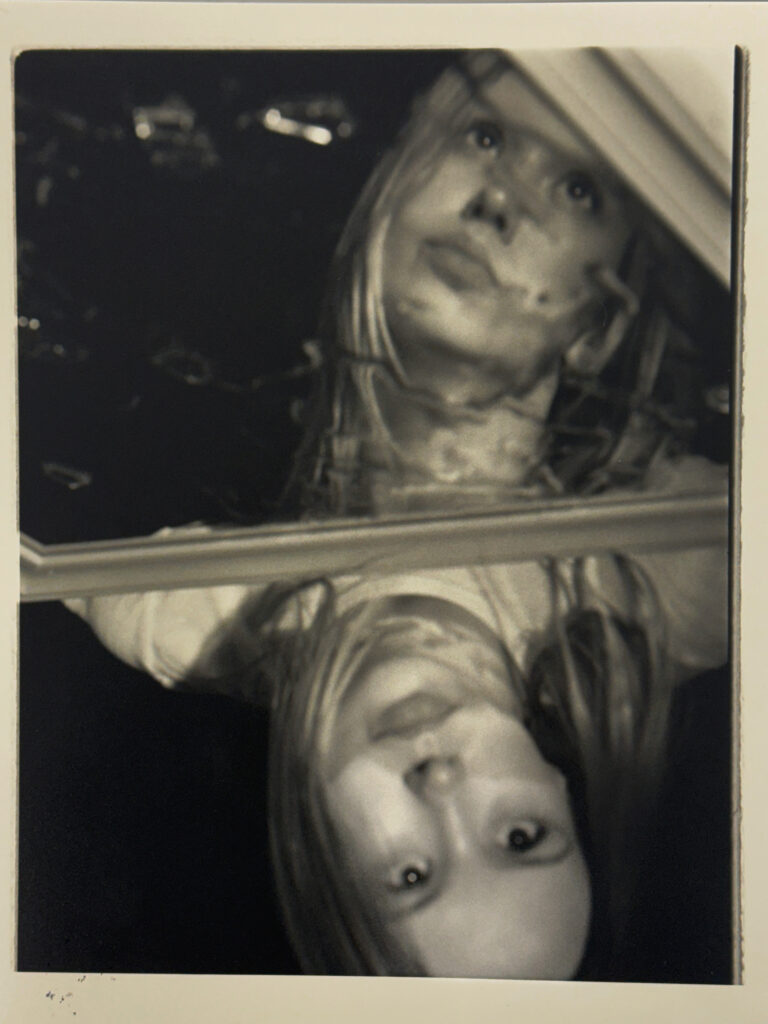
If Eve is under pressure from the constant questioning of uncertainty, Sugi’s troubles come from a different direction. She is a romantic asexual who has no sexual attraction, often called “alloromatic asexual”. Sugi has a close and stable same sex relationship, but it does not involve sexual activity. “That does not mean there is no intimacy,” she says to me. “We share our lives. We take care of each other. We have a deep emotional connection.”
“On a date, I can be really happy just talking,” Sugi says. “But if the other person suddenly tries to hold my hand or kiss me, I feel nauseous. I feel really uncomfortable.
“I can accept physical contact,” she adds. “I even like linking arms when I walk with someone. But everything depends on it not having a special meaning.”
Sugi understand asexuality does not mean denying emotions. “It means accepting that the way you express emotions can be different,” she says.
What really gets to Sugi, she explains, is the world’s high exposure to sex, and the way people assume you should participate by default. “I often feel like I’m being pulled into narratives about sex without my consent,” she says, explaining how, during a casual chat with a friend, the conversation suddenly veered towards the details of that friend’s sexual life.
“It was so abrupt,” says Sugi. “Can’t the sexual people understand that there are people in the world who can’t accept sex at all? “
“Talking about sex in front of me is like eating a tin of herring in front of a person with a sensitive nose.”
Sugi is puzzled by how easily people conflate love with sex, as if the authenticity of emotions must be verified through sex. “People can just fall in love because of hormones and sexual attraction,” she says. “That is really hard for me to understand.” She also notices how sexual imagery fills public space. “There are huge kissing ads
everywhere,” she says. “Sometimes it feels like a reminder that people like me are invisible. Our feelings are not considered.”
“I think this is about boundaries and consent,” says KJ Cerankowski. “When talking about sex is treated as a sign of openness, people forget something basic: not everyone wants to be included.” Respecting asexual people does not mean stopping the discussion of sex, he adds. “It means recognising the right to opt out.”
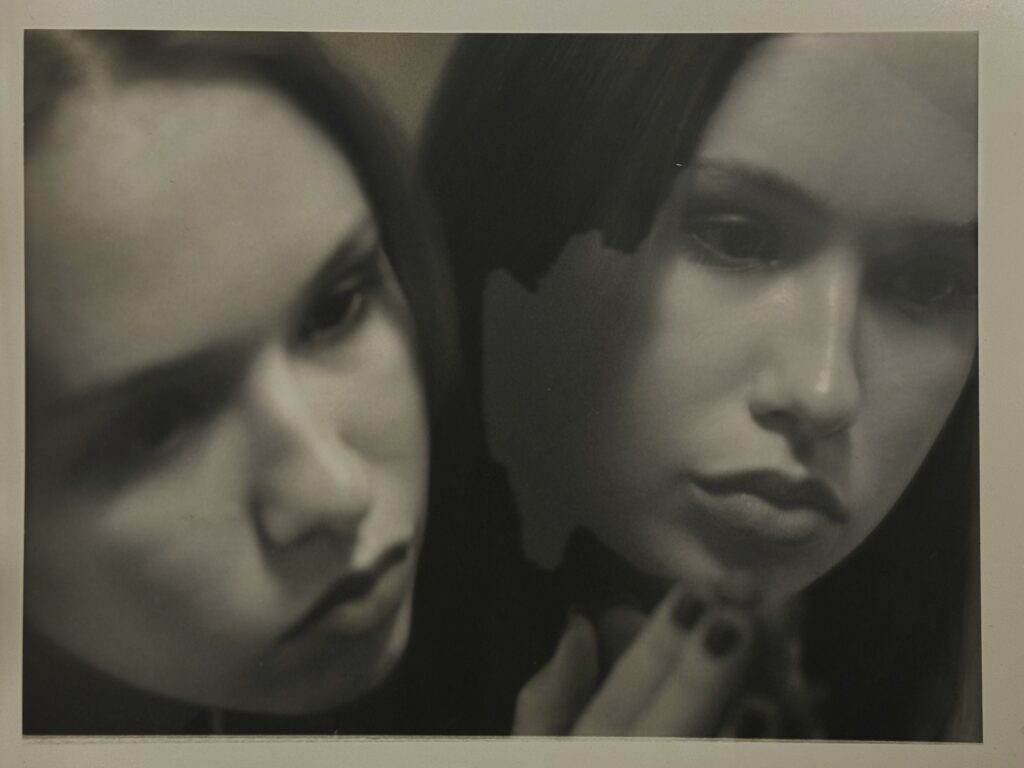
For me, as a greysexual, the grey area within the asexual spectrum also means constant explanation. Both romantic and sexual attraction are relatively weak in my experience, and what I find most uncomfortable is the confusion of those around me after coming out. Often, people tell me, “You just haven’t met the right person yet. You’re still young; you’ll understand when you grow up.” These words, though seemingly caring, implicitly deny the validity of my feelings, as if they need time to be “verified” or “corrected”.
“I think a lot of people are making a judgment without realising it,” says KJ Cerankowski. “They treat sexual attraction as the measure of whether a relationship is real, and they treat romance as the main proof that you are emotionally capable.” He adds, “When you do that, you end up equating intimacy with sex or couplehood. So friendship gets treated like it is second place, or like it is only there until ‘real love’ shows up. But that is not how closeness works for many people.”
In this context, friendship has become the most certain form of intimacy for me. Compared to romantic relationships, it is more stable and less questioned. For people in their early twenties, three-year-long romantic relationships are not all that common, yet I have several close friendships that have lasted for five or six years. They do not rely on sex or romance to be maintained, but they still contain companionship, responsibility, and trust. However, such relationships are rarely taken seriously in mainstream narratives and are often seen as transitional or substitutes before true love comes along.
The ace community has a well-known joke about garlic bread. As one Reddit user explains: “Since asexual people aren’t really interested in ‘the nasty’, they make memes about the second or arguably the first best thing, garlic bread.” It is funny because it refuses the idea that everyone must want the same thing. It is also a small reminder that respect should be the default, even when desire is not.