

From political extremism, self-centred conversations and bad breath, we asked LoveLens readers what turn them off when they’re on a date…
Perhaps it’s mansplaining, having long fingernails or sporting terrible tattoos that gives you or your friends the ick, but whatever it is, you’re not alone. Dating is always a struggle, whether it’s your fifth or fiftieth time trying to find that special someone, but now the social-media ick trend has made it even harder to ignore those small irritants that can show up when you’re on a date.
Minnie Lane, a dating and relationship coach, says that young people are facing many challenges in the dating scene, not just these super turn-offs. “Younger people face a lot of issues in dating these days,” she says, “The mindset of people being easily replaceable is rife, so new couples often don’t work through issues, but look for someone new when conflict arises.”
One of the problems, Lane explains, is that a lot of young people have a ready-made checklist of what they do and don’t want from a partner. “While awareness is a good thing, this can create more of a negative interview vibe than the curiosity and openness necessary from a connection to occur.” she says.
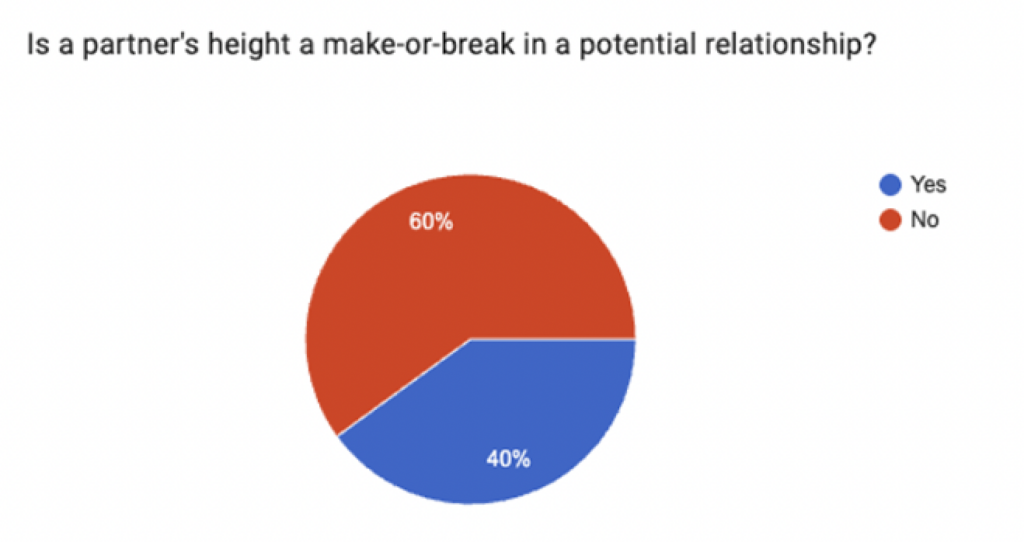
So, we asked LoveLens’ readers what their biggest red and green flags when dating were. We asked you questions such as, ‘Is a partner’s height a make-or-break in a potential relationship?’ and ‘What is the biggest red flag in a potential partner?’ and you told us what you loved and hated when it came to personal dating preferences.
Unsurprisingly perhaps, height is a hot topic and can be a make-or-break issue when it comes to dating, especially among women, because they want to feel “feminine/protected”, according to the National Institutes of Health. A Medium article by Kate Brunotts says that “without shorter male representation, it’s difficult for our brains to see shorter partners as viable companions.”
But our survey found that over half of you (60 per cent) said that height is not a factor they are concerned with in a potential relationship.
Politics and political views have been playing a vital role in dating and compatibility in a big way. Faya, 38, said that her red flag in a male partner is if he ‘doesn’t understand minorities and women issues in 2026’, and a green flag for her is if her date is ‘a feminist’.
A 2024 survey by HuffPost UK found that 60 per cent of people in the UK “feel strongly” that the person they are dating should be respectful of their political standpoints and views.
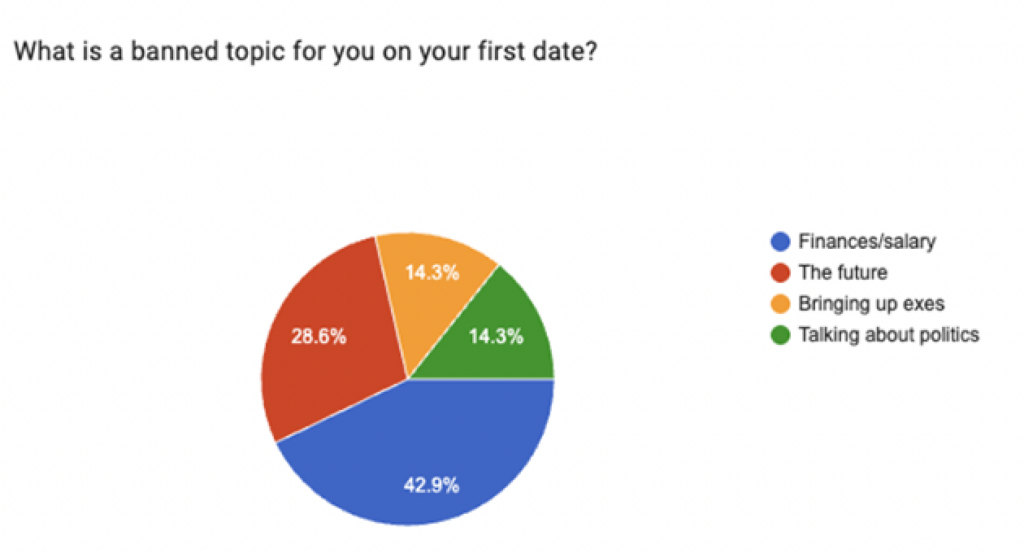
Alongside politics, which 14.3 per cent of you said was a big no-no for a first date, you told us there are some other ‘no-go’ topics of conversations, including finances and salary (42.9 per cent); the future (28.6 per cent), and bringing up exes (14.3 per cent).
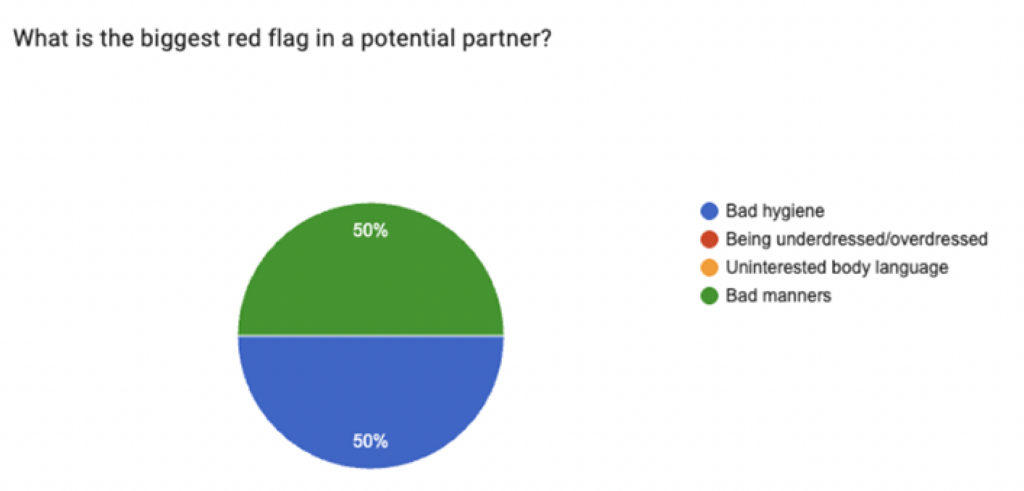
A major ick for many people revolves around mannerism and hygiene, especially the lack of both. Our survey asked about the biggest ick in a potential partner and had options including ‘being underdressed/overdressed’ and ‘uninterested body language’. However, it was a tie between ‘bad manners’ and ‘bad hygiene’.
The Mirror also did a survey in 2024, and out of 2,000 people who participated, “over two-thirds (64 per cent) admitted they wouldn’t date someone with poor oral hygiene.”
With the proliferation of social media, modern dating standards have become too demanding, with people harbouring too much thought on outward appearances and body standards, social and cultural expectations that determines what an ideal body should look like. “I think there has been an unhealthy raising of physical standards due to dating app and Instagram culture,” Lane says, “But I think the increase in standards around things like emotional maturity, commitment, boundary respect and genuine interest are mostly healthy.”
Whilst icks have been set as a negative trend, other aspects, such as setting boundaries and having realistic expectations are healthy and necessary when people are trying to find their perfect partner. The dating coach continues, “Unhealthy relationships can be hugely detrimental to wellbeing, so making sure you are filtering for people capable of healthy intimacy is always a good idea.”