
’Till obscurity do us part: Three unusual wedding traditions from around the world
These are some wondrous wedding traditions couples incorporate into their celebrations – voluntarily or not
Most people associate weddings with flowers, cake and colourful festivities. The odd embarrassing story about the bride or groom or a strip tease for a hen party might be the only unusual experience around the ceremony. People might throw rice at the couple for fertility or come up with interesting ideas to collect money to pay for the wedding.
In some cultures, however, wedding parties gather to smash plates for good luck or ambush the couple and cover them in soot, treacle and home-brewed concoctions in the days leading up to the big day.
Blackening (Scotland)
According to the Scotsman, Blackening is a vernacular pre-wedding tradition to ward off evil spirits and originated from rural parts of Aberdeenshire, now spread across many parts of north and east Scotland.
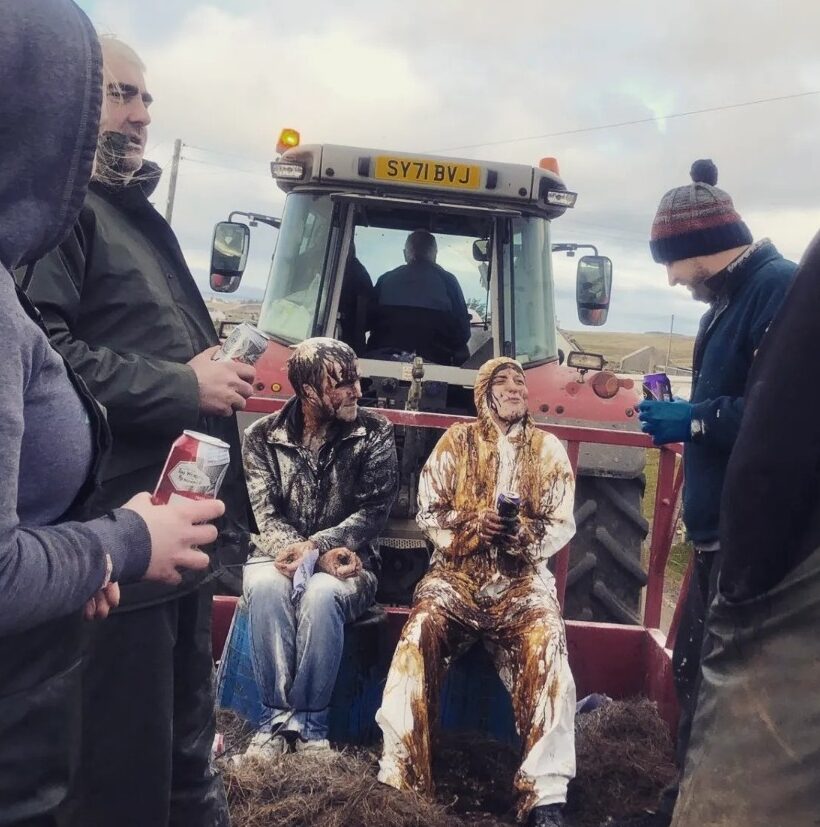
The ritual is usually carried out the day before the wedding and involves the bride or bride and groom being captured by friends and family and covered in soot, treacle, flour and feathers.
The victim or victims would be paraded through the town on a cart, while modern times see them driven around on a pick-up truck accompanied by the sounds of horns and claxons.
The ritual usually ends with the victims being plied with alcohol and tied up to a lamp post or thrown into the shallow sea.
“Traditionally, blackening was done to chase away evil spirits that might have brought bad luck to the newly married couple,” says Aleksandra McLeod, who was blackened alongside her fiancé a few weeks before their wedding on the Isle of Skye. “Now it’s more of a fun tradition – for those organising it, not so much for the couple.”
The couple was ambushed at home by the best man and the maid of honour, who tied their hands and feet with cable ties and shoved them onto a back of a trailer.
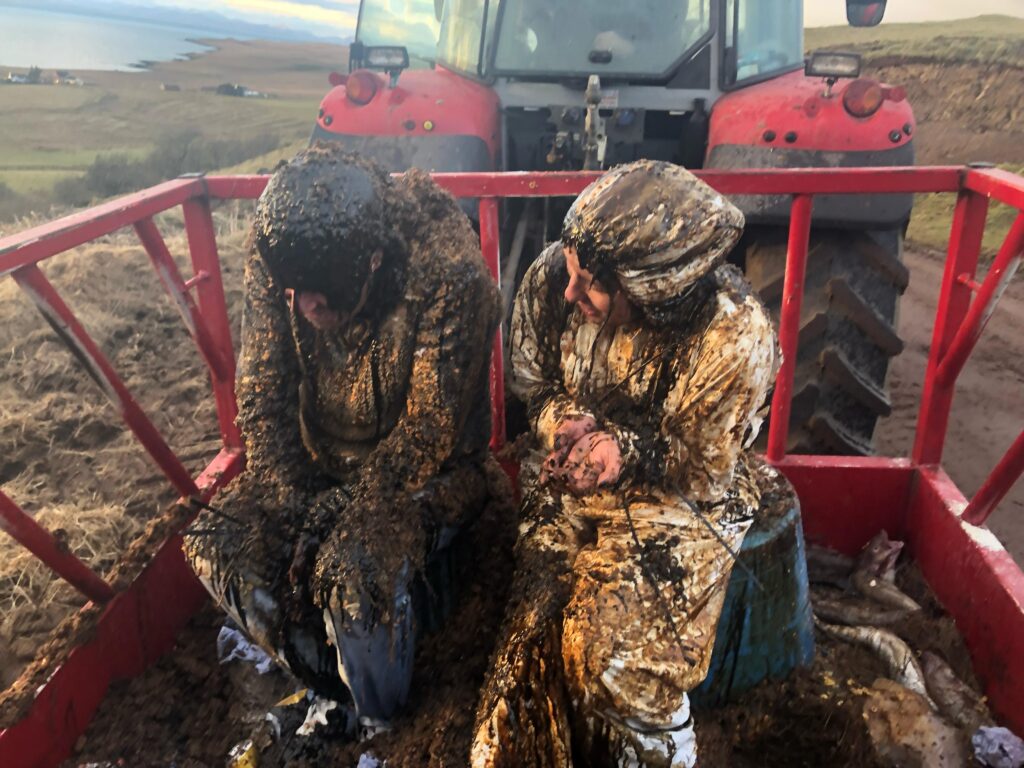
“We just accepted it, there was no point fighting or running away. We were allowed to change into some warm, old clothes.” Despite the cold, early March weather, Aleksandra and her fiancé were taken on a 15 mile round trip, stopping at friends’ and family’s houses to have cereal, flour, soup and even whole fresh fish poured over their heads.
“It was literally anything people could find in their cupboards to create as much of a mess as possible,” says Aleksandra. “Some start ‘brewing’ their concoctions as soon as they find out the couple got engaged. For us, the worst part was molasses and fish guts that had been fermenting for two years.”
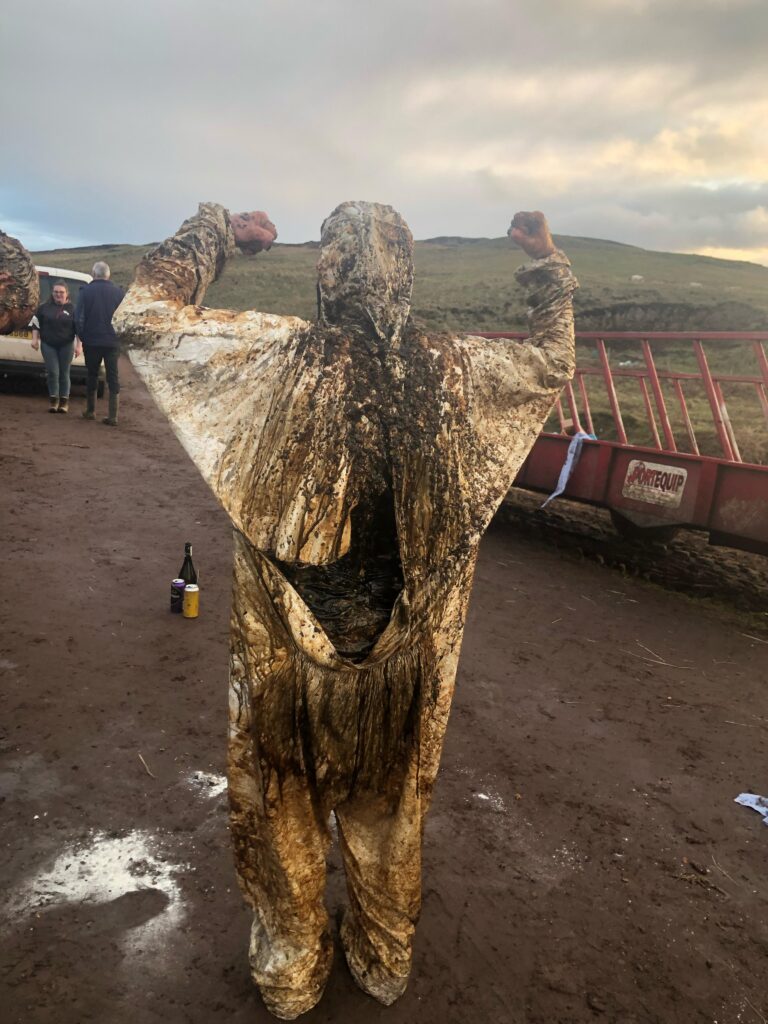
The couple were spared from further details of the tradition and didn’t end the night tied up and drunk in the middle of nowhere.
“Thankfully, we were released straight after, shoved in
the back of a van and taken home for a shower. The smell was horrendous, so one of the most vivid memories was stripping in front of the front door and running straight into the shower. There was no point saving the clothes, so they were just binned.”
Even with the bad smell of molasses lingering in her hair and finding bits of carrots and peas in the shower drain for weeks after, Aleksandra thinks it’s important to value a tradition like
this one to keep alive the rich culture of the Highlands and Islands. “As horrible as it was at the time, it’s now a fantastic memory to hold on to for the rest of our lives.”
Glitter (USA)
Many wedding parties embrace the common tradition of cans tied to a couple’s getaway car as a fun and noisy way to mark the drive off into their new life.
Originating from an old superstition, the noise of the cans is another way of warding off evil spirits and bringing good luck to the newlyweds, as well as a creative way of attracting
attention as the couple leaves the wedding reception.
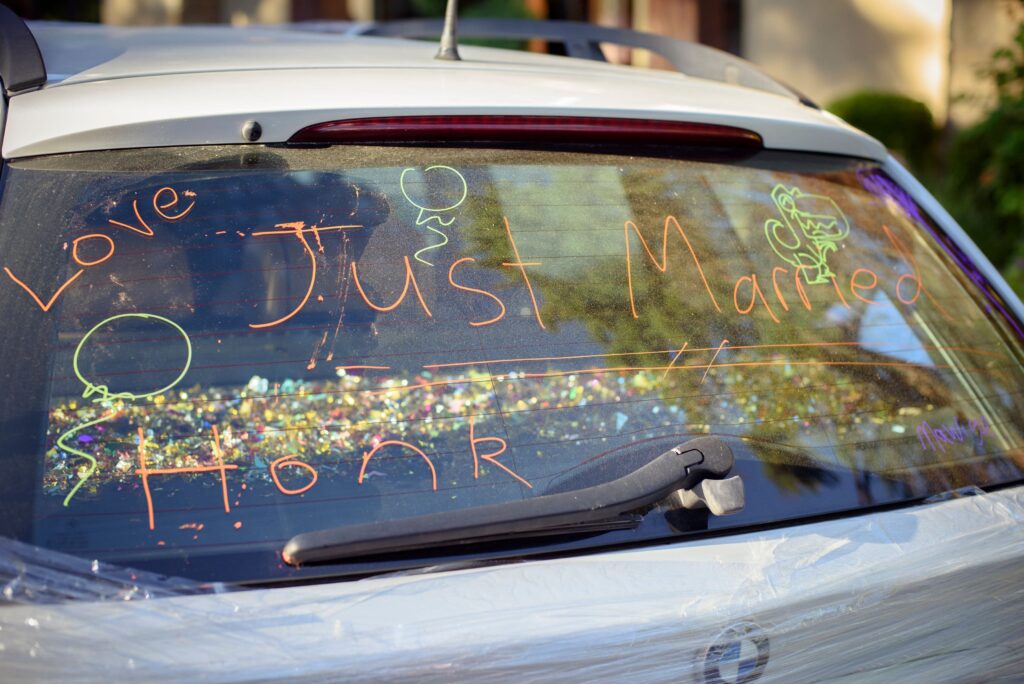
In addition to the cans, or to avoid the noise and legal difficulties with attaching objects to a vehicle, many people add flowers, stickers and signs to the couple’s car. “A fun option is to tie colourful streamers or affix a ‘Just Married’ sign,” said Kimberly Sisti, a wedding planner based in San Diego.
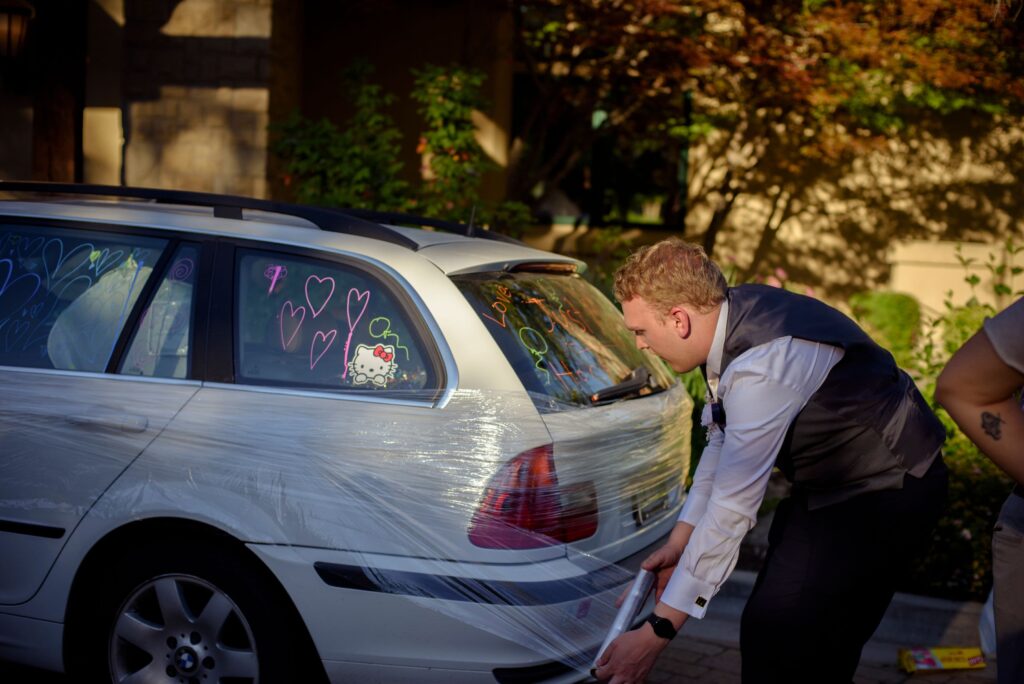
Most people put signs on the back or side of the car saying ‘Just Married’ or ‘Honk for the Newlyweds’ – some even
put their Venmo or PayPal for people to send money to them, says Mercedes.
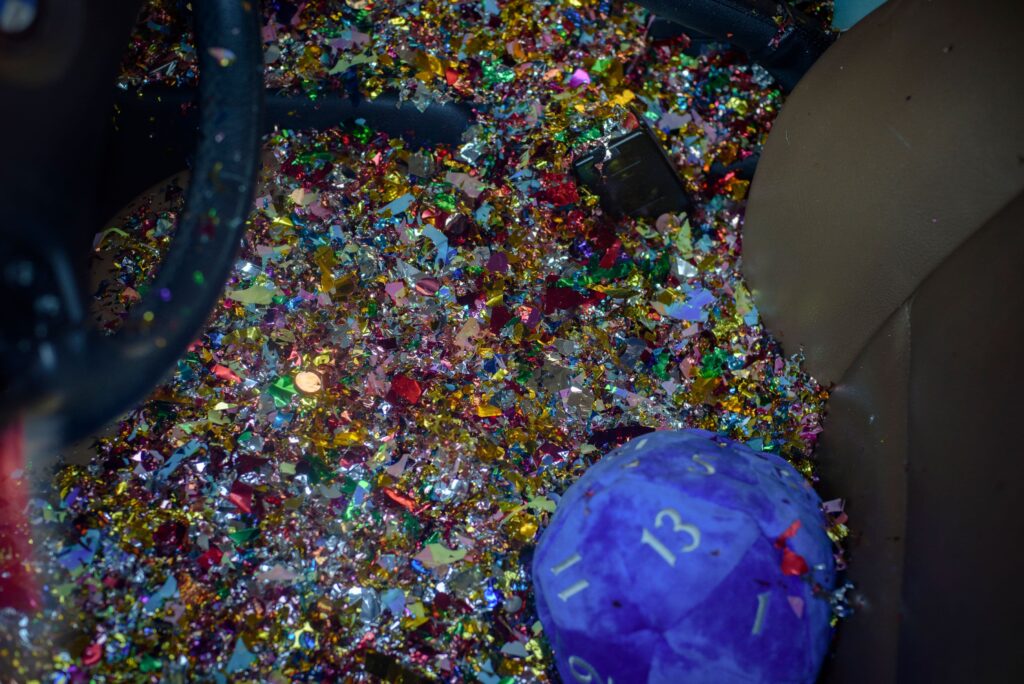
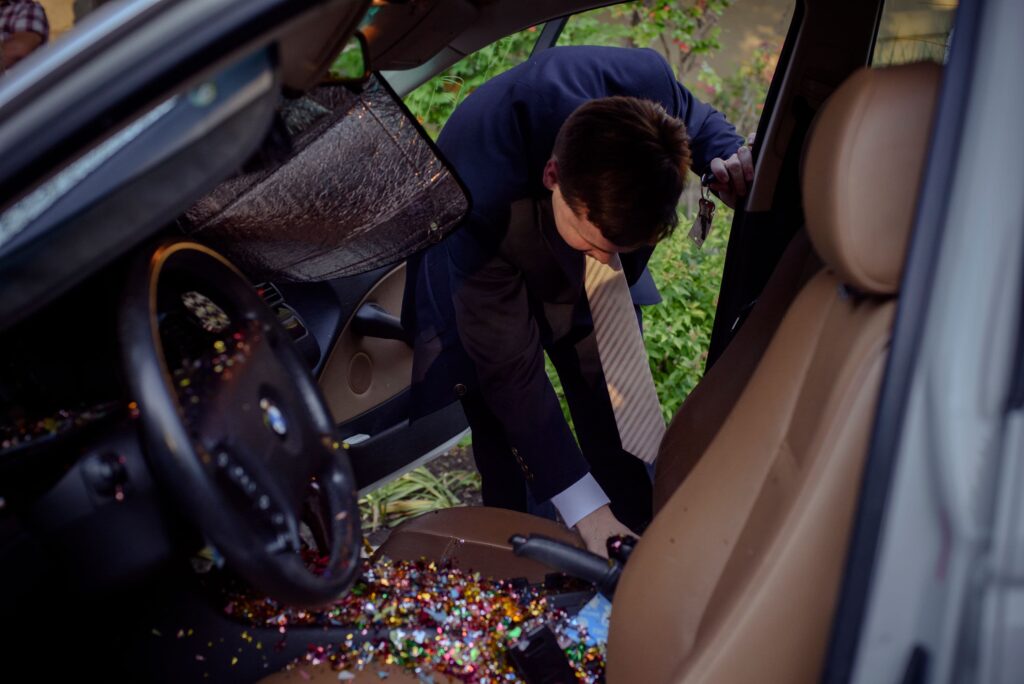
“Thankfully our party used confetti and not glitter, even though it still got everywhere,” she says. Mercedes liked the outside decorations, but the mess of the confetti was “a bit much” for her.
Even without the traditional glitter, Mercedes remembers her dad being “pretty pissed” about what the wedding party did to the inside of her car. After leaving the reception, the couple couldn’t wait to get rid of the confetti. “We stopped at a gas station that had a vacuum, so we could clean out as much as we could.”
Polterabend (Germany)
A compound from the German words poltern – ‘making a racket’, and Abend – ‘evening’, this tradition involves the couple and their guests gathering the night before the wedding to smash old pieces of crockery, pottery and porcelain – mainly plates, bowls and cups – for good luck and harmony.
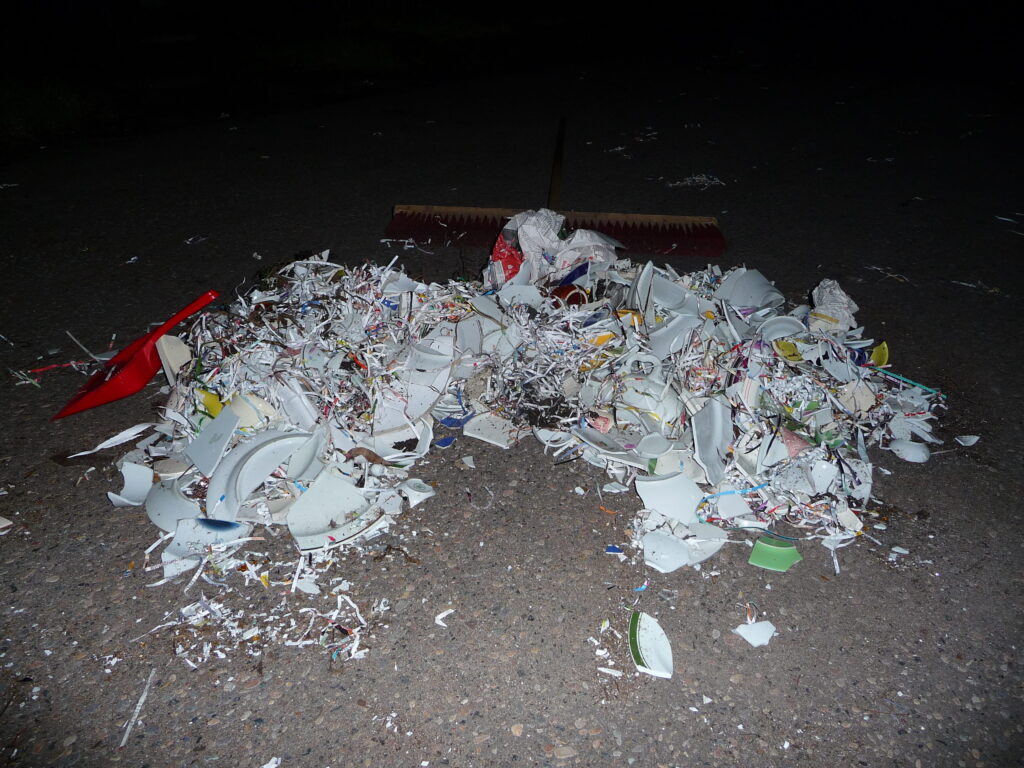
Scherben bringen Glück is a common German saying, literally translating to ‘shards bring luck’. Doctor Joel F. Harrington, a history professor at Vanderbilt University Nashville who specialises in early modern Germany, told the New York Times that traditions often originate from ancient beliefs and sayings such as this one.
“These pre-Christian, Germanic customs have become about two parts: scaring off evil spirits because of the loud noise made by the broken plates, and shards bringing luck, something everyone wants.” When the tradition started is unknown, says Dr Harrington, but the first record of a Polterabend is from the 16th century.
The representation of unity and teamwork as the couple break plates together “was probably introduced during the 18th and 19th century, as romantic love in culture and literature came into focus,” according to Dr Harrington.
For Meena Lee-DePasquale, owner and designer at 5th Avenue Weddings & Events, the continuation of traditions and cultures is an important part of wedding planning. She has spent the past 13 years working with couples incorporating their cultures into modern celebrations.
In regards to the Polterabend, she told the New York Times that nowadays the “couple sweep up the broken shards together to chase away the evil spirits and to represent their first shared task. […] It symbolizes working as a team in life and in their marriage.”
Linda Brandt and her partner Connor Tröbs, both 35, got married on an old farm yard in the small German village of Holzerode. “Many of the guests were travelling from quite far away – mostly northern Germany – so we organised the Polterabend for them to settle in and to start getting to know each other before the big day,” said Barbara Brandt, who organised her daughter’s Polterabend last year.
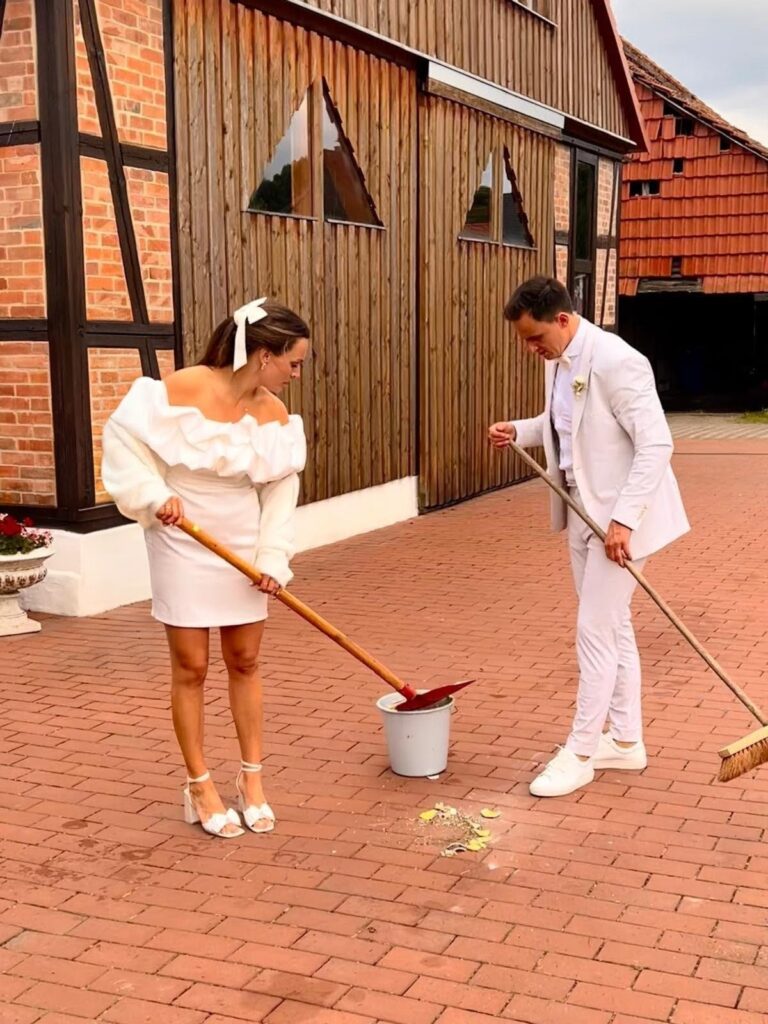
Traditionally, guests are meant to bring their own crockery. However, as with the Brandt family, hosts usually provide additional items to smash for anyone who didn’t bring along their old plates, mugs or tea pots. Despite Linda’s less traditional decision to keep her maiden name, the couple valued the Polterabend tradition as an important part of their celebrations.
Featured image: Mercedes and Austin Zane Kidd