
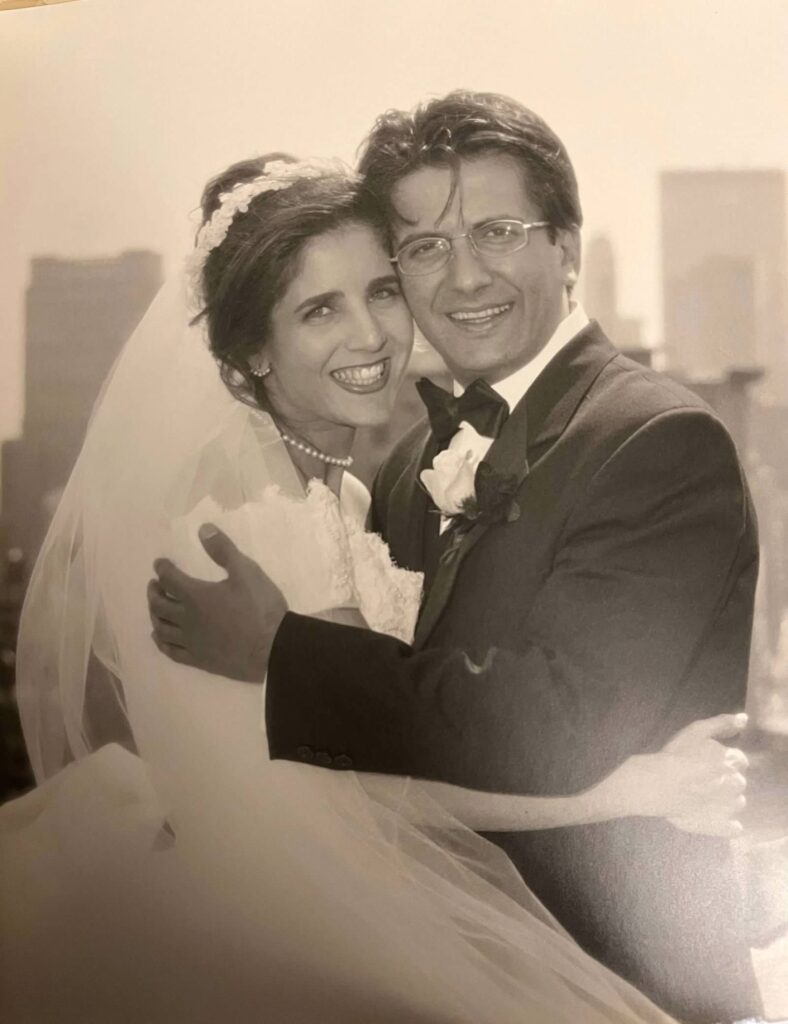
In a culture where moving on from your ex is pushed as the ultimate power move, couples who’ve married, divorced and then remarried each other once again, complicate the traditional trajectory of a love story.
One Sunday afternoon in February 2009, a judge raced to a modest home in New York’s suburban Westchester County to officiate a wedding. Called on just hours earlier, he might have expected it to be a ceremony arranged in haste. Stepping into the living room, where a close-knit family of four were awaiting his arrival, and the space emanated with domestic bliss, it became apparent this was anything but.
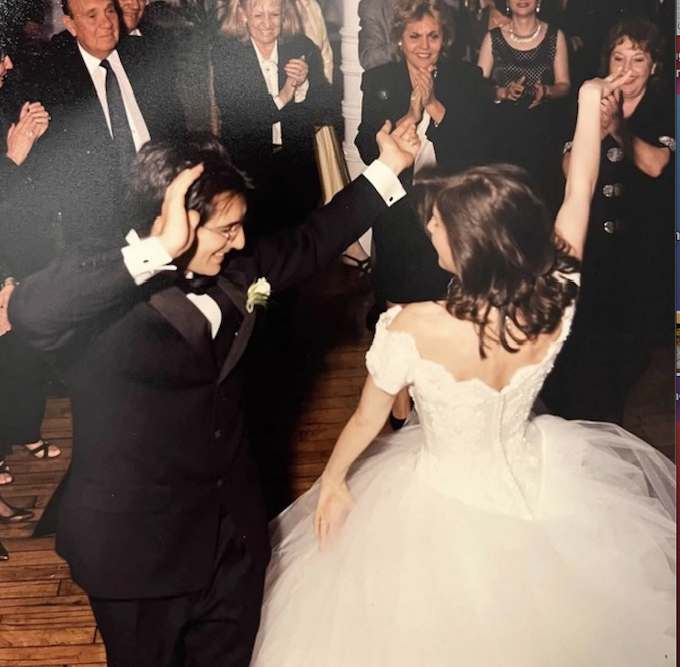
The bride and groom already shared two young sons, a house, and gave the impression that their love had years of history under its belt. If it seemed as if they had done this before, it was because, indeed, they had. Leslie and Val had both stood opposite an officiant once, at a grand Manhattan ceremony nearly 13 years earlier. Not to marry other people, but to marry each other.
This time they opted for a small affair. “We didn’t tell anyone,” says Leslie, now 61. “I was too embarrassed to tell my father and my sister. And it wasn’t until much later that I told them that we were married again.”
When Leslie did finally inform her nearest and dearest that she remarried the man she had divorced in bitter acrimony only 9 years before, they thought she was “absolutely bonkers”, she says. “My sister was mad at me. My father was mad at me. Like, ‘what are you doing?’”
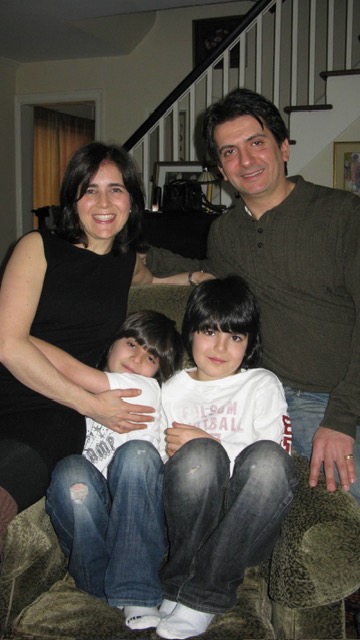
But they’ve since proved the naysayers wrong. Now 17 years into their second marriage, Leslie and Val are stronger than ever. When they reveal to people that they were once divorced, the reaction is usually one of disbelief. “I think they’re shocked because we seem like a nice couple,” she says. “We seem like we didn’t have any of those bumps. We are happy together. We laugh a lot.”
In a culture where moving on from your ex is pushed as the ultimate power move, such reactions are common to couples like Leslie and Val, whom have broken the rules. A 2024 survey by relationships blogger, Max Jancar, found that only 32% of exes get back together. And of these, just 18% stay together for more than a year after reconciling. But for a rare group, divorce doesn’t always spell the end of a love story. Among pop culture’s most iconic romances are stars who twice walked down the aisle together; most notably, that of Richard Burton and Elizabeth Taylor (1964 to 1974, then 1975 to 1975). Or more recently, Elon Musk and actor Talulah Riley (2010 to 2012, then 2013 to 2016).
Some marriage experts maintain that time spent apart following a breakup can flower a new and altogether more mature and healthier chapter. The success of Leslie and Val’s second round raises the question, why do we treat ‘going back’ as going backwards – or something of a failure – at all? Could rekindling with your ex-partner be the healthiest model for love of all?
According to marital therapist Andrew G Marshall, it very well could be. And doing so is nothing to be “ashamed of”. In fact, he says, “it’s much healthier to keep working on the same thing, then [to] go and find somebody else and repeat the whole same pattern all over again.”
He explains that people often take the wrong message from ended marriages altogether. “Most people’s lesson that they learn from their first marriage is, I should never have married them. They were wrong for me. It’s very easy to think I’m going to meet somebody entirely different,” he says. “I’ve heard people talk about their ex-wife and what a nightmare she was. And then they bring in their current wife, and she’s being a ‘nightmare’ in exactly the same way. They don’t see it. And so what do you do? You could leave the second wife. But if you don’t do the work, you’ll probably end up in the same dynamic again.”
But what makes the difference between a healthy reconciliation, from one where you and your partner fall back into the same habits? For Leslie, it was two simple things – compromise and not shying away from tough conversations, so resentment doesn’t silently foster between them like it previously had. Now, “we pick our battles for sure,” she says. “But who we were back then, there was no moving forward.”
It was 1998, two years on from their first wedding, Leslie and Val had just given birth to their first son, Aaron. It was supposed to be a milestone filled with joy that, if anything, reaffirmed their love to each other. Instead it triggered, what Leslie says, was “the beginning of the end of our relationship”.
Leslie, who was Jewish, wanted nothing more than for Aaron’s arrival to be celebrated with a Bris, a traditional Jewish custom in which a baby boy is circumcised. Val, who is Muslim, and of Iranian heritage, wanted to hear none of it. “He looked at me like I had six heads,” she recalls. “He thought it was a freakish thing and then, suddenly, everything about me seemed freakish after that. Everything I said was suspect. We had difficulty communicating.”
So she acquiesced. But two years later, when she was pregnant with their second son, Oliver, she was adamant,“I’d like to have a bris this time.” “And he said, ‘if you have a bris, I’ll leave you. And he did. I had a bris, and he left me.”
What was shocking to her about this was that their cultural differences never seemed to have reared its head before. “We didn’t discuss a lot of things that we should have discussed before getting married,” she says. Marshall says this is common in divorces when children and different backgrounds are paired together. When you’re young and in the throes of love, he says, “it sort of doesn’t matter that you’re a long way away from home. But when you have children, it pulls you back towards your family and your culture.”
When Leslie and Val found their way back to each other in the early 2000s, following their divorce and a stint of co-parenting, this was among the first things they reckoned with. Over weekly meals in diners, they began to speak openly about the breakdown of their marriage.
Marshall says being able to communicate with your ex-partner, about why they became your ex-partner can be the first step towards reconciliation. “If you can actually talk to each other honestly about what went wrong the first time round. What do we need to do differently? What do I need to do differently? That’s the most important question of all,” he says.” If you can answer that one, it’s sort of measurable. You’ve done the post-mortem. You’ve done the learning. You’re making a commitment to change and be different.”
The diner meetups proved fruitful. Looking back, Leslie believes it was confronting the conversations they spent years avoiding that is responsible for the success of their second marriage.“When we came back together, we really loved each other,” she says. “We realised that it never went away. It just, you know, had a significant bump in the road.”
So why does this idea that one must have ‘settled’ persist when it comes to reuniting with your former partner? It is a term that Marshall loathes. “This business of settling, it’s a lazy idea because actually what is easy is the disney you know you meet somebody across a crowded room your eyes meet and everything falls into place it’s easy isn’t it? Yes, but it’s not the experience for lots of people or they fall for people who are effectively unavailable if they’re married to somebody else. But actually working through your differences and dealing with them and accepting people for being different rather than your ideal fantasy, I mean, that’s a huge amount of work. It’s not settling. It’s growing up.”
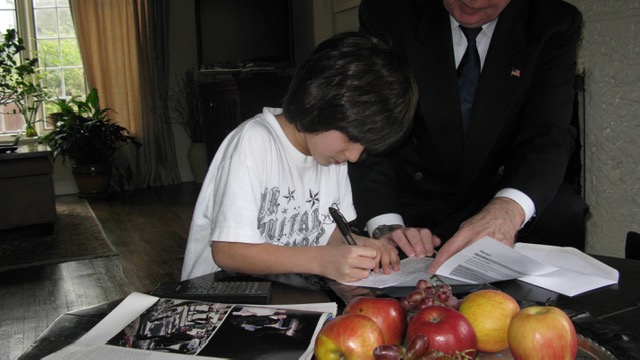
For Leslie it took the severing of her relationship with Val, to feel “validated that I did really love him,” she says. And on that February afternoon in Westchester, with their children eagerly learning to write their names for the first time, to become their witnesses, they knew they made the right choice.