Join Nox as we launch our “Damn the Light” campaign so we can help stop light pollution and claim back the night sky.
Light pollution in the UK has become an increasingly pressing issue, with its negative effects affecting the health of its population, wildlife, and the environment. Referring to the excessive and misdirected artificial light that interferes with natural darkness, light pollution is a pressing issue for the nation.
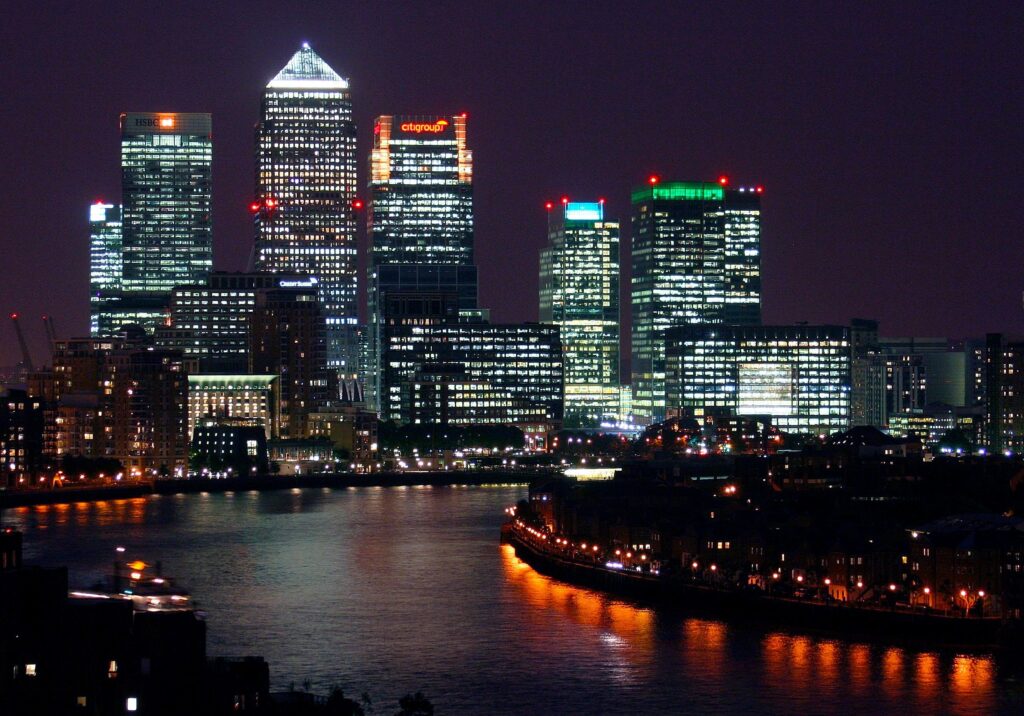
In London and many other cities in the UK, the bright lights from buildings, streetlights, and advertising displays create a bright glow that obscures the stars, disrupting the natural circadian rhythms of plants, animals, and humans, known as ‘skyglow’.

The skyglow above London is substantially greater than other cities and regions in the UK, as demonstrated by the 2016 report by the CPRE where its average brightness value was ranked at least 10 times higher than other regions of the country. Additionally, the city contains an increasing number of high-rise buildings.
University College London researchers have found that high rises illuminating London skies are far more energy intensive than low rises, with the electricity use per square metre of floor area being nearly two and a half times greater in high-rise office buildings of 20 or more storeys than in low rises of six storeys or less.
According to a 2020 analysis by Vice, the energy used overnight by buildings in Canary Wharf could power over 4,000 homes per year. In the face of the current energy crisis, this waste is especially glaring.
One of the most noticeable effects of light pollution in London is the loss of visibility of the night sky. The bright lights make it difficult for astronomers to observe the stars and can also impact the migration patterns of birds, which rely on the stars for navigation, creating a further impact on city wildlife.
The bright lights can confuse and disorient nocturnal animals, causing them to alter their behaviour and migration patterns. This can also have a cascading effect on the entire ecosystem, affecting food chains and the health of species. For example, bright lights can interfere with the mating and feeding patterns of insects, which can have a significant impact on the entire food chain.
According to wildlife expert Jack Falcon from the National Institute of Health, natural darkness is essential for the survival of around 60% of the UK’s wildlife because it regulates the rhythms of migration, reproduction, and pollination. Insect pollinators experienced a 31% decline between 1980 and 2016 and 2,890 ‘priority’ species experienced a 60% decline between 1970 and 2016, according to DEFRA’s UK Biodiversity Indicators report from 2019.
But it’s not just the wildlife that is feeling the effects of light pollution. Londoners are finding that bright lights disturb sleep patterns and can lead to health problems such as insomnia, depression, and fatigue.
And if all that wasn’t enough, the bright lights in cities also consume large amounts of energy, contributing to greenhouse gas emissions and increasing the city’s carbon footprint. The excessive use of lighting wastes energy and money, as the light is often not effectively directed, leading to a ‘spill’ into the sky and people’s homes. This is particularly problematic in London, where energy resources are scarce and the need for sustainable development is an ever-growing urgent matter.
In response to the growing problem of light pollution in London, there have been efforts to reduce its impact through more responsible lighting practices. Many streetlights have been converted to LED lights, which are more energy-efficient and emit less light pollution. This is however not seen as a priority due to boroughs receiving limited funding, which makes it difficult to allocate sufficient funds to generate true change.
It seems as though generally, light pollution is an issue that is put on the back burner, demonstrated by the London Borough of Barnet, which has not updated its policies in 10 years.
This is why Nox is taking a stand and saying it’s time to “Damn the light”. If you want to get involved in our campaign, visit our website for more information. You can also write to your MP (don’t worry we’ve got a letter you can download) here.
It’s time to act. Together, we can help switch off light pollution and put the stars back in the sky.