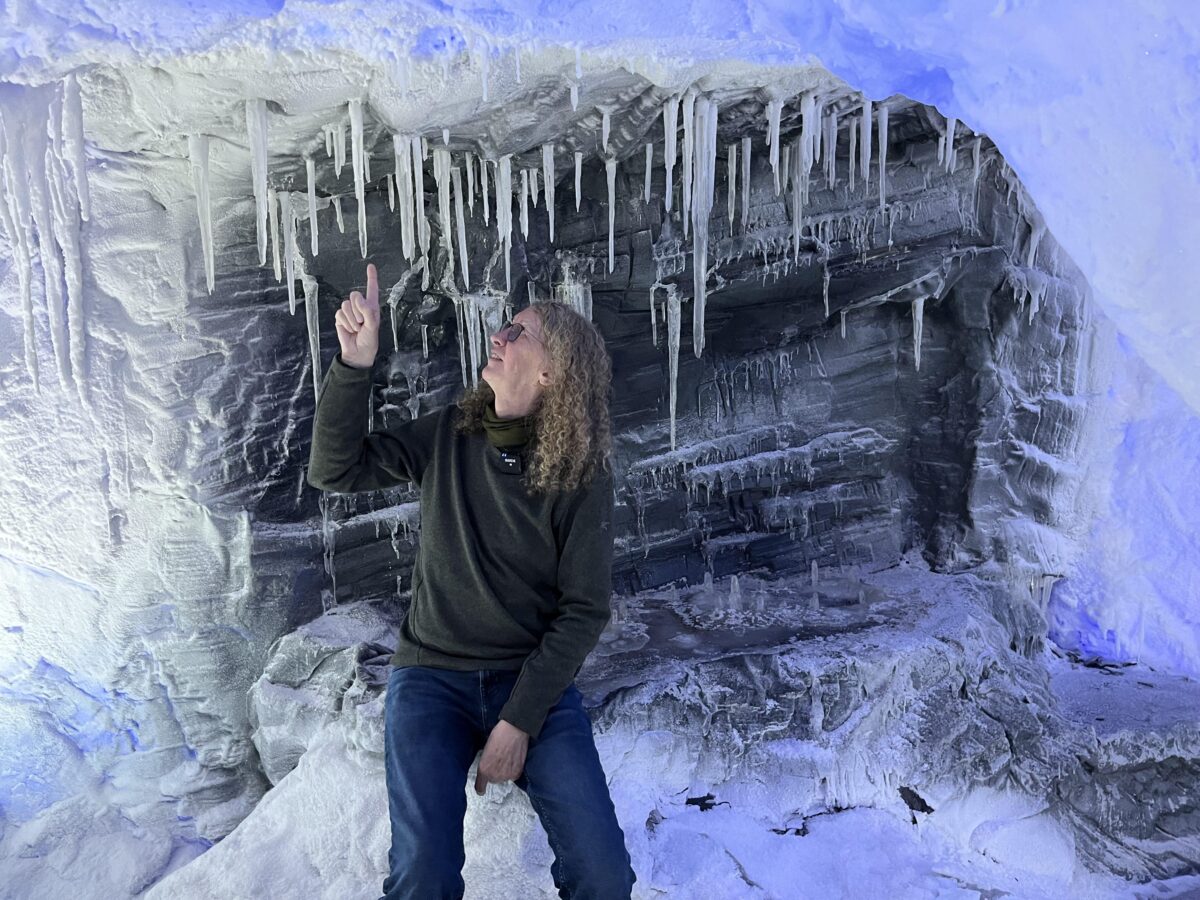
Surrounded by woodlands and cottages in a small town off the M4 is The Snow Mill, home of Snow Business. This historic water mill, dating back to the 1700s, serves as a winter wonderland, and Hollywood’s ultimate source of snow. These six acres of frosty land in Stroud, Gloucester, can be seen covered in a snowy mist 365 days a year. Complete with snowy fields, ice caves and snowball fights. The only thing is, this snow is shot from a cannon.
Darcey Crownshaw’s company, Snow Business, has been attributed to six Oscar wins, seven BAFTAs, and still counting. They have worked on hundreds of films from Bond to Bridget Jones, all because of Darcey and his fake snow. His most recent project includes the newest season of House of the Dragon, and this year he and his team celebrate 40 years in the industry. So how did it all start? With a kitchen table and answering someone else’s phone.
“If you’ve seen a movie with snow in the last 20 years, it was probably us”
Darcey Crownshaw
It was 1983, and Darcey had moved to London from Sheffield for some adventure before becoming a physics teacher, finding himself working at a paper company. One day he picked up a colleague’s phone. On the other end was a special effects manager asking to buy some grey shredded paper the company used to pad envelopes. He wanted to use it as ash in The Last Days of Pompeii. After buying several tons of the stuff, they called Darcey back, saying: “If you can make this stuff white, I could use it for snow.” And Snow Business was born. “It was pure luck!” he says. “Passing someone else’s phone on that day changed my life.”
Darcey is the number one manufacturer and hands-on snow dresser in the film and television industry. Not only does his company apply the snow themselves, creating anything from an ice cave to sleet-covered streets, but they also invent, produce and sell their own snow, which they ship to over 35 different countries. But it wasn’t always so glamorous. “It was quite a traumatic start,” says Darcey. “It was just me working out of my kitchen table, living hand to mouth. One year we only turned over £950, and that wasn’t a lot of money even in 1983.” Today, Snow Business has worked on some 500 productions, and its cheapest jobs tend to be more around the £200,000 mark, with several coming in at well over a million. Or as Darcey puts it: “Yeah, we’re doing alright,” as he chuckles away in his office at the mill.
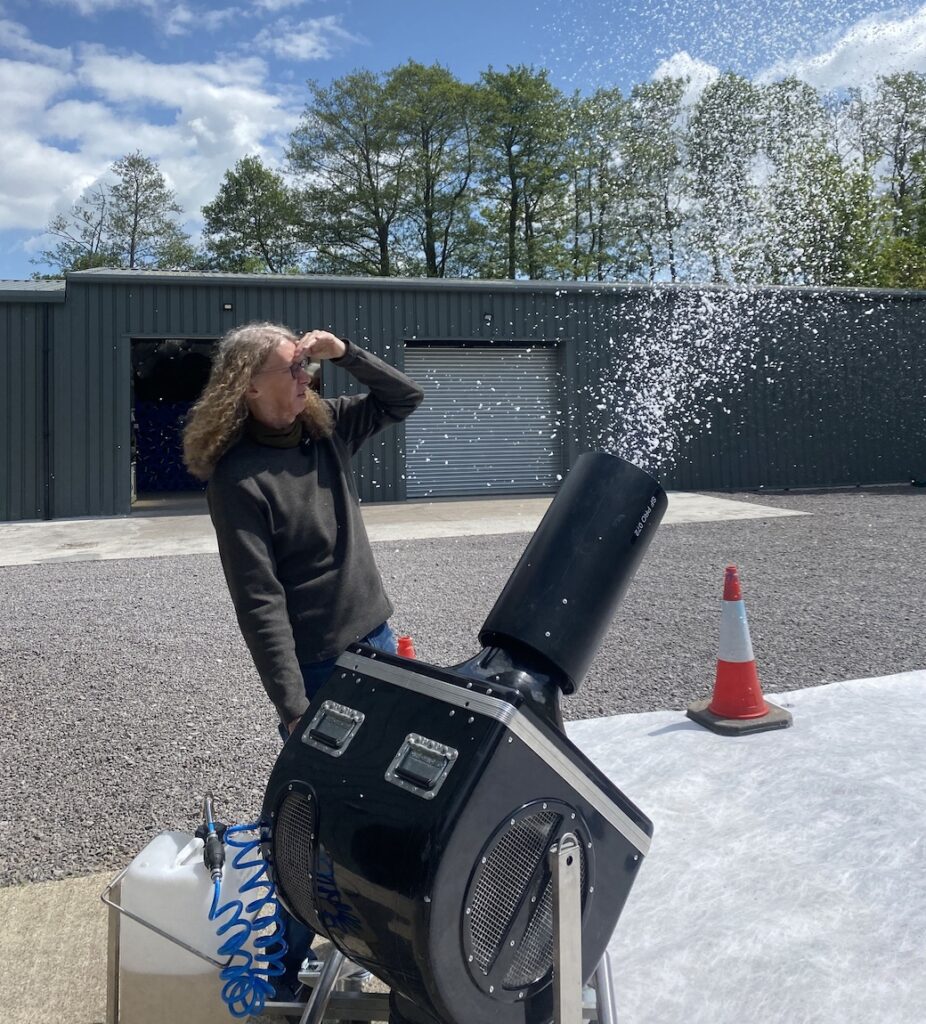
Nothing makes Darcey light up more than talking snow. On sets, they primarily use seven to eight types of snow, but over the last 40 years, he has invented over 300. Some are made from vegetable pastes, some of polymers, and others of wet recycled paper perfect for snowballs. Each has hyper-specific qualities to achieve each director’s vision. The most used include Snowcell, made from factories’ paper waste for flurries seen in Doctor Who and The Avengers. Half Size, a very fine snow invented specially for The Muppet Christmas Carol’s teeny tiny characters. Snow sticks are snow fireworks seen in films like Gladiator, for a dusty effect. Glitter Snow gives a magical effect for fantasy films like Maleficent or Nanny McPhee. Polymer, Darcey’s favourite, is used to layer over others to create a realistic effect, seen in shows like Band of Brothers. It also expands in water, so Darcey has been known to pull a prank or two on set by pouring it into the director’s water bottles: “Then I’m their best friend for the rest of the shoot, doing the ‘snow trick’ to everyone for them at the pub.”
Fake snow has famously been made of all sorts through the years, from painted cornflakes in Laurel and Hardy to white asbestos (yes, asbestos) in The Wizard of Oz. Many approaches can cause serious damage to the ecosystems and landscapes in which they are used. It took Castle Combe, a small village in the Cotswolds, 10 years to recover from a production’s use of strong chemicals like formaldehyde. “It’s really important not to leave anything behind,” says Darcey. He claims this damage has led to many locations banning the use of fake snow.
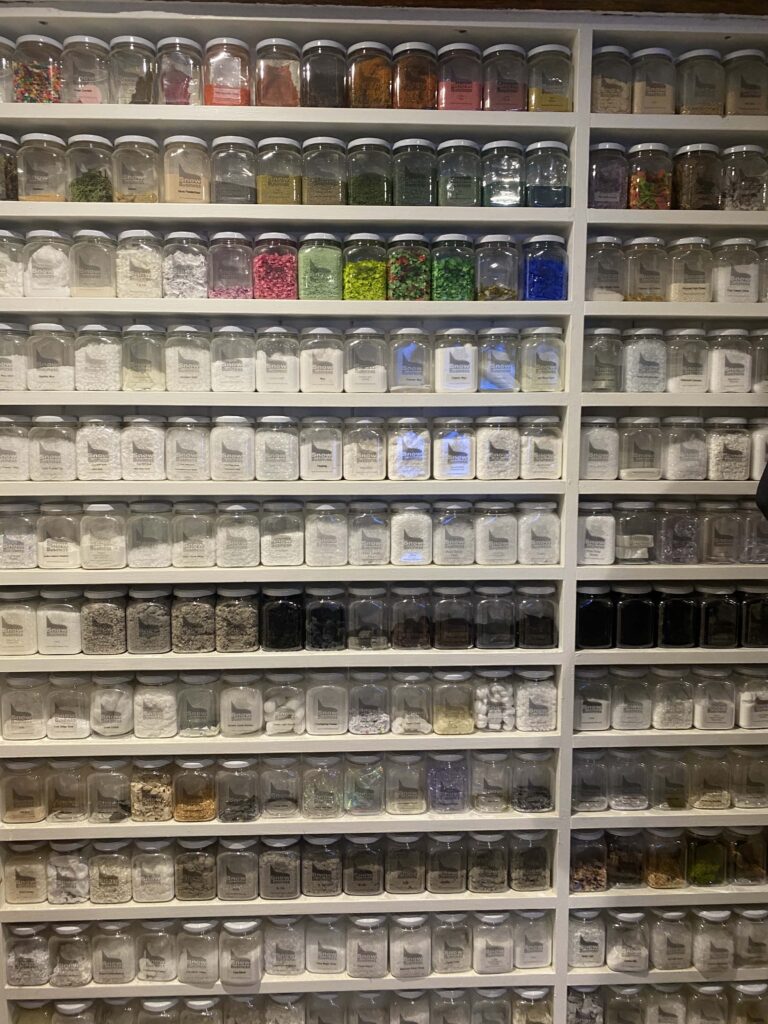
His very first snow was an environmentally friendly paper blend and still today about 90% of the snow used is somewhat biodegradable. All chemical mixtures are made from vegetable oils and vegetable paste is used over plastic where possible. Some locations will not permit the use of fake snow unless it is Darcey’s. “That’s the beauty of being around for 40 years,” he says. “They learn who you are, they learn your ethos and they learn to trust you.” This approach as well as focusing on reinvention, has always been Darcey’s way.
Once, after watching a Christmas film and being taken aback by the snow, he called the man credited for the job and asked: “How did you do that? It looks great!” He laughed and said: “You idiot! It’s your snow!” It turns out the job was done with Darcey’s own snow he had sold to him months before.
Darcey’s advice to those looking to succeed in the industry is a commonly heard one: “Don’t let the no’s get you down. All ‘no’ means is not yet,” he says. “I knocked on doors for 10 years before they really started to open up.” He warns the film industry is not for the faint of heart but is a circus of the most passionate and creative people. “Listen to what they say, adjust it and go back to them. Be a pain in the bum,” he says. “When they finally say yes, don’t mess it up.” Darcey may not have set out to be an inventor of snow, but today, he takes pride in being Hollywood’s number-one snowman.
To hear more about Darcey Crownshaw and Snow Business’ work, watch Off/Script’s video here.