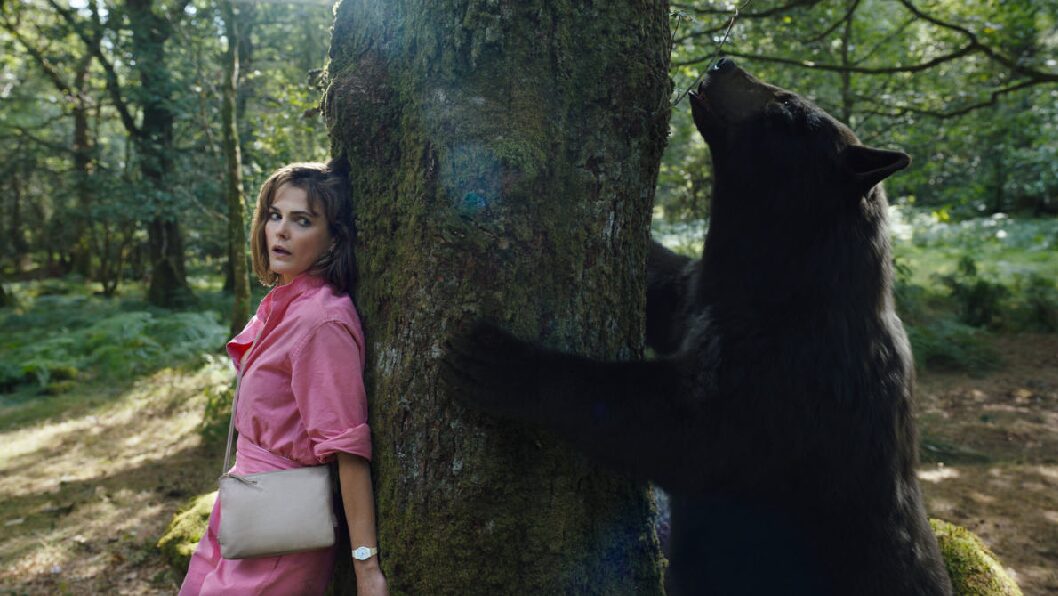
In 1985, a 175lb American black bear was found dead in a forest in Georgia, USA, surrounded by 40 empty packets that had contained a white substance. The cause of death? Cocaine overdose. This ludicrous yet true story inspired the plot of Cocaine Bear, which brought in over $50million in box offices globally. Whilst the bear was created using computer-generated images, director Elizabeth Banks enlisted Allan Henry to perform as Cokey on set – but there was no bear suit in sight.


How did you get into motion capture performing?
I’ve always been a thoroughly strange person. When I was young, I wanted to be a cartoon character because rules didn’t matter. They could express themselves however they wanted, like defying physics. I did a lot of physical things like gymnastics, acrobatics and martial arts. I’ve always had an interest in physical performance and when I did training at Toi Whakaari: New Zealand Drama School I tried to focus on that.
How did you prepare for your role as Cokey?
I did a lot of research locally in Wellington. Wellington Zoo has a Sun Bear enclosure and there’s this really beautiful Sun Bear called Sasa. They have talks at the zoo most days and I would turn up like this real keen guy and take notes. I watched the way she would be at rest compared to when she was active, noticing what part of her body – nose, mouth, claws – led her interaction with her space.
Alden Ehrenreich shared a behind-the-scenes photograph on Instagram that shows you in your full kit: black lycra, arm extensions and headrig with a silicone bear snout attached. It doesn’t look the most comfortable. How was learning to move with the arm extensions and snout?
Putting on the lycra was a liminal moment where I would get out of my casual Allan clothes and put on this very specific piece of clothing, and as the kit went on, it was a slow change into the mindset of “what do I have to do today?” A lot of people were expecting a bear suit. I would work with Weta FX, the animation supervisor and the VFX supervisor. We’d have conversations about the movement and trying to get the headrig similar to other headrigs I’ve worn before, so I kind of knew how it worked. I rehearsed everyday that I wasn’t filming, but it wasn’t entirely new movement – it was a lot of movement that I already had experience doing.
What might surprise people about your work as a motion capture performer?
I don’t look like the ideal Hollywood superhero. When you google Hollywood lead actors in my age range they all look incredibly fit and classically beautiful. I’m a 41-year-old, bald, 98 kg Maori dude with wonky teeth. I’m fit and flexible, but there’s a very shallow standard of the industry. The reality of performance capture is you don’t have to look a certain way. You have to be able to move the way they ask you to move, which is incredibly liberating as a performer. You get to focus on just doing the work.
Cokey is a very physical role. Did you have to do any physical training for it?
My good friend Ben Fransham has done a lot of really good performance roles, and he’s also a personal trainer. He and I worked together to create a program I could do in a hotel room because I wouldn’t have access to a gym. It was mostly bodyweight exercises and getting as much explosive power as possible because bears can move incredibly quickly.
Did you make noises when you were performing? Did you practice them at home?
So many noises. I snuffled, I growled, I roared. I always practice at home, so my son is used to it. He’s familiar with having a dad that crawls around the backyard, makes weird noises and clambers around the kitchen like a monkey.
How did you film the scene where Cokey is chasing the ambulance? Did you chase the ambulance, or did they choose not to use motion capture performance for it?
It was chaos. Absolute chaos. I ran on all fours as fast as I could, and they drove the ambulance as slow as they could, but there was no way I would run that fast. So in that scene, the Cokey running is fully digital.
Despite tech advancements and CGI, what is the importance of motion capture performance?
Ultimately, filmmaking is storytelling, and storytelling requires storytellers and a real human connection. Even if it’s covered up with a CGI character, you have someone there to connect to. Yes, you can imagine things and do your lines to a blue ball in front of you. But, having a living, breathing person connecting with you and giving you an emotional response is a much more powerful connection.
Cocaine Bear can be rented on Amazon, Apple TV and Sky