
In major West End productions, there is a myriad of adjectives one could use, from “elaborate” or “intricate”, to describe the props that complement the actors on stage. However, a word that probably does not come to mind is “durable”. This is exactly what the makers of the slapstick comedy, The Play That Goes Wrong, needed when they contacted Phil Jarman, director of Spur Creative, to produce their props. When props are subjected to consistent banging, collapsing, and being thrown around on stage, the costs for repairs and replacements can build up. This is where Spur Creative comes in.
Phil founded Spur Creative, the Kent-based company that makes props for theatre, films, and events, in 2006 but was interested in prop making for several decades before that. When he was at university he sold his drawings in Soho and designed backdrops for nightclubs, while collaborating with various scenic companies in polystyrene sculpting and painting.
“To be a prop maker, you need to be a jack of all trades”
Phil Jarman
Prop making in theatre encompasses diverse skills, from carpentry and sculpting to painting and electronics. “To be a prop maker, you need to be a jack of all trades,” says Phil. “You need to be able to solve problems and think laterally because you are given a brief and you have to think if you can make it work or not.”
Phil met the crew of The Play That Goes Wrong when it was a minor production. A production manager told him: “I’ve got these young lads who started this play where the props get dropped all the time, and they just keep getting broken. We need to make something a bit stronger.” Little did Phil know that the production would become the West End’s longest-running comedy play with performances around the globe.
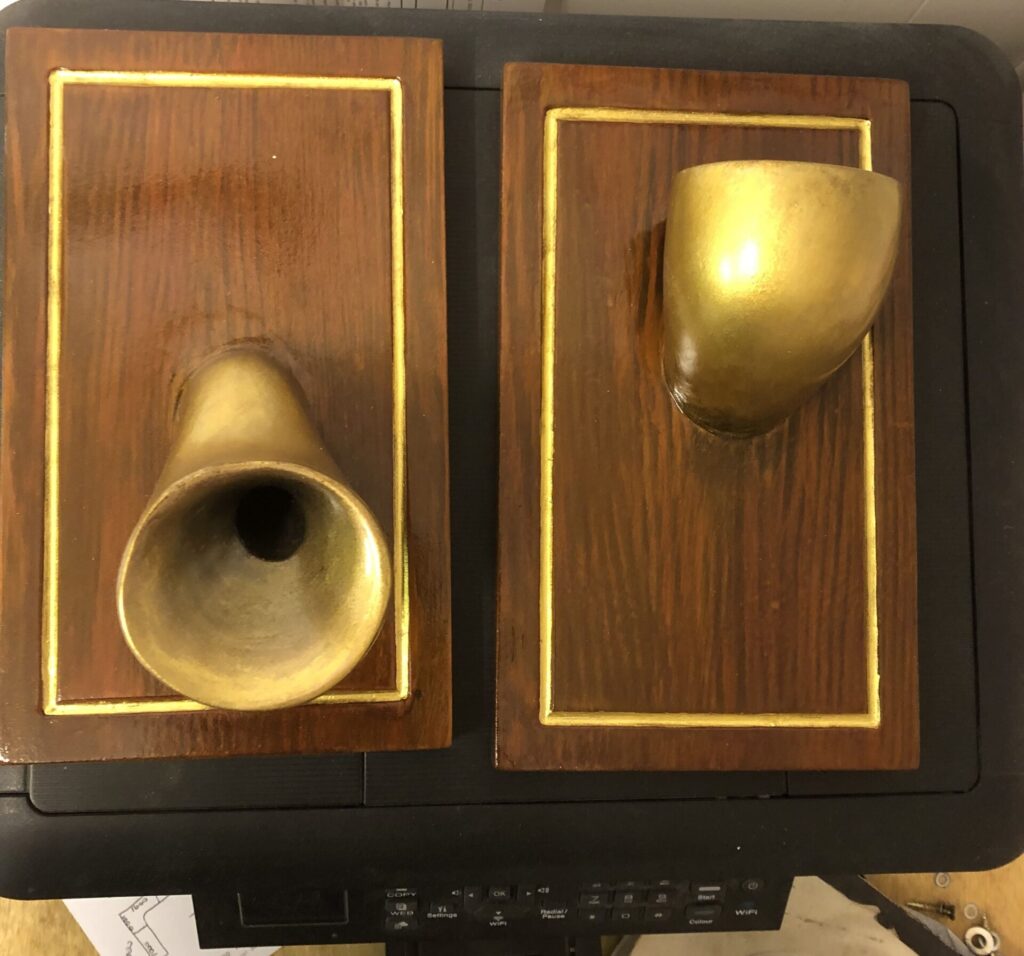
While most props are designed to be sturdy and not easily breakable, the props for The Play That Goes Wrong are intentionally created to withstand an exceptional amount of wear and tear. Phil and the team created voice pipes for the play which is a small, handheld prop that resembles a tube or horn, used by characters to communicate with each other or make announcements throughout the play. It is a comedic element to generate humour, comprising an upper and a lower voice pipe. “These pipes were utilised in seven-level stately homes where the butler would select one to communicate with a servant at the opposite end,” Phil says. “In the play, water is extracted from the pipes and sprayed onto someone’s face, adding to the slapstick comedy.”
However, Phil and his team utilise moulds to make lightweight versions of the props that won’t cause harm if dropped or mishandled. Additionally, they incorporated magnets into the pipes, and pulled them off the back of the stage, resulting in their fall from the wall. In the rare event of damage, they can quickly produce replacements, ensuring the smooth running of the play.
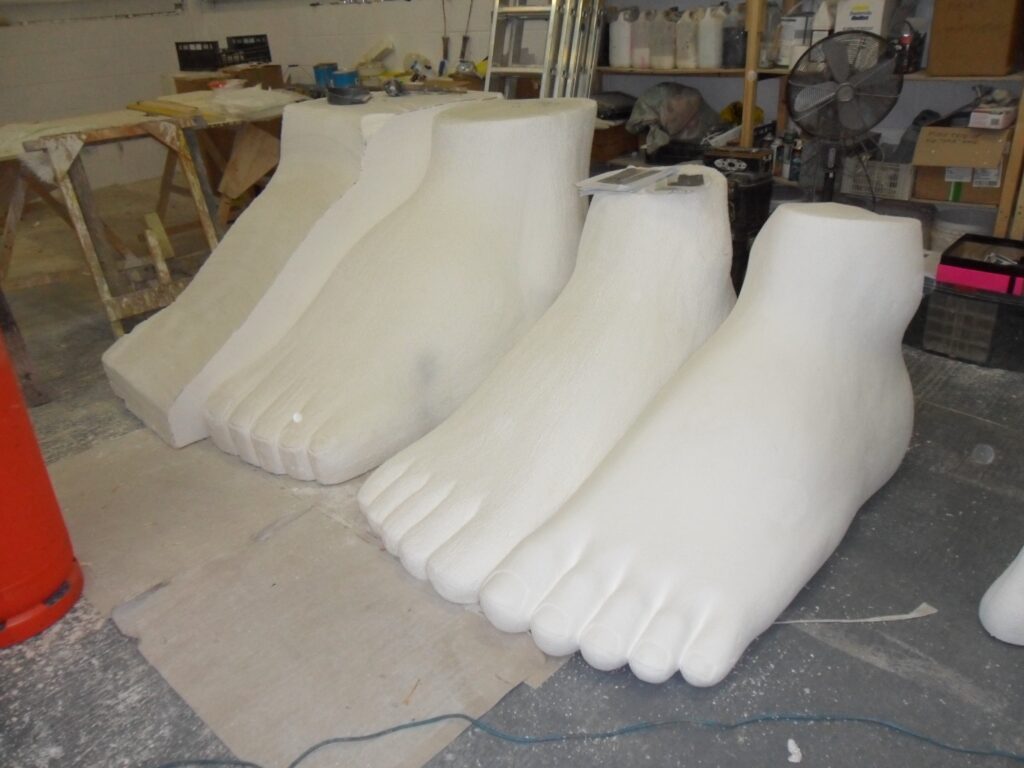
Working with theatres often involves night calls for touch-ups and adjustments to ensure everything fits seamlessly together, but even the most adept prop makers can make mistakes. “We turned up to touch up a set at The Old Vic, London, and it was an evening paint call,” he says. They had forgotten to bring the paints with them, so unable to go to a shop and buy any paint, they went to a local McDonald’s.
“We got some ketchup, mustard, and mayonnaise and dug up some soil from around a tree on the road and had to mix our own ‘paints’ from this,” Phil says.
Luckily, they found an old tub of dried blue paint backstage, which they reconstituted with boiling water, and managed to finish all the painting with these few items. “The show ran for at least a year and we were never asked to go back to do any more touch-ups so we had to presume that what we did was never discovered,” he says. This shows how imaginative and reactive prop makers need to be.
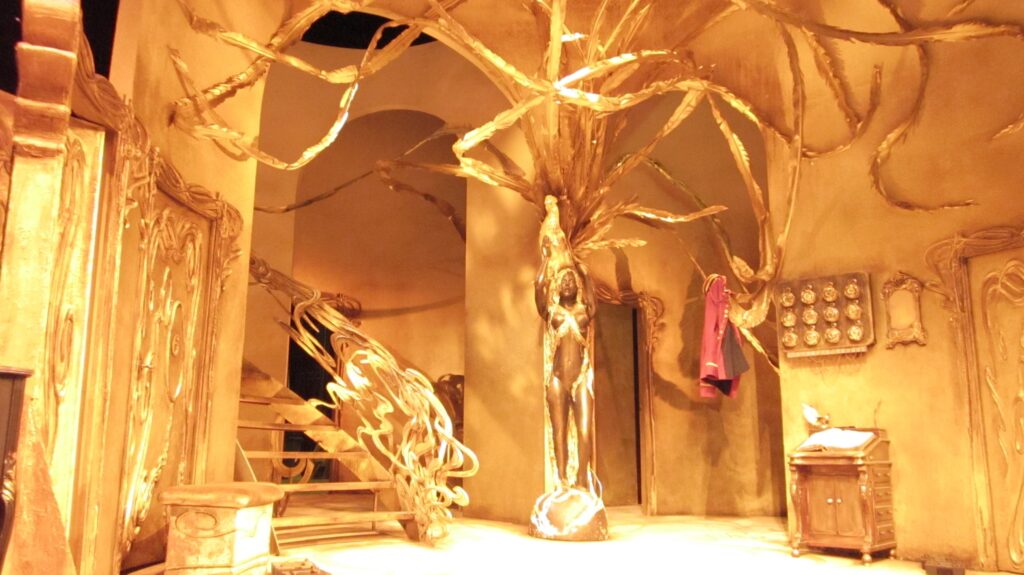
One notable trend in the industry that Phil has noticed over the years is the increasing demand for sustainable props. Phil’s team tries to work with materials that are either recycled or re-purposed. “However, as everything we make is bespoke, there are a certain set of criteria we need to meet,” he says. “Even though options available to us are limited, we use FSC-certified timber which is sustainable, a metal that can be readily recycled, and plaster-based material that has less impact on the environment than polyester resins.”
The most rewarding part of being a prop maker is seeing your props come together on stage. For Phil, “if you’re doing one aspect of a bigger thing, seeing the final show and your props seamlessly integrated and enhancing the performance is very fulfilling.”