
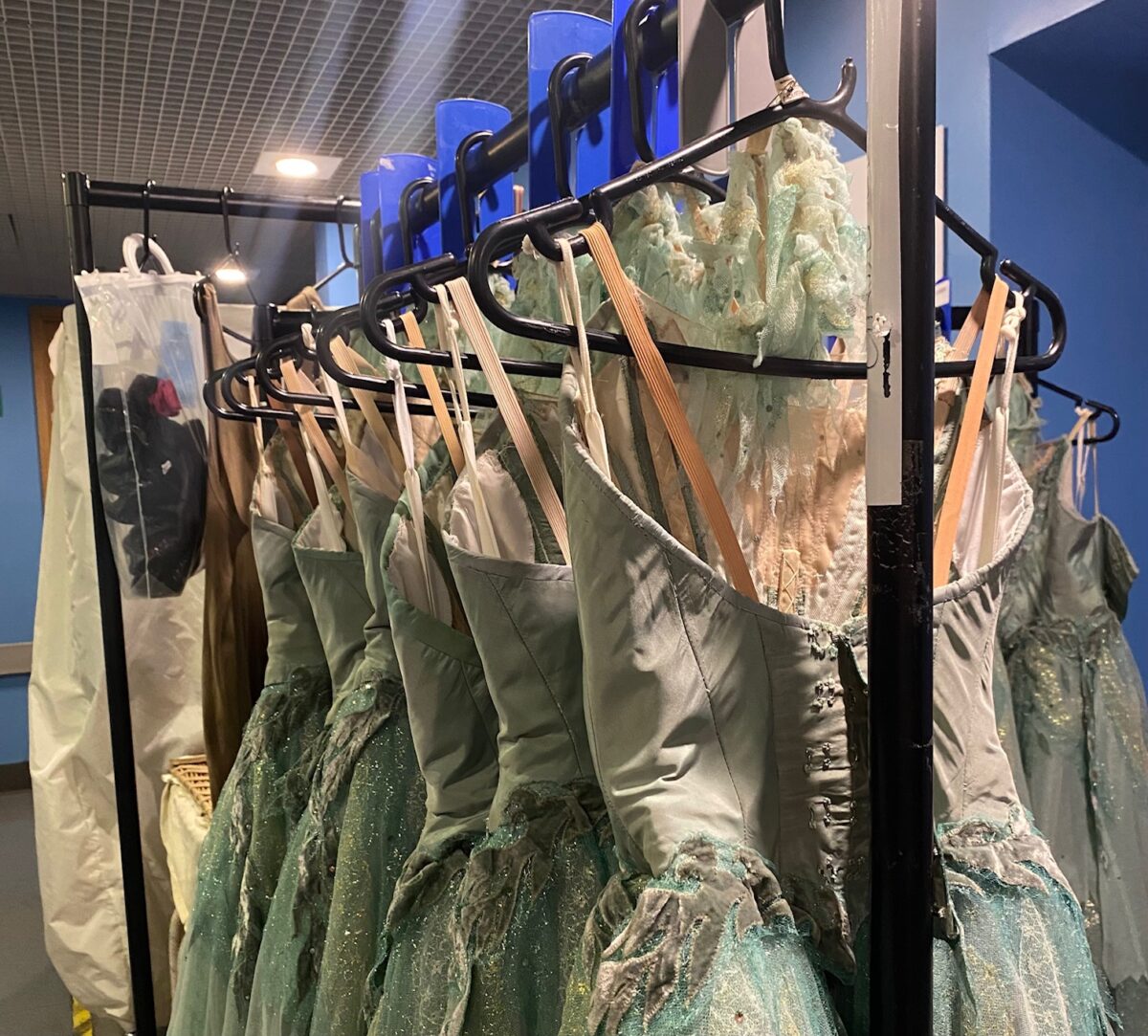
“It’s the buzz of seeing your costumes on stage,” says Edwina Dicker. “To actually see the artists on stage doing their job and thinking: ‘Well, we’ve helped with that.'” After working at the Royal Opera House for over 15 years, you might think that Edwina had gotten used to the buzz of seeing costumes she has hand-sewn and revived from past productions take to the stage. But the senior workroom technician still feels the magic.
Edwina is one of 18 staff members who make up the Royal Opera House’s revival workroom, which oversees repairs and modifications of up to 6,000 Royal Ballet and opera costumes every season. Their job is to get the costumes to look how they did when they first went on stage, which can be over five decades ago in some cases. The Royal Opera House has a greater collection of costumes than any other theatre in the UK, so the revival workroom is never short of work. “A lot of costume departments just have makers,” says Edwina. “I don’t know of other organisations that do their costumes in-house and reuse them the same way that we do.”
And reuse they do. Sustainability is at the heart of the revival workroom’s practice as they weave longevity into the pieces. The oldest costumes still in use are from a 1965 production of Romeo and Juliet. When conserving the 5,000 costumes stored at the Royal Opera House and the other 20,000 in a warehouse in Thurrock, moths and damp are some of costume technicians’ biggest enemies. Moth traps dot the bright workroom and they have in-house laundry rooms to care for the costumes.
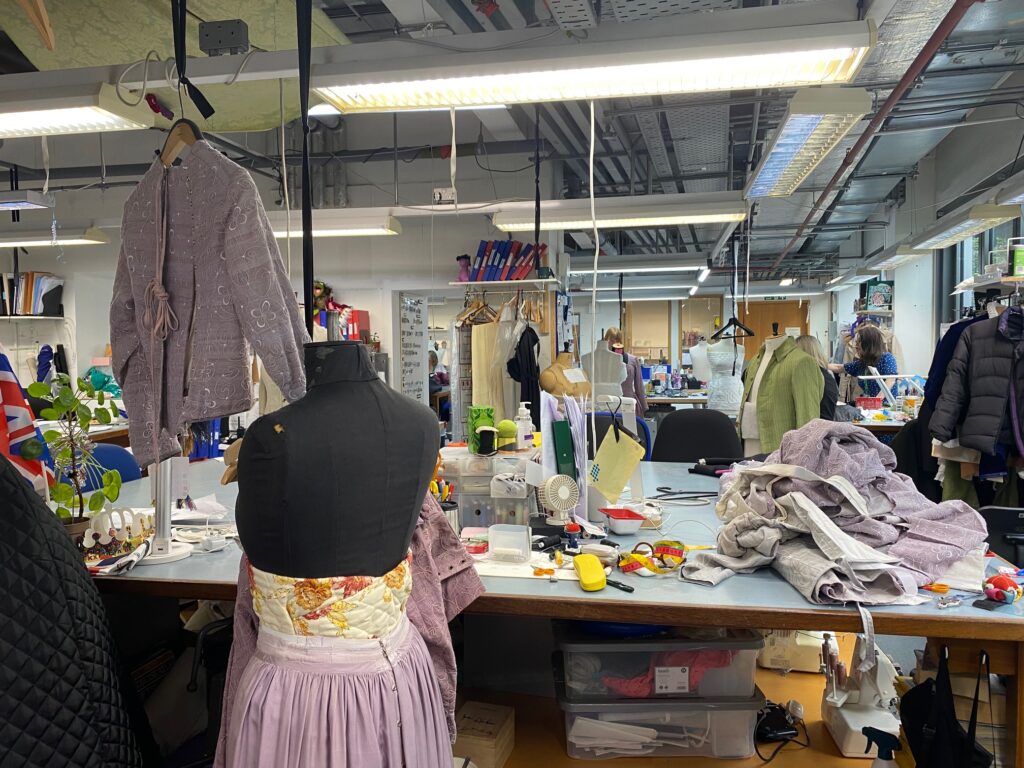
But sometimes the biggest challenges faced are not critters or temperature control – they can be other costume technicians. The Royal Opera House rents costumes out for productions at other locations and although this creates a collaborative effort, it also creates problems. For the Royal Opera House’s production of Don Carlo, which opens at the end of the month, the revival workroom has had to grapple with refitting and altering the costumes after they were used for a performance in Greece. The alterations undertaken in Athens were done differently from how they would have done them in-house, which can frustrate performers. “It’s a shame because some people love their costumes and they’ll remember them,” says Edwina. “Then all of a sudden, they put it on and it’s not theirs,” she says. “You have to be sensitive with bodies and clothes.”
“We want to be as periodically accurate as possible because we are trying to be the best in the world”
Edwina Dicker
These sensitivities are lessened by the fact that senior technicians always fit the same principle performers, so they get to know their bodies and how things fit them. “There’s an element of trust from them [the performers] because they build up a relationship with you and you get to know certain things about the dancer,” says Edwina.
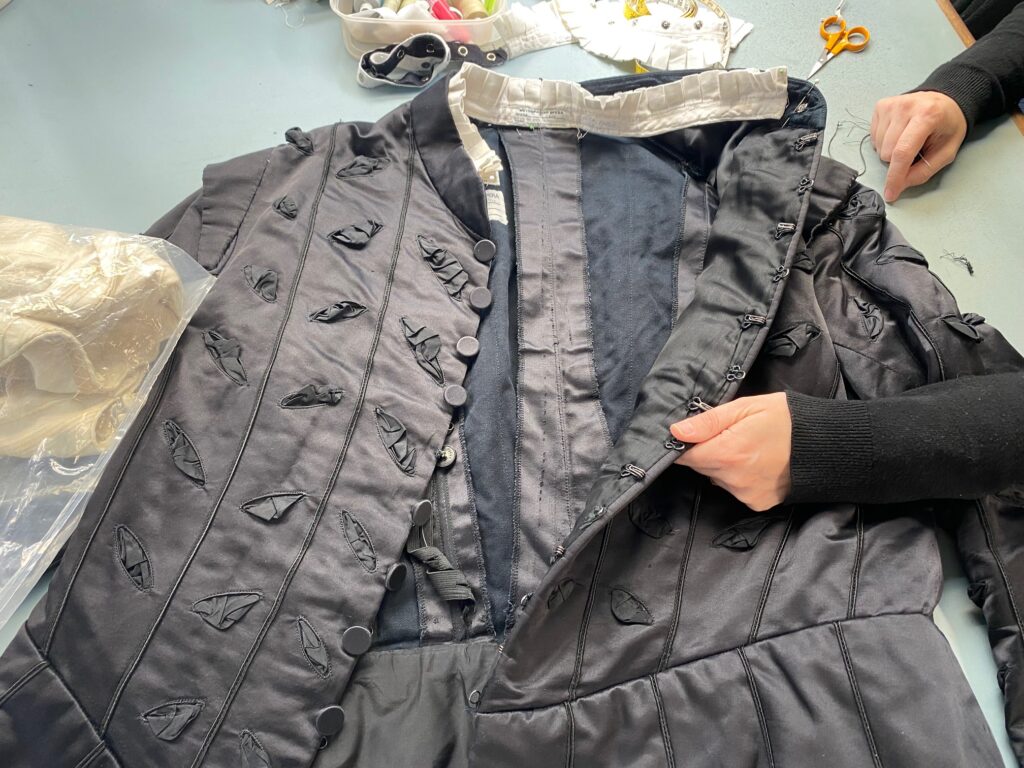
It is important to note that they are fitting costumes for “athletes”, she says. The silk used for A Diamond Celebration to mark 60 years of the Friends of the Royal Opera House last year was not the most athlete-friendly. “The dancers sweat, and the silk absorbs so much,” says Edwina. “We had to try and find a way of creating a barrier, so we used certain things like dress shields to try and protect the costumes as much as possible.” Not only was this done to stop dark patches from appearing on stage but also to protect the fabric for many performances to come.
Some revival shows were originally put on so long ago that the original fabrics cannot be used. When this happens they are able to enlist the help of the dye department to reprint or spray fabrics so they look similar to the original. If someone in the revival room does not have the answer, someone else in the building will. This is one of the perks of having the entire costume department under one roof – “it’s very team-based,” says Edwina. Some technicians have a penchant for hems, and others are adept at gussets.
There is beauty in the small details, like the designer of Carmen asking for historically accurate linen buttons on the costumes despite them being under five layers of material. “We want to be as periodically accurate as possible because we are trying to be the best in the world,” says Edwina. “And I think that’s where we fall down sometimes. We try so hard to make things right, then you think: ‘Hang on, it’s just a costume. It’s fun,'” she says. “But that’s why we do what we do. We want it to be perfect.”