
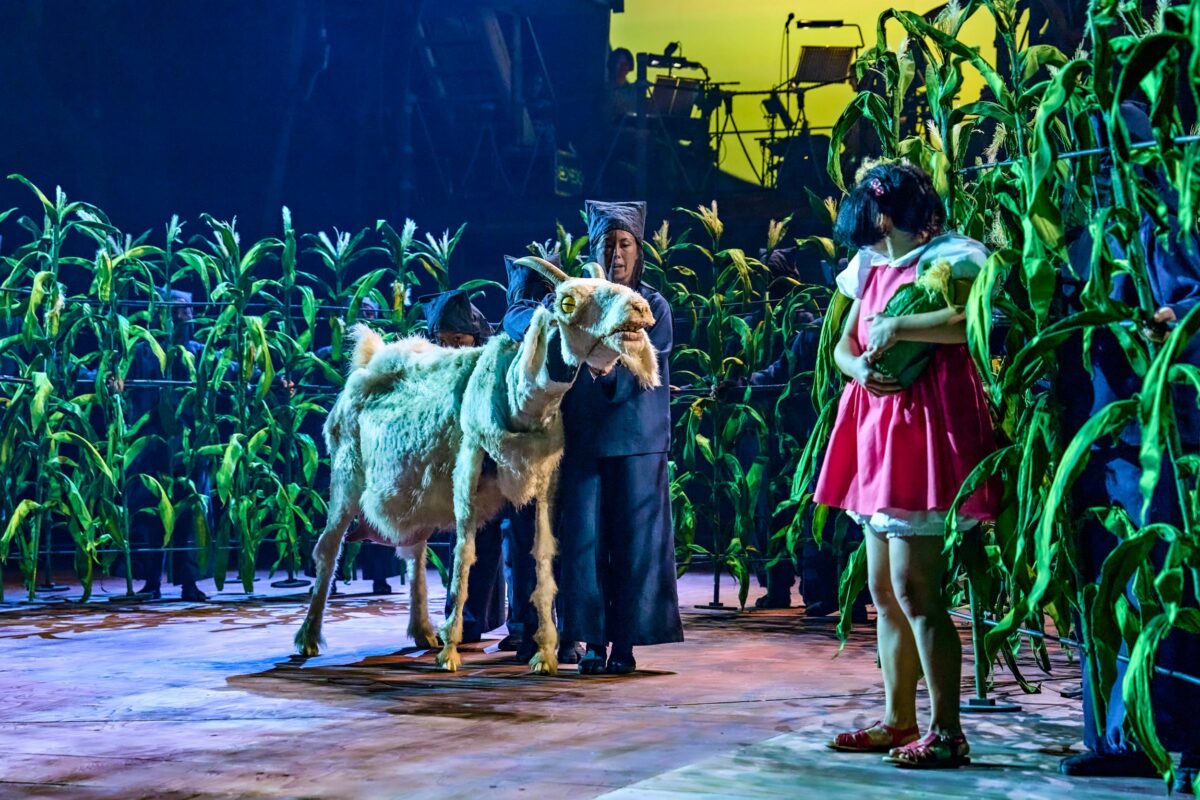
My Neighbour Totoro, a beloved Studio Ghibli classic, portrays an enchanting world of fantasy that invites us to think big and imagine. So when a stage adaptation of the film was first conceived in 2019, the production team was eager to capture the film’s charm in an imaginative way. Mervyn Millar is the masterful puppeteer who worked on the production and he reflects on the challenges and joys of bringing its adored characters to life.
The fantastical elements of the film meant that many of the characters could only come to life through inventive puppetry: “When Tom Morton-Smith’s script arrived, Phelim McDermott (director) and Tom Pye (designer) knew immediately that puppetry would be part of the language,” says Mervyn.
In 2008, Mervyn was puppetry associate on War Horse, bringing Hand Spring Puppet Company’s incredible horse puppets to stage at the National Theatre. The wonderfully life-like horse, Joey, is proof that magic does exist in theatre. Last year Mervyn supported puppet designer and director Basil Twist for the Royal Shakespeare Company’s (RSC) multi-award-winning production of My Neighbour Totoro at the Barbican. Again, Mervyn had to conjure the magic of puppetry to help bring the spirit of Totoro to life.
Much work and care needed to be put in for making something so simple: “In the film, Totoro can be of different sizes in different moments. When you first see him in the forest down by the tree with Mei, he is so big,” he says. “So when you’re trying to build something three-dimensional, this is a challenge.”
As expected, the biggest challenge for the show lies in the puppet design of Totoro. “We were trying to keep Totoro simple and pure,” says Mervyn, “just as the drawing style of the film is beautifully simple and pure.” To capture this “essence”, Meryvn experimented with materials like plastic bags, pillowcases and fabric. “The way the puppets are designed to be manipulated is part of that philosophy — we want to play with simple things in ways that are spectacular,” he says.
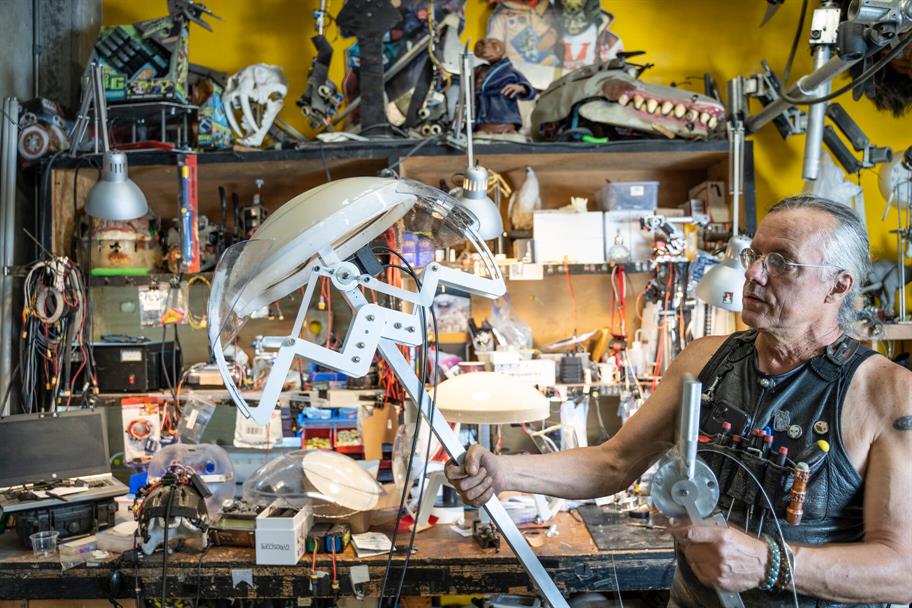
Mervyn’s company Significant Object collaborated with the makers at Jim Henson Creature Shop, who took the lead on characterising the Totoro puppets, designed by Twist. “One of their most extraordinary skills is character design. We needed to find a shape that works for all angles, and Creature Shop is unparalleled in all aspects, especially with details like the fur,” says Mervyn. With the right kind of texture, the actor of Mei is able to jump onto Totoro’s belly while he snores with rumbling sounds.
“It felt that these puppeteers were moving like the wind, an energy in the air around us”
Mervyn Millar
Mervyn remembers undergoing multiple prototype workshops with Twist, whose approach to puppetry Mervyn says is “inspiring”. “Part of Twist’s gift is that he is good at pulling back when things get too complicated,” he says. “He’s clear about what he wants and very playful in the way he gets there.”
The transition from prototypes to the real thing is a challenge, especially when it comes to weight. “The balance between strength and lightness is important in constructing a puppet,” says Mervyn.
The puppeteers who move the puppets also needed to embody the shapeshifting nature of the puppets. Mervyn says they have to “honour” the idea of the spirits: “There was a moment in the rehearsal when we were reflecting on how the puppeteers move in the space,” he says. “It felt that these puppeteers were moving like the wind, an energy in the air around us. That really unlocks the relationships with the puppeteers for us.”
“What we have is a balance between simplicity and complexity,” says Mervyn. “The performers did a fantastic job to create that encounter portrayed so beautifully in the story with Totoro, the Catbus, and all other magical creatures.”
Mervyn and the puppetry team also needed to ensure the puppets not only looked vivid but also moved seamlessly with the performers. Large-scale puppets are incorporated into the performance to embody the wood creature, Totoro, who comes in all sizes. Therefore, some of them are controlled by multiple puppeteers, who need to cooperate well with one another for the puppets to move naturally on stage. “The energy between the performers is an important element of how puppets work together to animate a big creature,” says Mervyn. It is through the interaction between the puppets and performers that these inanimate objects come to life.
But ultimately, “the most important thing is the impact on and relationship with the audience,” says Mervyn, who sees the unique power of puppetry to move the audience: “Puppetry touches on what it’s like to be alive and invites us all to participate. That’s why it can be profound.”