
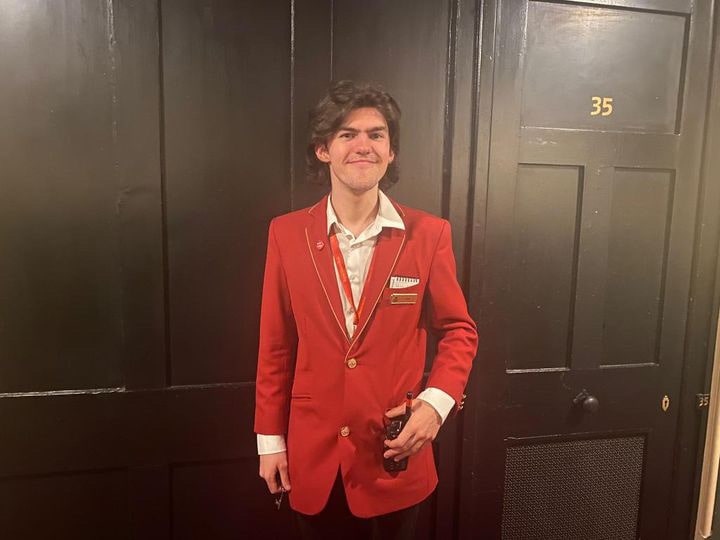
The West End theatre scene was hit hard by Covid-19, with a staggering 93% drop in ticket sales in 2020. However, in the last three years, the industry has miraculously returned to almost higher ticket sales than pre-pandemic. Although, with all this rush back into the theatre, it appears the Great British public has forgotten their pre-pandemic manners. It has been widely debated what is and isn’t the appropriate behaviour for an audience member, with stories such as the drunk, singing theatregoers at The Bodyguard in Manchester being so widely covered recently. But is it really about alcohol or entitlement? And what do the people dealing with this first-hand have to say? How do the ushers feel?
Ushers are an essential, yet overlooked cog in the machine that makes theatre go round. They greet us, show us to our seats and sell us extortionate snacks. And yet the reality of what it’s like to be a London theatre usher is so much more. They are the first responders when it comes to drunk, late, or entitled members of the British audience. Most are artists and performers themselves, who put up with a lot just to be close to that elusive stage.
“I’ve been clicked at, ordered around and even shouted at multiple times”
Dan Hardwell
Despite being at the forefront of one of London’s best commodities, the ushering job is not always a song and dance. Dan Hardwell has just completed their first year ushering at The Royal Albert Hall and has had their fair share of Brits behaving badly, even experiencing homophobic and lewd remarks frequently. Dan attributes this behaviour in part to the prestige of the venue (and the Hall’s some 14 bars), saying: “Some people pay a lot of money for tickets, so they see that in their minds as meaning they can treat us however they want to.”
“I’ve been clicked at, ordered around and even shouted at multiple times,” says Dan. There was even one occasion, whilst on break, in which they heard a call over the radio: “Could someone please help, it appears a customer has urinated in the Royal Box.”
The pattern that begins to emerge from the ushers’ stories seems to be that the difficulties in dealing with audiences come less from alcohol and more from sheer entitlement. Sahanna Rackal, whose first ever job was ushering at the Young Vic theatre in London, says, “Each show brings in a different demographic of audience. So it kind of depends, but a lot of the time, it’s middle-class, white British people who are very entitled.”
According to Sahanna, the yelling at and ordering around of ushers got so bad during the theatre’s run of Oklahoma that a new code of conduct had to be made. “Literally every night, we were having issues with audiences where they were really getting up in our face and having a go at us,” she says. Arguing with staff about their own lateness or about not having good enough seats at a sold-out show. However, now when they purchase tickets, audience members must sign to ensure they understand abusing staff is not acceptable. Though Sahanna is unsure if this has made any real impact, she finds comfort in knowing the management team has their backs.
Ushering in London does have its benefits, of course. Being front and centre to the best theatres the country has to offer never ceases to amaze the staff. Stella Franke, originally from Berlin (where she first ushered), began working in London at The PlayHouse Theatre when the multi-Olivier award-winning production of Cabaret began in November 2021. Even today, the production is one of the most sought-after shows in London, with some tickets costing an eye-watering £325. Yet at this point, Stella is practically sick of it: “I probably saw it 150 plus times,” she says. “But we weren’t really supposed to be watching, obviously,” says Stella, who despite seeing it an endless amount of times, was moved to tears almost every night by Jessie Buckley’s performance as Sally Bowles.
“Theatre really does feel like a family”
Sahanna Rackal
Other ushers find fulfilment in just being in the space. Sahanna feels a unique energy before every shift. “It’s nice to go into a building and get transported to a little world for a couple of hours and get to experience all those stories,” she says.
The prestige of these theatres attracts a certain audience with certain ideas of what is appropriate theatre etiquette. Whilst half the audience sees the expensive tickets as a reason to be excited and enjoy every second, the other half sees it as permission to be demanding. Stella talks about the amount of out of touch celebrities she would usher, having heard: “Do you know who I am?” one too many times. She recounts one time when the fire alarm was set off mid-show, and the whole theatre had to evacuate. Once everyone was out, “someone had to check all the toilets to see what was going on,” says Stella. “And they found Courtney Love smoking in the toilet cubicle.”
Sahanna feels that it is difficult not to feel small in this job, but humour and her team of ushers help. “We always make jokes, like saying we feel we’re at the bottom of the totem pole,” she says. “I think people sometimes don’t clock that we’re people. They think we’re like robots.” This dehumanising quality of the job is only enhanced by unstable pay, according to Sahanna. “If it wasn’t for the team, I probably wouldn’t work there, only because the pay is not good enough and it’s too unreliable,” she says. Sahanna has even had to take on a second usher job at The Royal Court Theatre due to the Young Vic’s pay and hours.
It seems as though ushering, as any good play, contains great comedy and tragedy. However, as defeating as this treatment may sound, ushers like Dan insist: “I don’t feel that going into work is a burden.” Stella finds comfort in reminding those in the job to remember how special it is, saying, “I was really excited to be there, the feeling was electric. Every time you walked in, it was like, ‘wow, this feels like I’m watching history happen right now.'” When reflecting on it all, Sahanna still loves the job: “It’s cheesy, but theatre really does feel like family,” she says. Sahanna also has one simple piece of advice for audiences: “It’s not hard to be nice. Also, just be on time.”