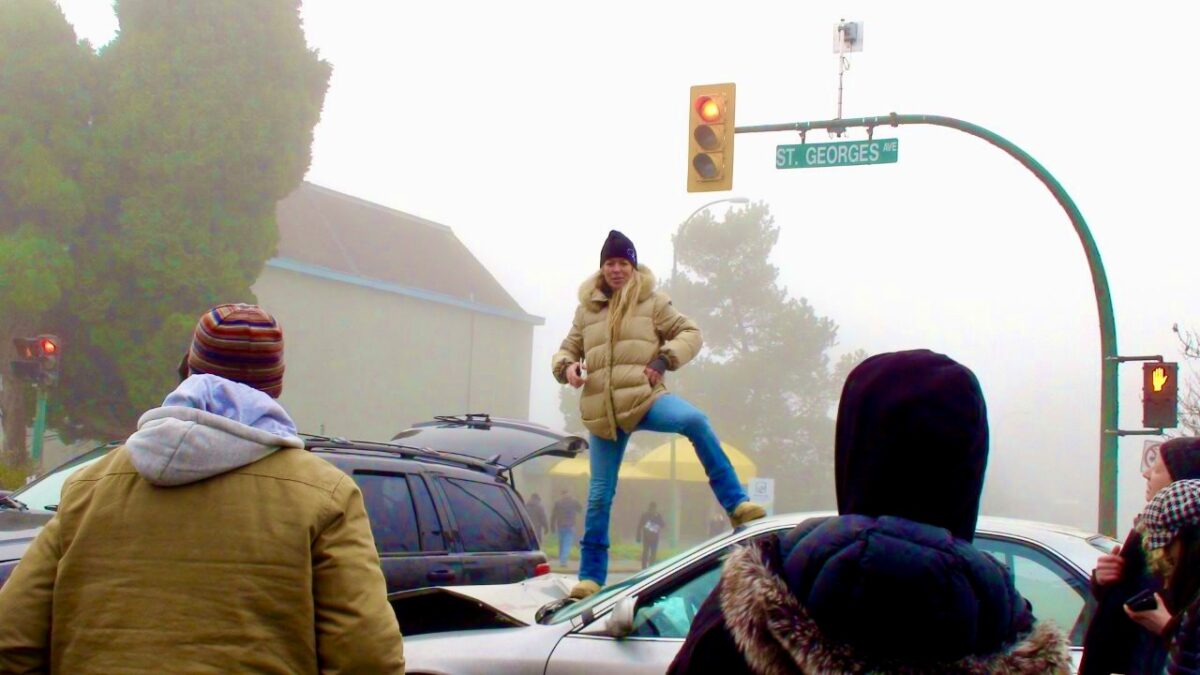
In the 2005 action film Sahara, Penelope Cruz, Matthew McConaughey and Steve Zahn ambush a moving train whilst riding camels. Cruz leaps off her camel, which is galloping next to the train and is caught in the last second by McConaughey. She dangles off the moving train as the audience holds their breath.
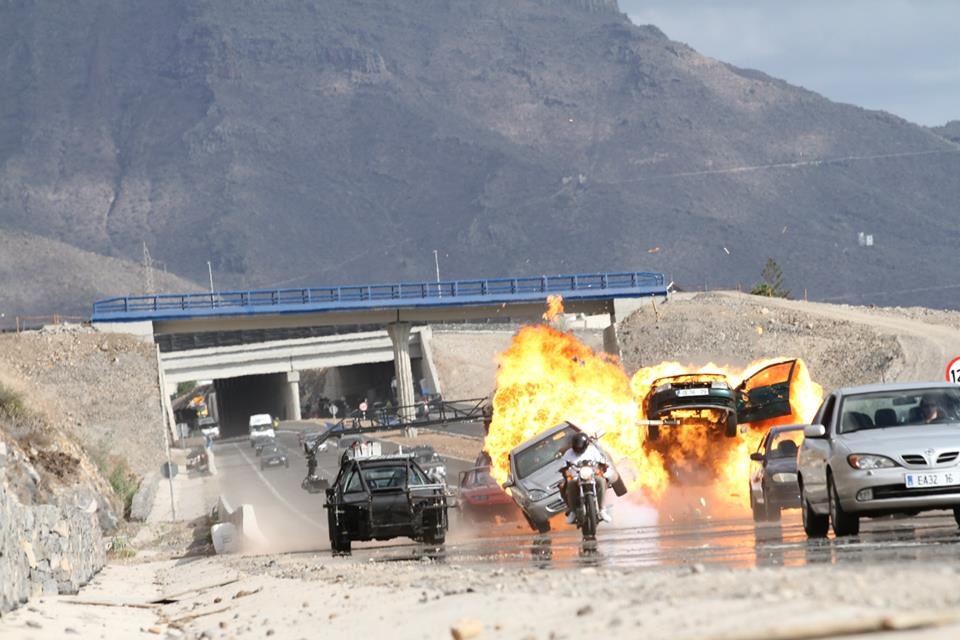
It’s perhaps no surprise the person dangling off the train is not, in fact, Cruz, but a stunt double. “I am galloping on my camel, jumping without any wires, without any assistance. I didn’t even have any pads either,” says Guiomar Alonso, the Spanish stunt performer and coordinator who doubled for Cruz in the film. Guiomar has over 20 years experience in the business and has performed stunts for films like Wonder Woman, Fast and Furious 6 and Avengers: Age of Ultron. Her speciality? “I’m a crasher,” says Guiomar, meaning she crashes through walls and windows at high speeds.
The stunt industry has changed a lot over the past decades. For example, the stunt Guiomar did for Sahara would be safer today, done with harnesses, wires and CGI. While there are more female stunt performers than ever before, there are still several gender-specific hurdles for women in the industry. Veteran stuntwomen Melissa Stubbs, La Faye Baker and Guiomar discuss their experiences in the industry and how things are changing – albeit slowly.
Sexism in the stunt performers’ industry takes many shapes. Sometimes in the form of misplaced paternal concern: “Male directors, male producers, male stunt coordinators didn’t want to see a woman getting hurt,” says Melissa, a Canadian stunt performer and coordinator. Other times it is the gender-specific footwear: “You have a male stunt coordinator who is thinking about cars and buildings blowing up – they’re not thinking about footwear. I’ve broken my leg three times due to bad footwear. Heels are my nemesis!”
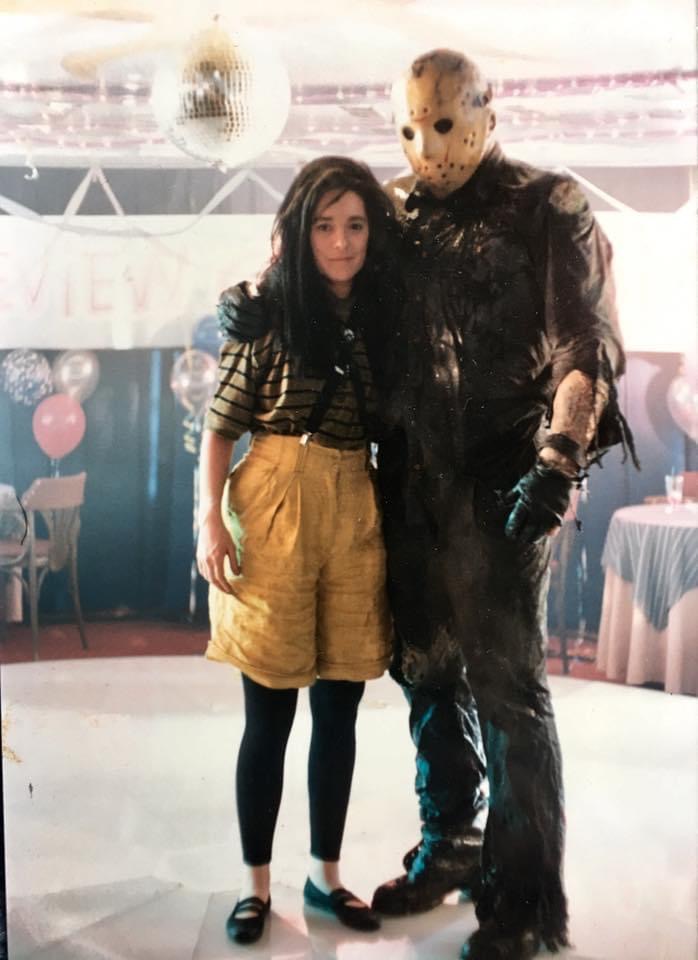
Melissa has over 30 years experience as a stunt performer and stunt coordinator. She has worked on films such as Suicide Squad, The Dark Knight Rises and doubled Angelina Jolie in Mr and Mrs Smith. Her first day on set was in 1989 on Friday the 13th Part VIII, where she was one of hockey-masked killer Jason Vorhees’ victims: “I cracked a rib on that job. I thought ‘this is the best’. I woke up with sore ribs laughing and thought ‘alright that’s how it goes.’”
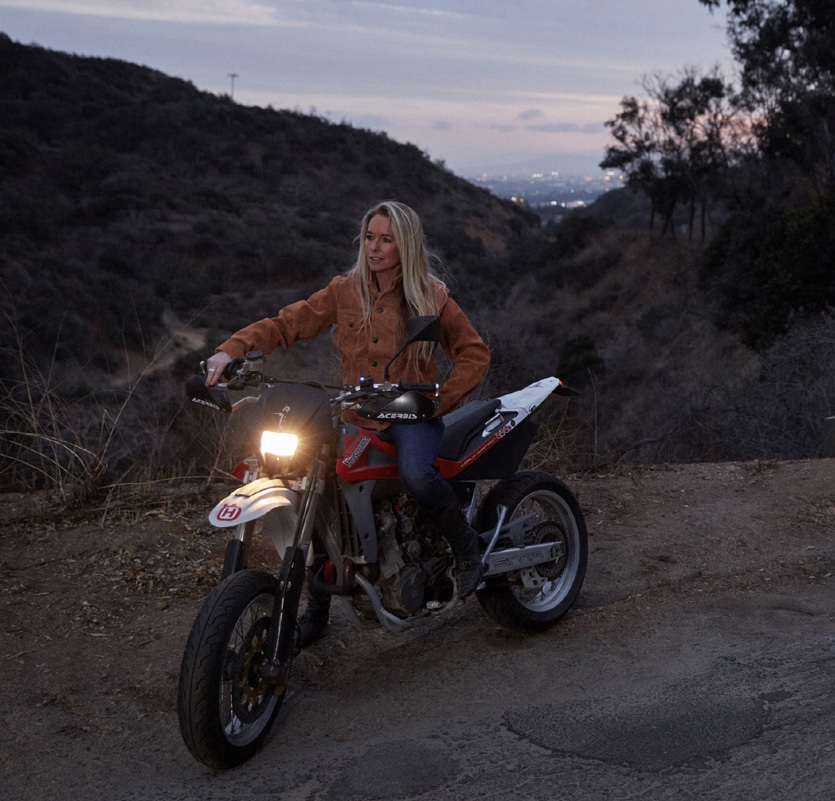
Melissa Stubbs on motorbike. Pic: Melissa Stubbs
Stuntwomen have been in the public eye more than usual recently. The 2020 documentary Stuntwomen: The Untold Hollywood Story, directed by April Wright, shined a light on their pivotal role in cinema history. The recent action-comedy Polite Society is one of the first to feature a main character who wants to be a stuntwoman. Guiomar doubled for Nimra Bucha’s character in the film.
Even with the increased interest in stuntwomen and the rise of female lead action movies like Wonder Woman, Tomb Raider and Black Widow, the industry still doesn’t hire as many women as it should.
Progress is noticeable, but it is slow. When Guiomar started out as a stunt performer, she says: “It was just me and 15 other stunt guys. Now, we are three girls, but still 15 guys.” Guiomar also adds she is the only female stunt coordinator working in Spain.
“You can’t get qualified if you don’t get on a set and get the experience”
La Faye Baker
The reason for the lack of women stunt performers is a combination of factors: sexist attitudes have kept women from dangerous stunts, which has blocked women from gaining the essential experience. It doesn’t help that scriptwriters don’t write as many women into action-filled scenes and that the boy’s club mentality in Hollywood means that nondescript roles often go to men.
The bulk of the stunt industry isn’t doubling Scarlett Johansson in Black Widow – it is performing nondescript roles that could require any potentially dangerous actions. When you see civilians jumping from burning buildings, running between cars or falling down stairs, it is done by professional stunt performers, says La Faye. She has been a stuntwoman and coordinator for over 30 years and was the first black woman to be a stunt coordinator on a big-budget film. She has worked on productions ranging from Clueless to Black Panther and doubled Angela Bassett on Green Lantern.
La Faye recalls an experience shooting a huge scene on a bridge for Mission: Impossible III that sums up the oversight of women nondescripts: “Director J.J. Abrams came and said: ‘We’re on a bridge and there are no women running out from the cars’,” says La Faye. The crew had to scramble to find women to make the scene realistic. La Faye says this is representative of Hollywood’s boy club mentality: “A lot of the time they hire their friends… they’re working with their homeboys and then they’re thinking about who to bring on set? So they bring their friends.”
Along with civilian roles, the bulk of stunt jobs come in the shape of nondescript fight scenes: “Army, bodyguards – all guys. People getting drunk in the pub having a little fight? They’re all guys,” says Guiomar. The change here is slow. Melissa recently saw the latest John Wick starring Keanu Reeves: “There’s one female in the entire film. He must have killed a thousand guys in the movie. A thousand stunt guys got jobs, which is great, but I just laughed because that’s just like how it used to be.”
Yet even when female characters are doing stunts, the job of the stunt double will sometimes go to a male performer in a wig – a controversial practice known as “wigging”. This has been a topic of debate within the industry: In 2018, American stunt woman Deven MacNair filed a complaint against the Screen Actors Guild to the US Equal Employment Opportunity Commission. An investigation concluded that it is “not acceptable and that this should not happen”.
La Faye says the practice still happens but is less prevalent and says it is “a way of blocking women from doing stuff by saying women aren’t qualified”. The irony being: “You can’t get qualified if you don’t get on a set and get the experience!” Similarly, “paint downs” are when white performers paint their skin to match the actor: “There’s no more excuses for paint downs – whether male or female,” says La Faye. Jwaundace Candece is a black stunt woman who founded stuntpoc.com, a database of stunt performers of colour made to encourage stunt coordinators to hire more diverse performers.
“I think that Hollywood is changing for the better”
Melissa Stubbs
As a performer, Melissa says: “I learnt at a young age, I don’t want to be replaced. I want to flip the car, I want to jump the motorcycle, I want to learn all the things that only the boys are allowed to do.” Yet as a coordinator, Melissa recognises that the lack of diversity in the industry cannot ever impede on the necessary safety precautions: “I don’t want to water down the stunt or make the stunt simple to suit the performer… if the right person doesn’t have the experience you need to offer them the shadow experience and they can come to watch and learn.”
All the stuntwomen agreed that mentorship opportunities are the most important way of passing on knowledge and creating opportunities. This is why La Faye founded the nonprofit organisation Diamond in the RAW, which caters to girls from underserved communities and educates them about careers behind the scenes. They have hosted film boot camps where young girls get the opportunity to be stunt performers: “They were able to be set on fire, sit in the car like Fast and Furious and do 180 slides. They were doing wire work and high falls. It was amazing!” says La Faye.
Melissa feels positive about the future of the industry: “I think that Hollywood is changing for the better.” La Faye agrees: “There’s more training available, more opportunities and they make more money,” she says. “There is an amazing group of talented women that are out here now!” This is in no small part thanks to trailblazing figures like Melissa, La Faye and Guiomar.