
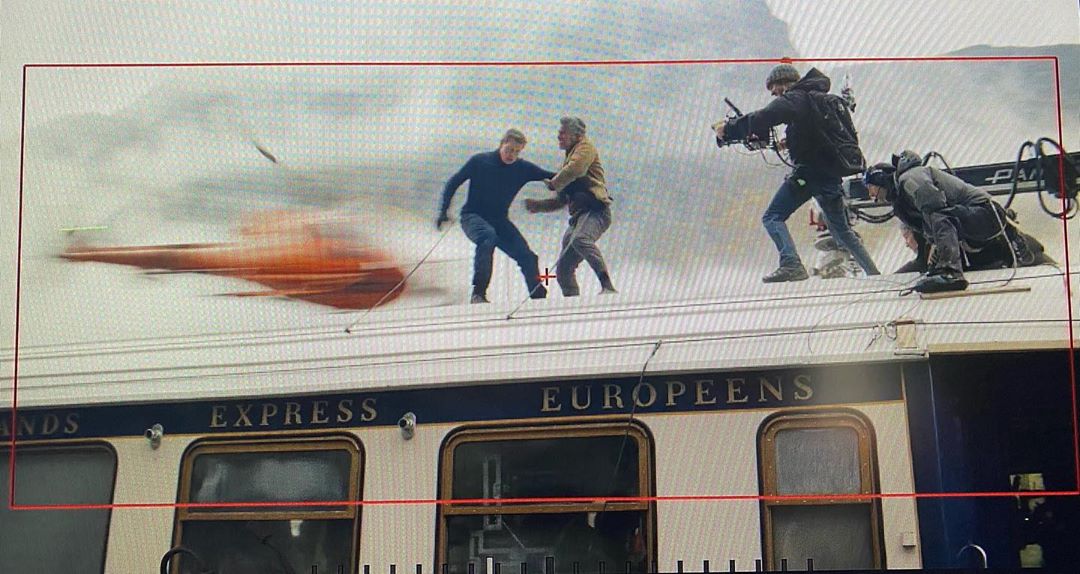
On the biggest Hollywood productions, only a fraction of what is filmed makes the final cut. “Sequences that last 10 minutes in the film sometimes take five months to shoot,” says Ben Haim, who works on the biggest blockbusters as a digital image technician (DIT). Every single frame that is shot needs to be accounted for, which is the role of the DIT: “It may sound boring to you because there’s a lot of technical stuff a DIT needs to carry out. But they are integral as they act as the ‘bridge’ between pre and post-production,” says Ben.
The DIT is a highly technical role that Ben has been doing for about two years. “A DIT is mainly responsible in two areas: colour grading and media management,” which means working rapidly on set next to the director of photography (DP) as well as being responsible for the raw footage. Ben has worked on some of Hollywood’s biggest productions, including the latest Mission: Impossible and Marvel’s Antman.
“I see the job as a guardian, protecting the director of photography’s creative vision”
Ben Haim
From the moment the footage is captured on camera, the DIT has to closely observe changes that may affect the director’s cinematographic needs with live colour correction. “When the shooting starts and the sequences are framed on the camera, I need to ensure that all images are colour graded as exactly what the DP intends for the overall style of the film. I see the job as a guardian, protecting the DP’s creative vision,” says Ben.
Colour grading refers to the manipulation of images and videos to obtain a consistent colour tone, which usually takes place in post-production. Yet, it comes as part of Ben’s responsibility as a DIT to make colour corrections “live” for the director to be able to watch back immediately on set. Ben says it is demanding “because you never know what the director wants in a shot. Does he prefer bright colours or gloomy vibes? There are countless possibilities with how colour can be presented in the images.”
Cameras on these films can cost millions of dollars and require extremely specific, cutting-edge technology, which is partly Ben’s responsibility to oversee. In Ant-Man, Marvel’s new sprawling multi-verse epic, the universe comprises overlapping angles seen from both humans and ants. The rapid change in perspective resulted in the demand for an integrated mix of camera lenses, like Panavision Primo V lenses or Canon EF lenses, that all affect the colour of the shots.
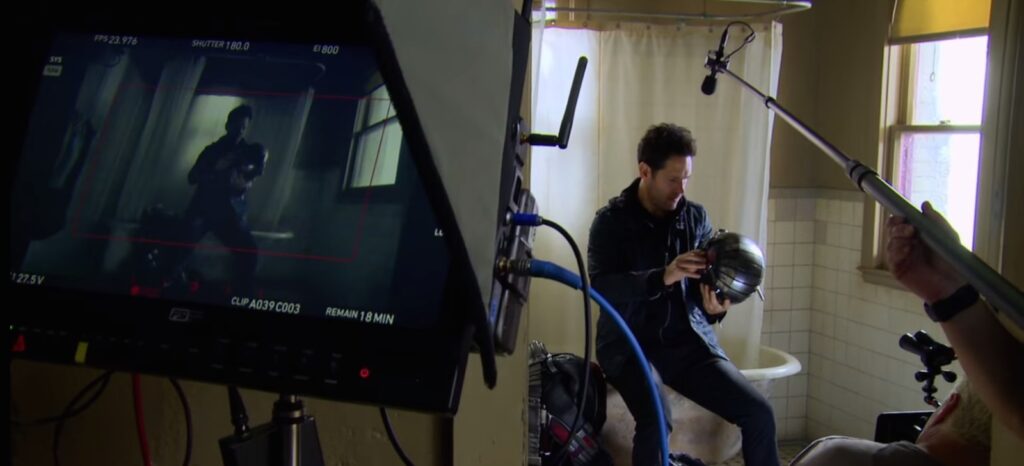
The money invested in cameras is “frightening”, says Ben. “Because Ant-Man is packed with dangerous action with helicopters and fight sequences,” he recalls, “I had a fright shooting high above the ground and was worried that the Alexa M cameras, which cost a shocking $100,000 each, might fall to the ground. No cameras were broken, fortunately,” he adds.
While cameras falling out of helicopters are bad, the real danger lies in something more mundane. The DIT is responsible for all of the raw footage: “Even if it was just a single frame of footage missed from backing up, it could lead to significant problems in post-production when the editors are demanding access to all files.” Ben says managing the footage is the “utmost responsibility” and he’s not exaggerating. Without the footage, there would obviously be no film.
Nevertheless, Ben feels a sense of satisfaction when the action before his eyes is seamlessly captured by the camera, colour corrected in his hands, and then quickly copied and organised. “One of the fascinating things I found on a massive set is the flow of it. Once a scene is ready for shooting, everything flows in harmony, allowing the DIT to capture the scenic details that are most important to the film,” says Ben.
Ben knows his role isn’t widely acknowledged. “It was only through working as a DIT that I came to realise small roles do shine,” he says, “I feel proud knowing that my role has a contributing place.”