
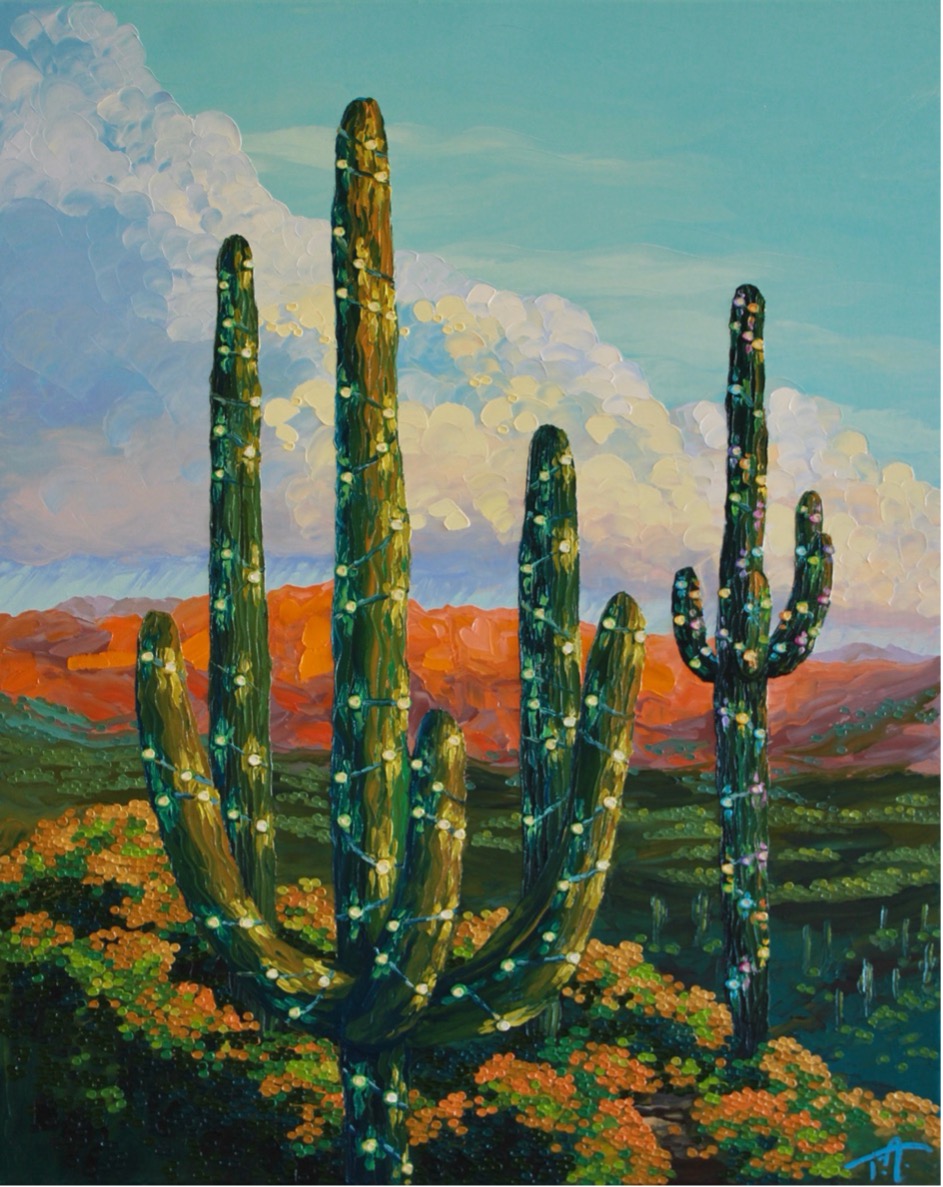
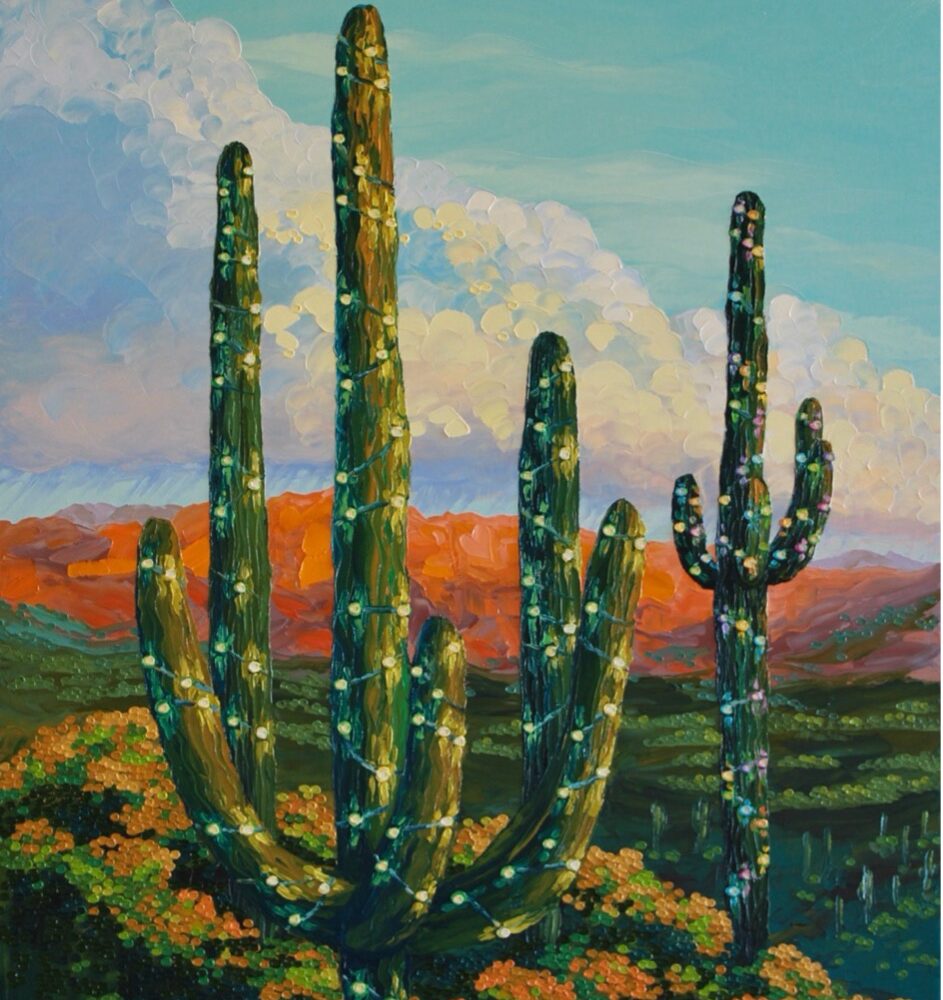
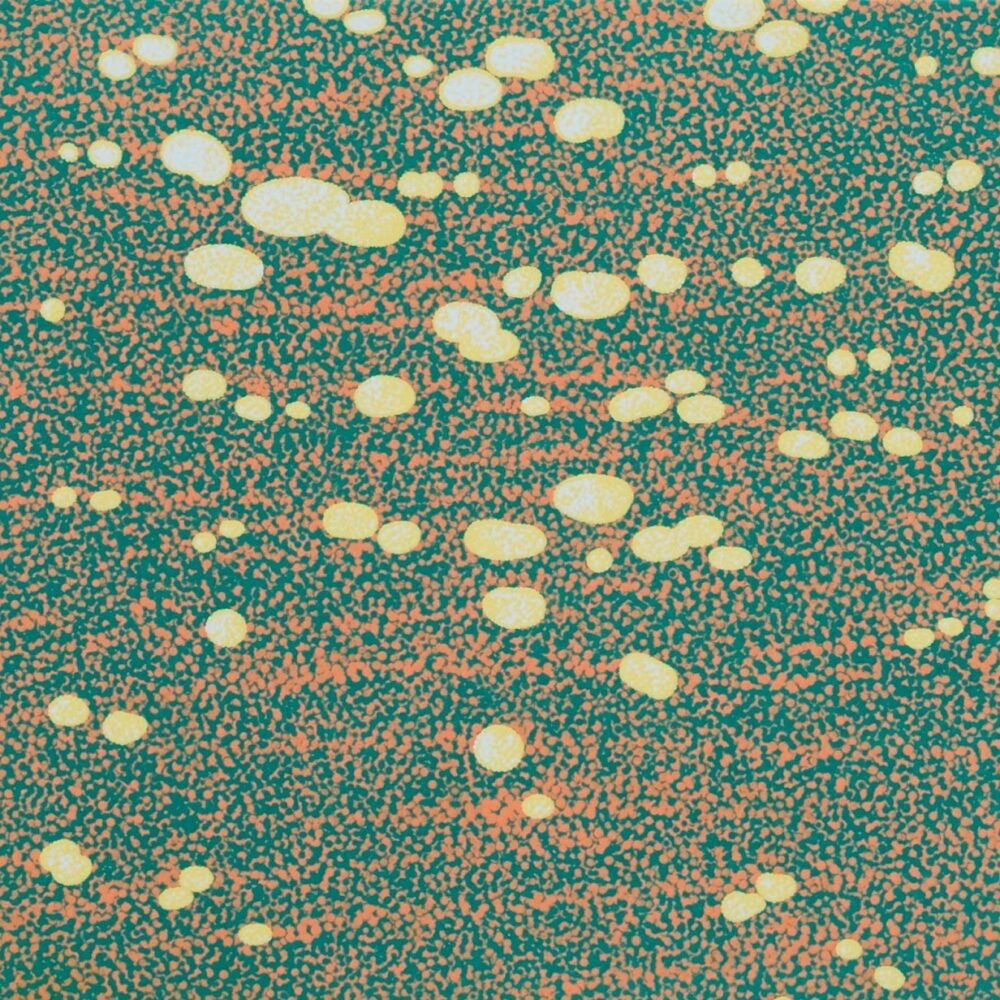
Featured image: “Feeling Seen”, “Warm Welcome” collection, 2025, oil on linen canvas. Image courtesy of Tessa Nicole
Composed of dots that only resolve at a distance, pointillism is being reimagined by contemporary artists in new ways
From a distance the image appears as a whole. Step closer and you’ll discover the hundreds of dots carefully placed next to each other. The painting encourages you to slow down, to look again, to shift your perspective. It is this optical illusion that lies at the heart of pointillism.
Pointillism, also known as Neo-Impressionism, emerged in the 19th century. The technique involves the careful placement of tiny dots of pure colour on the canvas; it is a time-consuming and methodical process, which requires immense patience from the artist. Pioneered by French artists, Georges Seurat and his associate Paul Signac, the movement stood in sharp contrast to Impressionism, the prevailing art movement of the time, which was celebrated for its emotional intensity and spontaneous brushwork.
Early pointillists drew on scientific research into colour and perception, which suggested that contrasting colours when juxtaposed, can appear brighter and create an illusion of new hues from a distance. Seurat embraced this theory, dividing scenes into light, shadow and complementary tones and applying each as a separate dot, allowing colour to blend in the viewer’s eye rather than on the canvas.
Today pointillism is less about strict adherence to 19th century theory, but rather personal interpretation. For Arizona-based artist Tessa Nicole, 28, pointillism didn’t emerge from colour theory or formal training, but rather an intuitive process and experimentation with materials.
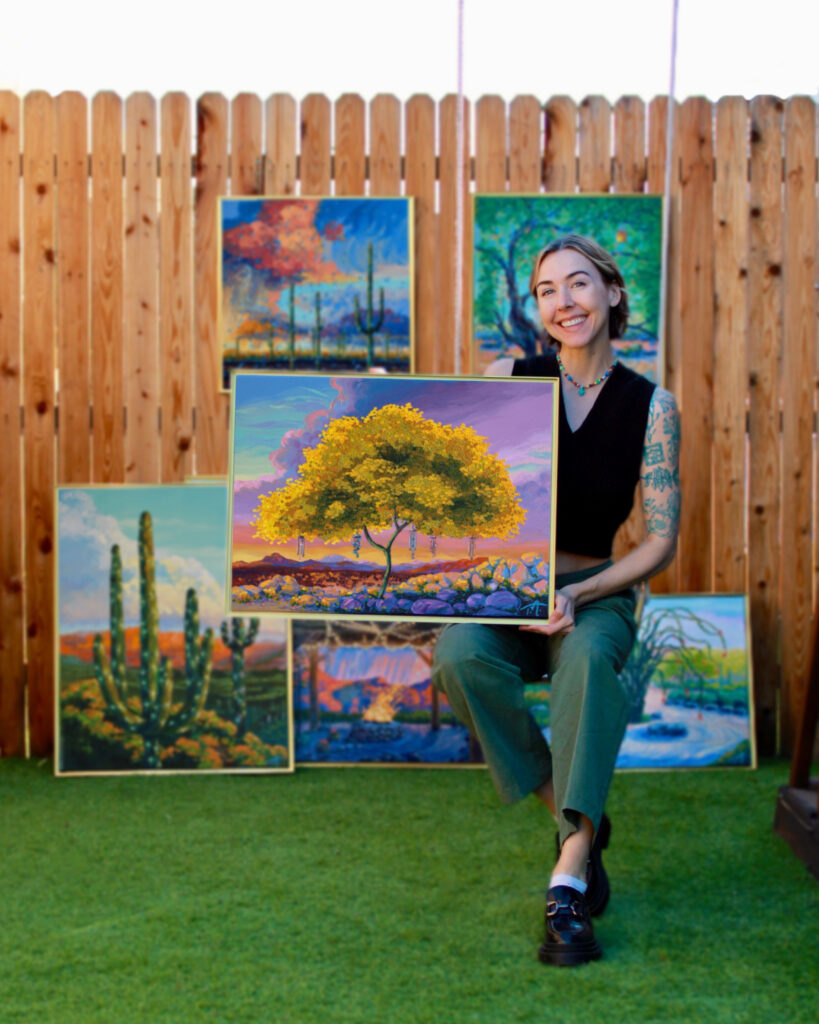
Tessa, an artist who has embraced pointillism, transitioned from music to visual art, creating their first painting for a music video in 2015. They started experimenting with different styles and eventually started creating solely with a palette knife in 2017. In July 2020, Tessa created their original style-textured pointillism. “The pointillism came from my palette knife,” they explain. “This is my tool for everything.” With time the palette knife started to bend, and Tessa discovered that if they got a specific scoop of paint at the bottom, they could make the perfect textured dot. With practice, Tessa’s dots became very consistent.
Tessa attributes much of their ability to experiment and stay original to the absence of formal education. “I definitely thrive on not having a blueprint to follow,” they explain. Unlike Seurat, they do not approach painting as a structured practice, but rather an intuitive and ever-changing process.
Although Tessa loves classical pointillism, for them the technique was an accident. Tessa doesn’t place the dots all over the painting, focusing the pointillist technique where it can have the most impactful effect. “I usually say that anything with life, I can use with pointillism. Any foliage will lend itself well: trees, flowers, even clouds, and light.” The texture of the dots creates an additional layer of contrast between the smooth and the pointillist layers, adding depth to their pieces.
“I found that a lot of people are more drawn to the painting if it has a really strong contrast, and so I try to play with the dark a lot,” Tessa explains. “I think it helps bring out the brighter colours and lighter colours, and it makes it more dramatic.” While Tessa’s use of contrast is similar to traditional pointillist techniques, the placement of colour is largely intuitive rather than strictly theoretical.
“The pointillism came from my palette knife. This is my tool for everything”
Nature serves as Tessa’s main source of inspiration: some scenes are drawn from real places, while others appear from imagination. “I like to bring outside inside,” they say. Unlike many early pointillists, whose work was often criticised as stiff and lifeless, Tessa uses art as a channel for their emotions. Their love for nature radiates from the paintings, inviting the audience into a whimsical, almost dreamlike landscape filled with candy-coloured trees and vibrant clouds.
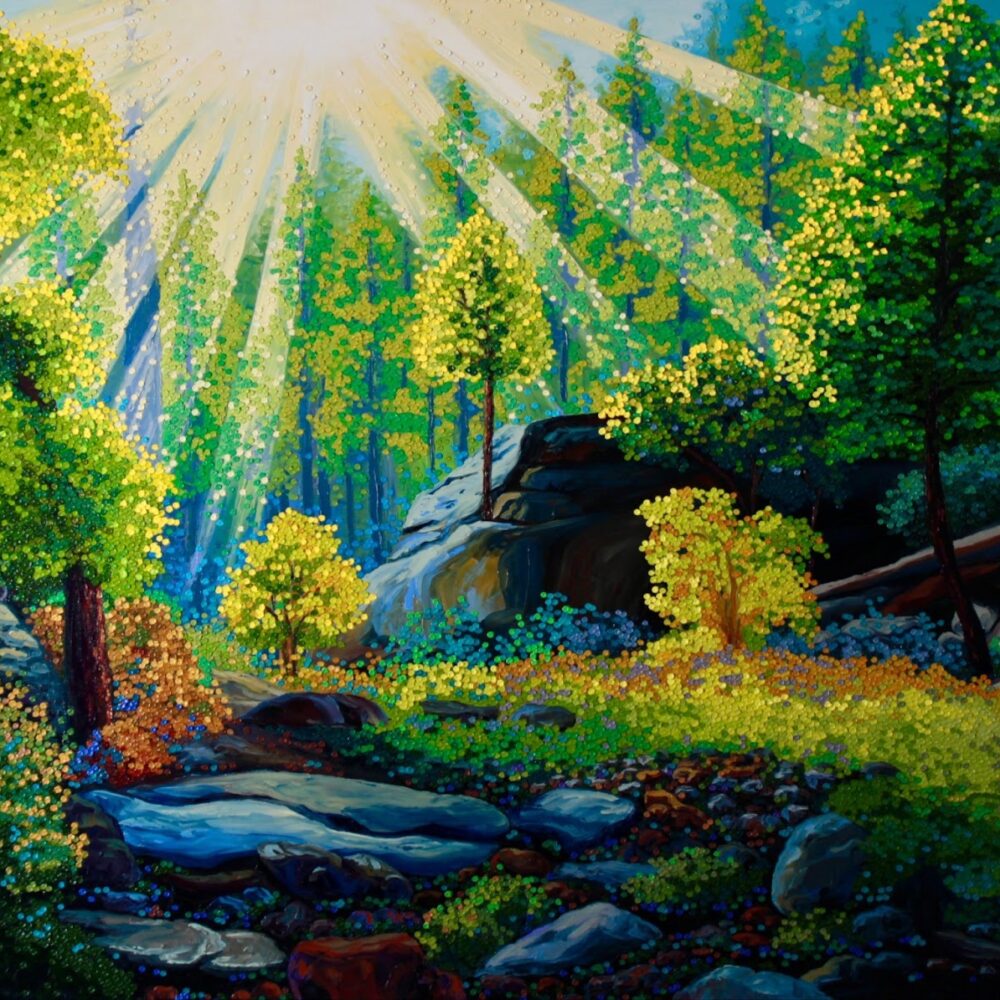
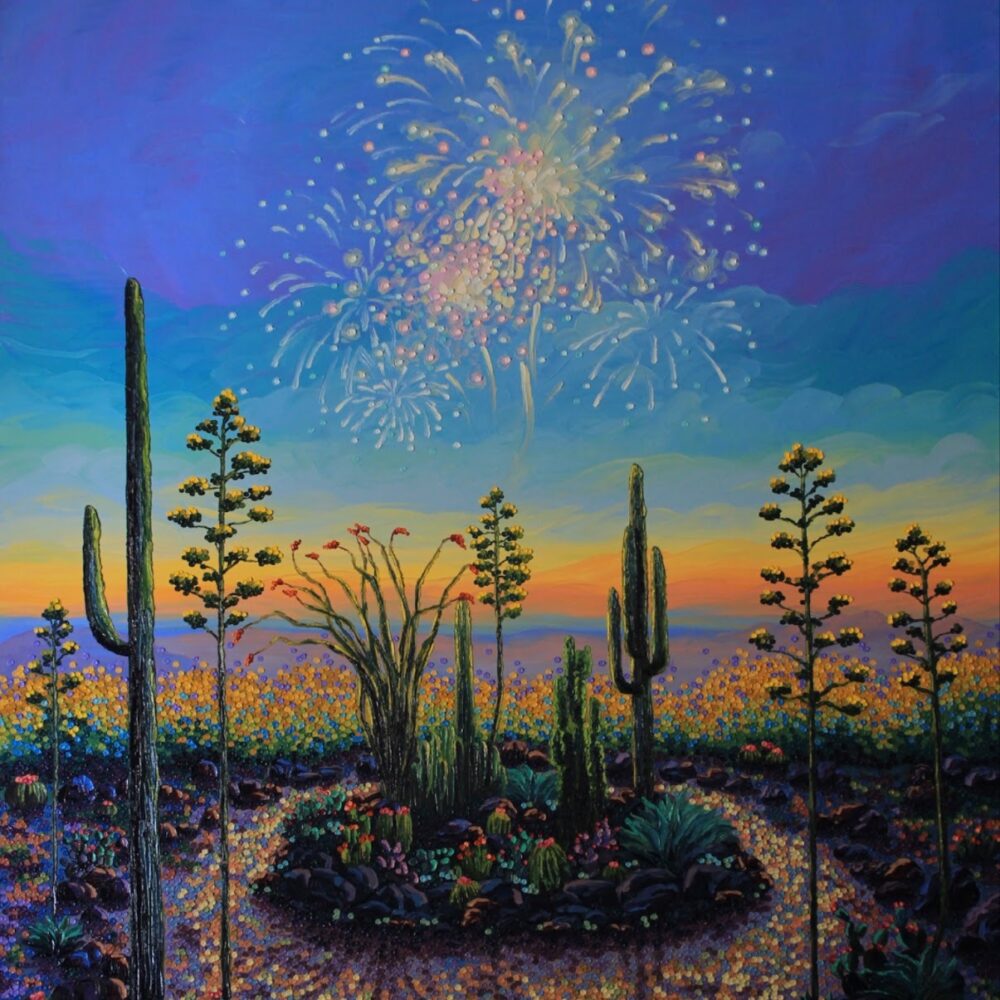
“Letting It Sink In”, ”Nature and Nurture” collection, 2024, oil on linen canvas
Lakitki, 37, a South Korean artist, like Tessa, didn’t receive a formal education in fine art. However, she also feels that it allows her to stay more original. Lakitki says traditional pointillists inspired her art at the beginning of her journey, but they don’t guide her work as much today.
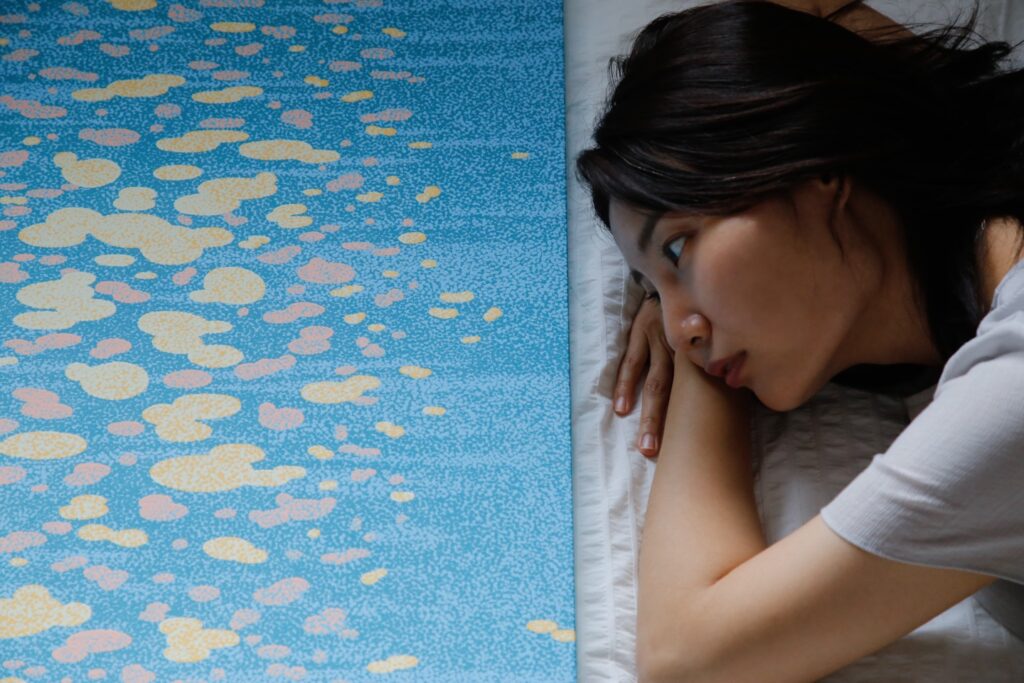
Lakitki, courtesy of the artist.
She first started using the dot technique in 2022. She explains that the pointillist approach came to her on a clear day, while enjoying a view in the town she lives in. “The landscape behind the dazzling sunlight appeared to me as tiny particles,” she says. “Since then, I stopped separating light and shadow when painting an object and instead began mixing and layering two or three colours of dots.” Lakitki explains how she explores the relationship between light and colour, but scientific theory doesn’t guide her. She, like Tessa, relies on her intuition. Lakitki finds herself mixing new colours to capture the nature around her in all its glory.
Lakitki similarly finds inspiration in nature. Born and raised in the bustling city of Seoul, she spent many years feeling under constant pressure. She decided to move to the countryside and the nature she discovered was completely different from anything she had encountered in the city: unmanaged and untamed. After that moment she couldn’t help but paint the sky, the mountains, the trees, the water.
Lakitki lives by the Soyang River, a river that inspires her work every day. Her most recent series “Observer by the Soyang River”, released last year, features intricate paintings of the water’s glistening surface. “I can’t imagine painting anything else while seeing it move before me every morning,” Lakitki says.
For Lakitki, the pointillist technique is a deeply meditative process. It helps calm her anxiety and grounds her in the present moment. Through her work, she aims to communicate the value of fleeting moments that, like reflections on water, exist only briefly before disappearing forever. “I feel our days flow the same way, like a river that never stops,” she says. Through her art, she continues to explore and encourage the viewer to place themselves in the present and appreciate what surrounds them. Much like pointillism requires the artist to slow down, it invites the viewer to do the same, to slow down and observe, to discover the whole picture behind the thousands of individual dots.
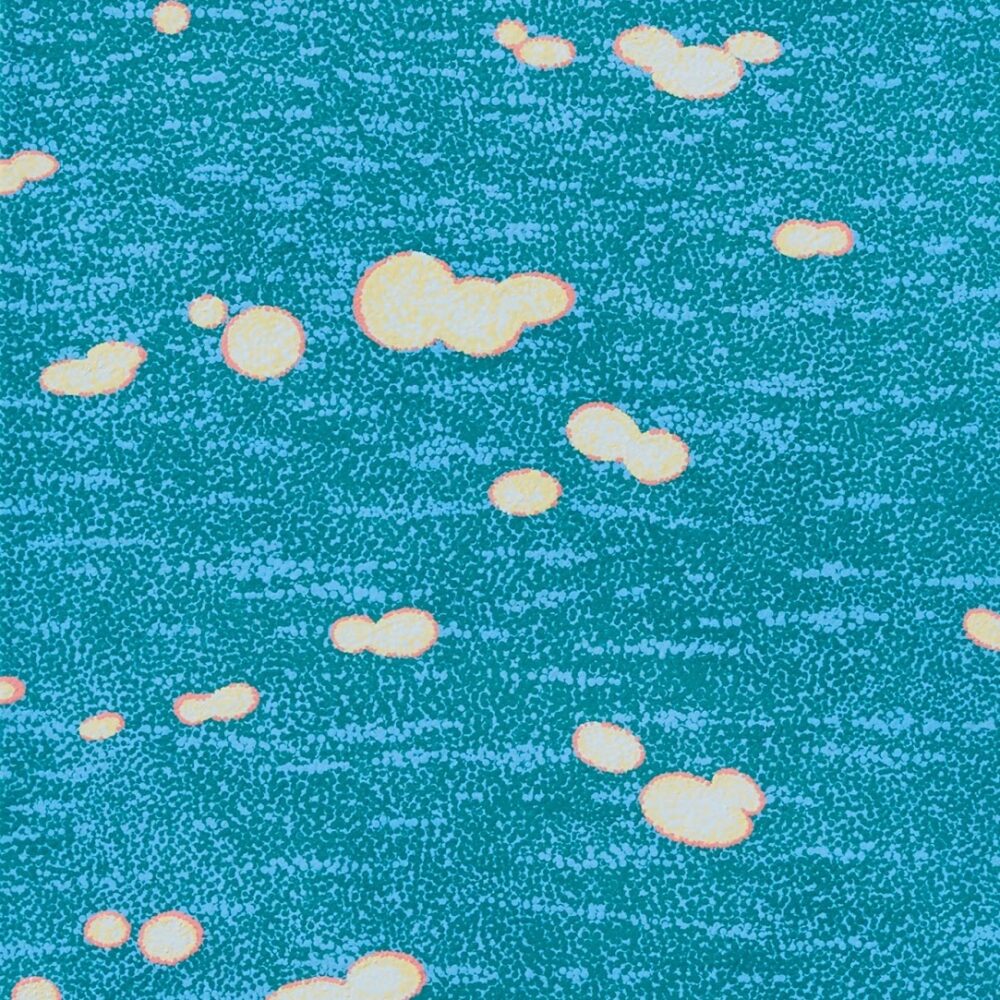
“Luminous 02_”, “Observer by the Soyang River” series, 2025, gouache on paper
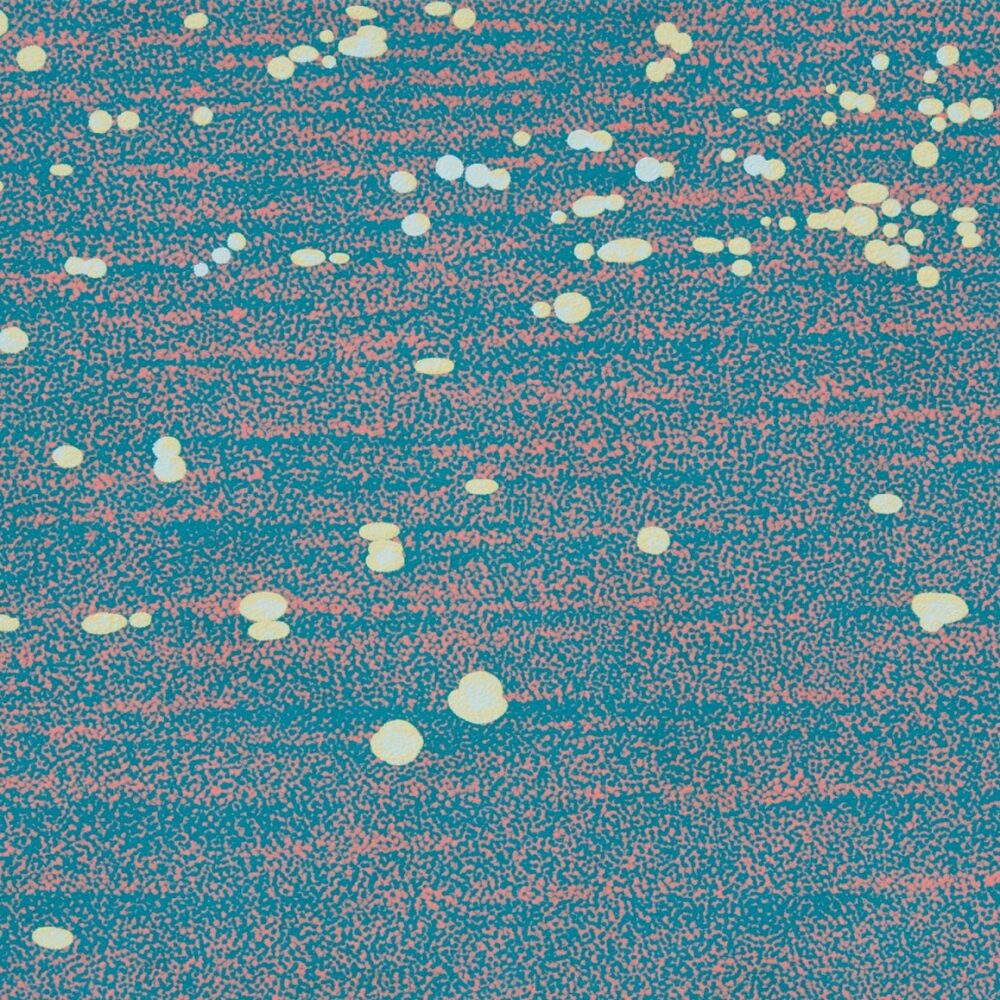
Julia Wheatley, 29, an artist based on the East Coast of the United States, received formal education in art. She first encountered pointillism in a colour theory class, developing a final project that examined how layering pigments can manipulate the eye. Using only six markers, she explored this idea through the pointillist technique.
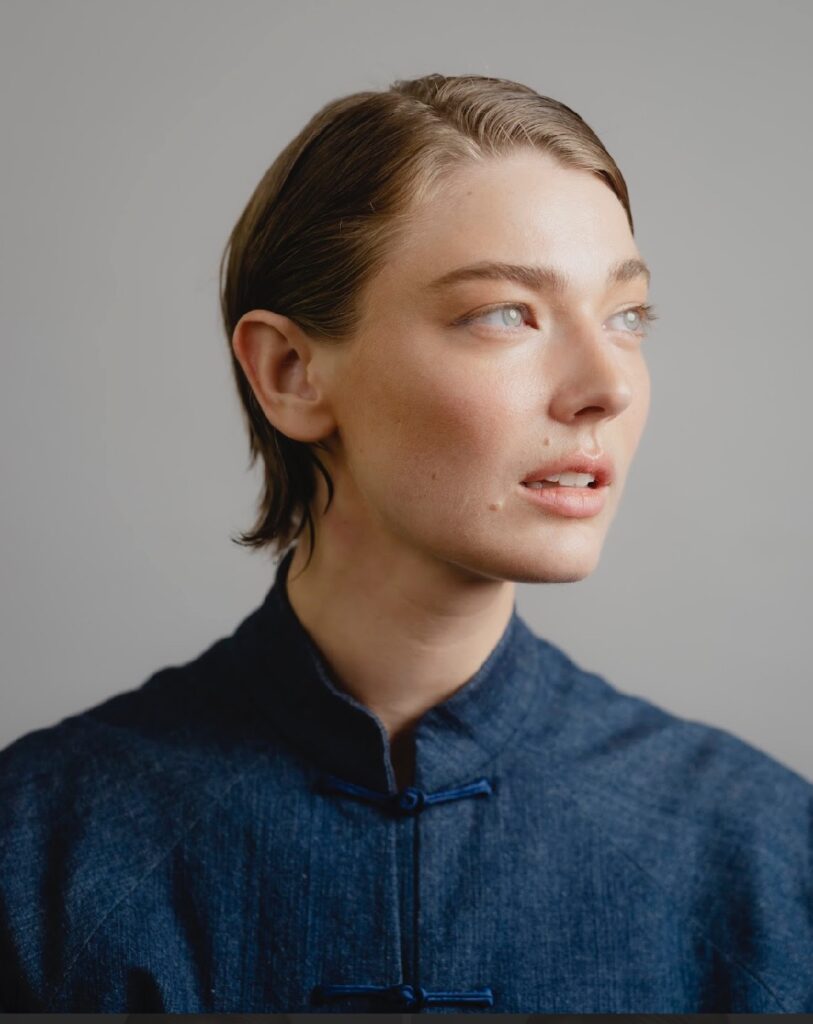
Julia Wheatley, courtesy of the artist.
Around six years ago Julia started doing sketches with markers on Pantone cards, experimenting with pointillism once again. At the time she didn’t have a studio and wanted something portable for daily practice. The material remained in her work, and she continues to use them today to create her pointillist dots.
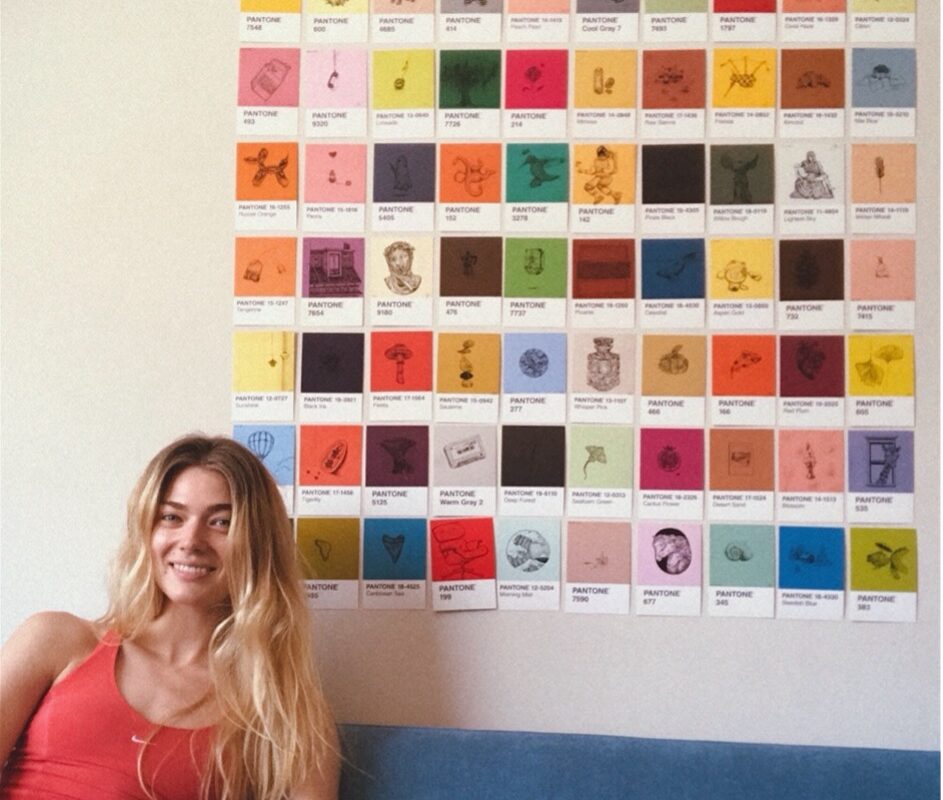
Julia’s Pantone card sketches
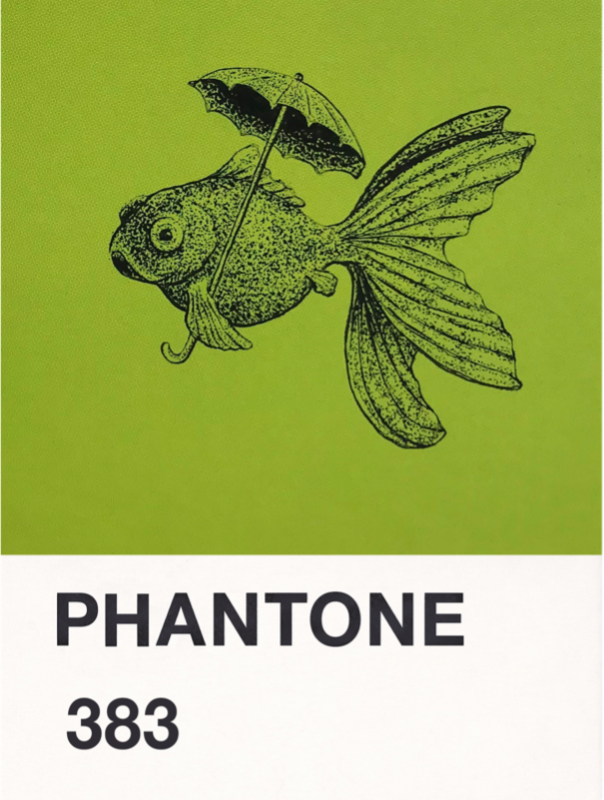
In 2023, after pursuing art professionally, Julia focused on creating collages, but recently pointillism has returned to her work. “I was drawn back to pointillism specifically because my work is about distortion,” she says. “It’s about how life is perceived differently by each of us.” For Julia, pointillism functions as both a process and a metaphor – images change with distance, just as perception varies from person to person.
“Even Fountain Water Flows” was a pivotal work for Julia, as it was the first painting she did combining pointillism and collage. For her this work was a “fork in the path”. “That painting took me down a really specific path that I otherwise wouldn’t have gone, and I am excited to still be on that path and exploring where it’s taking me,” she says.
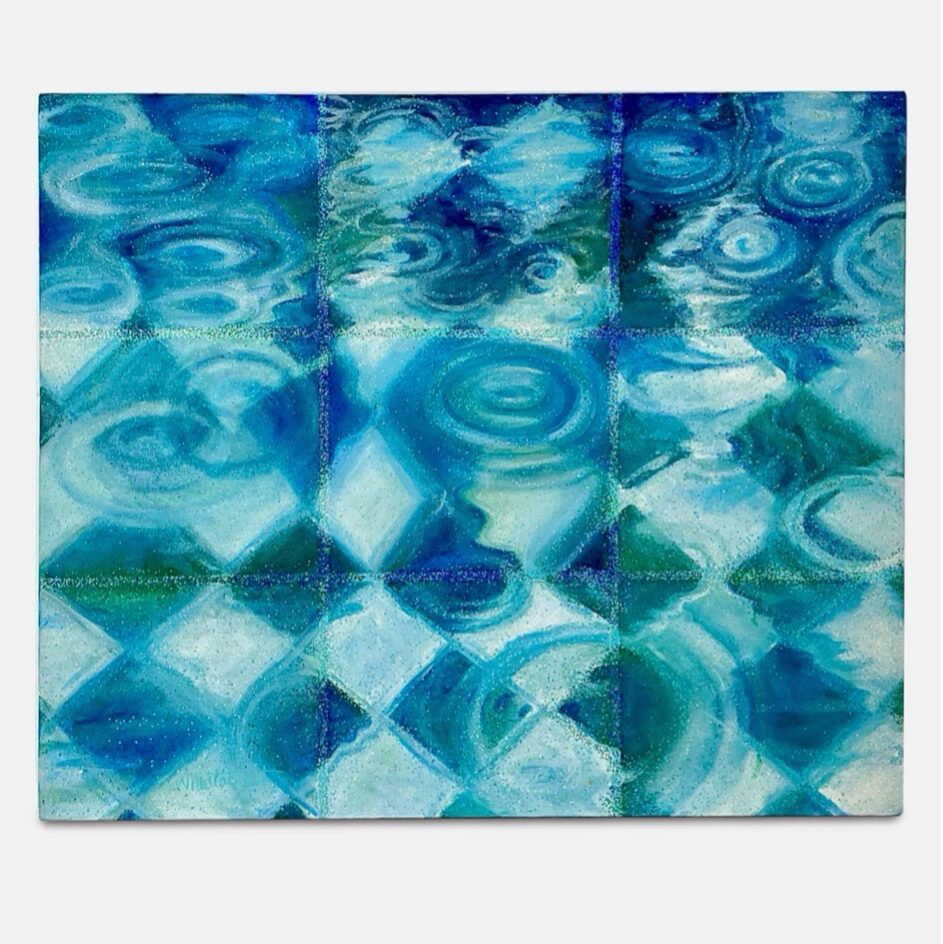
Following this work, Julia has been working on a series of paintings of glass blocks. The initial idea for the series came from a friend of hers who was putting on a show, titled ‘What makes a house a home?’ “I thought back to my childhood best friend. Her parents’ house had all these glass blocks in their wall,” Julia recalls, “And I remember, thinking that’s not my house, but it’s my home.” The glass blocks act as a representation of the overarching ideas of distortion in her work. By painting the world through glass blocks, she explores how perception can be distorted, using pointillism to amplify the visual effect.
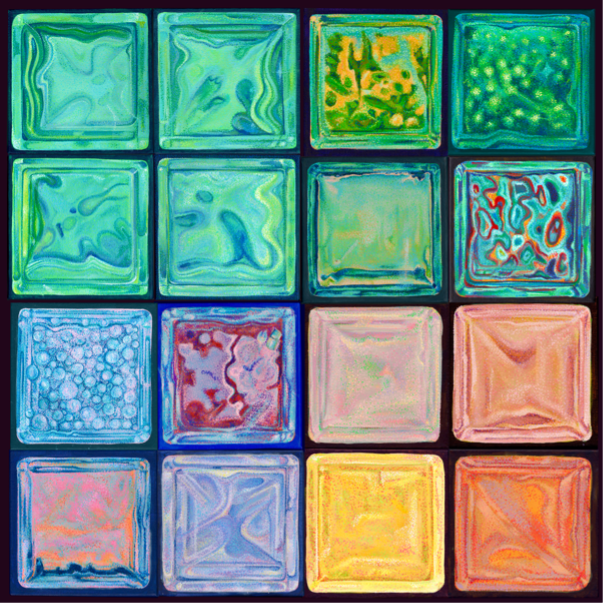
Julia hopes to create many more paintings of the glass blocks, eventually combining them into a large collage. The large painting will become a pointillism piece, each small block contributing to the bigger picture. She explains that combining collage and pointillism, allows her to question what a collage is literally and what is representative of it.
“I was drawn back to pointillism specifically because my work is about distortion”
Pointillism persists not because of the rigid approach laid out by Seurat or Signac, but because it, like any art, is able to adapt and evolve. Each artist interprets it in their own way, suggesting new takes on the 19th century approach to painting.
As Julia says: “I think it wouldn’t be cynical for me to say that nothing is new. But it is all about new context. Everything that is interpreted now can be new with a new perspective, with a new addition, with new ideas. So even if pointillism is an old concept, there are people who are doing it in different ways.”