
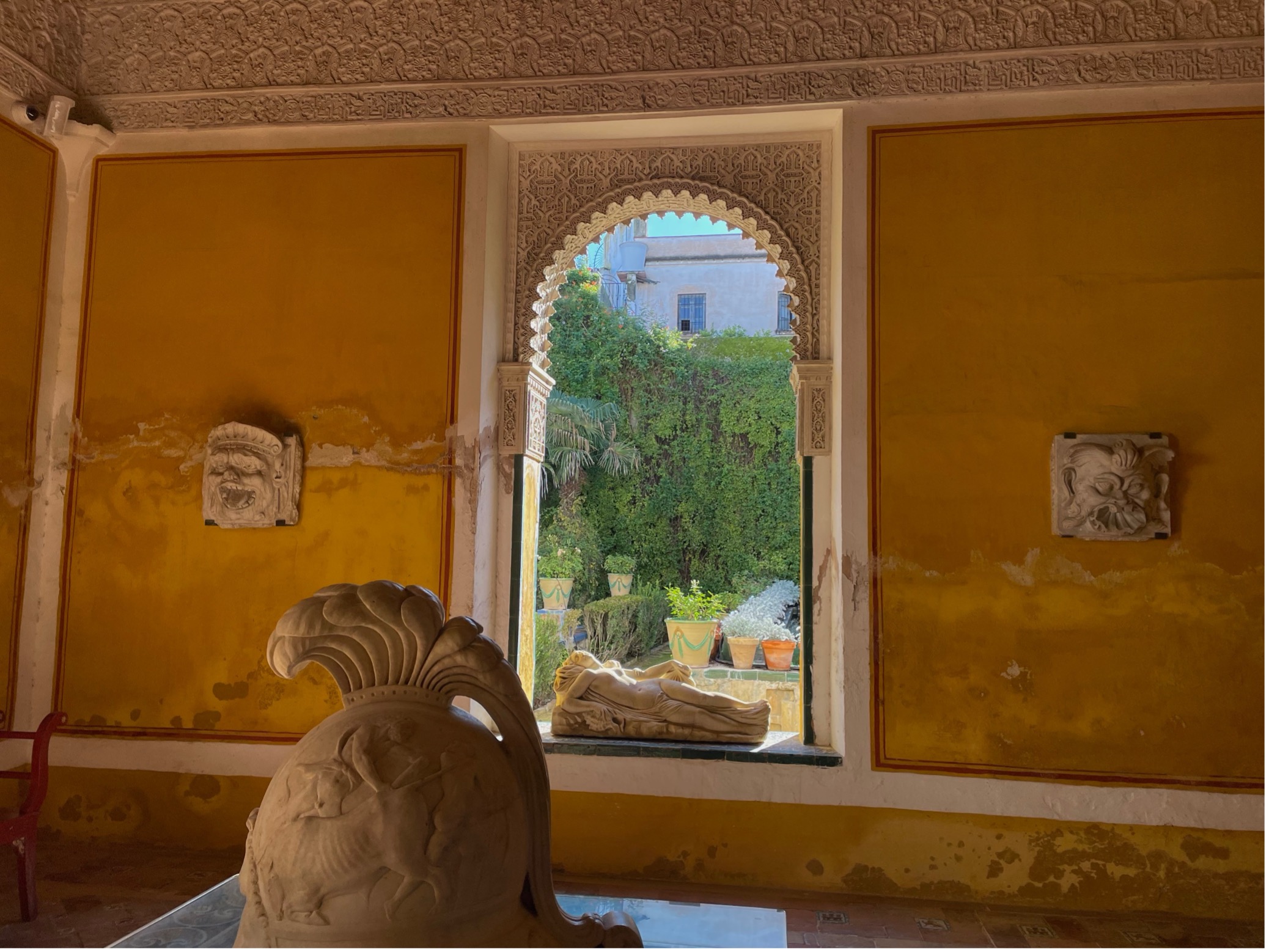
Discover the Spanish architecture that embraces different cultures through arches, spheres and domes
Circles in Andalusian architecture are shaped by Roman, Islamic, Jewish, and Christian cultures. Ángela María López Martín, an art historian and cultural communicator based in Seville, who specialises in historical costume, art history and local heritage interpretation, says that the Andalusian peninsula is not one culture replacing another, but “many folding into each other”.
Seville Cathedral & the Giralda
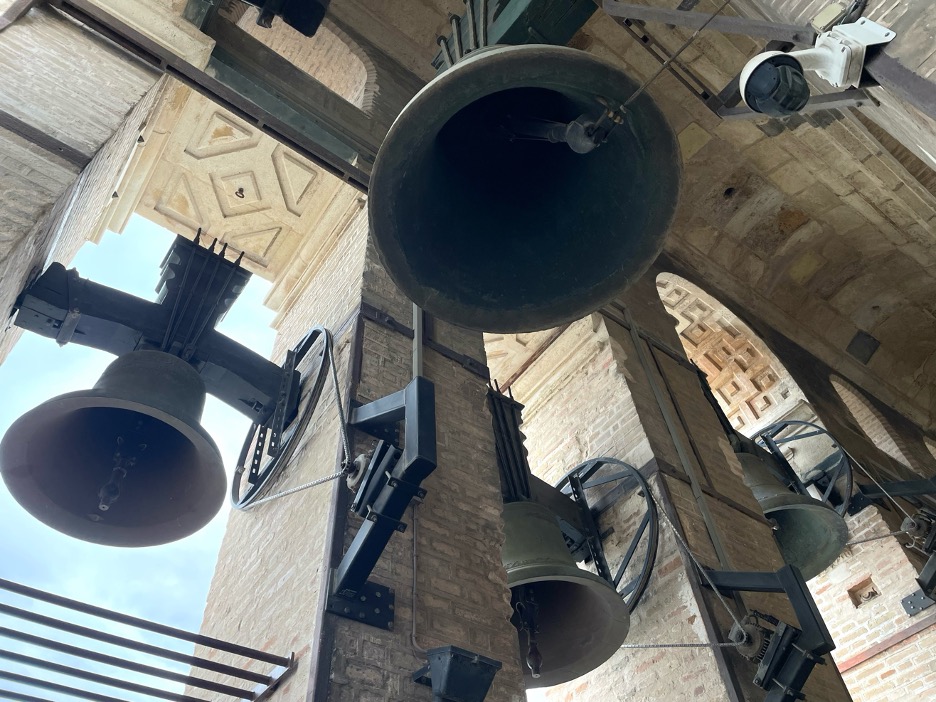
The Giralda of Seville (above), a minaret – a tall tower used by a muezzin to deliver the adhan call to prayer five times a day – is accessible via a spiralling ramp rather than steps, because people would use horses during the 12th century to go up the 35 ramps to get to the top of the tower.
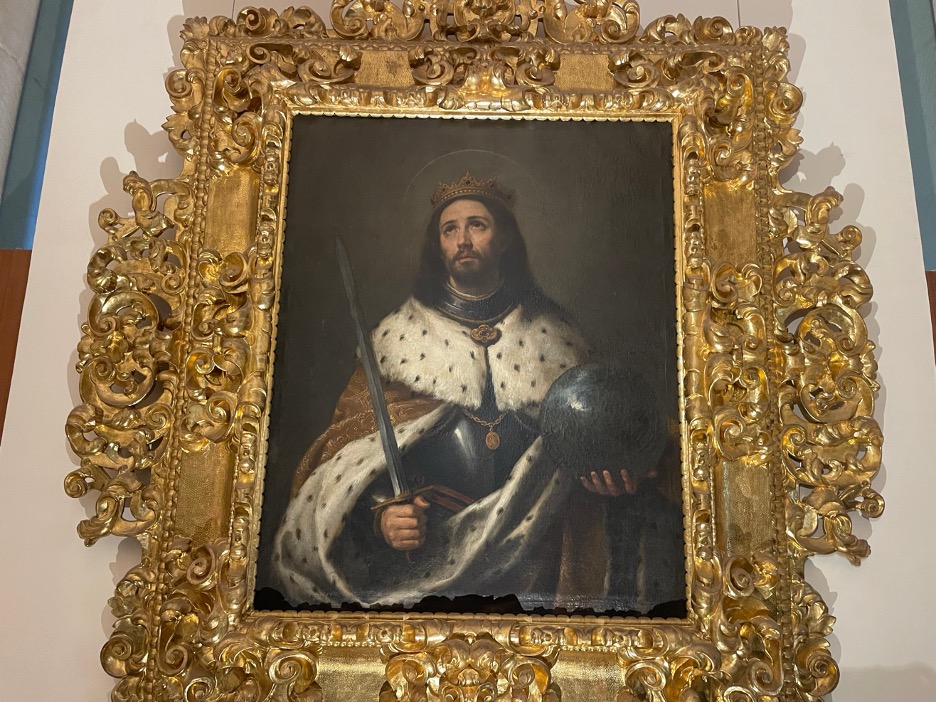
At Seville Cathedral’s entrance stands San Fernando III (1199-1252) of Castile and León, who was the Christian king who conquered Seville in 1248 during the Reconquista and unified the kingdoms of Castile and León. He was later canonised (declared a saint) for his role in expanding Christian rule in medieval Spain. He is presented holding a globe, reflecting a medieval view of a unified and divinely guided world, with Seville at its symbolic centre during the age of discovery. Seville’s cathedral covers 10,000 square metres, making it the largest Gothic cathedral in the world. Seville is the second city in the world with the most churches, behind Rome.
Casa de Pilatos
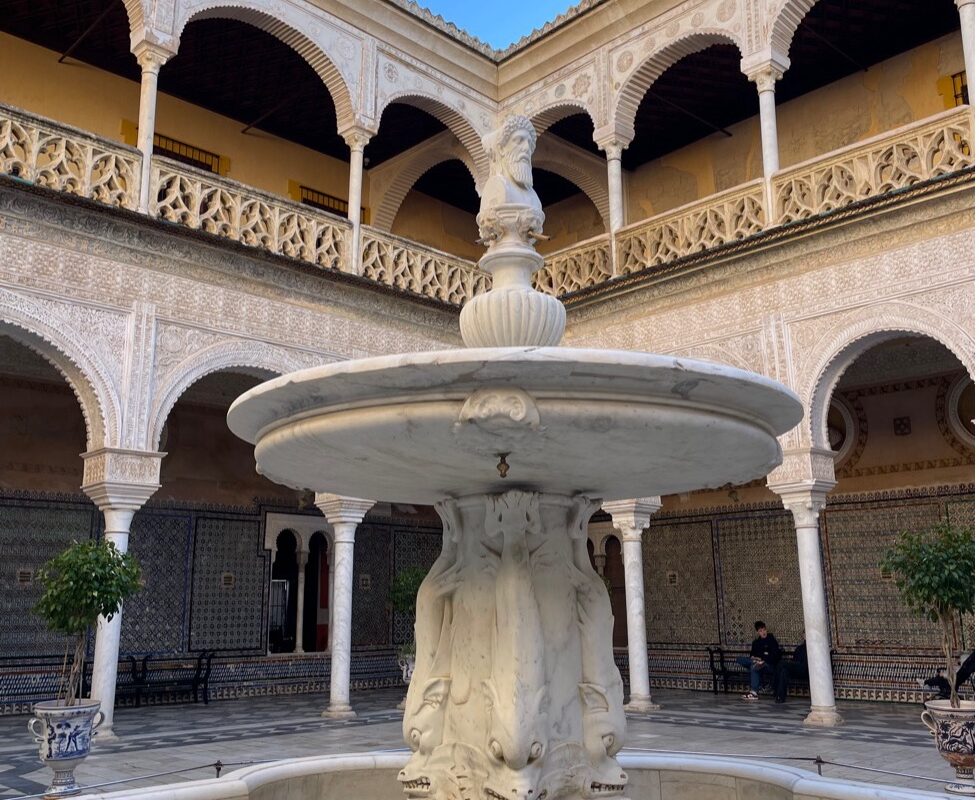
The courtyard of Casa de Pilatos was inspired by the Alcázar, the fortified palace of Seville. It belonged to Catalina de Ribera, an influential noble from the 15th century. She was a close friend of Isabel the Catholic, the queen of Castilla.
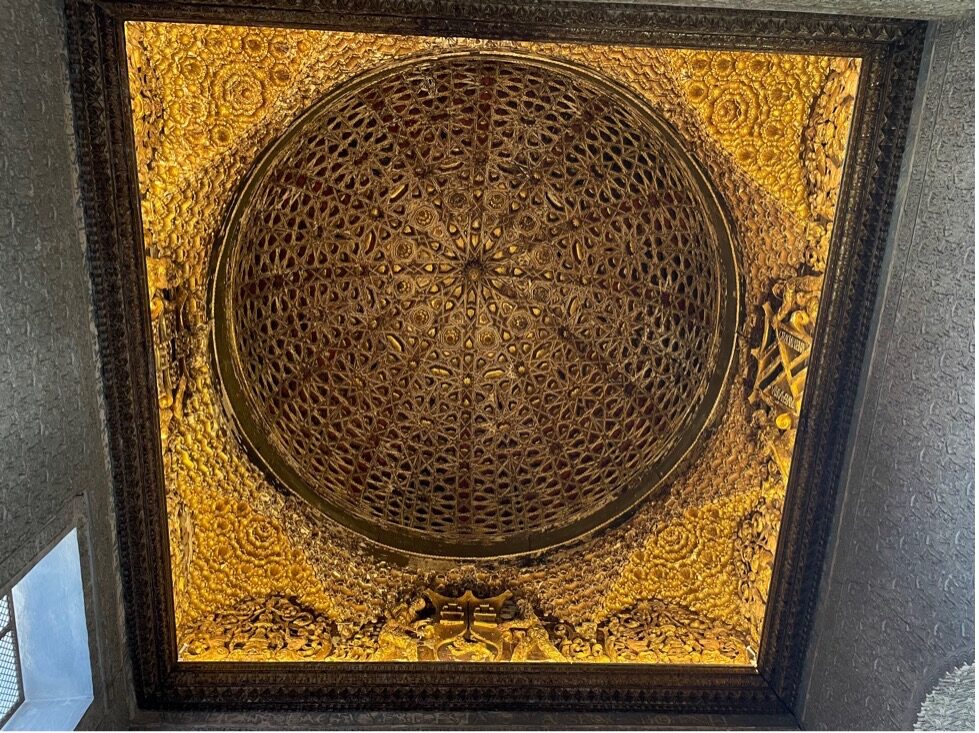
The dome with a gothic-muslim touch was a statement of power and lineage, linking the family to royal authority and global exploration. The house feels like a world of its own. At the centre of the courtyard, there is a Janus fountain, the god of beginnings and transitions, that embodies “the circle as union and separation,” says López Martín. Interestingly, Velázquez was discovered in this palace.
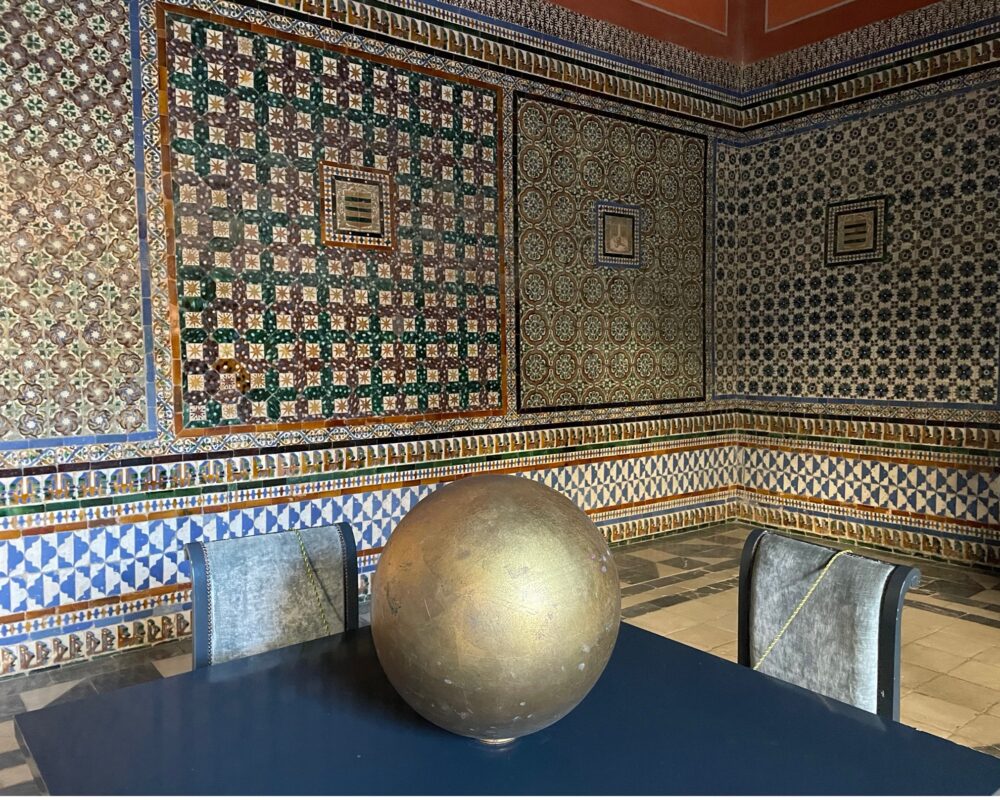
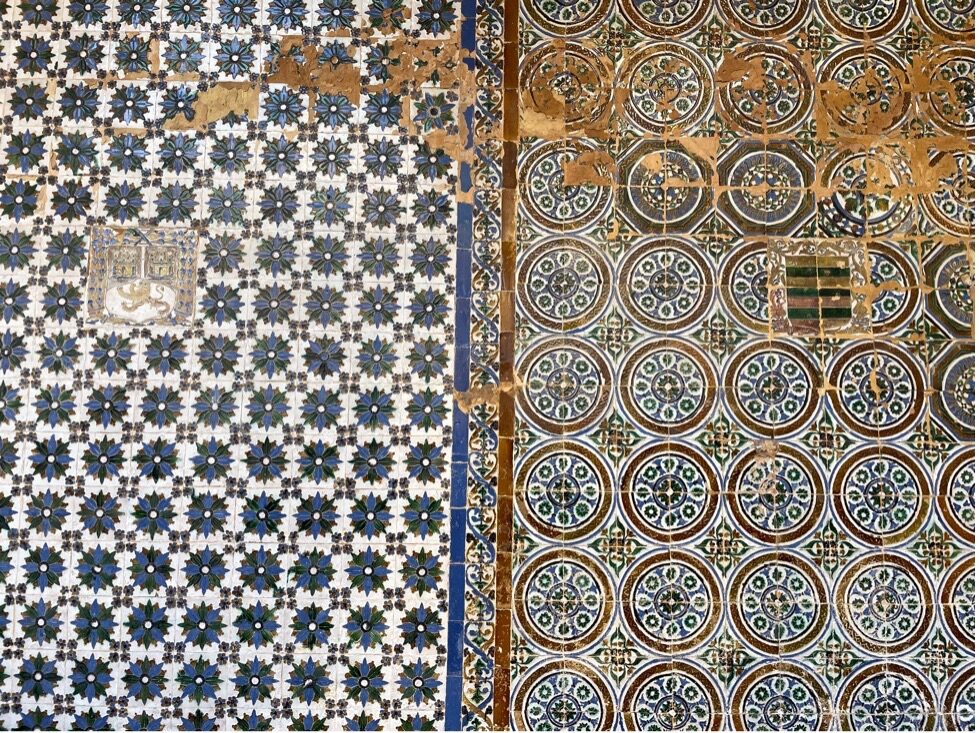
All around this palace, we can see many hand-painted Islamic stars which were fashionable in Andalusia during the 14th and 15th centuries.
The dome in the palace, made of wood with gold leaves, is a copy of the Alcazar dome. This was done to show that “the aristocracy living here had power,” and was connected to the royals, explains López Martín.
This round gold globe-like object, from the 1990s, “symbolises the world,” says López Martín, and alludes to Spain’s vast transatlantic reach, particularly its connections with Mexico and Peru. This global empire expanded across continents but later declined significantly under the Bourbon reforms.
Palacio de Lebrija
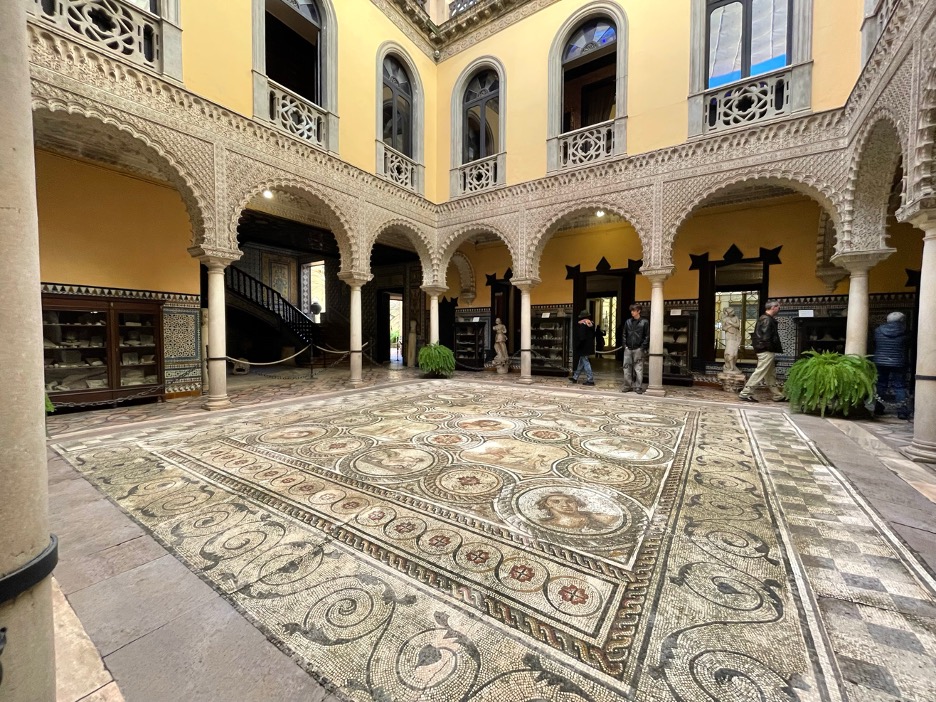
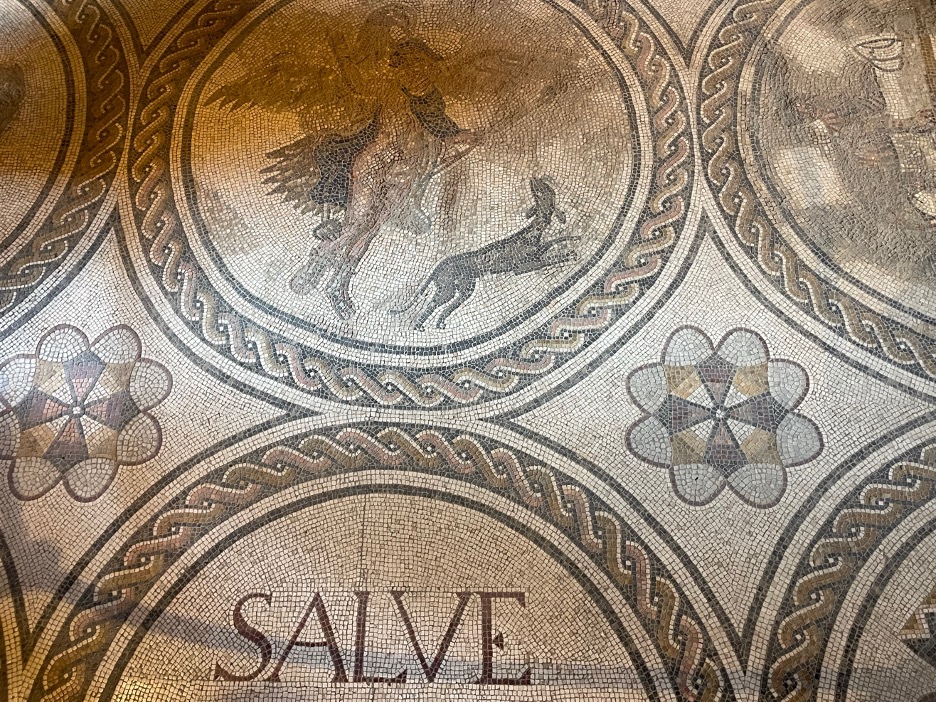
This 16th century palace was bought by the Countess of Lebrija in 1901. In the entrance hall, circular Roman mosaics lay on the floor. They come from the nearby Roman city of Itálica and depict figures such as the seasons, continents and virtues, turning the floor into something resembling a symbolic map of the world. Above some of them, the Latin word SALVE, meaning “to bow” and “salute”, welcomes the visitor. The mosaics themselves date back to the 2nd century, when, as Seville academic Nieves Chisvert Jiménez explains, “Emperor Hadrian decided to expand the city to commemorate the birth of Emperor Trajan, who was originally from Itálica.” She adds that “the Countess decided to fund the excavations herself to dig up the mosaics and decorate her home” –something that, back in the 19th century, wasn’t illegal.
Mosque – Cathedral of Córdoba
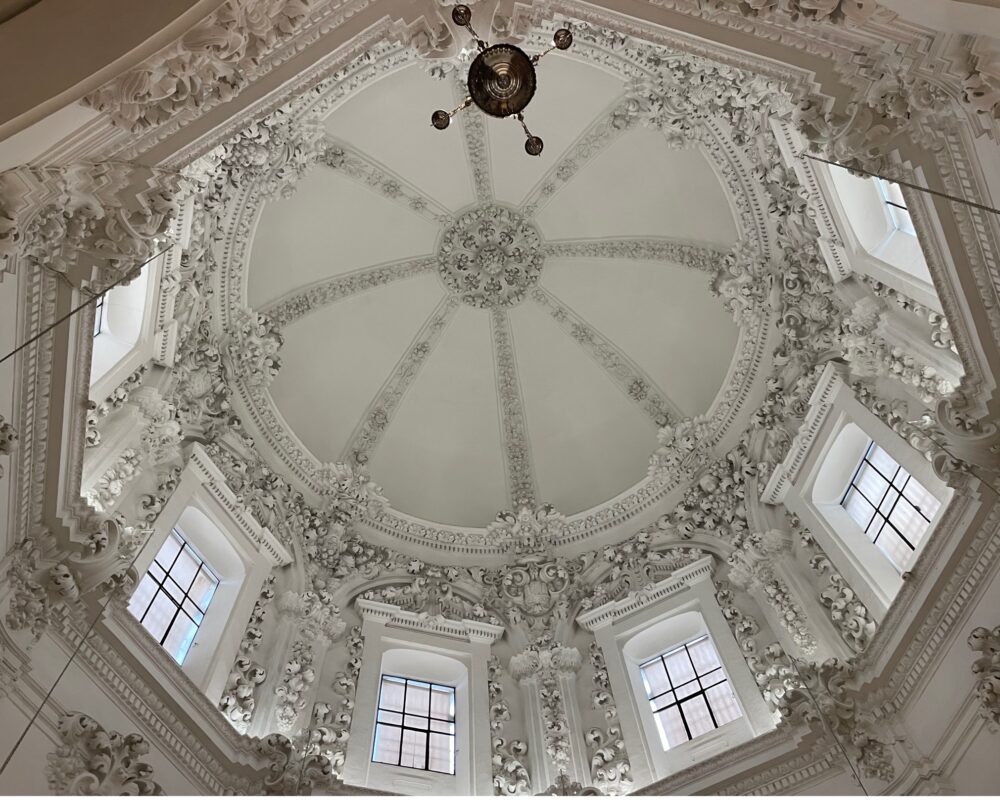
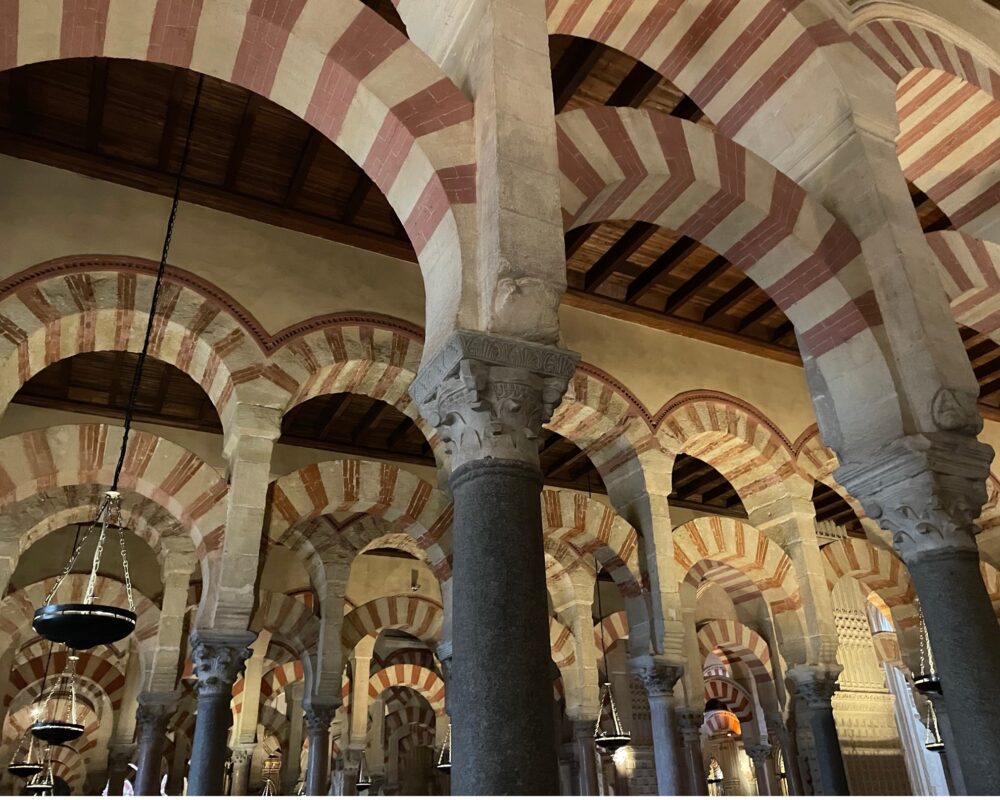
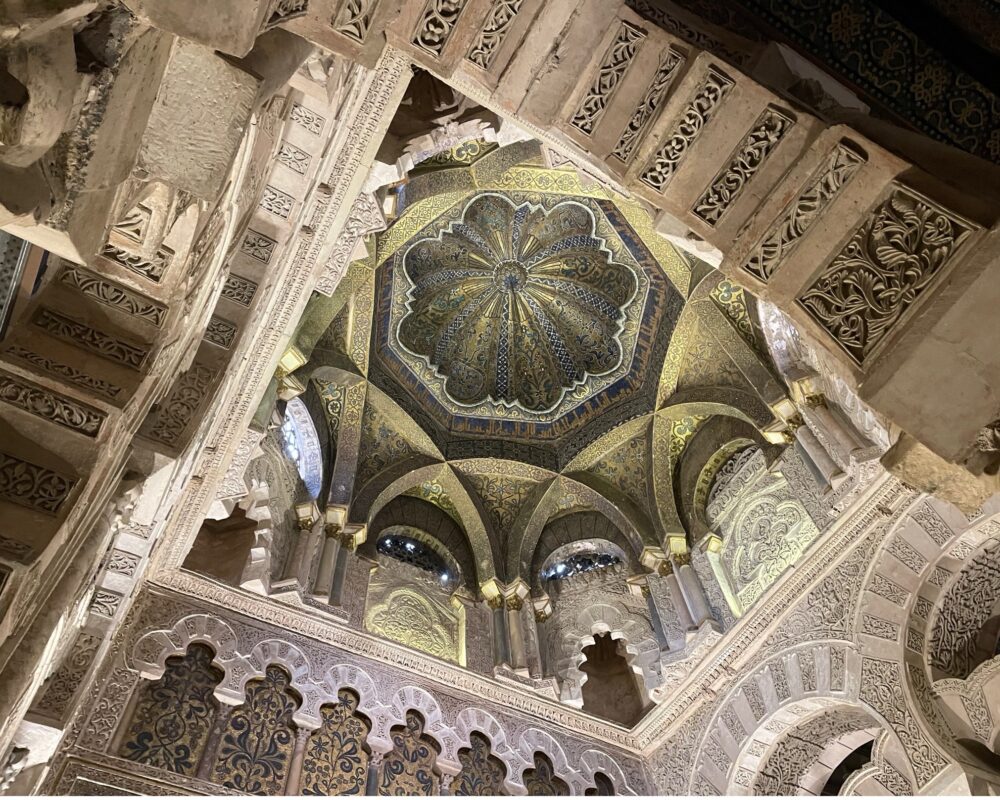
Here, domes and horseshoe arches create a “rhythm of infinity”, explains López Martín. The original 12th-century Almohad mosque was oriented according to medieval Islamic practices of determining the direction of Mecca, which did not always correspond precisely to modern geographic calculations. After the Christian conquest of Seville in 1248, the mosque was gradually transformed into a cathedral, preserving elements of Islamic architecture. Later, Gothic and Baroque layers introduced new Christian symbolism. There have been ceremonies in this chapel every day since 1236, but it has not been used as a mosque since the 13th century.
Plaza de España
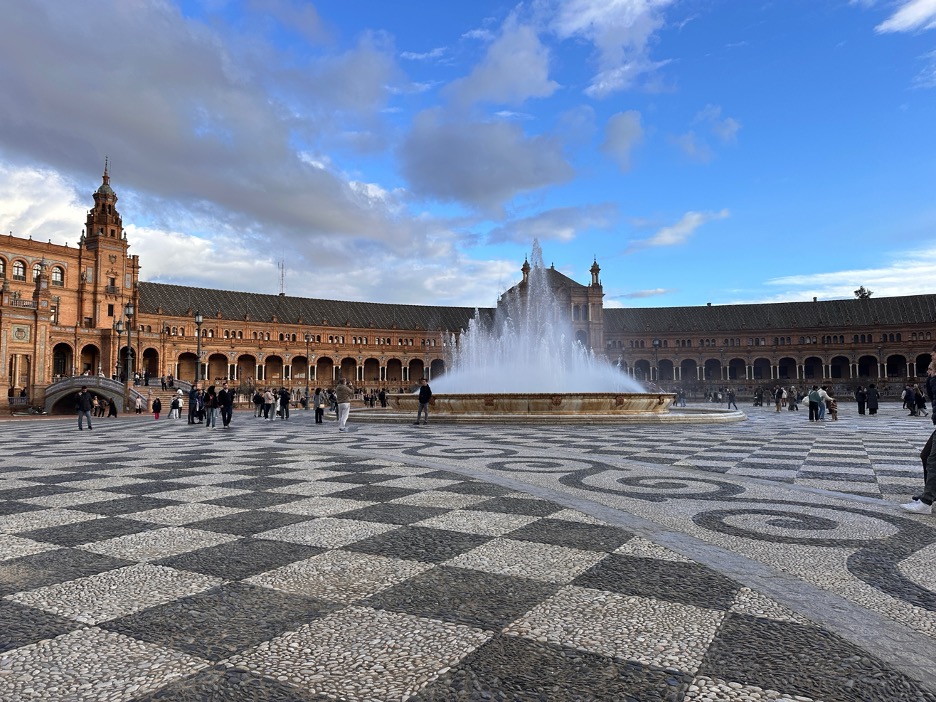
Designed by Aníbal González and completed in 1928 for the 1929 Ibero-American Exposition, Plaza de España combines Renaissance Revival and Moorish Revival influences in one of Seville’s most monumental spaces. Its vast semi-circular layout was conceived with a clear symbolic intention: as Chisvert Jiménez explains, “the semi-circular shape of the building and the square itself is deeply symbolic: it represents Spain’s embrace of the American nations that were part of the Spanish Empire for centuries.” The plaza faces both the American pavilions built across the park and the Guadalquivir River, historically the route that connected Seville (once known as the Port of the Indies) to the Americas. The canal running through the plaza represents this transatlantic link, crossed by bridges and surrounded by alcoves representing Spain’s provinces. The swirling circles set into the paving may look symbolic, but Chisvert Jiménez notes that “the spirals on the ground don’t actually have a specific meaning. They’re just traditional decorative stonework, typical of the south of Spain, known as chinos.”
Iglesia de Santa María la Blanca
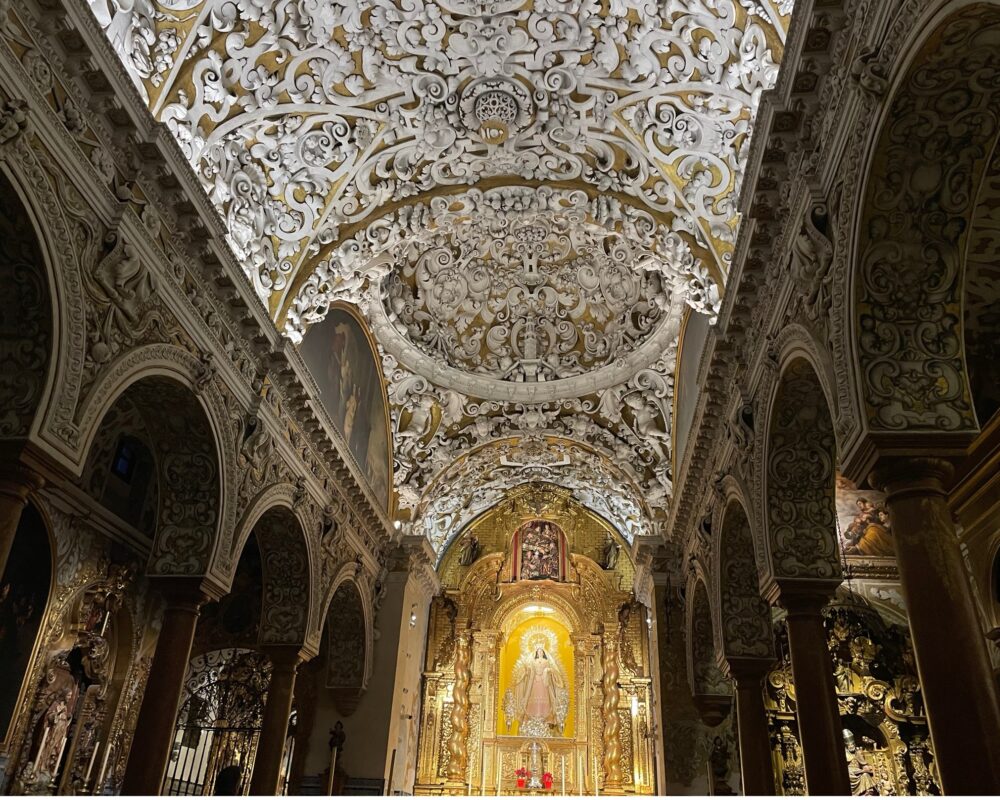
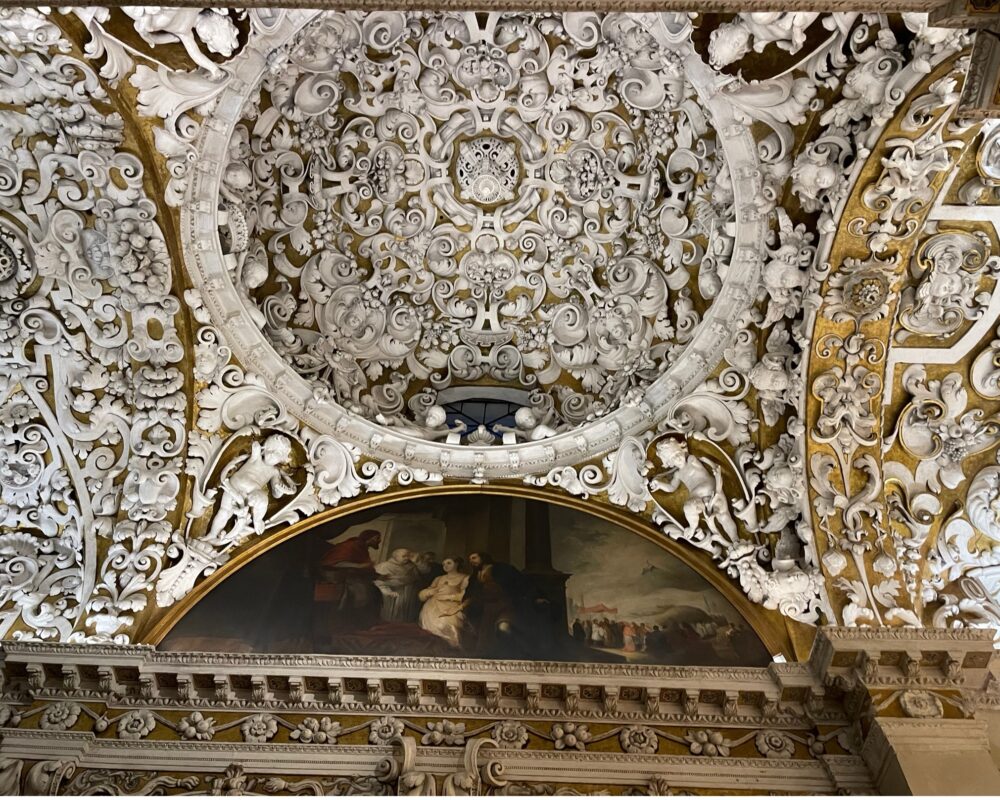
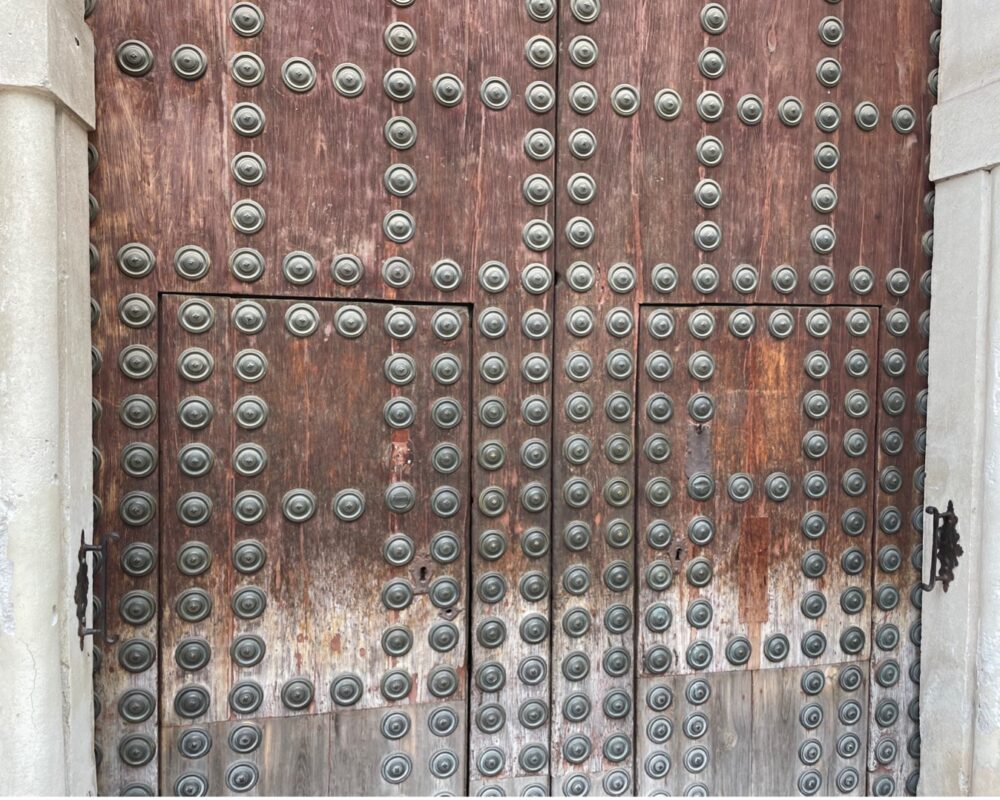
Iglesia de Santa María la Blanca is one of Seville’s most layered religious buildings. Originally built as a mosque, it later became a synagogue in the 13th century and was finally converted into a Christian church in the 15th century, before being remodelled in the Baroque style in the 1660s. At the entrance, the heavy wooden door is covered with iron circles, a feature common in traditional Andalusian architecture. Chisvert Jiménez explains that these circles are “both structural and decorative. They’re the heads of the nails that hold the door’s internal frame together, but they’ve been styled to serve as decoration.” The church is also notable for housing a painting by Murillo, though, as Chisvert Jiménez notes, it originally had three before Napoleon’s troops took two of them during the French occupation.
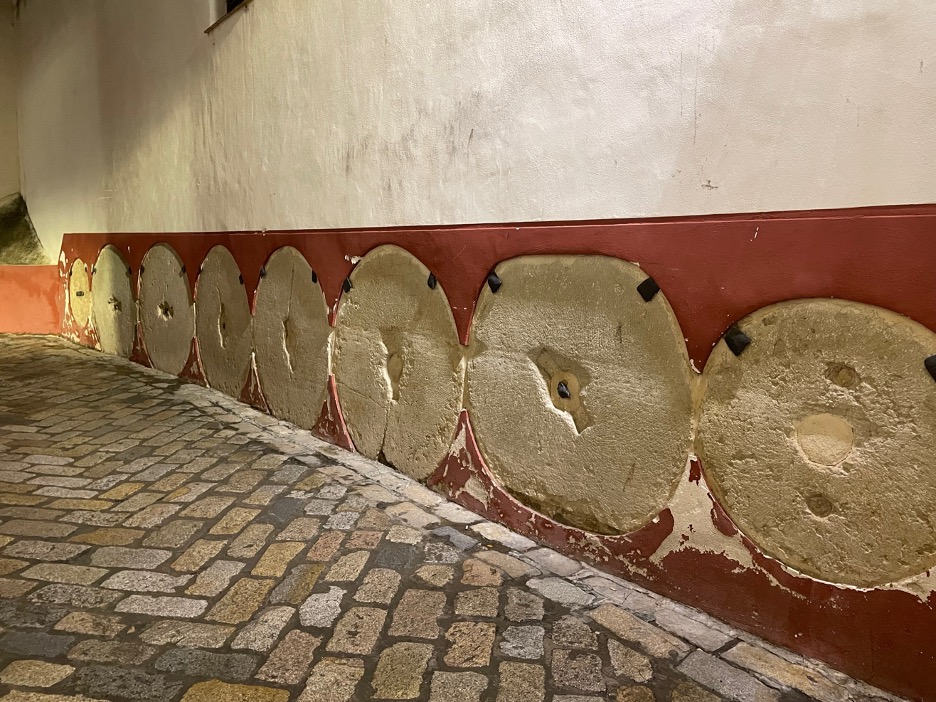
Circles in the streets
In some of Seville’s narrow streets, stone disks embedded at the base of buildings once protected walls from the wheels of passing carts. Chisvert Jiménez notes, “you only find them in narrow alleys that were just wide enough for a carriage to squeeze through.”
All images in the article are courtesy of Jane Matheson.