
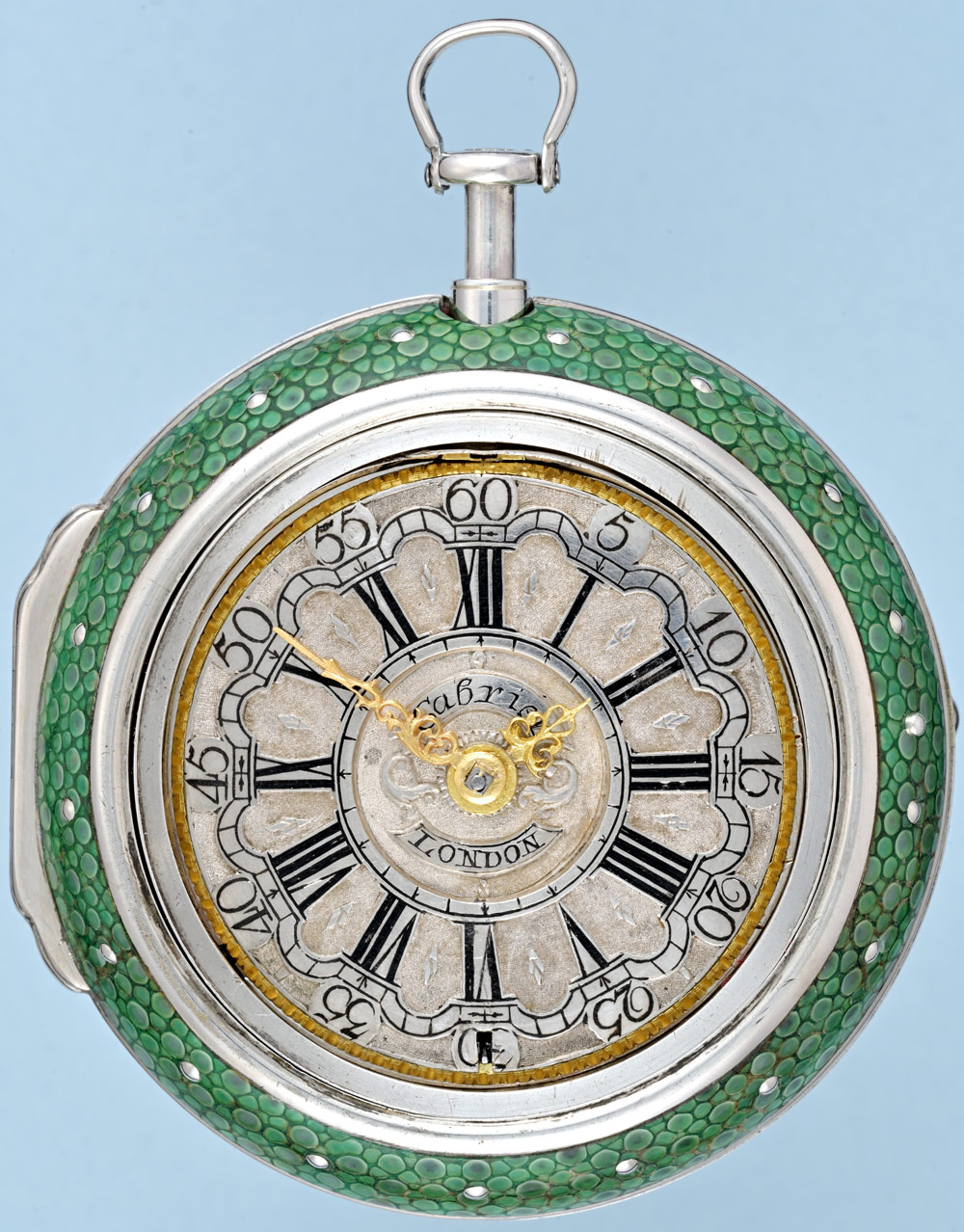
Featured image: photo courtesy of Pieces of Time
A conversation with antique pocket watch dealer Jonathan “Johnny” Wachsmann
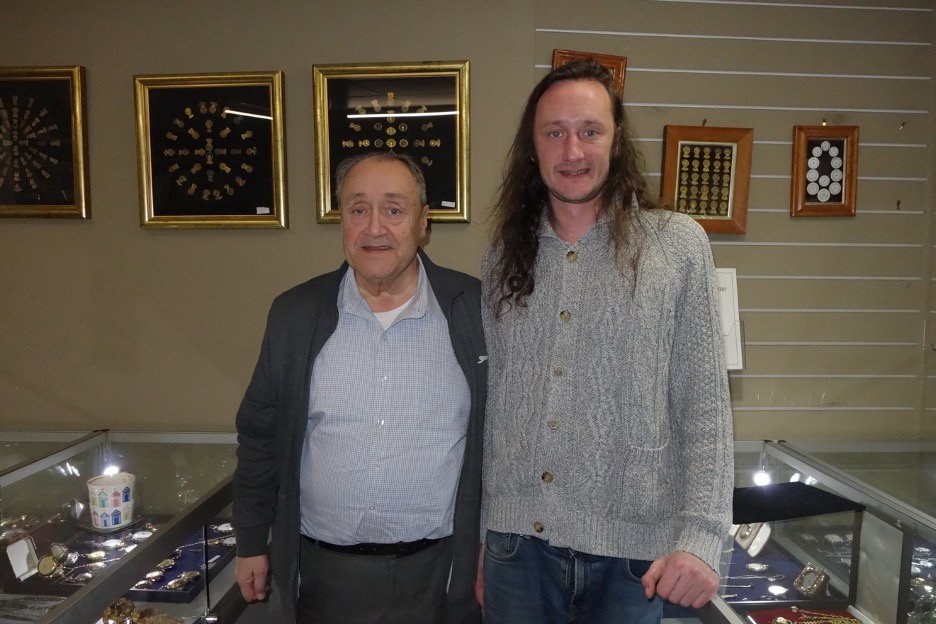
Inside the Grays Antique Market in Mayfair, London, glass cases at Pieces of Time are filled with intricate pocket watches – some centuries old. Jonathan “Johnny” Wachsmann has spent more than 50 years in the antique watch trade. We spoke to him about the world of antique pocket watches and the stories behind them.
Q: How did you get into the antique business?
A: I started in the business in 1972, serving an apprenticeship with a general antique dealer who specialised in watches, fine enamel and silver. When the Grays Antique Market opened in 1977, I took a stand upstairs and began trading on my own. Today, Pieces of Time is the largest specialist dealers in antique pocket watches, certainly in Europe, but probably worldwide.
Q: Why did you decide to focus on pocket watches?
A: At the time, the main collectability was in antique pocket watches. It was an enormous market, especially in America, Germany, England and Switzerland. In London alone there were four auctions a month specialising in pocket watches and clocks, with three or four hundred items in each sale.
The pocket watch market has remained quite steady, rising around 2% to 4% each year. I always say to people, it’s not a question of investing. You’re buying them because you like them, because you’re interested in them, and that’s what it’s all about.
Q: Who buys antique pocket watches?
A: I think the market is sort of middle aged to older clientele. But in Peaky Blinders, the series, part of the attraction was the waistcoat and the pocket watch. It can just take a film coming out with somebody wearing a pocket watch, which will revitalise the interest of the younger generation. We sell a lot to collectors, museums and other dealers. Many customers come looking for specific watches, and museums are after particular pieces to fill gaps in their collections
Q: What does the curation process look like?
A: In the old days, I used to travel to Switzerland, or to America to buy at auctions there. Today, more or less you can tell enough from viewing it online. And I know what I’m looking at, so I know more than the auction houses do.
Q: What do you look for?
A: I always tell people the three most important things about purchasing watches – condition, condition and condition. Everything can be restored but it’s a question of whether it’s economical. It’s quite expensive to restore, and also time consuming. So we’re happy to pay much more money for watches that are in perfect condition. For example, I’ve just gotten a watch back which has been away now for 24 years, being repaired .
I bought it at a Christie’s auction in December 2002 for about £15,000, but the restoration alone cost nearly £30,000. My watchmaker was with me and had promised to repair the watch straight away. It turned out the repair was far more complicated than expected, and when he picked up the watch, the restoration took about six months to complete. You’ll often find that watchmakers do the easy jobs straight away, while the really complicated ones get pushed to the back of the workbench, which is why I didn’t get it back for 24 years.
Q: Do you have a personal collection of pocket watches?
A: No, you can’t collect and deal, because otherwise every time you get something nice, you are going to want to keep it. I collect ceremonial silver cups and Passover plates.
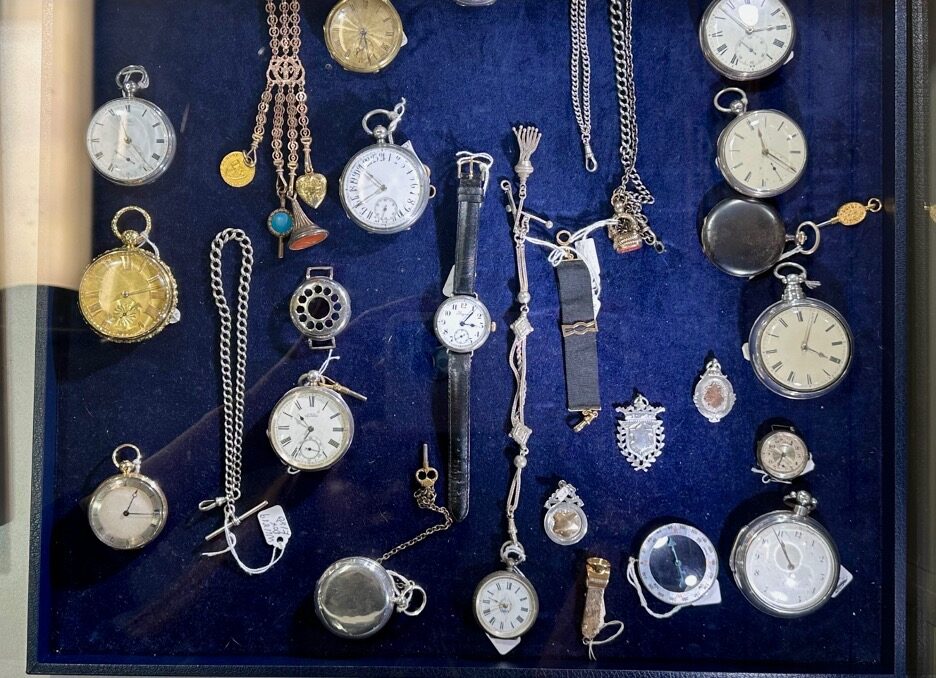 Watches at Pieces of Time. Photo by Miya Sarana
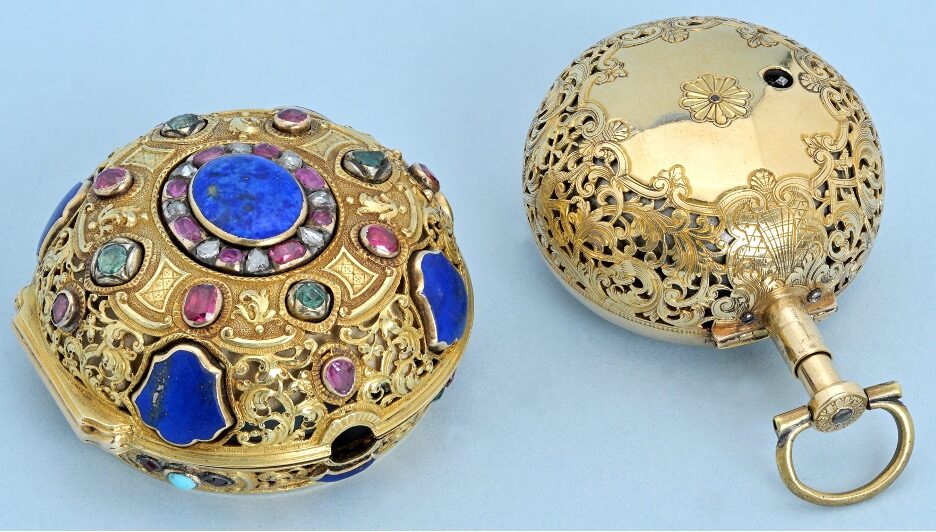
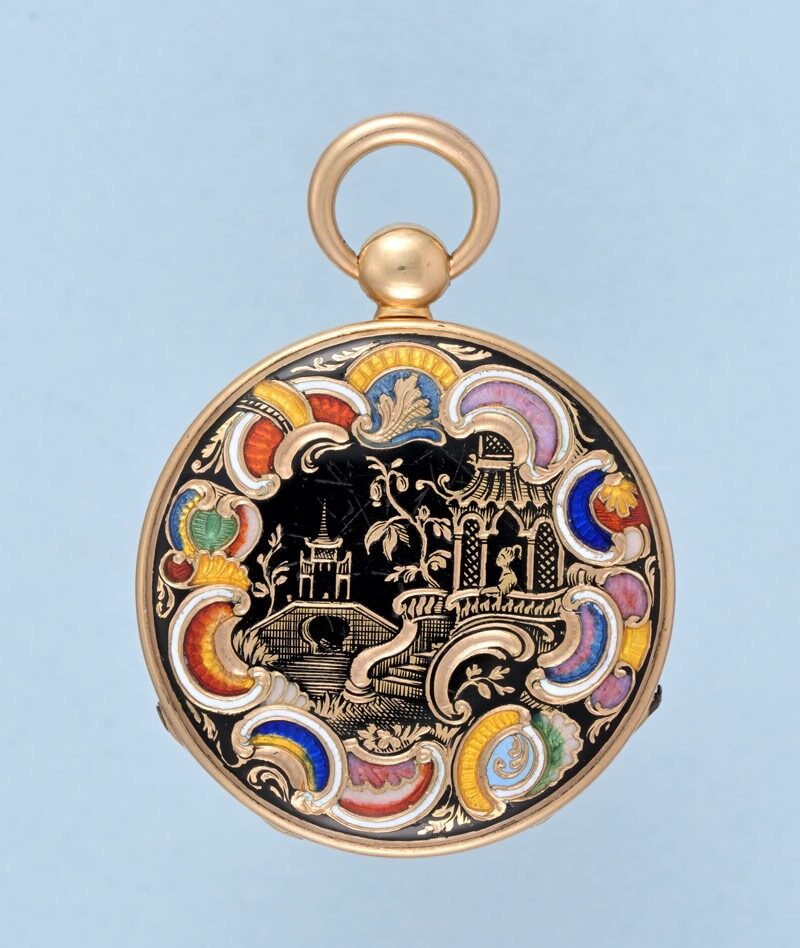
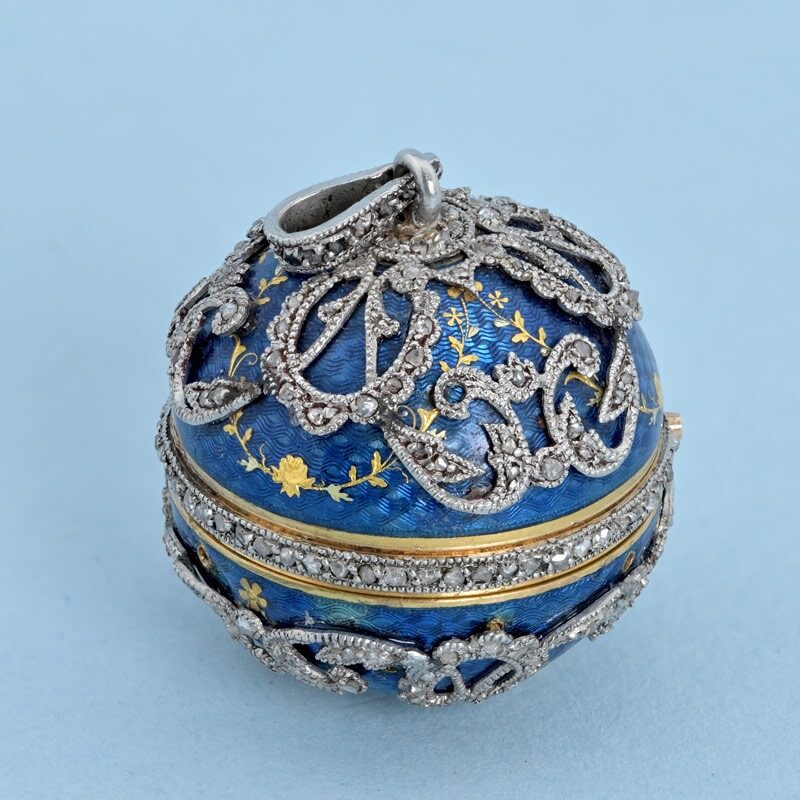
Q: What is the most difficult part of the business?
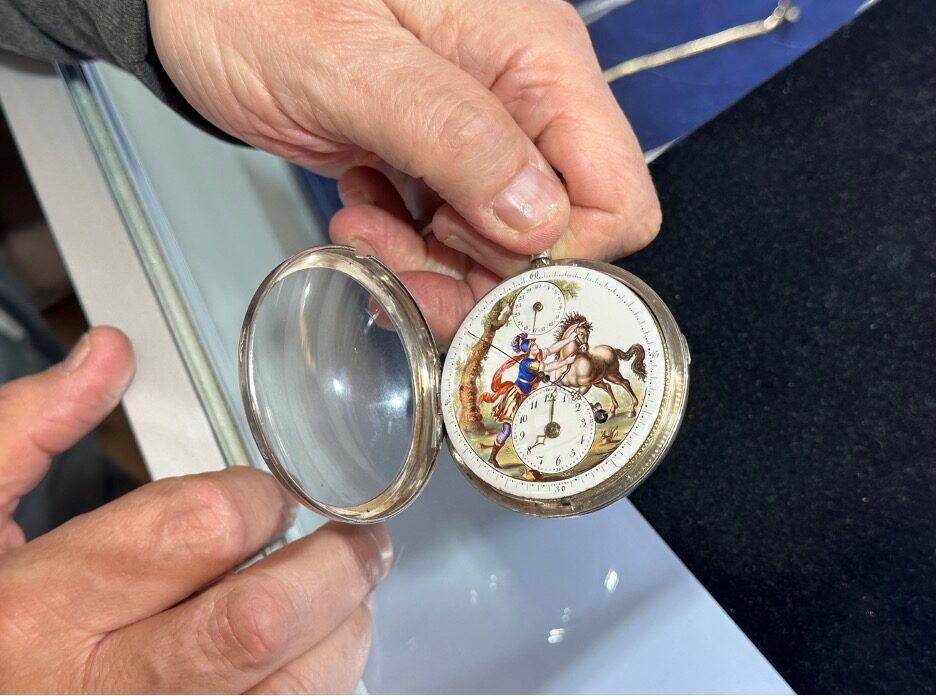
A: Restoration. There are less and less antiquarian watchmakers who can do this type of work. With antique pocket watches, components have to be made by hand, which is why repairs can take so long. I’ve had watches away with restorers for well over 30 years. I’m always looking for new people who can do repairs. I always say to people, if you are handy and you are mechanically minded, go into restoration, whether it’s on clocks, watches or silver.
Q: Have you handled watches with remarkable provenance?
A: We had a watch which belonged to William of Orange, and we’ve got another watch at the moment, which was given by Queen Mary to the Russian royal family. We once had a watch belonging to Oliver Cromwell, but nine times out of ten we don’t know who they belonged to.
We sold a watch that Darwin carried on him on the Beagle while he was exploring the Galápagos Islands.
If you’ve got a £10,000 watch and it hasn’t got any provenance, it is worth £10,000. If it has really good provenance, it could be worth £100,000 pounds. The provenance sometimes can be more important than the watch, so we work with somebody who does a lot of research for us.
Q: Are there specific markers on the watches that help figure out the provenance?
A: Yes, sometimes. We had a watch which had a presentation and inscription on it from Queen Victoria, with a picture of Queen Victoria on the inside, but that was very specific.
You look at the period the watch comes from and what was happening at the time. If it came from a particular family, you can sometimes trace it through wills. But that kind of research can be very time-consuming and expensive, often involving museums, libraries and records.
Q: Do you look for specific brands?
A: A watch by a recognised maker like Patek Philippe will usually be more expensive and hold its value better than an unsigned watch from the same period, even though the mechanics may be just as good. In the end, it depends on what a customer wants to spend.
Q: What’s the oldest watch you ever sold?
A: The oldest watch we ever sold was made in 1530, which was when portable time keeping came in. I bought it in Christie’s Auction House, and they didn’t have a key with it, so I didn’t know whether it was working or not. I came back to the shop, and gave it one wind, and it started ticking immediately, which was amazing, because the watch was nearly 500 years old. I love early watches, you look at these beautiful pieces and they’re still working, because they were so well made.
Q: What is your favourite part of the business?
A: I love buying. It’s pitting your knowledge against other people, finding something everybody else has missed in an auction, or just getting a piece in your hands, something I’ve never seen before. People always say, “I’ve seen it all,” but I haven’t – pieces still turn up.