
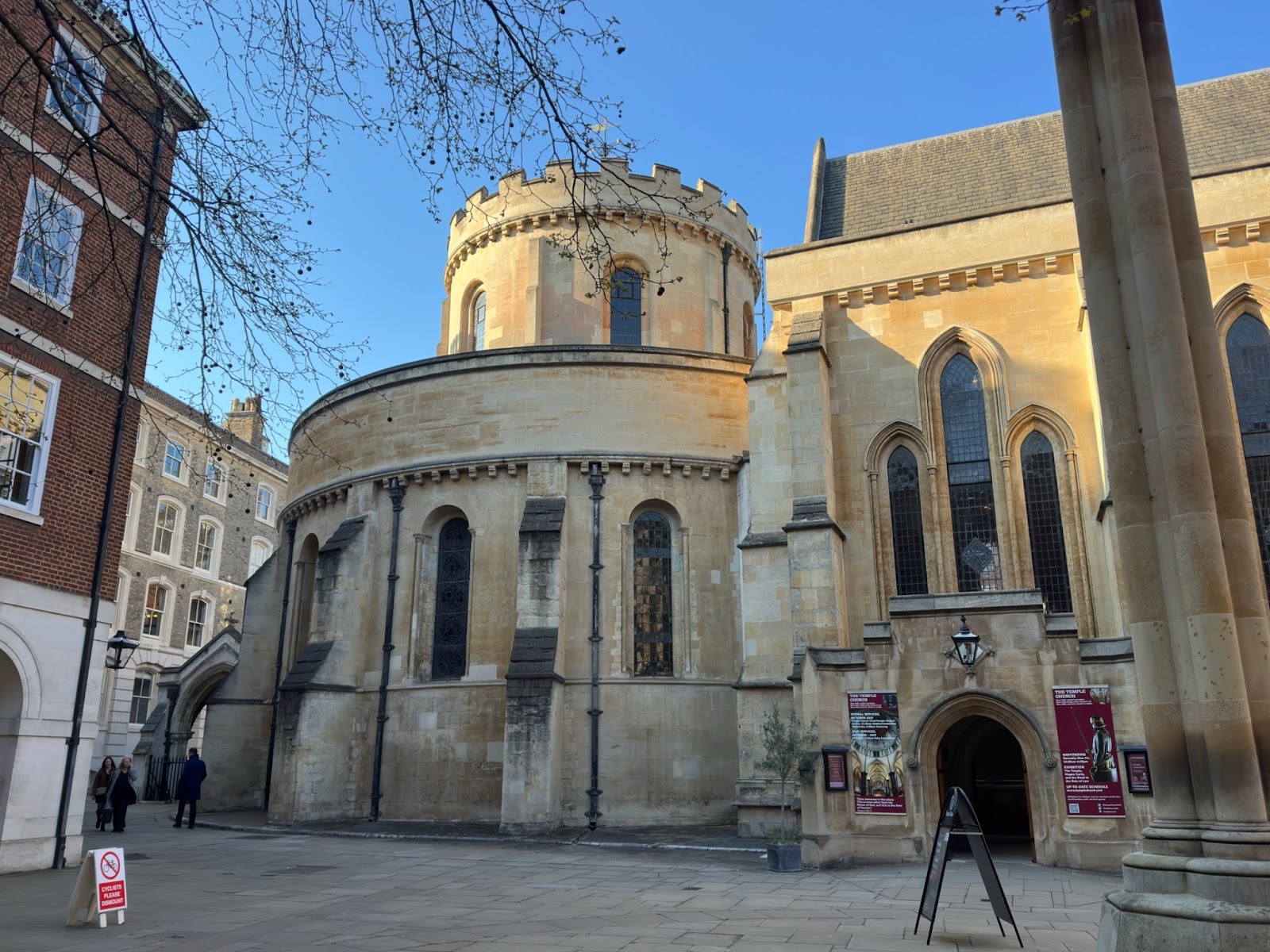
Featured image: Temple Church, photo by Miya Sarana
Take a look at some of the city’s most round buildings
London is full of corners and straight lines; its streets and facades are defined by angles and edges. Yet across centuries, architects have returned to the circle – a shape associated with unity, eternity and wholeness. Whether for worship, performance or broadcasting, the circle continues to shape spaces designed for gathering, community and connection.
Dr Rebecca McConnell, an architect and research scientist in Architecture at University College Dublin, explains how circular forms continue to appeal in architecture because they often create a stronger sense of gathering, focus, and continuity than more angular buildings. “A circle has no obvious front or back,” she says, “and that can make a space feel more collective, symbolic, and sometimes more memorable.”
She adds: “Although these are very different buildings, the circular form persists because it can hold both practical and cultural meaning at once.”
We explore some of London’s most compelling circular spaces.
Temple Church, Temple, Central London
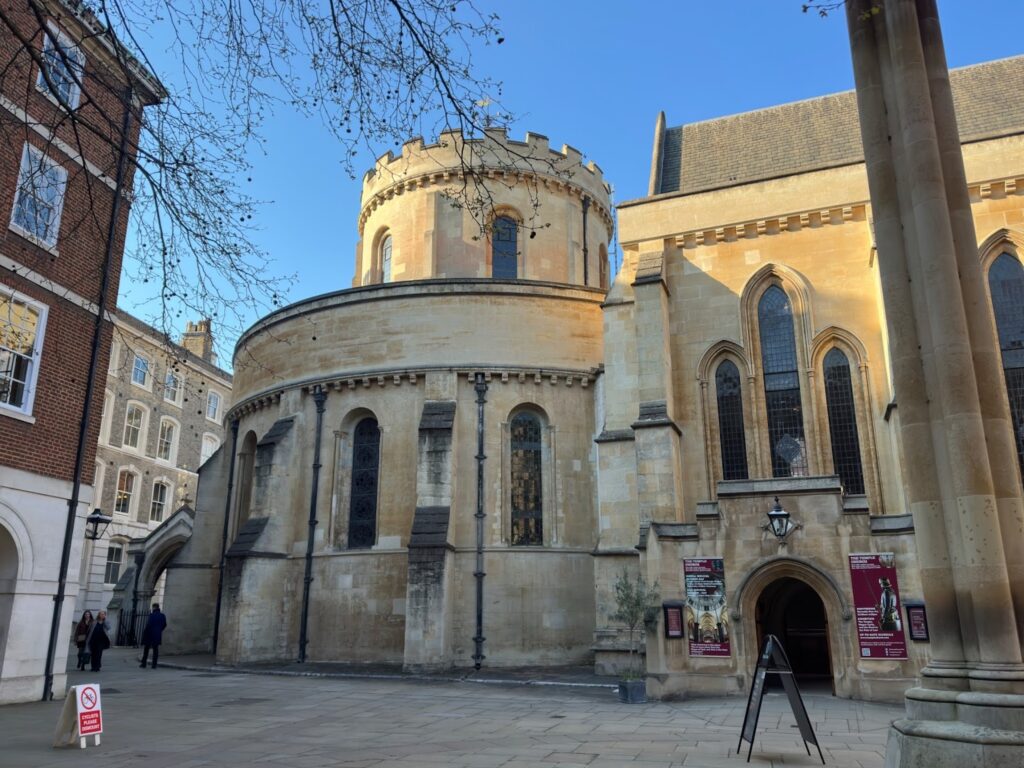
Hidden within the Temple district, Temple Church is one of London’s oldest places of worship. Built in the 12th century by the Knights Templar, the church originally consisted only of a circular nave inspired by the Church of the Holy Sepulchre in Jerusalem, believed by the order to be the site of Jesus’ crucifixion and resurrection. Here, the circle “carries historical and symbolic weight,” says Dr McConnell.
A rectangular chancel, the part of the church containing the alter, was added in the 13th century, extending the building beyond its original round structure. Little of the original church survives today, as it has undergone numerous restorations over the centuries, including major repairs following the extensive damage it suffered during the Second World War.
The Roundhouse, Camden, North London
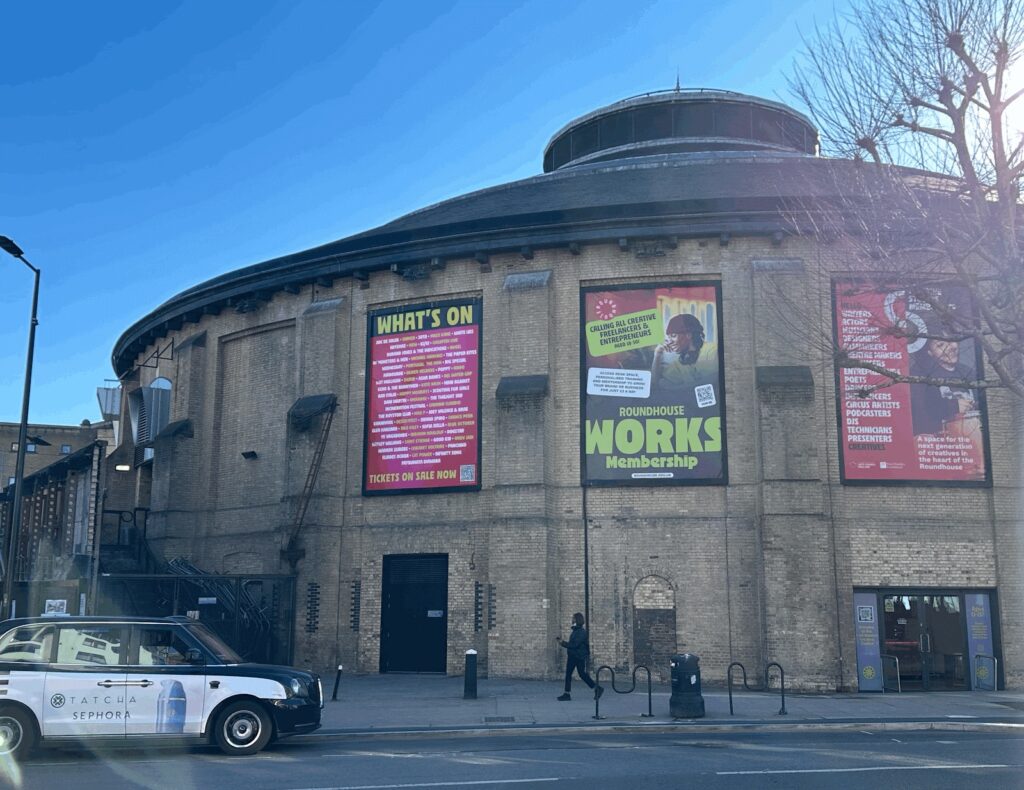
Originally built in the 19th century as a railway roundhouse for turning trains, the structure’s circular form was purely functional. It was used for this purpose for only a decade before becoming a warehouse. In the mid-20th century, the building fell into disrepair.
It reopened in 1964 as a performing arts venue. For two decades the Roundhouse became a significant space for the UK music scene, featuring performances by The Rolling Stones, Pink Floyd, David Bowie and many others.
After that the building remained largely unused, until it was restored and reopened its doors in 2006 as a performance space once again. What was once a practical circular structure for servicing locomotives now functions as a space for gathering.
Royal Albert Hall, South Kensington, Central London
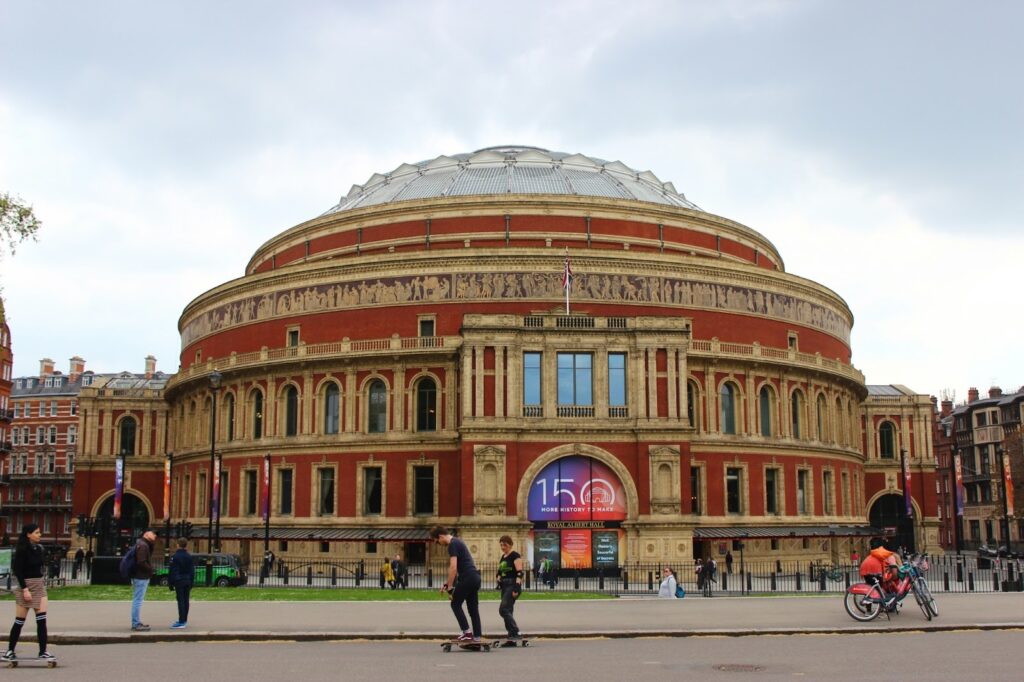
An engineering marvel of the Victorian era, the Royal Albert Hall stands out with its rich terracotta brick facade in South Kensington. The vast iron and glass roof was constructed in Manchester, transported to London by train and assembled on site. The building was completed in just four years, with construction starting in 1867.
Inspired by Roman amphitheatres, the hall was built to fulfil Prince Albert’s vision of promoting the arts and sciences. At its heart lies a circular auditorium, designed so audiences could gather around a central stage – a layout that, as Dr McConnell says, “supports collective experience and performance,” seen in both the Royal Albert Hall and the Roundhouse.
Although largely associated with classical music, over the years the hall has hosted a wide range of events, like Britain’s first science fiction convention in 1891 and the first indoor British marathon in 1909.
BBC Television Centre, White City, West London
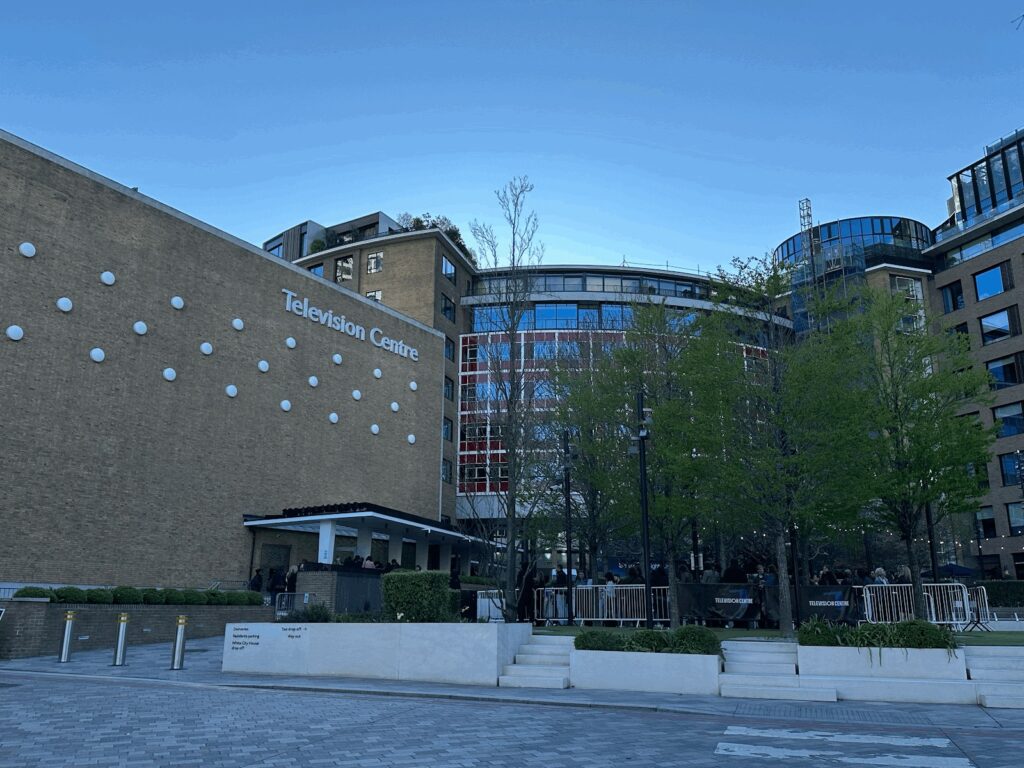
When the BBC Television Centre opened in 1960, it became the main headquarters for BBC Television for more than five decades. Originally a fully circular structure was considered by the BBC, however the final design evolved into a distinctive question mark shape, with a circular main block – a form that, as Dr McConnell notes, “suggests institutional identity.”
But the circular form was more than a striking architectural feature. In the analogue age of broadcasting, studios needed to be connected to videotape recorders by cables. Arranging the studios around a circular hub shortened cable runs and helped keep all systems electronically synchronised.
In 2013 the complex was sold to property developer Stanhope PLC and later redeveloped to include offices, retail spaces and residential apartments. Three studios remain in operation under the BBC, and the once-closed broadcasting hub has since opened its doors to the public.
Millennium Dome, Greenwich, South-East London
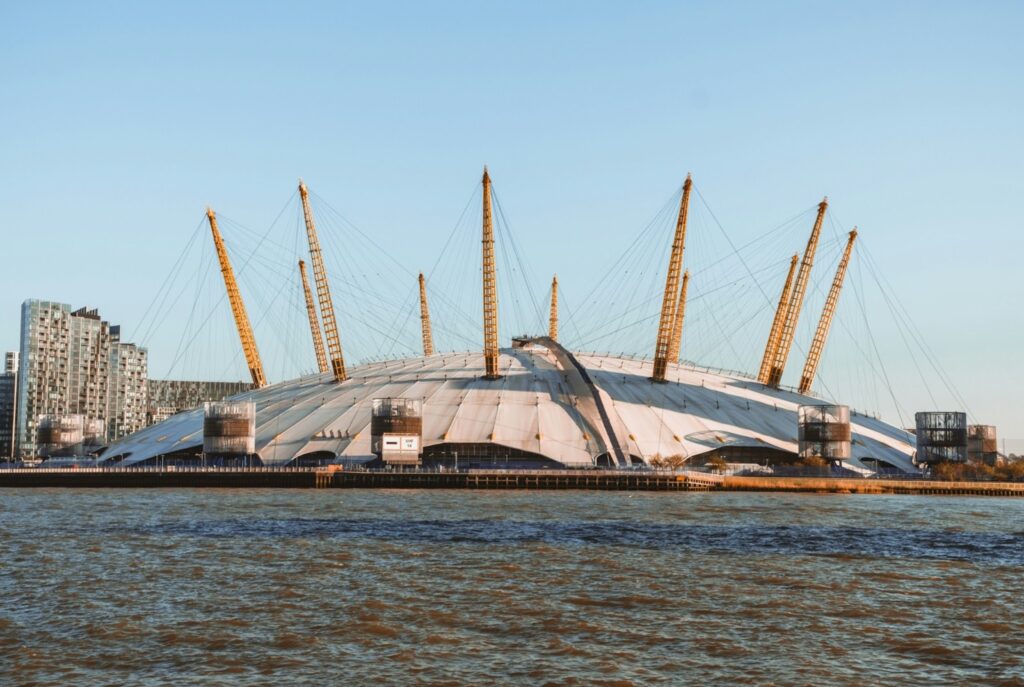
On the Greenwich Peninsula, the vast circular structure stands out on the London skyline, described by Dr McConnell as “spectacle at an urban scale.” As project architect Mike Davies told The Guardian, “The site had an incredible 270-degree sweep of the river, so a circle made sense.”
Built to celebrate the arrival of the year 2000 as part of a government millennium project, the Millennium Dome housed a year-long exhibition marking the occasion. The project quickly became controversial, attracting criticism over its high cost, underwhelming installations and lower-than-expected visitor numbers.
The design is filled with symbolic references to time. Measuring around 365 metres in diameter, the dome echoes the days of the year. Twelve yellow support towers represent the months, while the structure rises to 52 metres at its highest point, reflecting the weeks of the year. Its location on the Prime Meridian reinforces the theme of time and the arrival of a new millennium.
After several years of uncertainty about the building’s future, the dome was redeveloped and reopened as an entertainment venue under a new name: The O2.