

Judith Palmer interviews the Countess Bathurst, exploring the family’s deep-rooted connections to fine bone china. She also reflects on the Countess’s fond childhood memories and her deep appreciation for the art.
Dating back to the 17th century, the Bathurst Family has a long-standing history and connection to the fine bone china trade, tracing its origins to Sir Benjamin Bathurst. Sir Benjamin was a director of the East India Company and oversaw the trade of spice and silk commodities, which played a key role in the import of fine bone china to England. Over generations, the Bathurst family has maintained and preserved an exquisite collection of various pieces, demonstrating a deep appreciation for their rarity and beauty. The collection ranges from vases and plates to the most delicate of teacups.
During Sir Benjamin Bathurst’s time at the East India Company, fine bone china was used as ballast in ships, meaning its heavy weight helped stabilise vessels carrying the far more valuable cargo of silk and tea from the East to the West. As fine bone china grew in popularity among royal and aristocratic families, so too did the significance of the Bathurst family’s collection and influence.
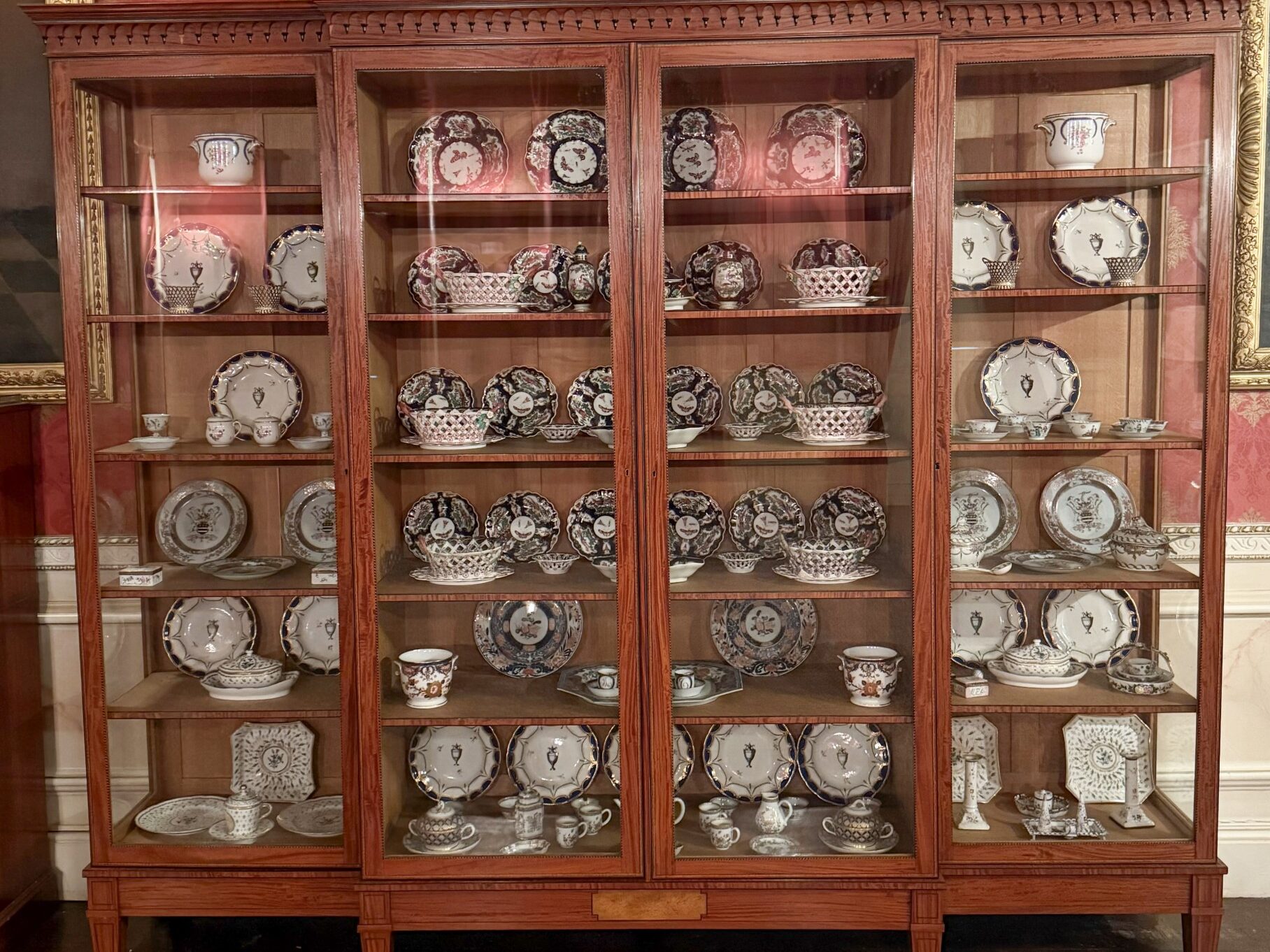
“I’ve always loved fine bone china ever since I was a little girl, when I used to play very gently with my great grandmother’s fine bone china set. It’s been I think, because it’s just so delicate, and especially the hand-painted pieces of centuries ago that still last to today are so beautifully done and with such exquisite craftsmanship, each piece really being a story, each item being a piece of art, and that’s why I love it, and the fact, of course, that it’s lasted this long.”
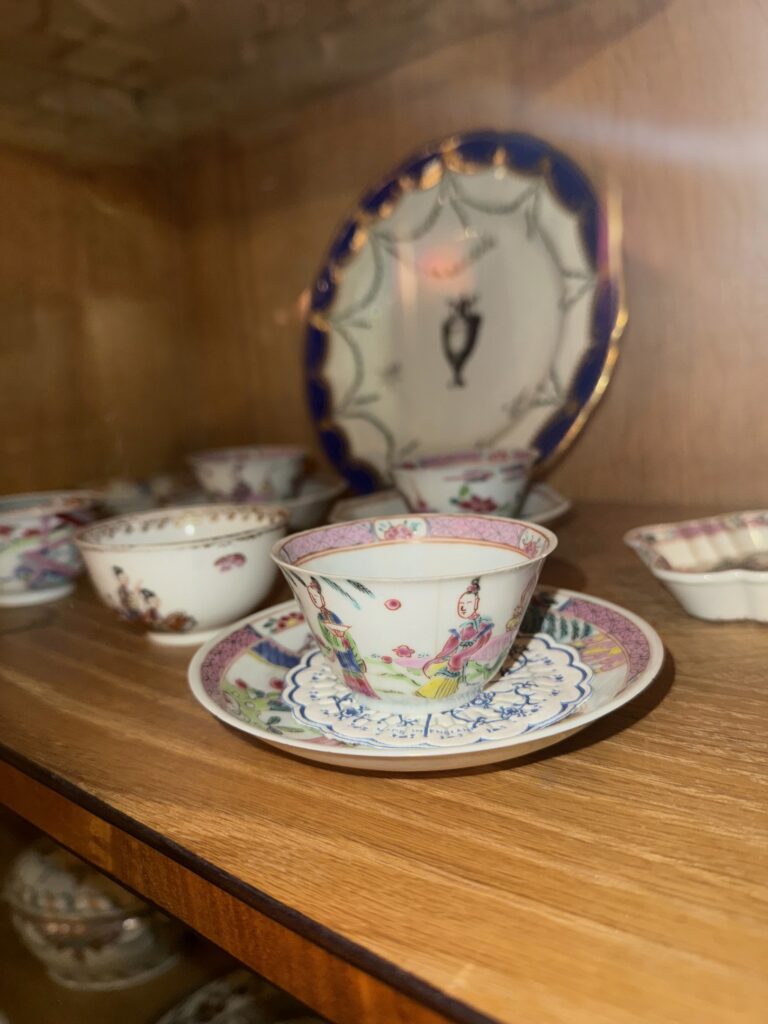
The Countess explains that the Bathurst family has been fortunate to inherit a beautiful Wedgwood tea set, passed down through generations while still maintaining its original condition.
While the Bathurst family have no direct links to manufacturers such as the Wedgwood and Royal Doulton they were known for their exquisite armorial sets.
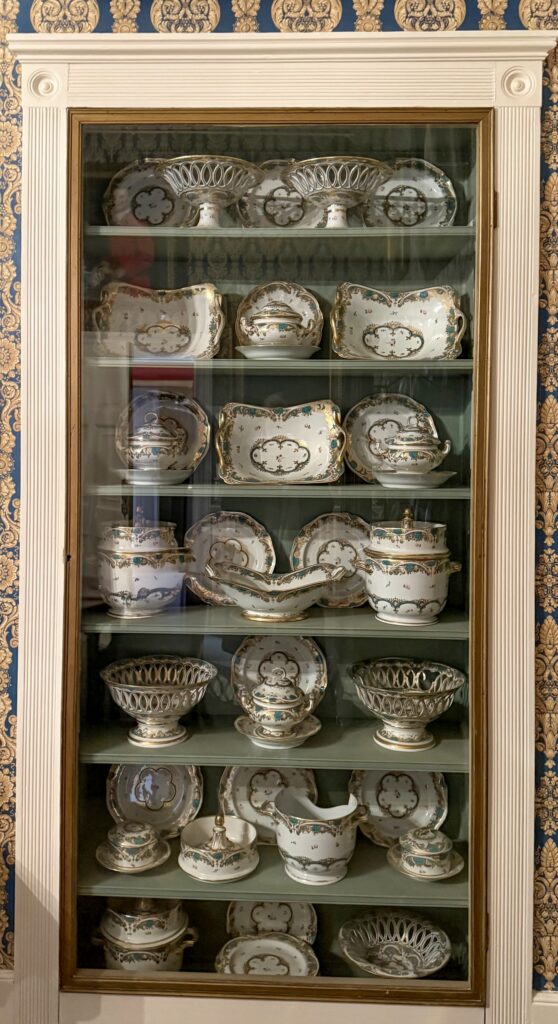
Many of them date back to the 17th century and still remain in perfect condition, being among many a visitor’s favourite pieces from the family collection.
An armorial set is a collection of ceramics, silverware, and sometimes textiles, decorated with a coat of arms or heraldic design. These sets were historically commissioned by aristocratic families, to display their status and identity. Popular examples include armorial porcelain, especially Chinese export ware for European markets, and armorial silverware engraved with family crests.
While the Bathursts, like many other aristocratic families of the era, had ties to the East India Company, this historical engagement raises questions about the broader colonial and slavery-related impacts of the period. The second and third Earl Bathurst were well known for their abolitionist activities, supporting the end of the slave trade and promoting the improvement of living conditions for enslaved people, while also advocating widely for full abolition.
Over several generations, the collection has grown larger and the Bathurst family has taken great care to look after their collection of beautiful bone china, guaranteeing that it will last for the upcoming generations. However, what was once considered a practical set for tea and dining is now regarded as a valuable collection, carefully displayed in beautiful wooden cases to showcase its full splendour. Although some pieces have been lost or sold due to different family circumstances, every attempt has been made to preserve what is left. Television programmes such as Antiques Roadshow have helped to preserve the legacy of fine bone china. “I have appeared on the Antique Roadshow displaying the armorial plates, hoping to gain further interest in collectors.”
Shows like these have played a crucial role in maintaining interest in the craftsmanship, history, and novelty of fine bone china. However, the Countess truly does try to emphasise the importance of care and storing the fine bone china correctly. She also talks about a recent sad incident in which a relative friend’s dog knocked over a shelf, damaging some priceless items from her own family that now sadly need restoration.
“It’s programming like the antiques roadshow, which I hope sparks an interest in the younger generation, and perhaps they might start going around antique shops and discovering pieces for themselves and what they love. But collecting china is very much down to personal taste. It’s down to what the individual likes and enjoys, and so I hope that future generations will always have an appreciation of something beautiful. And bone china is exactly exquisite.”
Fortunately, the Bathurst family collection is protected by a trust, ensuring that it will remain within the family for generations to come. The countess expresses that while there are few efforts to educate the public about fine bone china, she hopes that interest will continue to be sparked through media and antique appreciation programmes. However, she does explain that collecting is a personal preference and however the contests hope that it is something that carries out through future generations.
When asked if there is a particular piece of fine bone china she would love to acquire, the countess shares an insightful answer:
“Perhaps a piece of china used from the Battle of Waterloo, which would never exist had it not been for the third Earl, who helped fund The Duke of Wellington during the battle. That would be really fun to have. But apart from that, I think that we are incredibly lucky to have the bone china that we do, and we must preserve it for future generations — not just the family, but people who visit.”
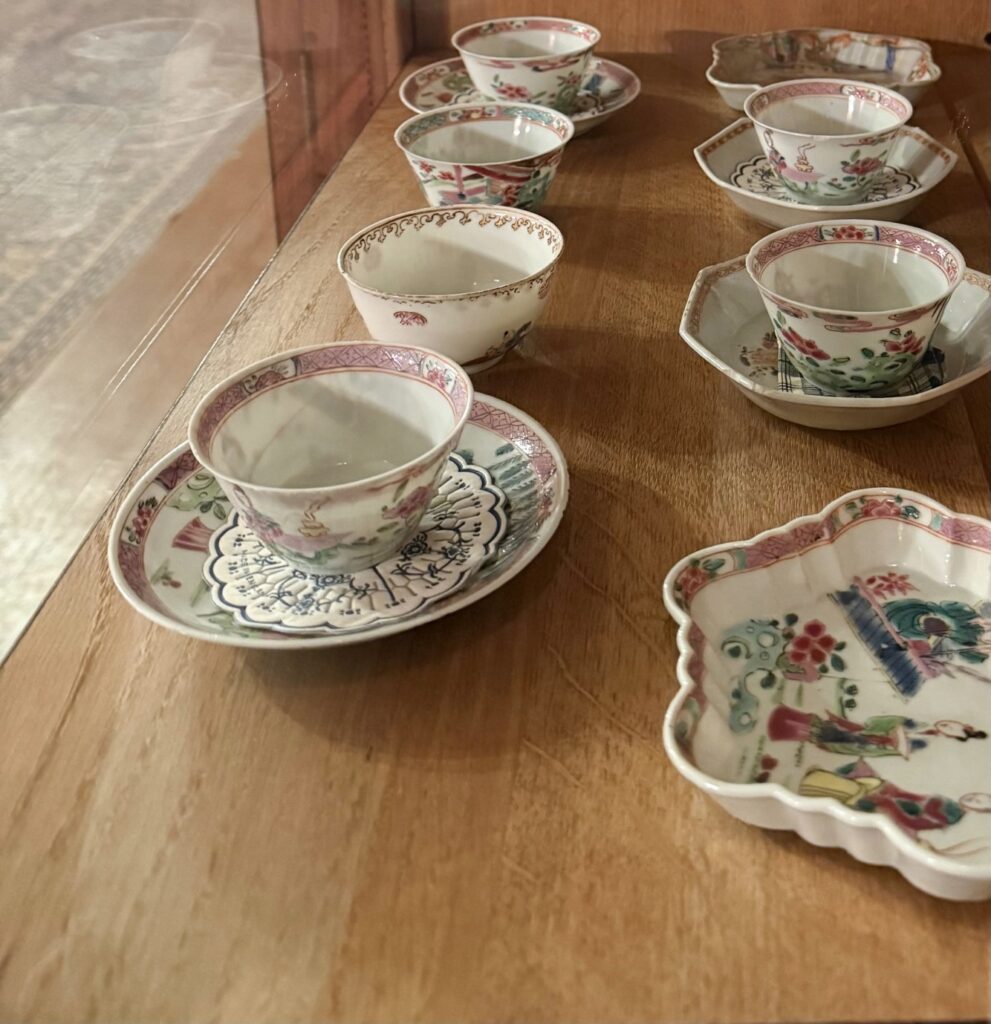
The Bathurst family’s history with fine bone china is a testament to both their aristocratic legacy and their enduring appreciation for exquisite craftsmanship. As the Countess reflects on her personal love for fine bone china, it becomes apparent that these delicate pieces are more than just objects—they are links to the past, carrying stories of family, tradition, and artistry. Whether through careful preservation or renewed interest among younger generations, the legacy of fine bone china remains a cherished part of history, both for the Bathurst family and for collectors around the world.