A coffee cup isn’t just a cup — it’s a status symbol. From TikTok trends to street style, your choice of brew says more about you than you think. But are you sipping on culture or just falling for marketing? Come and discover with Beilin Feng.
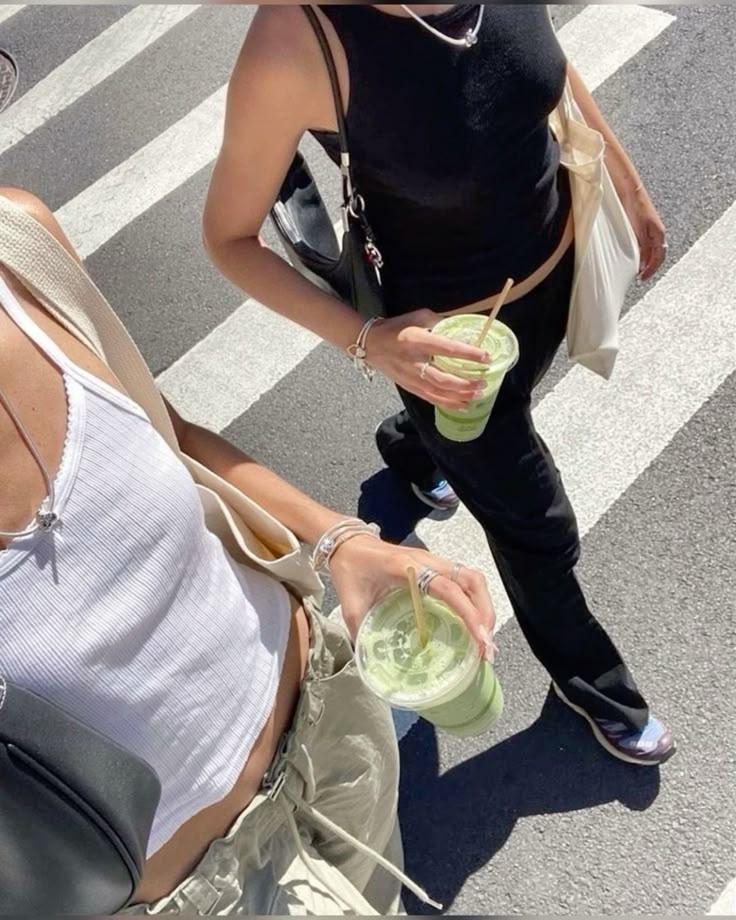
When you see someone on the street with a cup of coffee in their hand, what is your first thought? Do you think that people are enjoying a caffeine-fueled encounter, or are they silently announcing their lifestyle to the world? From celebrity street photography to “morning vlogs” on TikTok, a cup emblazoned with a niche boutique coffee brand seems to be more important than the coffee itself — Watch House, Blue Bottle, Blank Street — each brand seems to represent a lifestyle.
From Trend to Icon

On the city streets, disposable coffee cups are more than just containers for drinks, they are a fashion icon. “In London, a coffee cup is more than just a tool for drinking coffee, it symbolises your lifestyle. What brand you choose, what material you use, what colour your cup is, and even the way you hold it, is interpreted as a certain attitude.” Elia Brooks, 31, a freelance fashion buyer who was buying Jenki at Selfridges in London, says.
“I think it’s very similar to the logic of the fashion industry. For example, if you’re holding a Jenki or a Watch House, it makes people think you’re more health-conscious and have a more sophisticated lifestyle. If it’s Starbucks or Costa, it could be a ‘classic choice’,just like being casual. Or even a chain brand like Pret, where you might be a busy working person buying a quick cup of coffee and heading to catch the underground.” Says Elia.
This trend has been amplified by the rise of social media, especially by socialites like Molly-Mae Hague, who are often seen holding coffee cups in street photos, indirectly creating a visual symbol of the “daily life of the urban elite”. “The coffee cup has become part of the personal brand, not only do people drink coffee but they express their personality through it.” Elia explains.
The phenomenon has even spread to the world of fashion, with models holding Starbucks coffee cups on the runway at Italian luxury brand Dsquared² in 2009. Celebrities have also been incorporating coffee cups into their daily looks for a long time, such as Jennifer Lopez, who was photographed holding a customised rhinestone-encrusted Starbucks cup. This shows that disposable coffee cups have been integrated into urban culture and transformed into a fashion symbol.


Image credit: Marcio Madeira / Vogue.com
Icons In the Making
Miles Sun, 19, an undergraduate management student at LSE, says: “For our generation of young people, coffee is more than just a drink, it’s a daily ritual.”
She mentions a study showing that millennials (25-40 year-olds) spend an average of £728 a year on takeaway coffee, much higher than younger Gen Z (£676) and the more frugal baby boomers (£260) . This shows how young people are more willing to pay for their daily cup of coffee, even if it’s a small splurge of a few pounds.
“When you see someone on the street with a minimalist design mug from Watch House, or other brands that focus on healthy concepts, it doesn’t just mean they like the brand’s drinks, it represents a lifestyle choice. That’s why so many people on social media show their coffee mugs; it’s not just a drink, it’s an identity.” Elia added.
Miles points out that this is closely related to the ‘theory of symbolic consumption’ in brand marketing — when a product goes beyond its own function and becomes a symbol of a certain lifestyle or identity, it really enters the realm of cultural symbols. “Like Starbucks’ Red Cup series, a limited edition is launched every winter to attract consumers and strengthen brand identity with a festive atmosphere, while Blue Bottle Coffee creates a high-end brand image through minimalist design. These brands make their coffee cups more than just beverage containers, but part of the brand culture through unique visual design and social media communication.”

The Anthora Cup is a great example of this. Originally designed by Greek immigrants in the 1960s as a simple blue and white paper cup, it first appeared in New York’s street eateries and delis, then formed part of the city’s everyday landscape, and in turn grew to become a symbol that could represent New York.
As one of the case studies for Miles’ brand management course, she found that the Anthora Cup became a symbol of New York not just because of its widespread use, but also because of the strong brand identity it created in the minds of consumers. “The cup started out as a way to cater to New York’s fast-paced takeaway culture, but as its use expanded and it was featured in almost every movie and TV show like Friends or Sex and the City, it made the Anthora Cup a natural part of New York’s urban life, much like London’s black cabs — one look at the cup makes you think of New York.”
“In marketing, this is known as ‘brand cultural resonance’ — when a product is popular enough and deeply embedded in consumers’ lifestyles and memories, it becomes a cultural symbol of sorts.” She explains. “This is why many boutique coffee brands are looking to market themselves through the frequent appearance of disposable coffee cups in their daily routine, to build up people’s impression of the brand and enhance consumers’ identification with it.”
A clash of generations
But not everyone agrees that coffee cups are “fashionable” — Robert Hartley, 56, a British high school chemistry teacher living in Shanghai, thinks differently. “To me, it’s just a paper cup with coffee in it, that’s all. But I know young people like to use it to show a certain lifestyle, as if holding a cup of coffee from a certain brand shows that they are busy city dwellers. I find this a bit strange because in my day, people valued ‘what you’re drinking’ more than ‘what cup you’re holding’.” He laughs. The fast-food lifestyle has made the dining experience simpler and quicker, rather than as elaborate as it used to be.

Robert mentioned that his parents’ generation were even less able to understand that young people were willing to pay £4 for a cup of coffee and drink it while walking. “To them, drinking coffee should be something you sit down and enjoy slowly, not something you rush through on the street.”
However, he does admit that he occasionally buys takeaway coffee, especially on a fast-paced weekday. “At the end of the day, the pace of modern life dictates everything and we have to get used to it.”
Meanwhile, some older people are more tolerant of the trend. Margaret Collins, 62, a retired bank clerk, passing by Baker St, says: “young people bringing a cup of coffee to work with them is really the same as my generation making a cup of tea before work, it’s just a change in habit.” She believes that while disposable coffee cups are more popular among the younger crowd, for many of the older generation it is more of a convenience option than a fashion symbol.
It is worth pondering whether a cup that can be easily bought and discarded at any time can really represent a person’s taste and identity. But when this ‘symbol’ is carefully shaped and instilled by brands and social media, is its significance a matter of personal expression or another successful manipulation of business marketing? We should perhaps also re-examine this trend: is the disposable coffee cup a cultural symbol or a commercial gimmick? The next time you walk down the street with a cup of coffee in your hand, you might want to stop and think about whether the cup is satisfying your taste buds or catering to your desire for identity.