
The cup effect is the most direct way to detect human relationships, so let’s explore with Zidong Li together.
How do you treat your cups? Just a vessel for your drink? Well, probably not if you’re reading Sip. With great care, wash it gently, and place it down with purpose. Is our home littered with the remnants of past drinks, or is every cup mindfully put away? Have you ever noticed how you treat an ordinary cup in your life? Maybe you think the cup is just a vessel for your drinks, it does not matter; maybe you are careful, afraid of breaking it; or perhaps, you always put it aside, and wait until the need to remember that it exists.
These habitual behaviours may embody the ‘cup effect’, a metaphorical concept in psychology, which refers to the fact that a person’s attitude towards everyday objects can often reflect his or her deep character traits, emotional state, and living habits. Recently, this concept has become a hot topic again due to a discussion on social networks all about how your cup and your respect for it reflects your personality. This trend is evident in social media this year with trends like the Rednote.
Let’s start with a broken cup. Liu, a 29-year-old white-collar worker, in a cafe in Shanghai. She shared with us a story about a cup. “Last year I bought a beautiful ceramic mug as a little reward for myself. One day, I made a mistake in my busy schedule and broke it. At that time, I was especially sad, feeling as if I had lost something important.” She laughed. “I realised that I had become so attached to the mug.”
Yutong Wanyan, a psychologist in Southampton, explained the phenomenon: “This is a kind of ‘projection psychology’. Liu’s cherishing of the cup reflects her high dependence on certain security or stability in her life. When the cup was broken, this emotional projection of hers ‘broke’ with it, thus making her feel lost.”
In contrast, others were indifferent to the cup. A fan of the cup Mr Chan, said, “If the cup breaks, just get another one; it’s no big deal.” Psychologists believe that such people may be more casual, less attached to specific things, and may have a more spontaneous attitude towards life.
At a charity auction in Hangzhou, a mediocre ceramic cup fetched a high price. It turned out that this cup carries the memory of a deceased old man. When the old man was young, he taught in the mountains for many years, and this cup was the tool he used to drink water with his students. Over time, the cup was broken and repaired many times, but the old man regarded it as a treasure.
Psychologists believe that human beings tend to give emotional meaning to objects, especially those that have been with them for a long time. The cup effect in this case not only reflects the individual’s cherishing of memories but also makes people rethink that small objects that are easily overlooked in daily life carry a lot of far-reaching value.
How does the cup become a tool for ‘psychological projection’? The ‘cup effect’ is not an empty claim; it is backed up by psychology. According to the ‘Object Relations Theory’, put forward by the famous psychologist Winnicott, people often give special meaning to certain objects. These objects may represent an inner need or an emotional attachment.
Yutong adds: “The details of a person’s life, such as the way they use a cup, can be a window into their psychological state. For example, those who always keep their cups neat and spotless may have a strong sense of control and perfectionism. Whereas people who treat their cups casually and without fuss tend to be more free-spirited and spontaneous.”
I also interviewed a few passers-by to find out what they thought about the ‘cup effect’. “I never thought that a cup could reflect a person’s personality. I have a cracked cup at home; my father said not to use it, but I still can’t throw it away, and I always feel that it’s a comrade-in-arms that has accompanied me through many nights of exams.” Cheng, 23, a university student, said.
And 45-year-old business executive, Lee, laughed: “A cup is a cup; don’t give too much meaning. People live to move on, and when something breaks, you get a new one.”
In response, Southampton psychologist Wanyan Yutong mentioned that everyone does treat objects differently, but these details are sometimes worth noting, especially when people are emotionally or psychologically confused, and that these subtle habits can be clues to delving deeper into the heart.
The cup effect not only exists in the field of life, but also appears widely in the workplace, education, and even scientific research and technology. For example, some companies tend to hire employees with many years of experience, while ignoring the creativity and potential of young people; students are used to familiar solutions in exams but do not dare to try new methods. To avoid the ‘cup effect’ limiting our thinking, we can take the following measures: Firstly, learn to ‘pour out the old water’ to fill it with new content, and think from multiple perspectives. When encountering a problem, try to analyse it from different perspectives rather than relying on experience. Secondly, don’t let the ‘shape of the glass’ limit your choices, and learn to accept new perspectives. Allow yourself to question your perceptions and listen to different opinions to avoid stereotyping your thinking. Finally, know that the ‘capacity of the cup’ can be expanded and develop a sense of creativity. Through reading, communication, and practice, the brain can get used to stepping out of its ‘comfort zone’ and exploring new possibilities.
Another fan of cup, 48-year-old Chen, loves drinking tea, but she always thought that the only authentic way to make tea was in a Zisha (Chinese purple clay) pot. One day, she was at a friend’s house and saw him brewing green tea in an ordinary glass cup, with the tea leaves tumbling in the water, releasing a faint fragrance. Chen initially thought that this way was ‘not authentic’, but at her friend’s suggestion, she tried a sip and found that the flavour was surprisingly good, and even more refreshing than her own brewing in a Zisha pot.
She realised that the key to making tea is not the material of the cup, but the way the tea leaves are combined with the water. The previous thinking mode makes him stubbornly believe that ‘tea must be made in a Zisha pot, which is a typical ‘cup effect’.
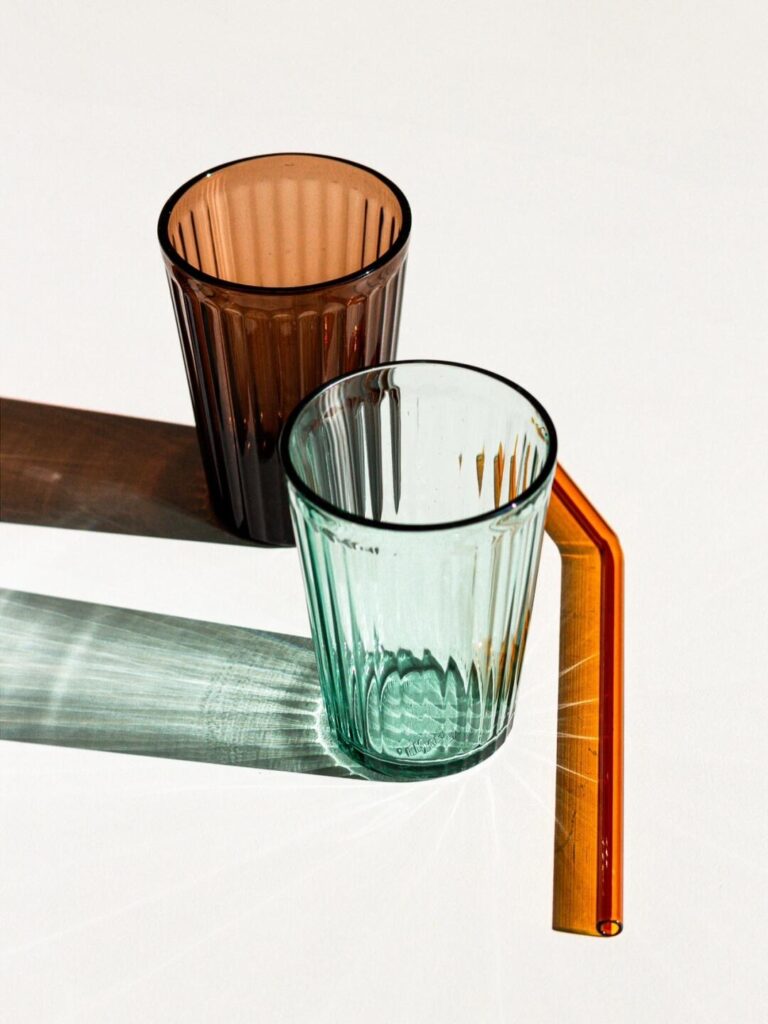
Overall, there is a big world in a small cup. The ‘cup effect’ is not only an interesting social phenomenon but also reminds us to pay attention to the details of life. The way you treat a cup may reflect your character; respecting other people’s cups may enhance interpersonal relationships; cherishing your cup may even make you more grateful for life. Whether it is a broken ceramic cup or a water cup sitting in the corner, the ‘cup effect’ reveals a corner of our inner world. Perhaps the next time you use a mug, you might want to stop and think about how it relates to you, and whether it reflects something in your life. After all, a seemingly ordinary everyday object may contain an extraordinary psychological code.