
Tea, Macarons, and Napoleon. A French Cafe at the Foot of the Pyramids.
Follow Judith Palmer as she drives into the cup culture of Ciaro leaving her quenched for more…
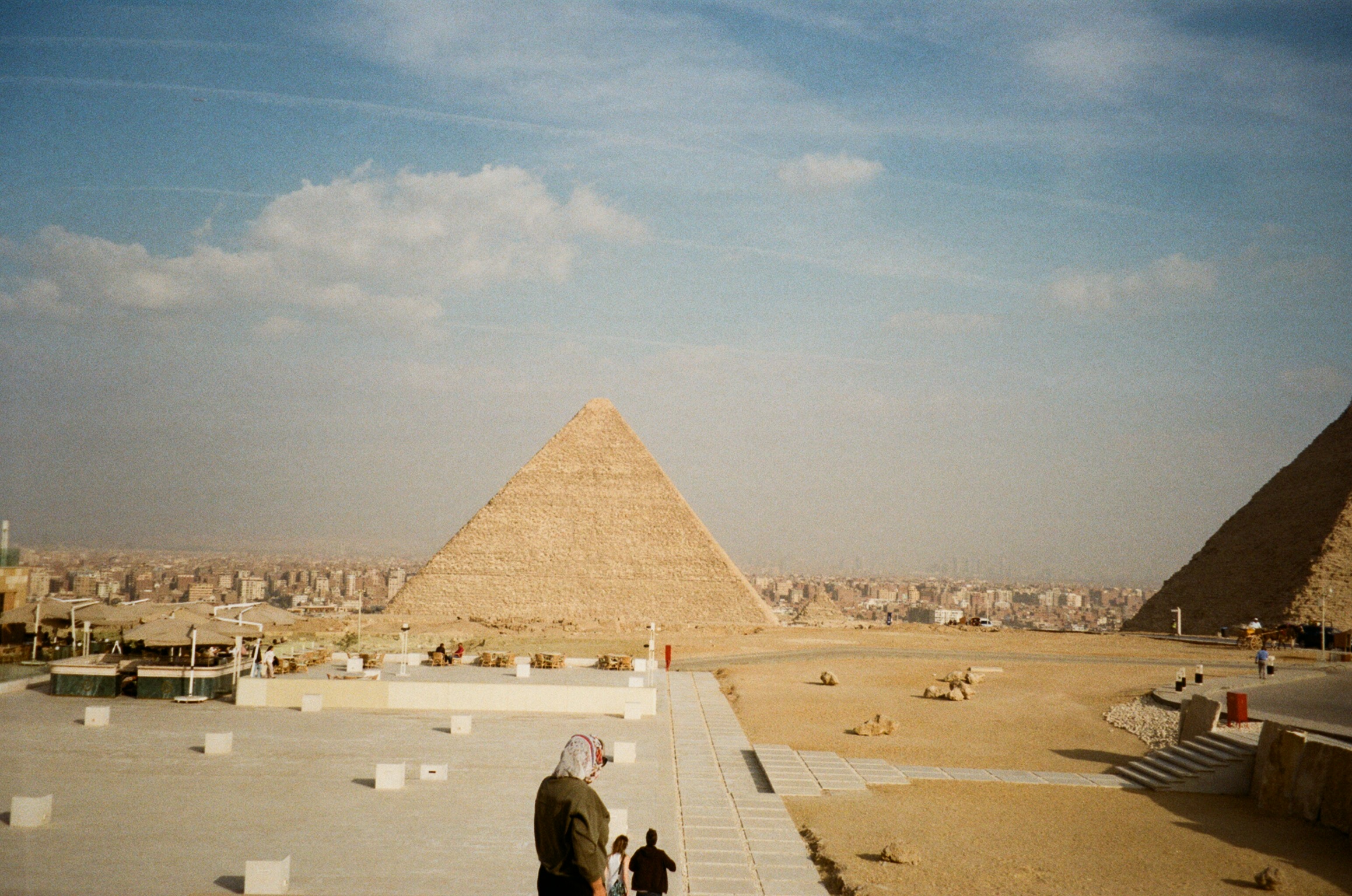
When thinking of Egypt, the first images that come to mind are the pharaohs, pyramids, sphinxes, and, of course, the Nile River exactly what was on my itinerary for a week’s trip to explore the cup culture of this fascinating country. Seeing photos of the colossal pyramids of Giza does little to capture their true grandeur. Driving through what was once a thriving empire, spanning centuries, to modern Egypt — now visibly worn down and struggling with extreme poverty — felt surreal. It was difficult to reconcile the present landscape with the magnificence it once held.
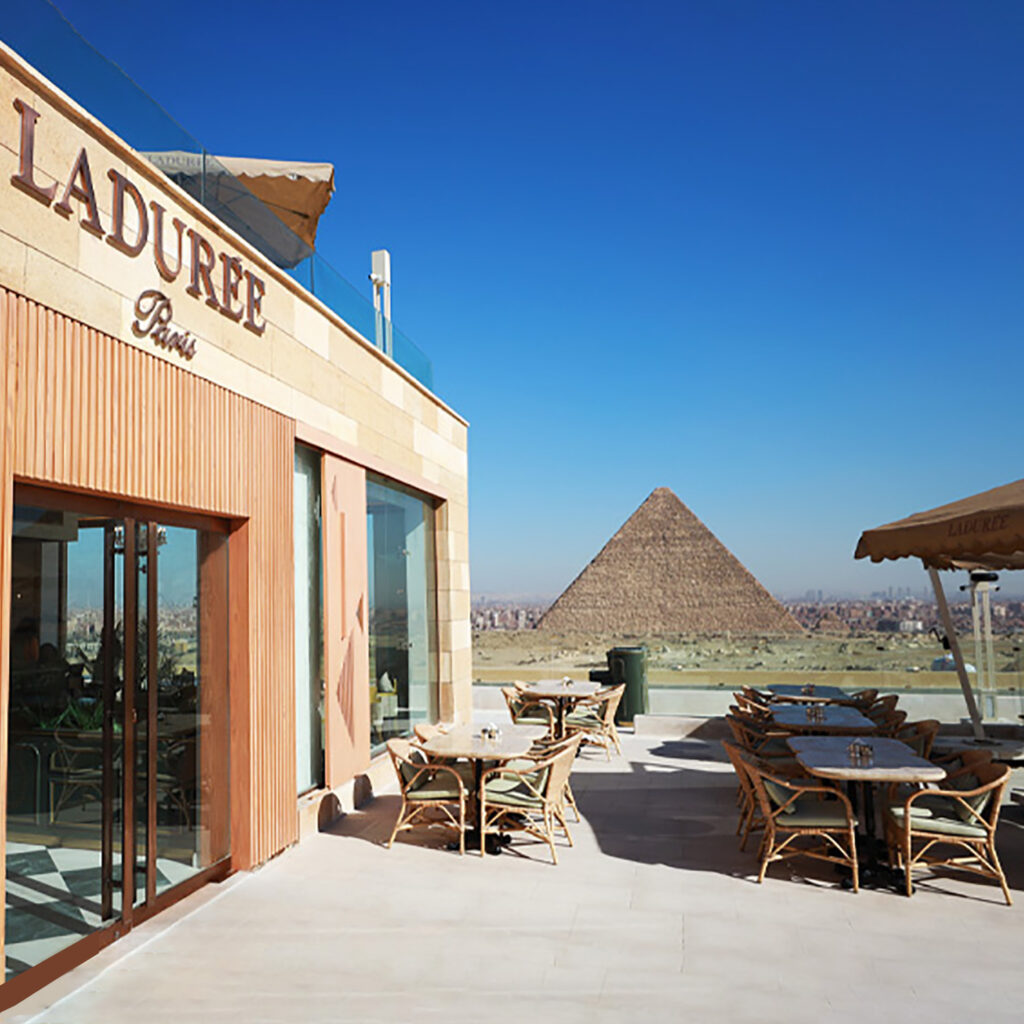
Beneath the pyramids, stands quite a different landmark, one dedicated to the delights of Western tea and coffee drinking: a branch of the very French, very bougee Ladurée. Walking up the long road to the restaurant, I found myself constantly glancing back at the pyramids, still in awe of their might. My friends and I debated the many conspiracy theories surrounding their construction while I enthusiastically shared my Egyptology knowledge — including Napoleon Bonaparte’s invasion of Egypt in 1798 and how he had once walked these very steps. My friends were skeptical, but presented with this beacon to the French patissiere… A nod to Napoleon? I certainly thought so.
I couldn’t shake the feeling of dissonance — staring at a French menu filled with an array of teas, macarons, and finger sandwiches while the pyramids loomed in the background.
For a country with such a rich tea culture, why Ladurée Egypt hasdeeply embedded their café culture — or an ahwa? Locals are drawn to Ladurée for its difference, drawing them into the ancient site and boosting revenue.
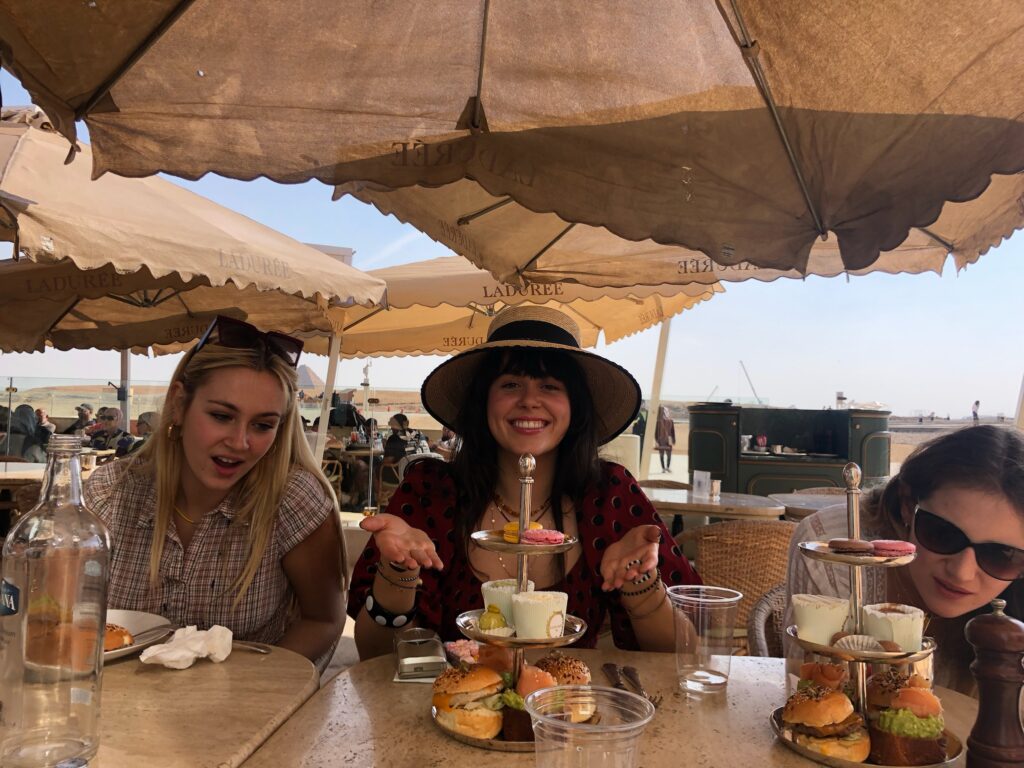
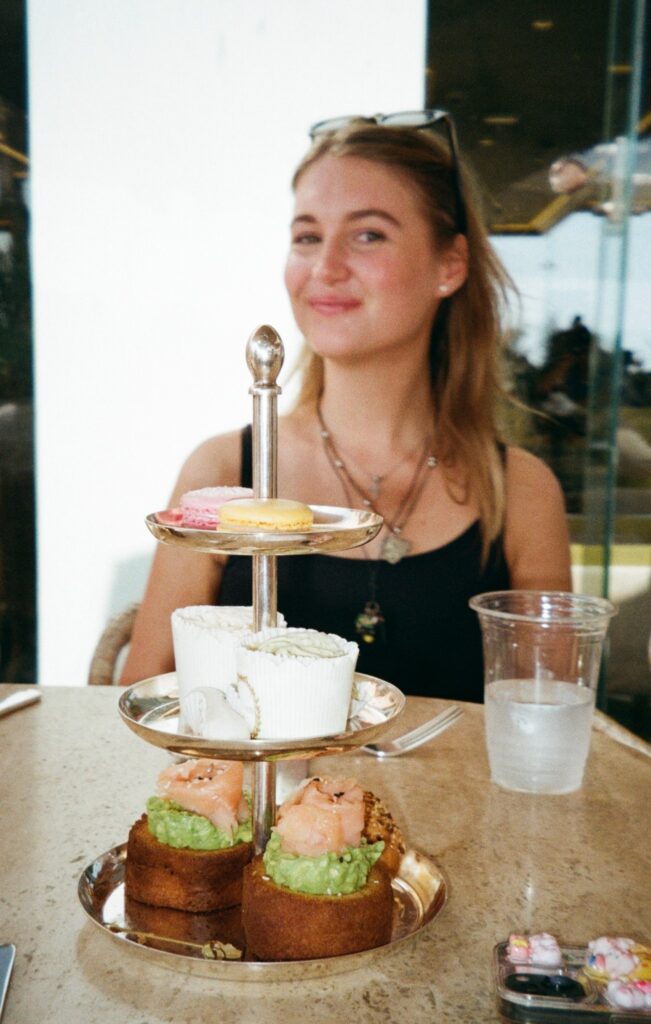
Our table was soon filled with selections from the Marie Antoinette Afternoon Tea set — mini salmon and avocado toasts, sliders, pastries, ice cream, and, of course, their world-famous macarons and tea. However, something was missing: flavour. Biting into my beautifully presented salmon toast, I noticed my friends and I all had the same reaction — it was painfully dry. Reaching for my tea, which arrived a full 45 minutes after the food, I took a sip, only to be met with blandness in a plain white porcelain cup. The irony was not lost on me — Egypt, a country with a deep and vibrant tea culture, had failed to deliver even a decent cup of tea.
“Egypt is known for its hospitality and amazing food and tea. This is not Egypt — it’s a knock-off experience designed to attract locals to the pyramids and boost profits. My favourite Egyptian tea is hibiscus tea — here we call it karkadeh. But don’t worry, my mother will show you real Egyptian hospitality later in your trip.” Said my friend Adel Badaweh (24) .
According to Adel and his friends, tea in Egypt is not just a drink but a ritual and way of life. Koshary tea — a sweet and light brew, the bold andsyrupy sa’idi tea, and the deep red karkadeh, once sipped by pharaohs, are beloved across the country. Egyptian tea culture also carries the weight of colonial history — the British left behind their love of black tea, which remains a staple in cafés today.
Sitting in Ladurée, sipping mediocre tea beneath the watchful gaze of the pyramids, I couldn’t shake the feeling that I had somehow stumbled into the wrong century. Napoleon, too, had been fascinated by Ancient Egypt. Much like myself, I have always had a deep interest in all things about Egypt — how could one not? Every aspect of their lifestyle is intriguing. But now, I was learning something new: the significance of their tea culture. When Napoleon arrived in 1798, he brought scholars, scientists, and artists — not just to conquer the land, but to study it and claim it as part of his conquest for global power. While his campaign was short-lived, its impact still echoes through history and, strangely, into my very experience at Ladurée. I like to think Napoleon once drank a better cup of tea where I sat, perhaps from a more decadent cup and saucer.
Centuries later, the French presence here isn’t an army but a luxury brand, offering overpriced pastries with a pyramid view. And yet, the impulse feels strangely familiar — to take something ancient, something undeniably Egyptian, and frame it through a European lens. A café where there should be a traditional ahwa, a croissant where there should be fresh feteer, a lukewarm English Breakfast where there should be karkadeh.
I came here expecting to sink into Egyptian culture, to taste its traditions, and to experience its renowned hospitality — even if just through a cup of tea. Instead, I felt like an outsider — another European wandering through Egypt, watching it through glass, never quite touching the real thing.
The pyramids have stood for millennia, unmoved by passing trends. Yet, sitting literally at their doorstep, I wasn’t tasting Egypt. I was tasting France. And for all its elegance, it left me craving something real.