Why does Zen cherish imperfection, while knights quest for sacred fullness? How did a coffee cup become Sartre’s existential mirror? Join Jiayi Hu to explore the hidden significance of the cup — an object that transcends time and culture.
If human civilisation is an ongoing feast, then the cup is the vessel that mirrors our deepest thoughts. From the black pottery cups of the Neolithic Yangshao culture to the espresso cups in Parisian cafes, this ubiquitous container not only holds liquids but also carries humanity’s eternal questions: Why do all great civilizations pour their philosophy into cups? Keep reading, and perhaps you’ll find an answer…
“Void” in Eastern Philosophy
In Chinese philosophy, “void” is not the absence of everything, but a form of inclusive wisdom. Just as a cup can hold water because of its empty interior, not because of its material — this is the concept expressed by Laozi, the founder of Taoism: “What is full is useful, what is empty is the tool.” The human mind is like a cup: if it is filled with fixed ideas, it becomes like a cup filled with water, unable to contain anything new. The Zen concept of the “empty cup mindset” teaches that only by clearing away old ideas can one accept new knowledge. Just as one must discard old tea before making new tea, we must also set aside preconceived notions before learning. This idea aligns with Buddhism’s opposition to attachment: holding onto past thoughts is like gripping a full cup; one cannot taste new tea, nor can one see the present clearly. Zen masters often remind students through the act of drinking tea that true wisdom begins with letting go of the “old tea” in one’s hands.
Thus, the void in Chinese philosophy is an open state, not a mere lack; it signifies inclusivity, enlightenment, and infinite potential. Similarly, in the Japanese tea ceremony, the tea cup is not just a vessel for drinking tea; it also carries Japan’s unique aesthetic ideals, particularly the Wabi-Sabi philosophy.
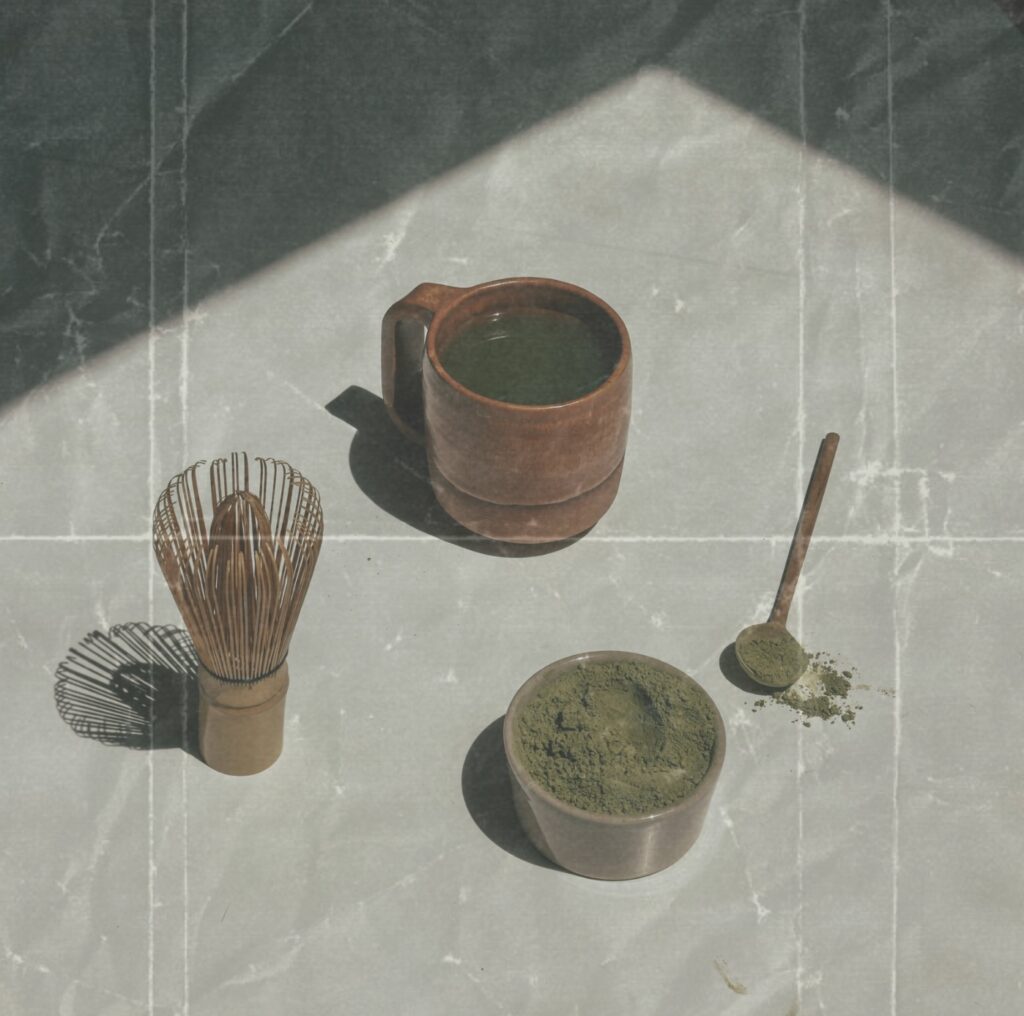
Wabi-Sabi tea cups are often handmade, irregular in shape, and may have cracks, with varied colours and textures. The Wabi-Sabi aesthetic emphasises the beauty of imperfection, transience, and simplicity, reflecting the appreciation of the natural marks that time leaves on objects. These “flaws” are not viewed as defects but as manifestations of the tea cup’s uniqueness and the marks it bears from its passage through time.
Rumiko Handa, a professor of architecture at the University of Nebraska-Lincoln, discusses how the famous tea master Sen no Rikyū frequently used tea tools made of pottery. She mentioned: “The physical properties of Rikyū’s objects presented themselves without relying on a building’s functional purpose or historical significance. The handmade nature of pottery inherently invites imperfection, forcing the tea drinker to face the irregularity of the cup’s rim and, in doing so, confront Wabi-Sabi — the understanding that true beauty lies in life’s asymmetries.”
“Full” in Western Philosophy
While Eastern philosophers meditate on the wisdom of “void”, Western knights pursue the unending Holy Grail. This contrast highlights the different understandings of the concept of “container” in Eastern and Western thought: Eastern philosophy emphasises the inclusivity and potential brought by “void”, while Western culture tends to view “fullness” as a symbol of holiness and redemption.
In medieval Europe, the Holy Grail, not only the cup used at the Last Supper of Jesus, was imbued with mythological significance as a symbol of eternal life and divine grace. The 12th-century legend of Perceval portrayed it as the ultimate symbol of faith, inspiring countless knights to embark on a quest to find it. Richard B. Sorensen, a scholar at Northcentral University & Christian Bible Institute and Seminary, notes that the Holy Grail, filled with Christ’s blood, symbolises faith, redemption, and immortality. The knightly quest for it was not only a search for a sacred relic but also a spiritual journey transcending the earthly realm to attain spiritual elevation. The symbolic meaning of the Grail went beyond religious contexts, becoming a symbol of morality, loyalty, and spiritual purity.
The desire for “fullness” is not unique to Christianity. In Greek Mythology, the wine cup of Dionysus, the god of wine, the Kylix, also carried transcendent meaning. It symbolised not only revelry, intoxication, and abundance, but also spiritual liberation, allowing individuals to break free from the constraints of reason and enter a more free and mystical realm. The core of Dionysian belief was that through drinking and ritualistic revelry, believers could unite with the gods and momentarily escape worldly suffering, entering into divine ecstasy. This ritual, along with the medieval knight’s quest for the Holy Grail, essentially points to a human desire for “completeness” — whether through spiritual redemption or sensory experience, both reflect humanity’s yearning to transcend reality and reach the divine.

Existential Vessels
In the 1940s Parisian cafés, the coffee cup became the “laboratory” for existential philosophy. As an ordinary daily object, the coffee cup carried profound existential significance within Sartre’s philosophical framework. In his theory, human existence is absurd, and every choice and action creates the meaning of life. The coffee cup, as an everyday vessel, reflects our deep contemplation of existence. Camus, in the myth of Sisyphus, wrote: “The gods had condemned Sisyphus to ceaselessly rolling a rock to the top of a mountain, whence the stone would fall back of its own weight. They had thought with some reason that there is no more dreadful punishment than futile and hopeless labor”. He likened human life to the endless struggle of Sisyphus pushing a boulder up a hill, only to have it roll back down, symbolising the endless cycle of life returning to the starting point. The coffee cup, in this context, represents one of the symbols of “meaninglessness”. It appears to be full, but its “emptiness” resonates with the human sense of existence—each sip of coffee, each thought and decision, seeks temporary meaning in the endless cycle. For existentialists, the coffee cup is not just a container; it is a ritual, a way to touch the deeper experience of existence through the mundanity of everyday life.
Whether sipping hand-drip coffee in Tokyo or admiring a gilded porcelain cup in Versailles, we are all participating in a “vessel voyage” that spans generations. As Argentine poet, Borges, observed in The Garden of Forking Paths, “perhaps universal history is just a variation of a few metaphors”, human history may be just different interpretations of a few core concepts, and these concepts are continuously reshaped and reenacted across different cultures, eras, and personal experiences. The cup, as the perfect metaphor for civilisation, is both a measure of the brevity of life and the sacred vessel that carries the elixir of our shared meanings.