I’ve spent my entire life as a vegetarian. From the moment I was born, to two vegetarian parents, up until this very moment, as a 22-year-old man. Even in my life, hell, even in the last decade, I’ve witnessed the lifestyle go from one of relative obscurity to the forefront of people’s lives.
It was one of the first things I noticed when moving to London in early 2023. The quantity and variety of vegetarian and vegan food were staggering.
At first, I welcomed the adoption of the dietary and, by extension, political choices people were making. I’ve grown up in its culture, and the messaging and rhetoric surrounding animal and climate welfare is one I’m very on board with.
But the last year or so has been different. Vegan and vegetarian restaurants have been closing at a staggering rate, and price hikes from supermarkets, to an already minority dietary choice, have left many of us with limited options.
2019, dubbed ‘The Year of the Vegan’ by The Economist, saw swathes of people take up veganism, and the future looked bright.
The fact of the matter is, those who jumped to a meat-alternative diet in the 2010s and the height of the craze, who are now jumping ship, have done undeniable damage to the industry for the rest of us. In essence, they have gentrified veganism and vegetarianism.
Young people, those most statistically likely to bear the brunt of these price hikes and lack of options, are stuck between choosing the ethical choice and the financially sensible one — things that used to be aligned, even in my lifetime.
I could go on and on and on. But I won’t.
What I will say is that, buried beneath all this doom and gloom, are small groups of people and small businesses, those dedicated to keeping the lifestyle afloat.
I recently went, with my girlfriend (who’s also a vegetarian), to two different restaurants.
Image: Sam on Unsplash.
The first, En Root Peckham, offers an interesting selection of plant-based “Indian fusion” items, all of which were enjoyable, and, crucially, it was affordable.
The interior was interesting and felt as if it had some soul — unlike the current state of ‘trendy’ restaurants and gastro pubs, which all merge into one — with more niche music, dimmed lights, and a sort of faux living room vibe.
The service left a little to be desired, and the strange layout of a cafe in the front section, dining area in the back, made for a slightly puzzling experience, but the food more than made up for these shortcomings.
Unfortunately, in line with broader veganism trends, we found out about En Root because of the owner appearing on the news, and talking about how much the business is struggling.
We went on a Friday evening, after work, and were two of only a dozen or so customers, during what should have been the place’s busiest time.
The second, Amrutha, in Honor Oak (that also serves Indian food), was a pleasant surprise. We went because it was convenient — close to both where I work and where my girlfriend lives — but left very happy on (almost) all fronts.
Despite the interior succumbing to the same disease plaguing gastro pubs — terribly uncomfortable chairs, an interior that could bore you to death, and a questionable music selection — the service and food were superb.
The food selection is, in essence, a ‘take it or leave it situation’. You get two options from the set menu: the normal portion at £33 per head or the slightly bigger one at £37. We opted for the normal portion, hesitant to pay extra for something we were unfamiliar with.
Due to it being our first time, we were upgraded to the slightly bigger portion at no extra cost, which was a welcome surprise. The staff were fantastic; they were friendly and genuinely seemed to care about providing a good service, which, having spent the last three years in hospitality myself, is not an easy feat to accomplish.
Image: Lai YuChing on Unsplash.
The food was great, the dishes interesting, and the bring your own booze policy (and the conveniently located corner shop just down the road) was the icing on the cake. Although, as pompous as it sounds, some kind of unique vegan beer or vegan wine pairing would’ve been a nice option (not that I’d opt for it anyway, for money’s sake).
We also found out that, when paying the bill, Amrutha operates a policy where you can pay as much or as little as you would like. This kind of policy is almost unheard of, but we chose to pay in full due to the exquisite service and food I mentioned earlier.
I left both feeling more than satisfied. I left feeling hopeful. Hopeful for the future of veganism and vegetarianism, with the belief that, no matter what’s trendy or what big corporations are doing, somebody, somewhere will stick by what they believe in.
Last year, a national survey found that the majority of journalism students had used AI tools to assist with their coursework at least once. Most said they didn’t consider it cheating. Many said their universities had never told them it was. The debate about artificial intelligence and academic integrity has generated significant coverage — but the more specific question of what it means for a profession that runs on human judgment has received considerably less attention.
Strange, isn’t it? That paragraph, the one you’ve just read through, felt off. Like something was wrong, but you weren’t sure what.
The excerpt was entirely generated by AI — specifically, a prompt I gave to Claude in which I asked it for “AI text that’s recognisable as AI to a trained eye, but not so lifeless that a casual reader bounces”.
“Your brain has already begun developing a ‘sixth sense’ for separating what’s human from what isn’t”
It becomes inevitable, then, that those of us who spend time reading or writing online will come across AI work, in one form or another. If you did experience that ‘strange feeling’ I talked about earlier, your brain has already begun developing a ‘sixth sense’ for separating what’s human from what isn’t. It’s learned through exposure and developed subconsciously, akin to a musician who can identify an incorrect note as it sounds, or an editor who can sense a weak lede before going through the rest of the story.
A study from the University of Massachusetts Amherst found that, among annotators who frequently use large language models (LLMs) for writing tasks, the incorrect detection rate is only 1 in 300. This is a near-perfect rate and outperforms every AI detector commercially available. It also, crucially, supports the idea that a new form of intuition has been developing in the minds of those working closely with AI.
Image: Steve A Johnson on Unsplash
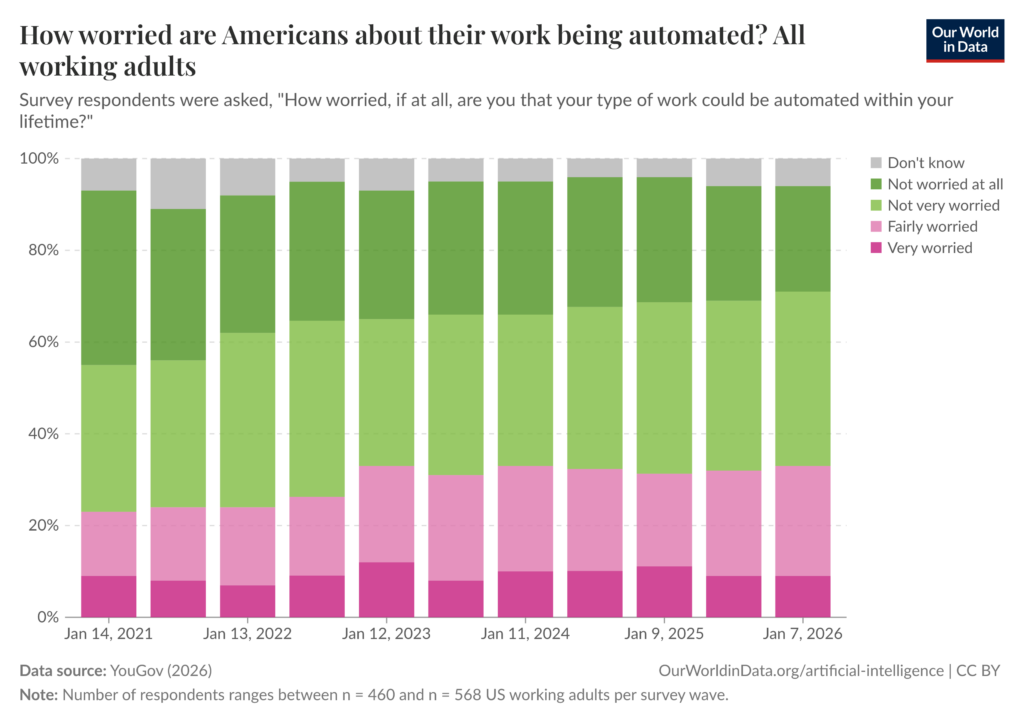
Out of 1041 students surveyed by the Higher Education Policy Institute in 2025, 92 per cent reported that they used AI in some capacity for university work, a 25 per cent increase compared to 2024, with 51 per cent using LLMs to work directly on their assessments, an increase of 29 per cent. Eight per cent of these students said they used AI in their assessment without editing, meaning the AI writing you and I have developed a ‘sixth sense’ for will, undoubtedly, be somewhere at some academic institution, away from public view.
More importantly, the writing lacks any of the little quirks that make it human. Certain word choices or sentence structure choices that, while maybe not the most algorithmically efficient way of producing prose, represent a decision, made by a person, indicative of his or her lived or learned experiences, for a reason we might never know.
LLMs aren’t capable of that nuance, instead producing, by design, a statistical average of all the writing that they’ve been trained on. What you read when you read AI work is an amalgamation of all that human context and feeling, watered down into a formula. Take em dashes, for example. Once a slightly more niche form of punctuation among your everyday person, the extent of their inclusion in AI training data — work from Emily Dickinson being a well-known example — has meant they now appear absolutely everywhere, irrespective of whether or not a comma or semicolon would, perhaps, be more appropriate contextually.
While these markers serve as a useful tool in analysing AI work, they don’t constitute a final verdict in determining whether or not the writing was entirely AI-generated.
Image: Our World in Data
One former student, who has asked not to be named, says she faced backlash on her work from her professors, despite no AI involvement, and that her work was “questioned”, with claims of not being how she would “normally say things”. Even with no formal disciplinary action, she felt as if the accusations resulted in her being “marked down on essays”.
Ironically, the crux of the allegations made against her stemmed from a professor getting her to attend an English as a second language course, which she was “involuntarily signed up for”, because of her northern accent. After the course, she altered her writing style to “sound more professional”, leading to the loss of her own voice and eventually to the accusations of AI usage.
Rory, whose name has been changed for privacy reasons, was an international student at a London university in his second year when he was accused of using AI in his work. The professor — who was also the head of assessments — making the claims, Rory says, was someone whom he had never met, nor did he teach on the module for which he was making allegations.
“Despite his passing grade, the professor still tried to have him withdrawn from the course”
A Zoom meeting was arranged to discuss the accusations, where the professor revealed that he put Rory’s work “through an AI checker, and he said that the feedback came out 100 per cent AI-generated”. Rory notes that the teacher, with no prior knowledge of his writing style, failed to compare the accused work with work he had done in September 2022, his first year, and a month prior to ChatGPT’s release. Rory maintains that the writing style was consistent throughout. After the meeting, he was told he could either accept the allegations and rewrite the essay in person, capped at 40 per cent, or he could raise the issue through a hearing. Rory chose the hearing.
His course coordinator, a module professor, and the initial accuser were present. “I showed my essays from before generative AI, my notes from lessons, which I used to write the essay, some of the drafts, and explained my thought process behind the essay,” Rory says. He was cleared of any wrongdoing, despite evidence “only being to the satisfaction of two of the members”.
Unbeknownst to Rory, his initial accuser then went back through each of the submissions he had made while at university. He found a formative 500-word essay, which Rory says was submitted only two days late in the first term of his first year. He notes that, at the time, the “submission was accepted and graded, and I passed the first year with no problems”.
Despite his passing grade, the professor still tried to have him withdrawn from the course. Rory raised a ‘Stage 1’ appeal, which is designated to the head of assessments, and he was, inevitably, rejected. He then escalated the appeal to ‘Stage 2’, which involved showing photo proof of submission, passing grade, and the final marksheet. The accuser argued that the late submission should count as a fail, and that Rory should be “withdrawn from the course”. Rory says the head of assessments did not wait for the outcome and tried to have him preemptively kicked out of the university.
“I had to get lawyers involved,” he says.
Rory was permitted to proceed to the third year, but his disillusionment with how the university handled his alleged AI usage left him with “a bad taste and distrust in the organisation”, and he opted to leave.
Image: Edwin Andrad on Unsplash.
In both instances, generative AI, or the suspicion of it, had a direct impact on the students’ degrees, pointing to a broader failure with universities in adapting to the technology, both from an education and detection standpoint. Although the unprecedented nature and access of commercial LLMs mean the failures are not necessarily the fault of universities, rather, they are dealing with a unique issue, relying on ill-equipped tools and frameworks.
Failings of AI detection — including a disproportionately high level of false positives attributed to non-native English speakers, according to research by Nathan Garland, such as Rory, who use punctuation like em dashes, as it promotes a ‘professional tone’ — have fostered a culture that is now hesitant to reprimand students for fear of getting it wrong.
Felix Simon, a researcher at the Reuters Institute for the Study of Journalism at Oxford University — whose work has informed evidence given to both the House of Commons and House of Lords on AI and Journalism — believes that the research surrounding AI usage in journalism training is “under-explored”. He recognises the difficulty in applying the tool, noting that journalism schools are “grappling with the question of how to integrate AI into their curriculum and how to educate the next generation of journalists for a challenging news landscape”.
“Why does it matter so much if text was generated with the help of AI, if the facts are accurate?”
On the topic of detection, Simon remains a sceptic, even when it comes to trained professionals. “My hunch is that the answer is ‘no’”, he says when asked if competent editors can reliably detect AI-generated writing. “They might be able to detect unedited text that comes straight out of an AI, but I doubt they can say if it was AI or not if the text has been edited afterwards”. Simon also sees AI-detection software as being “unreliable”, and that he is “not convinced that it works apart for [sic] text that comes straight out of a generative system and has not been edited”.
Felix Simon. Image: Reuters Institute.
Simon notes that the “ground is constantly shifting as these models improve and as text is further processed”. This complicates research from the University of Massachusetts Amherst cited earlier, and the idea of a learned intuition for spotting AI-written text. Simon believes the detection tools can’t keep up with the continuous upgrades to systems and advanced prompting that remove the hallmarks of AI writing. By extension, that ‘sixth sense’ may already be failing to keep up with the models it is trying to read.
“Both came away disillusioned, and both felt they weren’t taken seriously”
“Why does it matter so much if text was generated with the help of AI, if the facts are accurate?” he says, a question harder to answer than it appears. A 2025 study by Alexandra Fiedler concludes that even lecturers aren’t capable of reliably identifying AI text, further blurring the lines between human and AI-produced work.
‘Perplexity AI Dashboard’. Image: Aerps.com on Unsplash.
In a bid to address some of these issues, certain publications have started applying ‘AI-Generated’ labels to headlines. But the solution may not be so straightforward, as, according to research from Sacha Altay and Fabrizio Gilardi, the designation lowered readers’ perceived accuracy and willingness to share the pieces. In other words, the ‘AI-generated’ tag acts less as a transparency label and more as a burden for the piece it’s attached to, shifting the task of deciphering what’s trustworthy and what isn’t onto the audience.
For people like Rory or the unnamed student, the early overcompensation of universities has left a mark on their education that is hard to erase. Both came away disillusioned, and both felt they weren’t taken seriously. Now, they may feel the pendulum has shifted in the opposite direction.
Simon believes the conversation surrounding AI should be more nuanced, and that “the simple dichotomy ‘AI/Not AI’ isn’t very helpful at this point”. He suggests the debate may not even be starting in the right place.
“Are we asking the right question?”
The question of authorship has never been straightforward. Long before language models existed, writers borrowed, echoed, and absorbed the voices around them — editors shaped prose, collaborators dissolved into single bylines, ghost-writers vanished behind names that were not their own. What artificial intelligence has done is not invent a new problem, but accelerate an old one past the point where the existing language can keep up. Perhaps the more honest question is not whether a piece of writing is human, but whether it is true.
On a Friday night in southeast London, the pub I work at is half empty by 10, and with every passing week, fewer patrons come in than the last. A year ago, the same shift meant turning people away from the door; tonight, a double gin and tonic sits at £16, and the last table paid up at nine-thirty.
But this isn’t unique to my pub, and it isn’t unique to this Friday.
According to research conducted by the Night Time Industries Association (NTIA), a trade body advocating for the UK’s nighttime economy, roughly a quarter of late-night venues — clubs and bars that stay open past midnight — have been forced to close since March 2020. The night is not dying dramatically; the figures point to a structural shift in how the nighttime industry operates.
Both the pandemic and the cost-of-living crisis seem like the most obvious culprits, with their compounded effects increasing the cost and lowering the frequency someone can ‘go out’. But for Michael Kill, CEO of the NTIA, the story is longer and less convenient, with the decline stemming from a multitude of converging facets.
Students, key players in the nighttime economy, are going out less and prioritising their money for general living expenses and rent, according to the Rekom Night Index, with just over 45 per cent of its survey respondents saying they regularly go on nights out without consuming alcohol, and an 8.9 per cent decline in those who go out at least once per week.
The rising costs, a lot of which have been passed on to consumers, primarily stem from a stark increase in business rates — having risen by 45 per cent since 2019, according to 2024 research from the British Beer and Pub Association — and the 40 per cent relief for nighttime businesses that ended earlier in 2026. Changes to employer national insurance contributions, rising minimum wage, an increase in energy and utility costs, an increase in alcohol duty, in conjunction with a reduction in consumer spending, have all also contributed.
Kill believes COVID-19 accelerated underlying pressures already exerted on the industry, saying that the sector “was already dealing with rising rents, planning pressure, licensing complexity, business rates distortion, and a lack of long-term cultural protection for venues,” and the pandemic resulted in “long closures, debt, depleted cash reserves, and a reset in consumer behaviour”.
Regulatory pressure, both directly and indirectly linked to COVID, has had an unforeseen effect on the nighttime economy. According to data obtained through freedom of information requests submitted by The London Spy from 22 London councils, there was a 28 per cent increase in noise complaints in the initial full year venues were entitled to remain open post-pandemic. Responses to complaints made by councils have directly shaped how venues are managed and policed, often replacing the vibrant soundscape and freedoms of the dark with order and regimen.
Both the regulatory pressure and economic pressures are distinct problems, but for venues already operating on thin margins, they arrive at the same time and point in the same direction, and the effect of these compounded pressures has resulted in late-night venues having to re-examine the hierarchy of their operating costs.
Sidney, a San Francisco native who moved to London for University and has since stayed to build her career working within the nightlife and music industries, has heard this shift firsthand.
She believes “club nights are declining since there’s no scene,” and that, when working behind the bar at various events, her customers are predominantly tourists and students.
Forging a parallel career as a DJ, Sidney has experienced a palpable increase in the effort required to get work. She’s finding it “definitely harder” to get gigs, and says that she’s been “promoting myself more” than she could have anticipated, forcing a transition into the production side of things. The scene, she says, is unwelcoming in nature as a “non-established face”.
Kill frames this as venues under sustained financial pressure, making “defensive choices”. He believes there has been a narrowing of what’s creatively acceptable because “one weak Friday can blow the month.” For Sidney, that logic plays out in real time: slow ticket sales, uncertain accounts, and the feeling of having to “go into it blind, just praying numbers go up”.
Nighttime venues see paying DJs, promoters, sound engineers, and production fairly as “one of the few levers left, especially when fixed costs — rent, rates, utilities — won’t move,” Kill says. He believes that the conditions that allow for experimentation — affordable space, tolerant policy, sustainable operating economics — have been undermined, and the development of talent subsequently gets squeezed as a result of this.
According to interviews conducted by VICE, clubs have been forced to take on “up-and-coming” DJs, as opposed to more household names, due to their services costing double when compared to pre-pandemic rates. New talent has always been how scenes renew themselves. But when the decision is driven by cost rather than curation, a night can lose its identity without anyone quite deciding that it should.
But it hasn’t always been this way. To those of a different era, London’s nighttime soundscape played a more optimistic tune.
Club-goers of the 1990s and early 2000s, I spoke to on social media, recalled feeling as if it were “a great time for music and clubbing,” with the absence of social media reflected in people living “in the moment,” and “not caring what they looked like”.
Of course, while these statements are anecdotal — and, perhaps, clouded by nostalgia — the praise of the cultural zeitgeist felt in London, and by extension Britain, at the time is mirrored in the accessibility of the era.
Time Out London calculated the cost of a small night out — pub, tube fare, club entry, drinks at the venue, food, and a taxi home — to set you back over £20 more in 2025 than it would have done 30 years earlier. Kill puts it bluntly: “Frequency is down: people are going out less often, and when they do, they’re making it a ‘bigger decision’ because the night costs more end-to-end.”
The Music Venues Trust report, published earlier this year, has highlighted the reduced frequency of venue closures and a higher level of activity across the sector when compared to 2023 and 2024, which serves as tentative evidence, perhaps, that the industry may be healing.
January 2026 saw London’s Independent Nightlife Taskforce publish proposals to introduce a ‘Night-Time Business Cost Relief Scheme’, in which eligible pubs and live music venues will receive a 15 per cent business rates relief in 2026-27, in addition to a licensing reform throughout the boroughs, and a principle that would see new residential developments bear the cost of soundproofing, instead of it being passed on to existing venues that pre-date them.
Kill says that “targeted, meaningful cost relief for nighttime businesses” would be the biggest policy-based difference maker, adding that “if government wants safer nights, thriving high streets, and a globally competitive cultural city, it has to stop treating the night as optional”.