Category: Smell

  • The Sensory Science of Baking

    The Sensory Science of Baking

    Yilin Li immerses her senses of smell for a baking session at the London-based bakery, Bread Ahead


    Near the Bread Ahead stand on a weekend afternoon, a faint aroma of butter hangs in the market air. It draws passers-by towards the stall, where trays of baked goods and pastries quickly gather a crowd. As the crowd thins and you reach Bread Ahead, it becomes clear the smell rises from the open kitchen behind the counter, where bakers and students work side-by-side. The scent acts as a quiet invitation, encouraging people to step closer and peer into the baking room beyond.

    Doughnuts of different flavours on the stall. Image: Yilin Li

    In contrast to the noisy and lively atmosphere of the outside stalls, Bread Ahead’s baking class offers a slower, warmer, and more intimate experience of the bakery. Inside the large open baking room, the focus is not only on learning how to handle dough and master pastry techniques, but also on experiencing baking as a sensory journey where smell becomes the most direct link, connecting space, process and perception.

    The Pastry Workshop fills the baking classroom with various flavours, different types of bread courses such as the Sourdough Bread Beginner’s Guide, the Doughnut, Croissant Workshop, Brioche & Buns Workshop. Walking into the baking room, five students, including myself, sit around a stainless-steel table. The teacher, Sophia, grabs a handful of flour and scatters it across the surface. 

    The flour lingers in the warm air for a moment, releasing a dry wheat aroma, before quietly settling onto the metal table. Sophia begins to knead the already fermented dough. As she works, the dough gives off a faint yeast aroma – a subtle, slightly sweet scent that blends into the warmth of the room. Her movements are steady and rhythmic, and the repeated motion of her hands seems to draw everyone into a meditative state. She kneads and smiles at the same time. Only when the dough reaches a shape she is satisfied with does she look up and say, “Welcome, everyone, to our baking class. Are you ready to make fragrant small breads?”

    As Sophia guides the class through the first steps of kneading, a pleasant aroma begins to spread through the room, even before any technique is fully applied. It rises quietly from the dough in the mixing bowl and from the table lined with various seasonings, blending with the warmth of the oven and creating an atmosphere that feels comforting and almost therapeutic.

    Among the ingredients is a small bowl of lemon juice, added in modest amounts to the egg mixture. When Sophia squeezes the lemon by hand, its skin splits open, and a strong, fresh fragrance immediately wafts into the air, carrying a brightness that feels like a summer morning. As I brush the egg mixture onto the pastry, the citrus scent rises at once sharper and brighter than anything that has filled the room before. People pause, breathing a little deeper, their shoulders easing almost instinctively, as if the fragrance itself gently settles the space.

    Sophia notices it too. Later, she explains: ‘‘Not only lemon but also mint has a similar effect. If used in the baking process, their scents all have a soothing effect.’’ If someone breaks a mint leaf and gently rubs it, that refreshing grassy aroma will spread throughout the entire baking kitchen, making the atmosphere clear and gentle without people even realising it. Sophia explains that some students even seem to wake up suddenly when the scent appears. ‘‘Not because they’ve suddenly mastered the technique,’’ she says, ‘‘but because the freshness of mint makes them feel more alert.’’

    For Sophia, aroma is often misunderstood as something that appears only once a pastry is baked. It is a part of the baking process, an intangible companion. Different scents emerge in the early stages of baking, when dough and fillings are still being prepared. These smells, she believes, influence a baker’s mood, focus, and even confidence in subtle ways. As aromas move through the space, they can ease tension and encourage students to settle into the rhythm of the work, making it easier for beginners to find their footing.

    Sophia believes that the relationship between smell and emotion is so close that it has become part of teaching. ‘‘It’s therapeutic,’’ she says, ‘‘the smell helps people settle in.’’

    Aroma is not simply a result of baking, but an active part of the process. It does not appear only when a finished pastry or bread emerges from the oven. Instead, it unfolds at every stage, during kneading, fermentation, and the quiet waiting that follows. From the natural scent of fresh ingredients to the warm steam released by freshly baked bread, smell runs through the class like an invisible thread. It gently guides students from the initial nervousness of stepping into the kitchen towards a deeper state of focus and ease, allowing both body and mind to settle into the rhythm of making. As Sophia says, the aroma of the bread is calming, a reason to stop, take a deep breath and regain one’s rhythm.
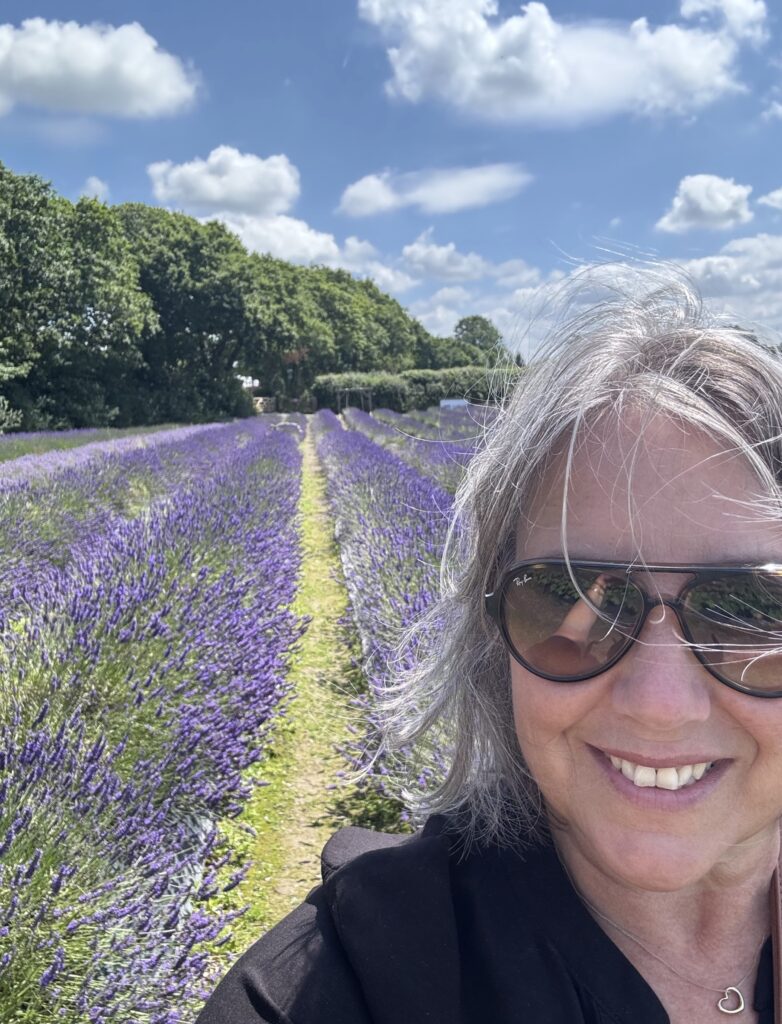
    Natural perfumer and aromachologist Nicky Jones. Image: Nicky Jones

    Natural perfumer and aromachologist – Nicky Jones offers a scientific explanation for this effect. She explains that the olfactory system has a direct pathway to the brain’s emotional centre. “When we inhale an aroma, the molecules travel through the olfactory system and directly enter the frontal lobes, where emotions and memories are processed,” she says.

    Certain chemical compounds, such as linalool, commonly found in natural essential oils, have been shown to reduce anxiety and stress. But beyond chemistry, Jones highlights the importance of memory.

    “Our brain creates scent associations,” she explains. “If a scent is linked to a particular emotion, time, place or person, when that aroma appears again, it immediately recalls the memory and emotion associated with it.”

    In the baking classroom, this neurological shortcut helps explain why the scent of warm dough can instantly shift the mood of the room. Aroma does not merely decorate the space; it shapes how the body settles into it. Changes in temperature can also affect the release of aroma, which is closely related to baking. Sophia explains that temperature not only affects the activity of the yeast but also determines when and how the aroma will spread. As the oven gradually heats up, the lemon juice in the egg-washed pastry crust and the sugar added to the dough begin to evaporate more quickly. The air takes on a fragrance that is fresh but never cloying, warm without becoming heavy. When the oven door is gently pulled open, a warm and sweet steam instantly gushes out, making the entire classroom seem to be filled with light in an instant. At that moment, no one speaks: the attention of the entire group is held by the smell alone.

    However, this calming effect does not stay confined to the classroom. Just outside Bread Ahead, in the crowded lanes of Borough Market, the same sensory influence continues.

    Among all the visitors in that afternoon, Robbie, who has travelled down from London with his partner shares “We have seen videos of the bakery online and plan to stop for lunch”. Yet it is not the online popularity that make them stay. “We know we are in the right place because you can smell the fresh bread,” Robbie adds.
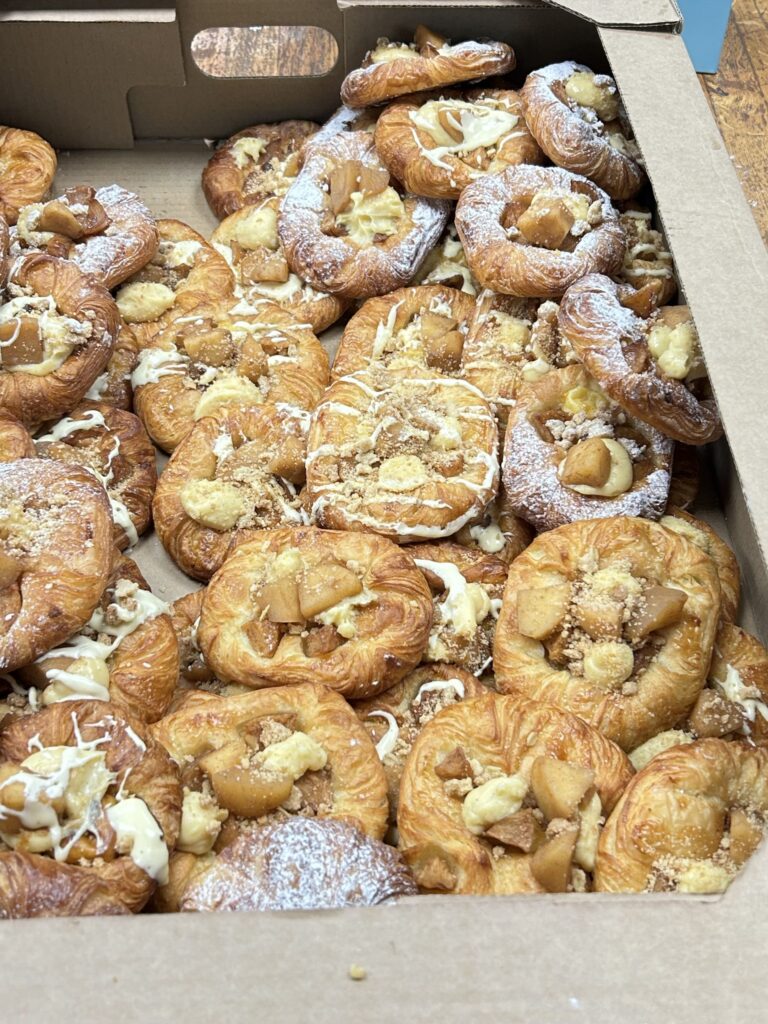
    Freshly baked pastries at the end of the session. Image: Yilin Li

    For locals, the relationship with the bakery feels different. Haley, who lives nearby, has brought her partner Kane, visiting her for the day to try it. While Robbie describes smell as a way of confirming they have arrived at the right place, Haley and Kane experience it as something more immediate. “Everything,” Haley says when asked what she can smell, before narrowing it down: “the garlic and the bread is very, very strong over here.”

    Finally, what lingers is not just the taste of the bread, but the quiet way aroma shapes how people feel, remember and connect to a place.
  • The Scent of Self: Inside London’s Most Personal Refinery

    The Scent of Self: Inside London’s Most Personal Refinery

    In a studio tucked away in the streets of Notting Hill, Lucy Heale is doing something quietly radical. She is teaching people that the most powerful fragrance they will ever wear is the one they make themselves. 

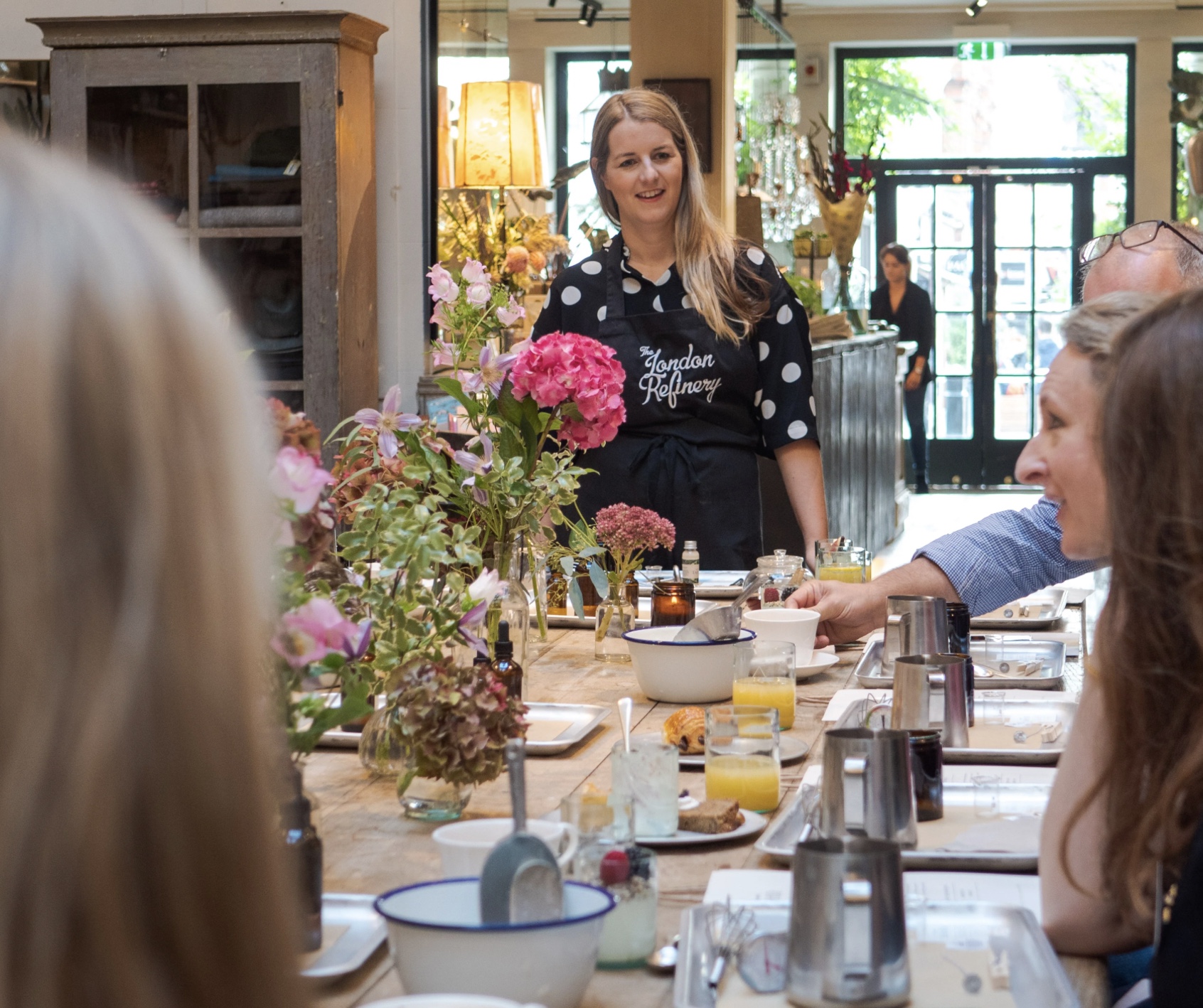
    There is a moment that happens in every workshop at The London Refinery. It is the moment when someone lifts a strip of testing paper to their nose, closes their eyes, and goes somewhere else entirely. Maybe it is a childhood garden, a lover’s bedroom, or a grandmother’s kitchen. In that instant, fragrance stops being a product and becomes something far more intimate: a portal. 

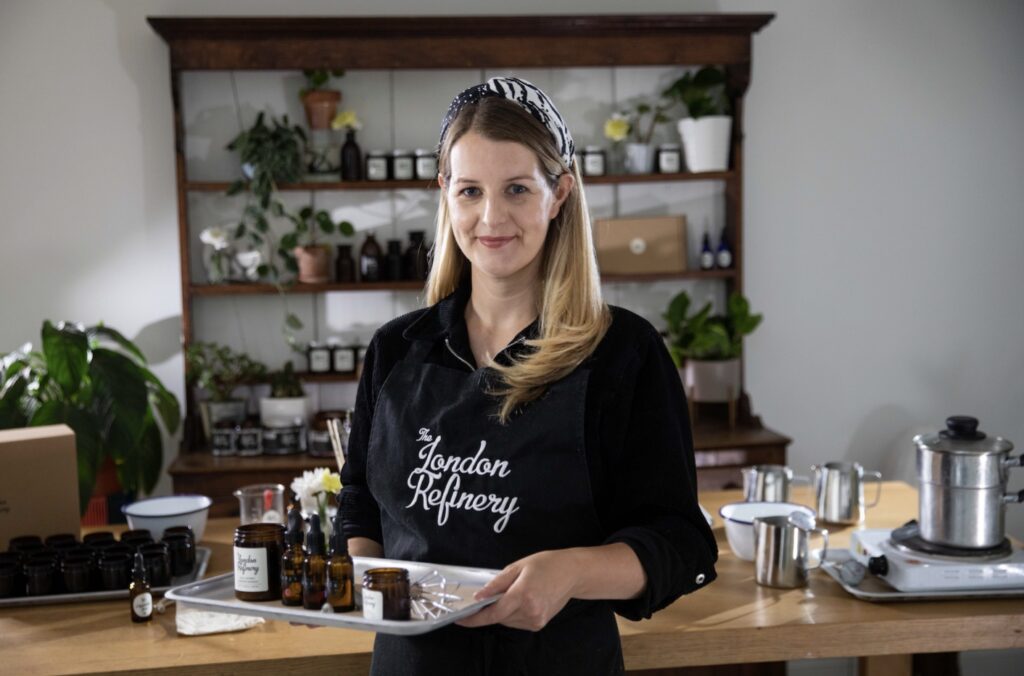
    Lucy Heale, the founder of The London Refinery, has built her entire business around that moment. Since launching in 2019, after winning a university competition at Central Saint Martins and turning down a perfectly good job at a digital marketing agency to do so, she has been quietly redefining what it means to wear a scent. 

    Lucy Heale preparing a workshop. Image: Lucy Heale

    “Fragrance is not just about smelling good,” she says. “It is about understanding where it comes from and how it is made.” 

    Of all the ways we construct identity, scent may be the most underestimated. It does not hang on a wall or sit in a wardrobe. It moves with you, invisible, intimate, and neurologically speaking, more deeply wired into who you are than almost anything else you wear.

    We have always known this, in some sense. Perfume has been traded, gifted, inherited, and mourned for thousands of years. People keep empty bottles long after the scent is gone. They describe the smell of a lost person the way they might describe a face. They recognise themselves, sometimes startlingly, in the scent of a room they have not entered since childhood.

    What is newer is the growing desire to reverse the transaction. Not to choose a scent off a shelf, but to make one. To sit with raw materials and arrive, through something between instinct and memory and experimentation, at something that feels genuinely, specifically yours.

    The London Refinery’s workshop. Image: Lucy Heale

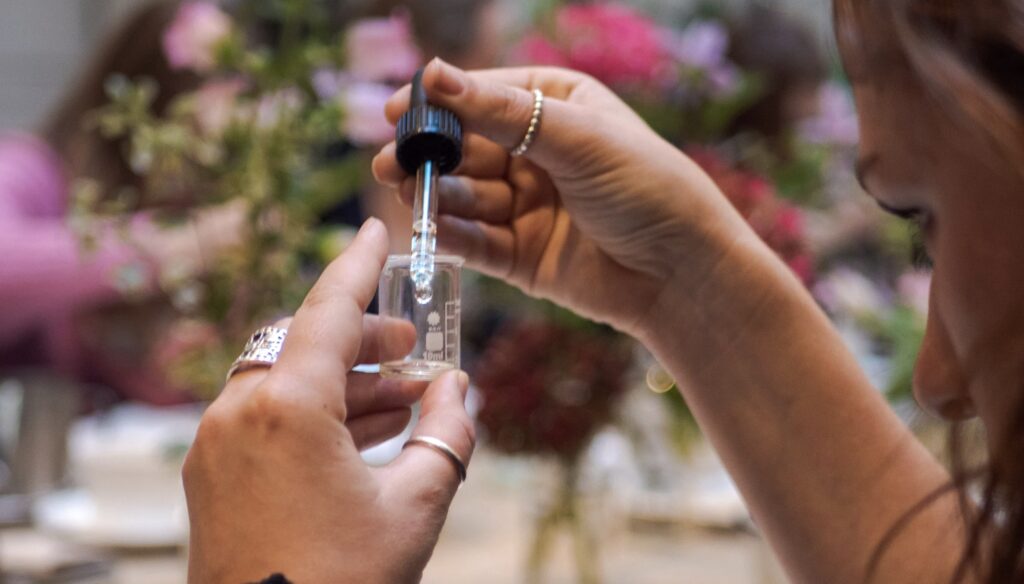
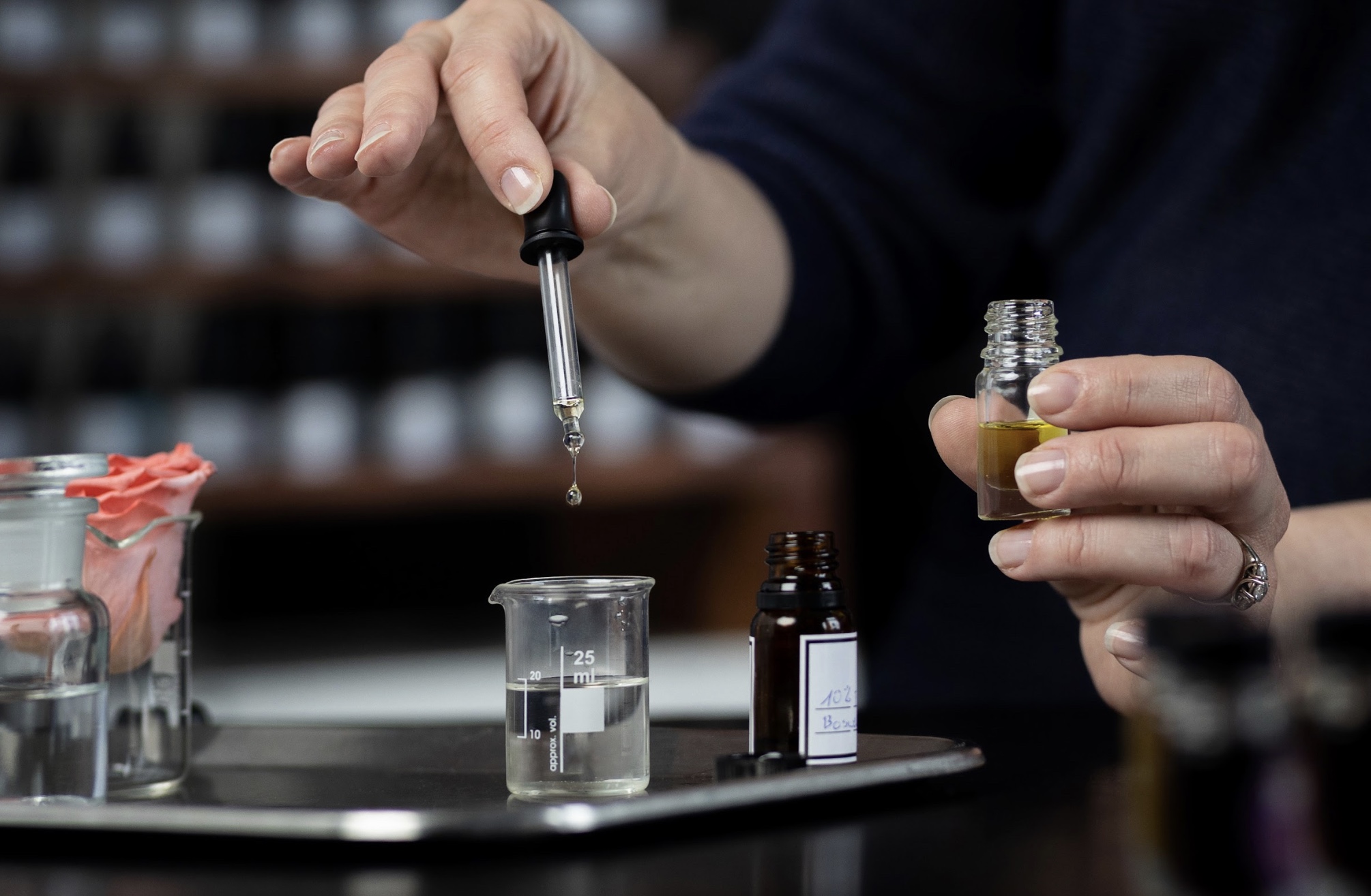
    The London Refinery’s workshops last two hours. There are no formulas to follow, no prescriptions. Instead, participants work through a palette of natural essential oils, most sourced from small producers in the south of France, following what they are drawn to rather than what they think they should want. 

    What emerges is rarely what people expect. Someone who arrives certain they want something floral often finds themselves reaching for something greener, earthier, more austere. Someone who thinks they want warmth discovers they actually want stillness. The process has a way of surfacing preferences people did not know they had, and preferences, it turns out, are a kind of self-knowledge. 

    “Your scent becomes an extension of your identity,” Heale says. “It is not something imposed on you. It is something you have shaped with intention.”

    That distinction matters more than it might seem. Most of us wear scents chosen for us by market research, celebrity association, or the ambient pressure of a department store counter. The fragrance we end up with is rarely a reflection of who we actually are. It is a reflection of what we were presented with on the day we needed to buy something.

    The act of making, by contrast, requires a different kind of attention. It slows you down. It asks you to be specific about what you actually respond to, and why. In this sense, the workshop format sits at the intersection of craft and self-inquiry, and the two hours people spend at a blending table often function as something closer to reflection than shopping. 

    That insistence on knowing what you are working with extends to the materials themselves. The fragrance industry has long operated behind a veil of deliberate opacity: ingredient lists that tell you almost nothing, supply chains that stretch across continents without scrutiny, synthetic compounds that approximate nature without coming from it. Heale works against this. The oils used in her studio are natural, largely European in origin, and free from petrochemicals, parabens, and pesticide-treated botanicals. Every ingredient is tested for skin safety, because natural, it turns out, does not automatically mean gentle. 

    She is candid about the limitations this creates. Natural scents can be softer, less immediately arresting than their synthetic counterparts, built as those often are for projection and longevity over subtlety. Some workshop materials, certain metals, and crystals used in the process, resist fully sustainable solutions. Heale makes the most responsible choices available and does not pretend otherwise when the ideal is out of reach. Something is clarifying about that honesty. It treats sustainability not as a marketing position but as an ongoing negotiation with the actual conditions of making things. 

    Knowing where your materials come from also, it turns out, changes the experience of working with them. When you understand that the lavender in your blend grew in a specific region, harvested in a particular season, the act of choosing it becomes something more than aesthetic preference. It becomes a small act of connection to a place and a process. The finished scent carries that with it. 

    The London Refinery’s workshop. Image: Lucy Heale

    Scent is also uniquely a memory technology. Of all the senses, smell has the most direct neurological connection to the limbic system, the part of the brain that processes emotion and memory. This is why a particular combination of notes can drop you into a specific afternoon twenty years ago with a precision that neither sound nor image can match. It is also why the fragrances people create in workshops so often have a retrospective quality: they are reaching, frequently without realising it, for something they already know. 

    One of the most striking examples of this at The London Refinery involved a woman who came in not to create something new but to recover something lost. She brought her late dog’s lead, his blankets, his coats, and anything that still held traces of his scent. She wanted something that could carry the memory of their walks together through the Cotswolds: cold and strong, she said, but also wintery, even though the walks had been in summer. The finished blend used woody, earthy notes for that familiar solidity; cool green herbs for the open air; soft musky undertones for the feeling of closeness. It was, in a very precise sense, a portrait. Not of a place, but of a relationship. 

    There is something in that story that speaks to a broader shift in how people relate to objects and experiences. The appetite for the meaningful over the merely good, for the traceable over the generic, has quietly reorganised how a generation consumes. In fragrance, as elsewhere, it has produced a growing scepticism toward the mass-produced and a corresponding interest in the natural, the artisanal, and the personal.

    The workshops also do something harder to account for in any framework of individual identity: they create community. Strangers who come in separately often find themselves bonding over the shared vulnerability of the process, of not knowing what they are doing and trying anyway. Friendships form during sessions. People return together. There is something about the shared intimacy of working with materials that are, literally, about how you want to be sensed by others, that seems to lower the usual defences.

    In this way, the making of a personal scent becomes a social act as much as a private one. You are deciding, in a room with other people, who you want to be. The answer you arrive at is yours alone, and yet the process of arriving at it is collective.

    What you leave with is a small bottle of something that smells, if the session has gone well, unmistakably like you. Not a version of you that a brand has decided to offer. Not a compromise with what was available. Something that started as an intuition and ended as an object. An identity, briefly and precisely bottled.