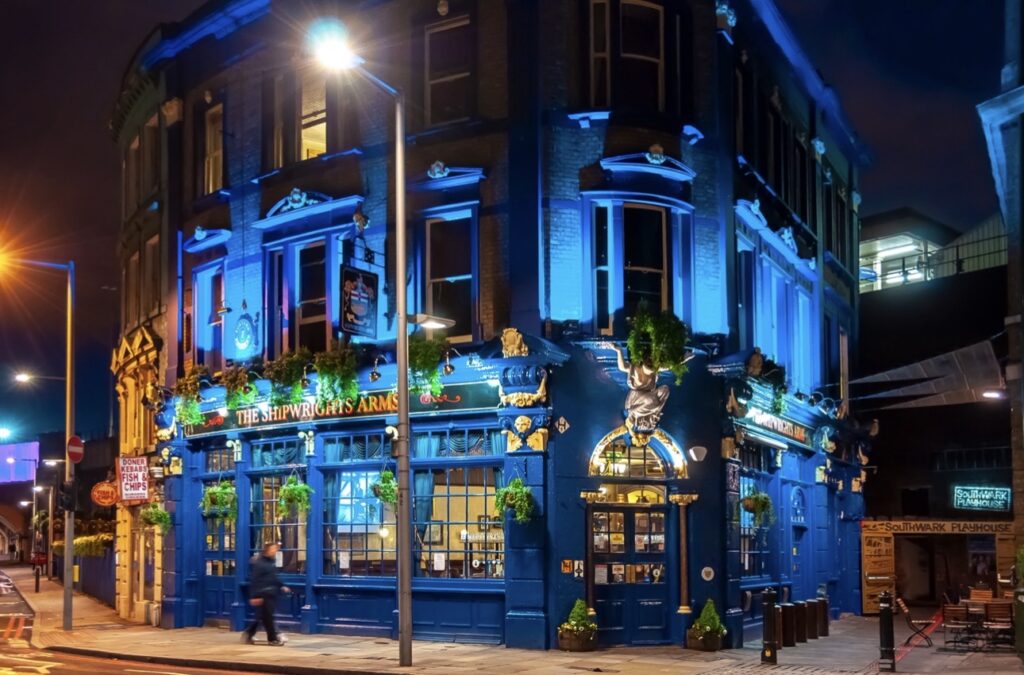
On a Friday night in southeast London, the pub I work at is half empty by 10, and with every passing week, fewer patrons come in than the last. A year ago, the same shift meant turning people away from the door; tonight, a double gin and tonic sits at £16, and the last table paid up at nine-thirty.
But this isn’t unique to my pub, and it isn’t unique to this Friday.
According to research conducted by the Night Time Industries Association (NTIA), a trade body advocating for the UK’s nighttime economy, roughly a quarter of late-night venues — clubs and bars that stay open past midnight — have been forced to close since March 2020. The night is not dying dramatically; the figures point to a structural shift in how the nighttime industry operates.
Both the pandemic and the cost-of-living crisis seem like the most obvious culprits, with their compounded effects increasing the cost and lowering the frequency someone can ‘go out’. But for Michael Kill, CEO of the NTIA, the story is longer and less convenient, with the decline stemming from a multitude of converging facets.
Students, key players in the nighttime economy, are going out less and prioritising their money for general living expenses and rent, according to the Rekom Night Index, with just over 45 per cent of its survey respondents saying they regularly go on nights out without consuming alcohol, and an 8.9 per cent decline in those who go out at least once per week.
The rising costs, a lot of which have been passed on to consumers, primarily stem from a stark increase in business rates — having risen by 45 per cent since 2019, according to 2024 research from the British Beer and Pub Association — and the 40 per cent relief for nighttime businesses that ended earlier in 2026. Changes to employer national insurance contributions, rising minimum wage, an increase in energy and utility costs, an increase in alcohol duty, in conjunction with a reduction in consumer spending, have all also contributed.

Kill believes COVID-19 accelerated underlying pressures already exerted on the industry, saying that the sector “was already dealing with rising rents, planning pressure, licensing complexity, business rates distortion, and a lack of long-term cultural protection for venues,” and the pandemic resulted in “long closures, debt, depleted cash reserves, and a reset in consumer behaviour”.
Regulatory pressure, both directly and indirectly linked to COVID, has had an unforeseen effect on the nighttime economy. According to data obtained through freedom of information requests submitted by The London Spy from 22 London councils, there was a 28 per cent increase in noise complaints in the initial full year venues were entitled to remain open post-pandemic. Responses to complaints made by councils have directly shaped how venues are managed and policed, often replacing the vibrant soundscape and freedoms of the dark with order and regimen.
Both the regulatory pressure and economic pressures are distinct problems, but for venues already operating on thin margins, they arrive at the same time and point in the same direction, and the effect of these compounded pressures has resulted in late-night venues having to re-examine the hierarchy of their operating costs.
Sidney, a San Francisco native who moved to London for University and has since stayed to build her career working within the nightlife and music industries, has heard this shift firsthand.
She believes “club nights are declining since there’s no scene,” and that, when working behind the bar at various events, her customers are predominantly tourists and students.
Forging a parallel career as a DJ, Sidney has experienced a palpable increase in the effort required to get work. She’s finding it “definitely harder” to get gigs, and says that she’s been “promoting myself more” than she could have anticipated, forcing a transition into the production side of things. The scene, she says, is unwelcoming in nature as a “non-established face”.
Kill frames this as venues under sustained financial pressure, making “defensive choices”. He believes there has been a narrowing of what’s creatively acceptable because “one weak Friday can blow the month.” For Sidney, that logic plays out in real time: slow ticket sales, uncertain accounts, and the feeling of having to “go into it blind, just praying numbers go up”.
Nighttime venues see paying DJs, promoters, sound engineers, and production fairly as “one of the few levers left, especially when fixed costs — rent, rates, utilities — won’t move,” Kill says. He believes that the conditions that allow for experimentation — affordable space, tolerant policy, sustainable operating economics — have been undermined, and the development of talent subsequently gets squeezed as a result of this.
According to interviews conducted by VICE, clubs have been forced to take on “up-and-coming” DJs, as opposed to more household names, due to their services costing double when compared to pre-pandemic rates. New talent has always been how scenes renew themselves. But when the decision is driven by cost rather than curation, a night can lose its identity without anyone quite deciding that it should.
But it hasn’t always been this way. To those of a different era, London’s nighttime soundscape played a more optimistic tune.
Club-goers of the 1990s and early 2000s, I spoke to on social media, recalled feeling as if it were “a great time for music and clubbing,” with the absence of social media reflected in people living “in the moment,” and “not caring what they looked like”.
Of course, while these statements are anecdotal — and, perhaps, clouded by nostalgia — the praise of the cultural zeitgeist felt in London, and by extension Britain, at the time is mirrored in the accessibility of the era.
Data from research conducted by the UK Office for National Statistics (ONS) shows that the median annual earnings for full-time employees were approximately £18,848 in 2000 and £39,039 in 2025. During the same period, the average cost of a pint of draught lager increased from £1.12 to £4.83. The relative cost has almost doubled, going up from 0.59 to 1.17 per cent of an individual’s yearly salary, and the average person can only afford just shy of half the drinks they would’ve done 25 years earlier.
Time Out London calculated the cost of a small night out — pub, tube fare, club entry, drinks at the venue, food, and a taxi home — to set you back over £20 more in 2025 than it would have done 30 years earlier. Kill puts it bluntly: “Frequency is down: people are going out less often, and when they do, they’re making it a ‘bigger decision’ because the night costs more end-to-end.”
The Music Venues Trust report, published earlier this year, has highlighted the reduced frequency of venue closures and a higher level of activity across the sector when compared to 2023 and 2024, which serves as tentative evidence, perhaps, that the industry may be healing.
January 2026 saw London’s Independent Nightlife Taskforce publish proposals to introduce a ‘Night-Time Business Cost Relief Scheme’, in which eligible pubs and live music venues will receive a 15 per cent business rates relief in 2026-27, in addition to a licensing reform throughout the boroughs, and a principle that would see new residential developments bear the cost of soundproofing, instead of it being passed on to existing venues that pre-date them.
Kill says that “targeted, meaningful cost relief for nighttime businesses” would be the biggest policy-based difference maker, adding that “if government wants safer nights, thriving high streets, and a globally competitive cultural city, it has to stop treating the night as optional”.