Category: Touch

  • When Your Body Says No

    When Your Body Says No

    Yilin Li investigates what it’s like living with everyday allergies


    It can be difficult when your body overreacts to everyday things that most people barely notice. For millions of people in the United Kingdom, allergic reactions are a part of daily life, triggered by anything from grass and pollen to shellfish and animal hairs. While many symptoms are mild and manageable, others can escalate rapidly, becoming serious or even life-threatening. From subtle irritation to severe physical reactions, allergies exist along a spectrum that is often misunderstood. Yet behind each reaction lies a complex relationship between the body, the environment and the way we learn to live with both.

    “Allergies and sensitivities are extremely common and irritating and uncomfortable, but not life-threatening,” Hammett explained. “However, an acute allergic reaction, anaphylaxis, can be serious and could prove fatal.”

    Emma Hammett, CEO of the UK training organisation – First Aid for Life, says it is crucial to distinguish between everyday allergies and acute reactions. While the mild allergic symptoms are often managed with antihistamines and avoidance of triggers. But severe reactions require immediate action.
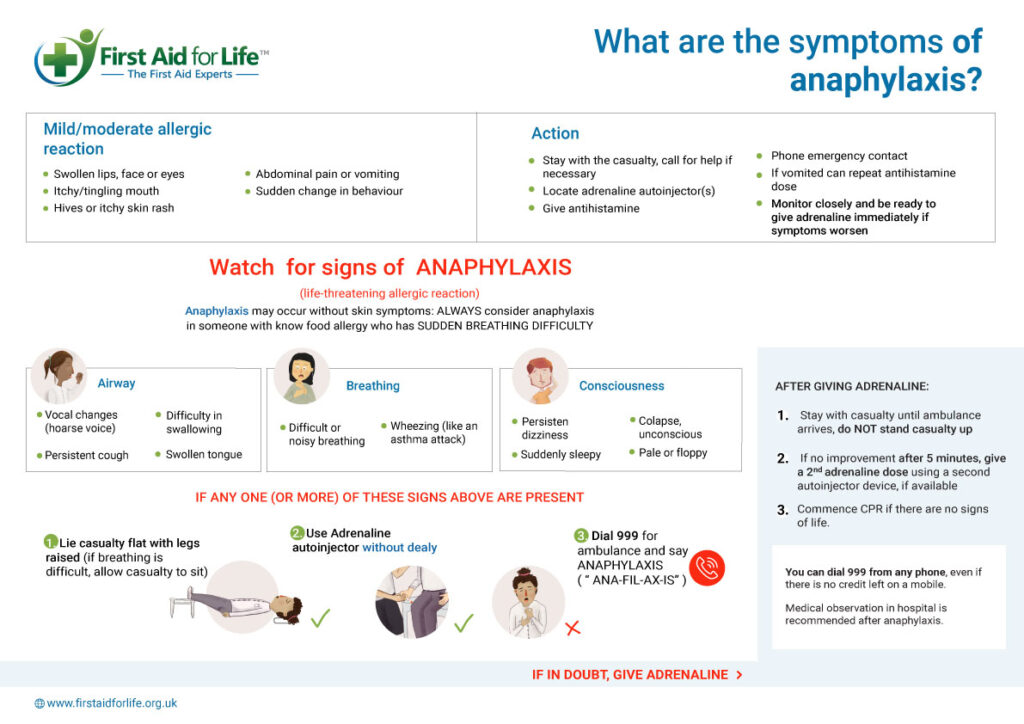
    Infographic of the symptoms of anaphylaxis. Image: Emma Hammett, First Aid for Life

    “Adrenaline should be administered as soon as you notice the signs of a severe systemic allergic reaction,” she says. “Always phone an ambulance after giving the adrenaline auto-injector.”

    Hammett notes that food allergies are becoming increasingly common, which is why public awareness and first-aid training are expanding. From September, UK schools are legally required to ensure staff are trained to recognise anaphylaxis and administer adrenaline auto-injectors.

    Allergies are often imagined as dramatic emergencies: swelling throats, hospital visits, urgent injections. But for many people, allergic reactions are quieter and far more ordinary. They appear in itchy skin after touching grass, a throat that tingles after certain foods, or sudden redness that spreads across the face without warning.

    These reactions can arrive in the middle of daily life, during a meal, on a walk in the park, or late at night when the body should be resting. Yet they often feel strangely unpredictable, as if the body has mistaken something harmless for danger.

    Why does the body sometimes react as if the world itself were a threat?

    Natalia’s face during a sudden allergic reaction. Image: Dora

    Dora Ni, a 21-year-old student, says the answer often appears without warning. She has lived with allergies since childhood, and her body can react suddenly to stress, lack of sleep, or even moments of anxiety in public. 

    “When I feel nervous, my face flushes intensely and becomes itchy and purple,” she says.

    For Dora, tactile sensations became a visible source of shame. Because her reactions developed so rapidly, strangers in public can readily perceive her distress, like sudden facial swelling, arms flushed and itching over large patches. Yet Dora says the difficulty lies not only in the symptoms themselves but in how others perceive them. “Because not all reactions are life-threatening, people don’t always see it as serious.” Over time, she has begun to recognise patterns in her body’s responses. Sleep, stress levels, and emotional stability all seem to influence how severe the reactions become. ‘‘When I’m well-rested and emotionally stable, my reactions are noticeably less severe.’’ For her, stress does not cause the allergy itself, but it can make the symptoms worse.

    Unlike Dora, Lia’s allergies developed slowly. As a child, Lia, a 21-year-old student living in London, loved animals and spent time around horses without any problems. But over the years, her body began to react.

    Torch animals allergic reaction. Image: Adobe Stock

    “I wasn’t allergic as a child, but the more time I spent around animals, the worse it became,” she says.

    Consequently, contact with animals now causes her eyes to itch, rashes to appear on her body, and even breathing difficulties. But it’s not just animals that she is allergic to; touching kiwifruit makes her throat tingle and grass triggers allergic reactions on her arms, particularly after exercise. ‘‘If I sit on grass, I get rashes all over my legs,” she says.

    Lia manages her symptoms by carrying antihistamines, avoiding certain foods, and washing her hands carefully after touching animals. But the allergies have affected her in other ways: “I would love to have a farm when I’m older… but I can’t,” she says. For Lia, the allergy does more than irritate her skin. It quietly redraws the boundaries of the life she once imagined.
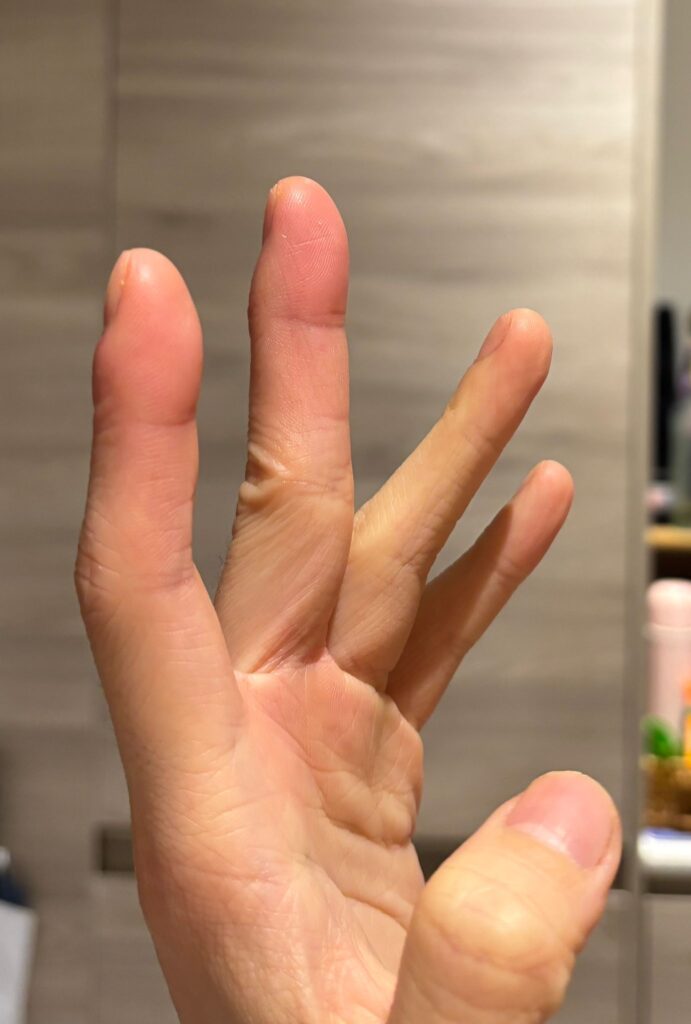
    Joanna’s allergic reaction occurred after her hand touched raw shrimp. Image: Joanna

    Joanna Chan, 23, a student, has a more pronounced allergic condition. Around the age of 15, despite having consumed seafood without issue since childhood, she suddenly developed an allergic reaction to raw and undercooked prawns.

    Handling raw prawns without gloves causes her hands to swell and itch. Eating undercooked prawns triggers a more serious response. “My airways constrict, and my lips become very swollen and itchy,” she says.

    Yet her attitude towards the allergy is surprisingly calm. “If something happens, I just take medication.” Because the trigger is specific and easy to avoid, she doesn’t feel the condition has dramatically altered her life. “It feels very normal to me.”

    While these experiences differ, they also raise an important question: when does an allergy become dangerous?

    For mild allergies, symptoms are often managed with antihistamines and avoidance of triggers, as Hammett explains. But severe reactions, though less common, require immediate recognition and response.

    But most allergies people live with every day fall somewhere between irritation and danger – uncomfortable, unpredictable, but rarely life-threatening.

    These three stories reveal how differently the body can respond to the same world. Allergic reactions are not signs of failure but forms of protection, sometimes imperfect, sometimes excessive. Living with allergies is akin to negotiating with the world. For Dora Ni, this means always carrying antihistamines. For Lia, it means relinquishing her dream of owning a farm. For Joanna Chan, it means understanding precisely where her body’s limits lie.  Learning to live with allergies means learning where those boundaries lie and how to live alongside them.


  • What London Teaches Newcomers About Touch

    What London Teaches Newcomers About Touch

    How touch changes within a new city

    Crosswalk. Image: Unsplash

    As an international student from Madrid now studying in London, I have felt firsthand how relationships and connections change in a new city. When I first arrived, academic support was essential. It helped me enrol, choose classes, and stay on track, but what I truly needed went beyond academics. I needed personal support, someone who understood the small, everyday confusions of adapting to a new culture and the quiet moments when the familiar warmth of home suddenly felt far away. But most of all, I needed a hug.

    For those arriving from warmer climates, the first jolt often comes with the sharp breeze rushing from the aircraft doors, a cold that cuts through summer clothes and foreshadows wider adjustments. For international students, it is the opening signal that familiar habits of closeness and gesture will need rethinking.

    Gregorio Vanacore. Image: Gregorio Vanacore

    Gregorio Vanacore, a 23-year-old freelancer, felt it through his arrival at his university in London, coming from the town of Lucca in Tuscany. At Imperial College London’s orientation, amid the hum of arrivals in a large hall, Gregorio leaned in to greet a classmate with the double cheek kiss customary in Italy. The other student gave a brief nod and stepped back half a pace, leaving a space where contact was expected. The exchange passed without remark, but it stayed with him.

    Later, in a seminar room lit by overhead strips and filled with projected slides, Gregorio reached out mid-discussion to touch a fellow student’s arm, a natural emphasis in Italy. The student stiffened for a split second, then carried on as though nothing had happened.

    “In Italy, physical contact is automatic,” Gregorio says. “You greet people with kisses on the cheek, you touch someone’s arm whilst you talk. Here, I became very aware of my body and how close it was to others.”

    On the packed Central Line at rush hour, passengers stood shoulder to shoulder but kept their gazes averted, on phones, papers, or nothing at all. Gregorio found himself inches from a woman reading a paperback, near enough to see the page number, yet the distance between them felt vast. He wasn’t used to so much distance. Back home in Lucca, the buses were local, and people would speak to each other more.

    “At first, I thought people were being distant because they didn’t like me,” he says. “It took time to understand that distance here is a form of politeness.”

    Mathilde Serrano arrived from Madrid and Nicosia with similar instincts. In her first class at Istituto Marangoni, she opened her arms to hug a Cypriot classmate who entered. The classmate smiled warmly and gave a small wave, hands remaining at her sides. Mathilde lowered her arms, cheeks warming.

    Mathilde Serrano and a Cypriot classmate. Image: Mathilde Serrano

    “In Spain and Cyprus, touch is emotional,” she says. “You hug when you greet someone, you sit close, you speak with your hands. In London, I felt like I had to hold myself back.” Matilde’s Cypriot classmate, who had lived here for some years, represented how a city can alter how you are, even having roots for a warmer touch.

    One rainy evening on the Underground, the train swayed, and bodies brushed briefly. A man’s elbow grazed Mathilde’s; he muttered “sorry” without looking up, then shifted slightly away. Nearby, two people talked in low voices, heads inclined, but bodies separate, no nudge, no tap. “Everyone is pressed together,” she notes, “but it feels very lonely. No one looks at each other. It’s like there’s an invisible agreement to keep to yourself.”

    Friendships developed slowly for Gregorio, with one of his British classmates suggesting coffee. They sat across from each other at Pret, talking for an hour about modules and football. No arm over a shoulder, no leaning in. But when Gregorio mentioned missing his mother’s ragù, the classmate listened closely. Weeks later came a text: “Found a decent Italian place near campus if you fancy it sometime.”

    “With my Italian friends, touch happens immediately,” Gregorio says. “Here, closeness builds through talking, spending time together, and being consistent. I had to learn that affection doesn’t always look the same.”

    Mathilde noticed quieter signs. Her flatmate left her favourite herbal tea on the counter after a long day. A lecturer, on their second seminar, asked by name how her weekend photography project had gone. No hugs or kisses, just small, steady gestures that built over time.

    “I stopped using touch as a measure of how close I was to someone,” she says. “In London, care shows up in different ways, like people remembering things about you, checking in, giving you space, and letting you dress and show up how you like.”

    Months on, Gregorio began pausing before reaching out, reading the room. One evening, after a group presentation, an Italian friend gave him a quick hug; he returned it, glanced around, and no one batted an eyelid. His shoulders dropped.

    “Now I move between cultures more easily,” he says. “I know when touch is welcome and when it’s not.”

    Mathilde found herself lingering in conversations, at ease with silences that once felt awkward. “I haven’t lost who I am, I’ve just added something to it.”

    “Students come back having learnt many things, like living alone, doing their own laundry, and much more,” says Sofia Goya of International Educational Consultants (IEC), a company that helps guide international students in UK universities. “But the most important lessons are the communication skills they develop. They learn how to deal with all kinds of people, whereas back home you usually interact with only one culture and assume everyone responds the same way.”

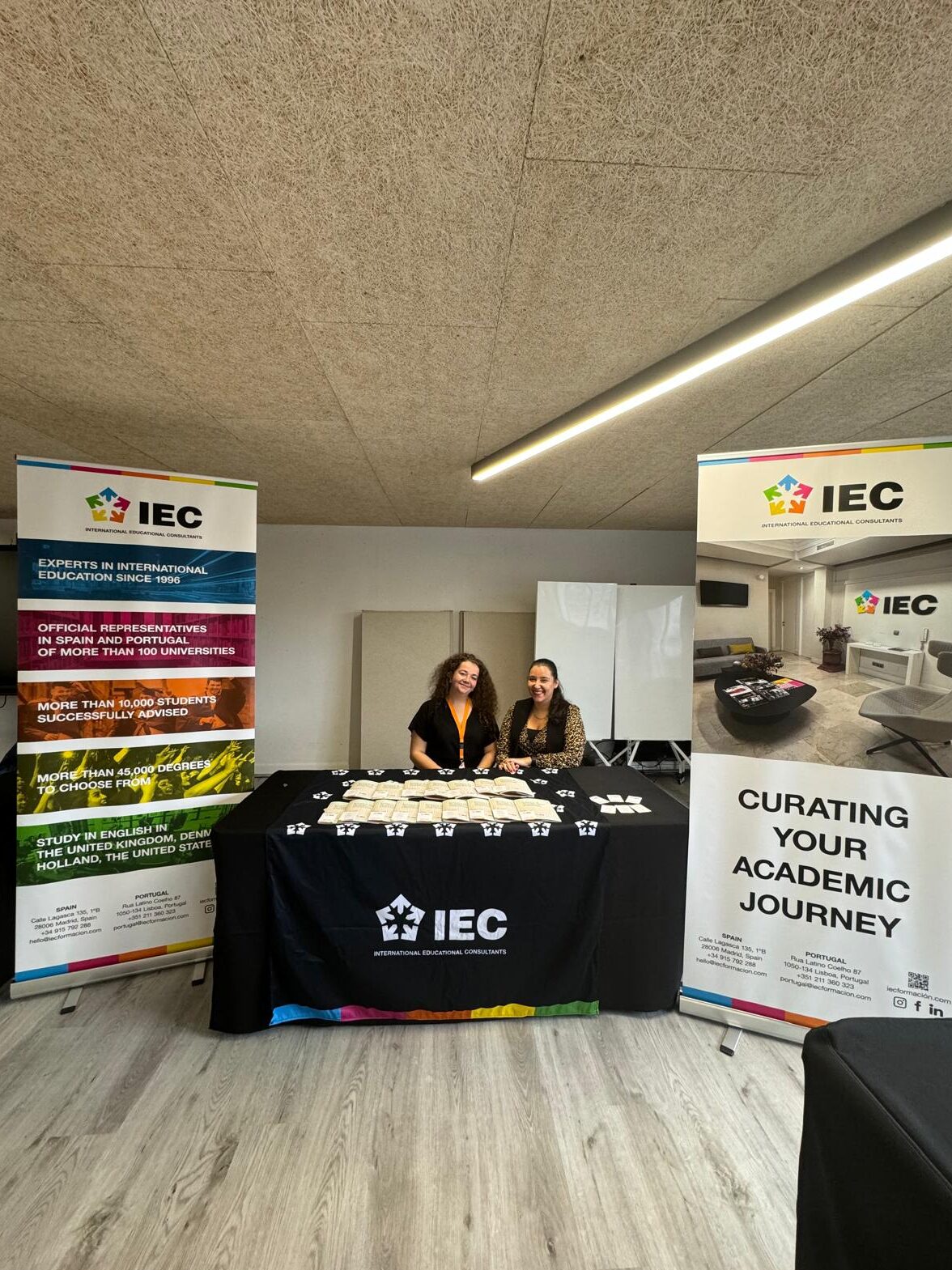
    Sofia Goya and Amy Vincent, Spain and Portugal representatives of IEC. Image: Sofia Goya

    Organisations such as IEC encounter these patterns often and see themselves as more than academic advisers. “Apart from academics, we also play a role in the lives of these people in these cities,” Goya says. “Our role is very important for their progress, not only academically, but also personally and emotionally, because we know there are differences that come along with changing countries.”

    Gregorio adds, “Many students describe warmth back home as gathering for tapas at 7 pm on a random Wednesday, surrounded by people talking and overlapping. In cities like London, they often discover a different kind of warmth. It is diverse and open-minded, creating a sense of mental closeness, a feeling of refuge.”

    In the end, London’s intimacy often resides in the spaces it preserves: the empty seat left on a crowded bench, the nod exchanged across a busy platform, the quiet text that arrives just when it is needed. For Gregorio, Mathilde, and many others, myself included, the city is more than lectures and libraries. It is evidence that connection can flourish in restraint, in distance, in the unspoken decision to let someone simply be.