
Beautiful, deadly, and forgotten. Scandinavian folklore is filled with women who seduce, haunt, and punish. Hanna Borgstrom explores the legends that shaped horror as we know it today.
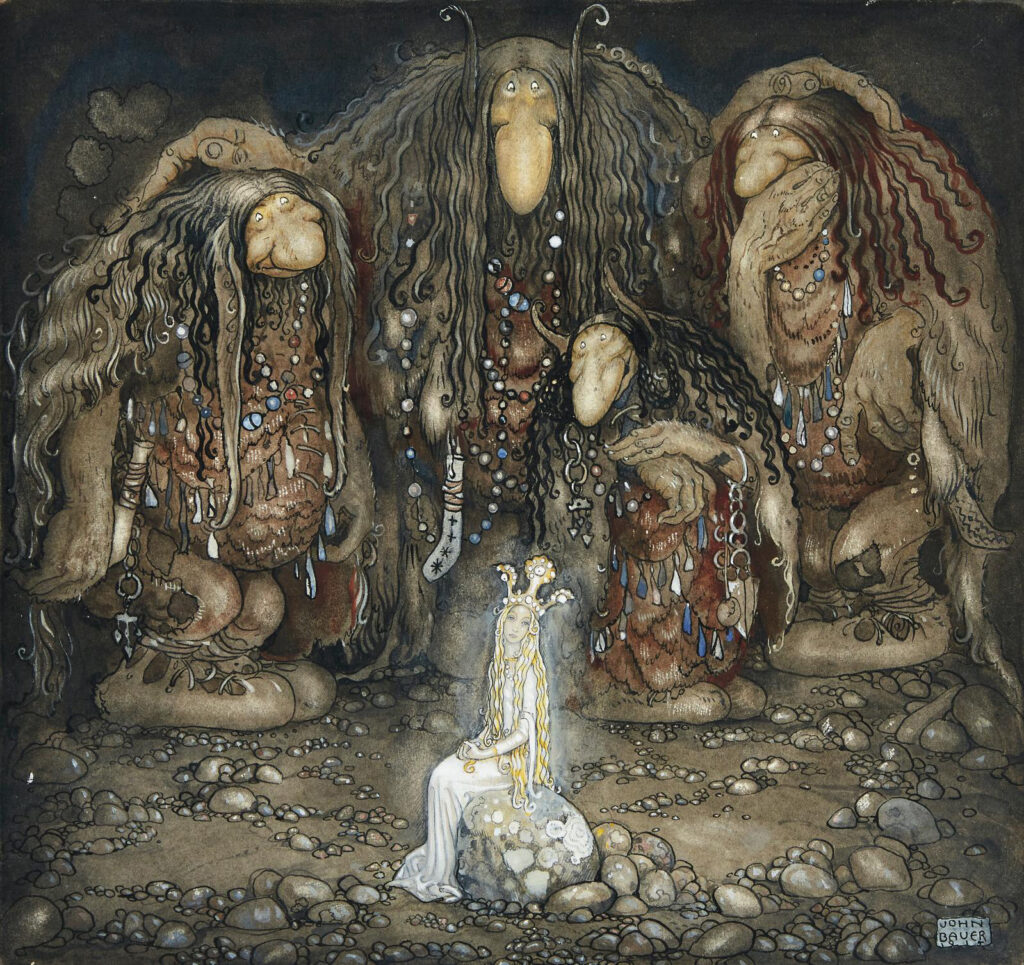
Folklore has always had a purpose in society, and a popular assumption is often that folklore is something from the past. Stories that don’t serve a purpose anymore. But that is wrong; we still use folklore to this day. “Folklore is still ‘being used’ by everyone, everywhere. Every human society, no matter how large or small, has folklore”, says Amber Cederstrom. Cederstrom is a PhD candidate and assistant editor specialising in folklore and Scandinavian studies at the University of Wisconsin Press. “Folklore is how we know who we are. It’s how we create ourselves and how we sustain our cultures and societies. All folklore, including legends of supernatural creatures or humans, tells us what to do, say, believe, and make under what circumstances. More than that, it tells us why and also what matters.”
What has always intrigued me, though, is the way women are portrayed in these stories. In Scandinavia, where I’m from, folklore has always been part of our lives. And maybe that’s not so surprising—after all, around 70% of Sweden is covered in dense, dark forests. While there are certainly wicked male figures in Scandinavian folklore, the most infamous and feared characters tend to be female. These women are dangerous, often solitary figures lurking in the forest. But they are also irresistibly seductive. They will steal your husband—and, of course, it won’t be his fault…
“When you look through these stories, you see that the narrative is often that the female characters’ purpose is to seduce the man.” Says Tommy Kuusela, an expert in the history of religion and folklore at Uppsala University. “The erotic content is probably best interpreted as sexual fantasies of men who spent long periods in solitude, without any contact with their wives or other women.”
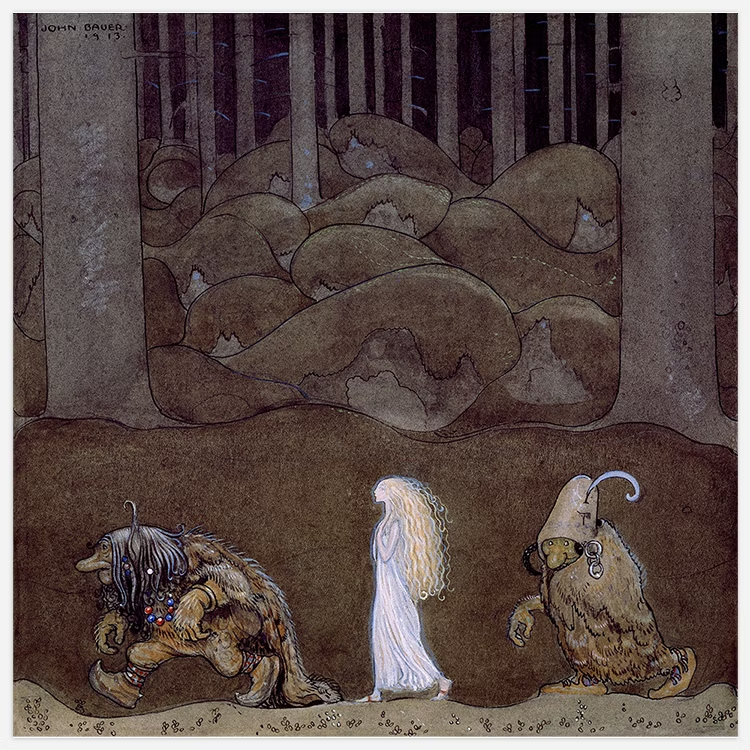
“In the Swedish traditional material, the female forest spirit usually takes the first step in the seduction, not the other way around.” Usually, the man will defend himself and be able to break free, but many other times, he just simply can’t. And can we blame him? With their flowing blonde hair, captivating beauty, and enchanting presence. How could he resist?
These folkloric figures remind me of female characters in horror stories—seductive, isolated, and deeply feared…if you are a man.
If you happen to be a woman, on the other hand, you have nothing to fear. Because, well, women didn’t really leave the house back then. Or they might have done, but they had nothing to fear. Let’s learn about some of the most horrific and perhaps inspiring female characters from folklore tales. Some of them have inspired and continue to inspire both the gothic and the horror genres today.
1. Mara – The Mare
The Mara, or the mare in English, is a figure in folklore responsible for the name of our unsettling nighttime visions—nightmares. That alone should give you an idea of what kind of entity she is. In the past, if someone had a terrible dream, it was blamed on the Mara, as she was believed to have paid them a visit. This belief is ancient, with versions of the Mara found in folklore worldwide. In Scandinavia, the earliest recorded mentions of her date back to the Viking Age in the 10th century. Described as a young, beautiful woman, the Mara could slip into houses without a sound. She crept in through chimneys or even squeezed through keyholes. If you’ve ever experienced sleep paralysis, some say she is the cause. According to legend, she would sit on her victim’s chest, leaving them paralysed and unable to cry out for help. The reason she did all this was said to be jealousy of men who got to live with their wives. According to the Institutet för Språk och Folkminne, she was once an ordinary girl, envious of others in her village. If she fixated on a young man, her visits could take on an erotic nature. But if he rejected her, she would grow vengeful and torment him in his sleep. Think it’s just a myth? Well, during the Middle Ages, Norway had an actual law forbidding women from “riding men in their sleep.” Folklore may be strange, but when it influences real laws, it only adds to its eerie credibility.
2. Skogsrået – Forest spirit
Skogsrået or ‘the forest spirit’ is the most famous of all female creatures in Scandinavian folklore stories. She takes form in many different ways, but most often, she is described as being the ruler of the deepest, darkest part of the forest. The forest spirit was said to be a strikingly beautiful woman from the front… Her back, however, was a rotten tree trunk. Other records meant that she had a tail like a cow or a fox, and it would only be visible after she had seduced you. Most stories regarding the encounters men had with the forest spirit were intimate. Some legends implied that she could even become pregnant and deliver a half-human, half-magical child, but this was seen as taboo. The crown and church viewed relationships with the forest spirit as a crime, and people convicted of this turned up in many judicial records dating back to the 16th and 17th centuries in Sweden.
3. Huldra – The Hidden People
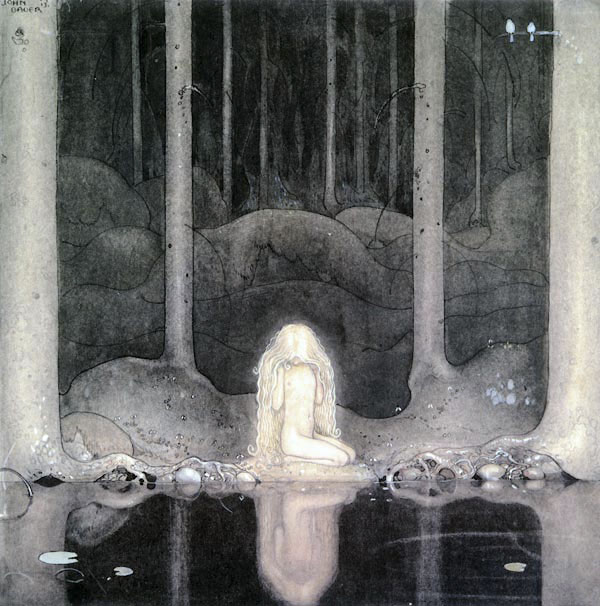
The Huldra is a mysterious woman who lives deep in the forest, seducing any man who crosses her path. She shares similarities with the forest spirit but differs in one key difference—she isn’t always malevolent. In fact, she can be kind and may even reward those who treat her well. In some stories, she marries a human man, but if she is baptised, she loses all her power and becomes an ordinary woman. The Huldrefolk (Huldra people) are well known in Norwegian folklore, with their name meaning “the hidden people.” They are said to inhabit forests and mountain caves, though to most, they remain invisible. Those with the gift of seeing them describe them as tall, beautiful, and with long flowing hair—and, of course, a tail. But whatever you do, don’t mention the tail—they don’t take it well. One tale tells of a Norwegian man who went to a dance and met a Huldra woman. He noticed her tail but, instead of pointing it out, he complimented her hair, saying it was so beautiful it reached the floor.
Havsrået – Mistress of the sea
The Havsrå was said to rule over the sea and water. Similar to a mermaid, she was often described as sitting by the shore, brushing her long, luscious hair. However, unlike mermaids, she had legs and appeared entirely human. But don’t be fooled by her beauty—if you weren’t careful, she would lure you into the water, where you would likely meet your doom. According to folklore, the Havsrå had a particular fondness for men and would go to great lengths to capture their attention. In 1640, a man was accused of having relations with the Mistress of the Sea. Found guilty, he was sentenced to death, as sleeping with her was believed to be the same as lying with the devil himself. Strangely, the Mistress of the Sea only revealed herself to men who were alone. If you wanted to avoid being accused of unholy encounters, the only protection against her was carrying anything made of metal.
It’s clear that the female characters from folklore share similarities with the horror genre. And it makes sense; they were the horror stories of their time.