ID Guide: Fat hen
Common names: Fat hen, white goosefoot, lambs quarters
Latin: Chenopodium album
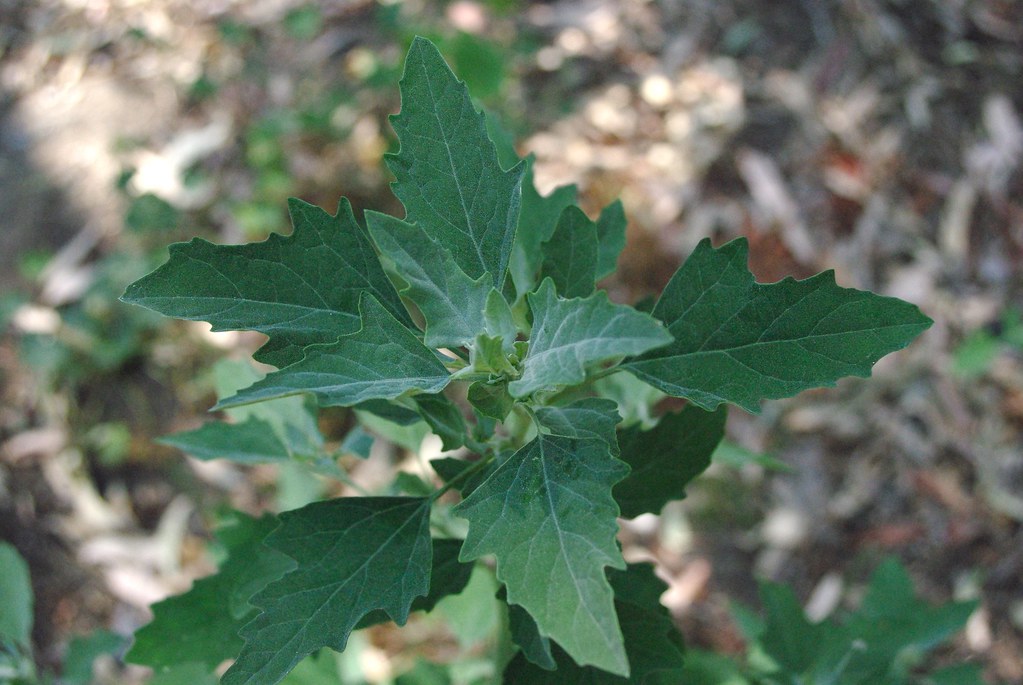
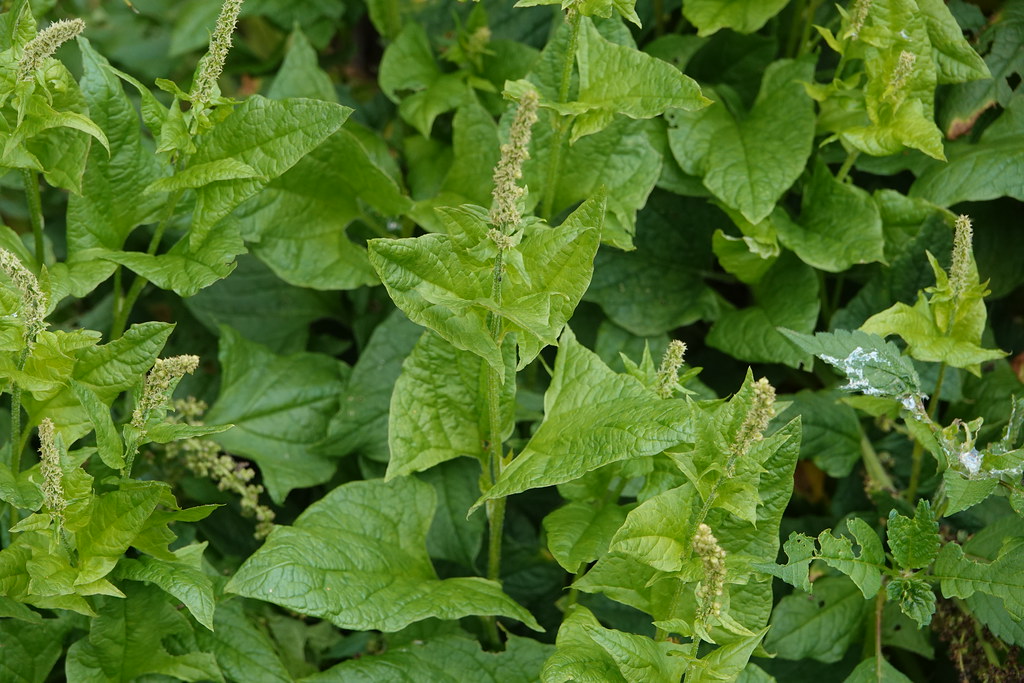
Appearance: Fat hen has large, green leaves that are a rounded triangular shape. A good distinguishing feature is the silvery sheen on the leaves, created by thousands of tiny water-repellent crystals. From June onwards there will be tiny spirals of green and white flowers on spikes coming from the bases of the leaves.
Where: Fat hen grows in lots of environments, particularly those recently disturbed like waste grounds or the edges of gardens (hence it is commonly considered a weed).
How to forage: All parts of the plant are edible, but the stem is not desirable. Pluck off whichever part of the plant you want to use with your fingers.
When: April to October
How to use: The fat hen leaves have a cabbage-like taste and can be used fresh in salads or cooked like spinach. When bloomed, the flowers go well as salad toppings.
Commonly mistaken with…
Other Chenopodiums, such as Good King Henry, though these are all also edible. Look for the sheen on the leaf to be sure.