A beginner’s guide to foraged dyes
Textile artist Daisy Gray on where foraging meets fashion
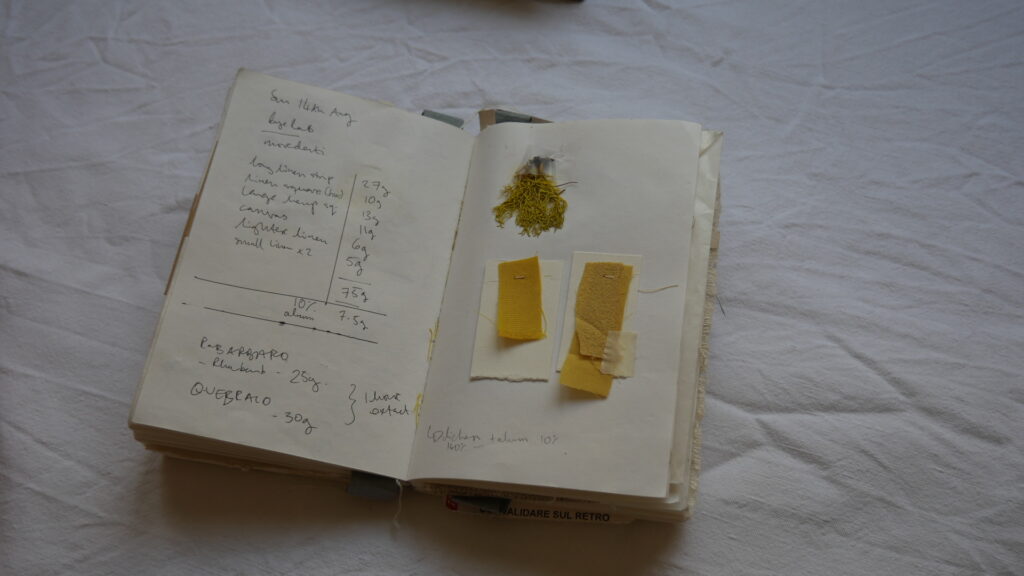
In a cobbled mews near Elephant and Castle, Daisy Gray is pulling out the thickest book you’ve ever seen. Between the covers, swatches of coloured linen, cotton, silk and wool spill out from the pages. This means the book is practically impossible to close. Fortunately, that suits Daisy, for whom the volume is in constant use as a research catalogue, buyers’ brochure, scientist’s journal and work of art all rolled into one.
Flicking through the heavily embroidered pages, she begins explaining how she first became interested in dyeing fabrics with natural materials.
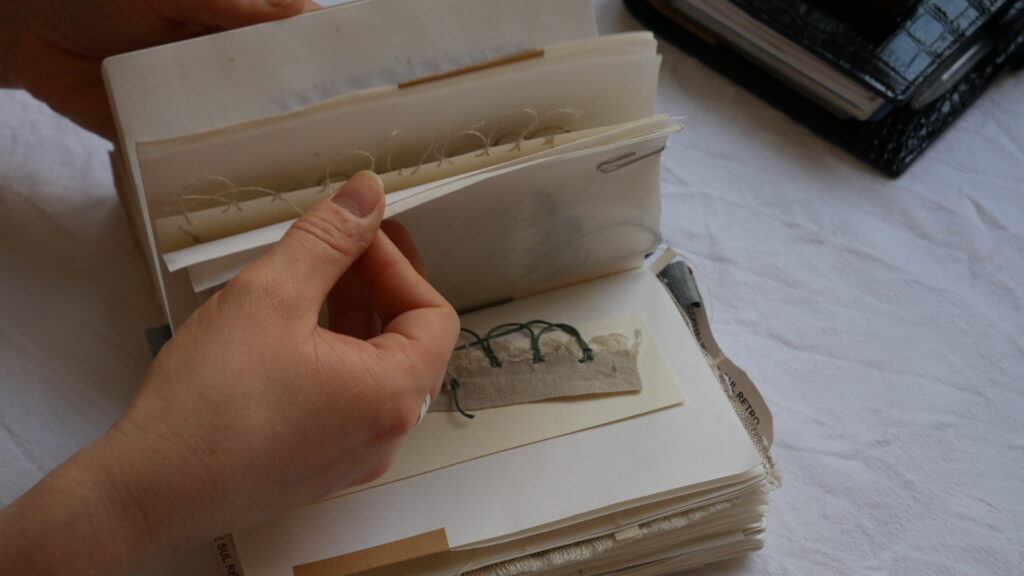
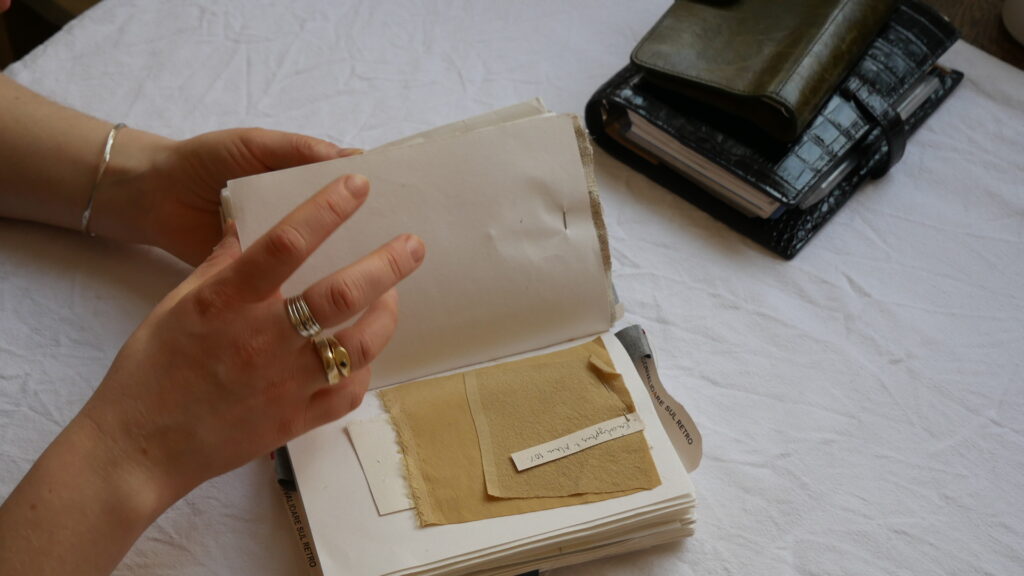
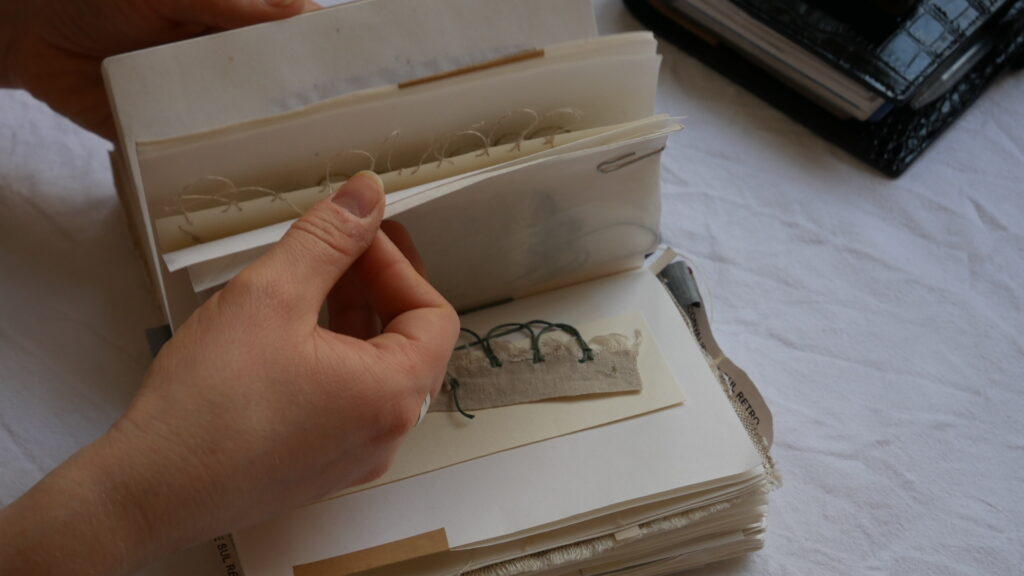
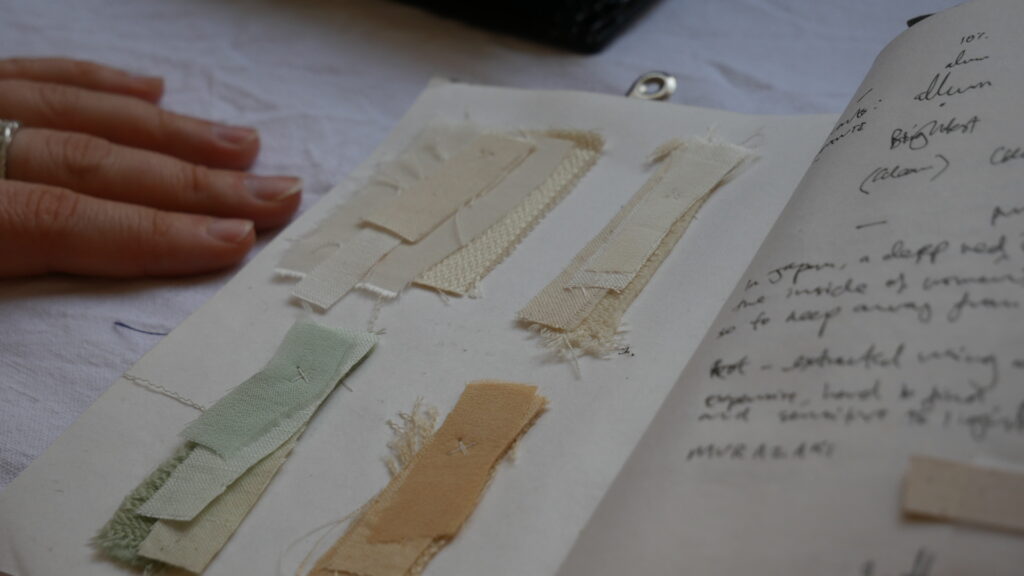
“I was studying fine art at Chelsea College of Arts and there’s an amazing textile course at the university. It meant I’d go in and use their workshops from time to time, playing with fabrics in different ways, but it wasn’t until I graduated and a friend put me in touch with Sissi and Stefano, that I really got into the dyeing process.”
Sissi Castellano and Stefano Panconesi are specialists in hand weaving and natural dyeing. Living in northern Italy, Stefano comes from a long line of natural dyers passionate about the craft and, today, the couple nurture that heritage with their own textile experimentation and artist residencies. It was during one of these residencies at their Casa Clementina, that Daisy began honing her own practice.
“While I was out there I learnt that dyeing is done differently all around the world – in Japan, China, India – and that’s partly the beauty of it, discovering the social histories too. These reconnect you with traditions, places and paces which, in the modern world, we increasingly forget, and I love how natural materials force you to embrace that things are not always perfect.”
As a child, I was so particular about how things had to look but in nature uniformity is impossible and there are so many variables in a hand-made process. This might be the time of year when a plant was harvested, the length of time it has been dried, dyed, or even different pH levels in the water. At each step there’s this element of surprise and the variety is also part of why we do it.”
According to Daisy, it’s a mentality that’s on the rise. “Now you’re seeing a greater number of clients, companies and customers not just appreciating but looking for bespoke items that might fade in time and with use. For them, the materials, craft and quality are what’s important and fabric changes can add to their beauty.” It’s a marked break from contemporary obsessions with fast fashion.
Instead, natural dyeing leans into a slow-living movement that prioritises custom-made, environmentally conscious products. And looking at other British makers it’s a market that’s doing well. Natural ingredient perfume brand Ffern, have sold out year on year with their small-batch, seasonal fragrances and jacket company, Paynter, have gained cult interest for their buy now, make later model, with products only being made after a restricted ordering window. For Daisy, it’s a change for the better, recentring care while tackling waste.
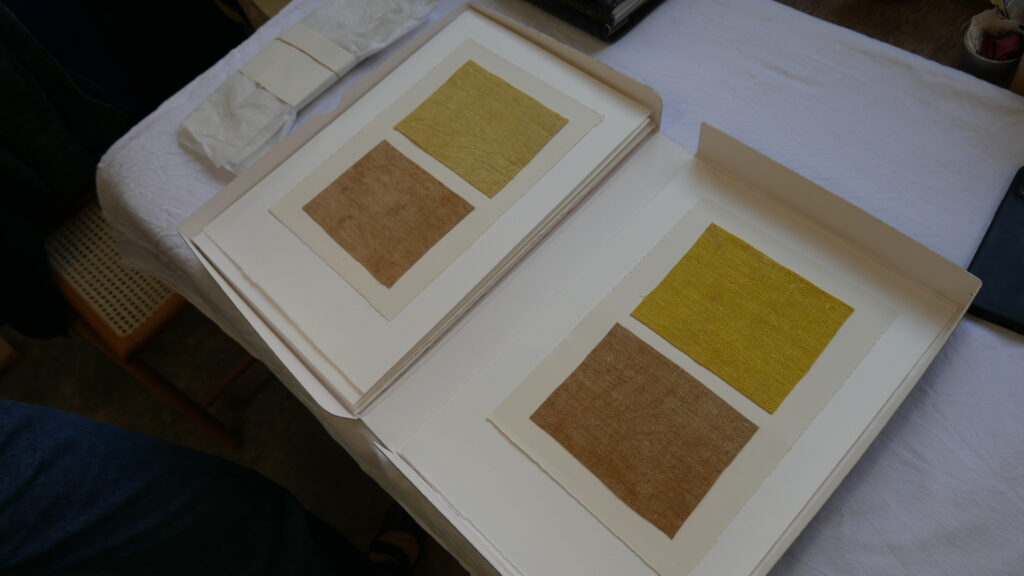
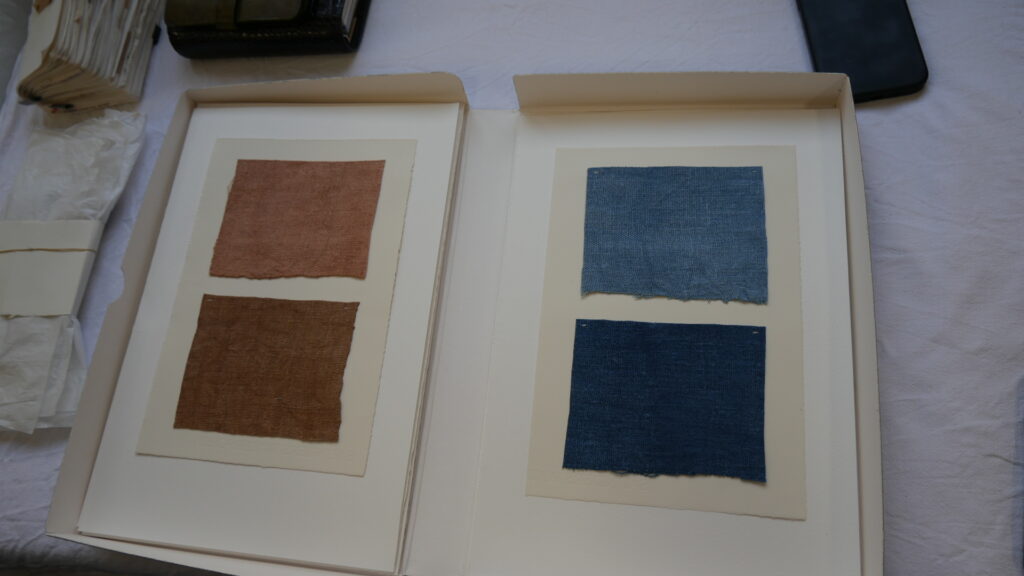
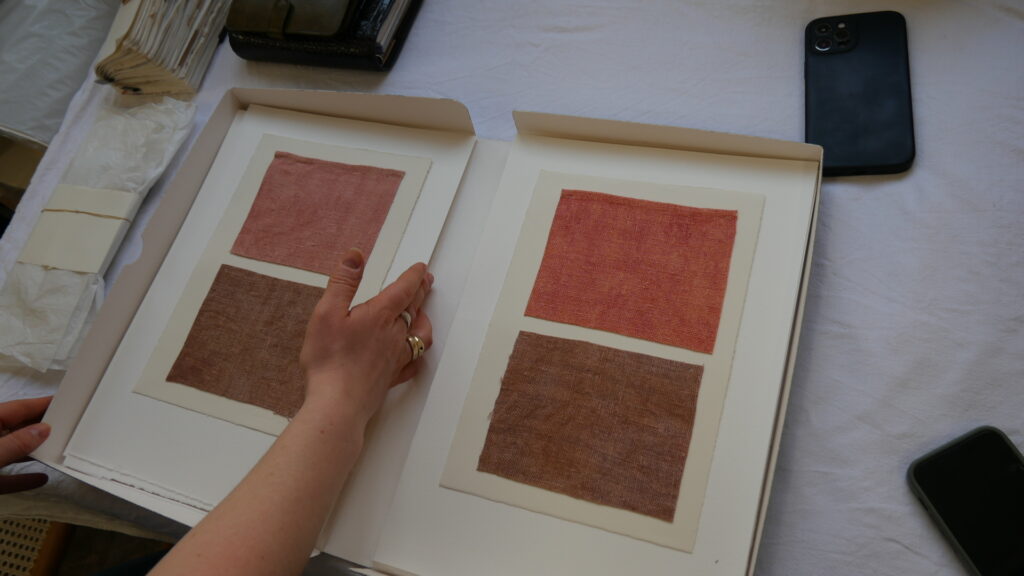
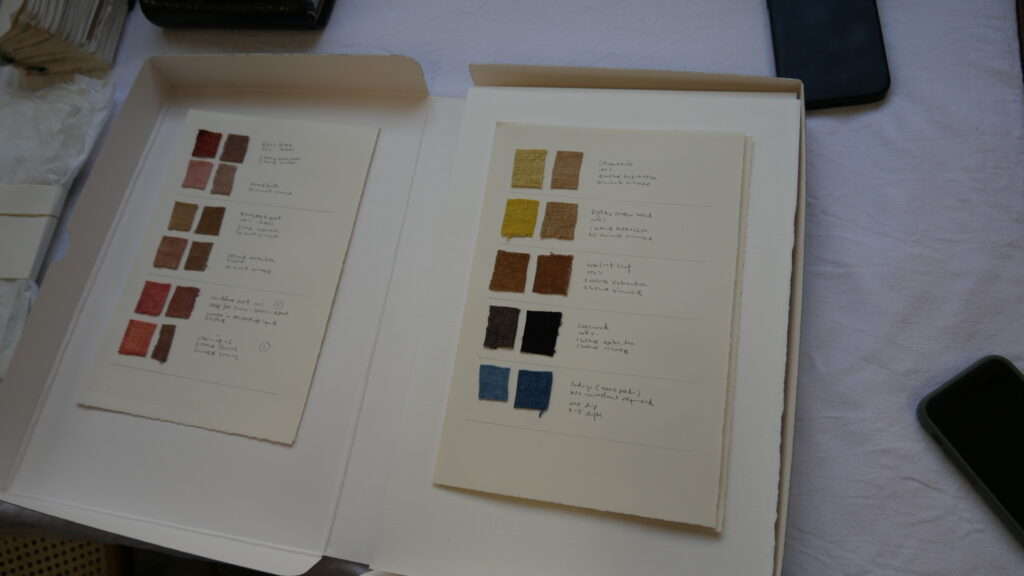
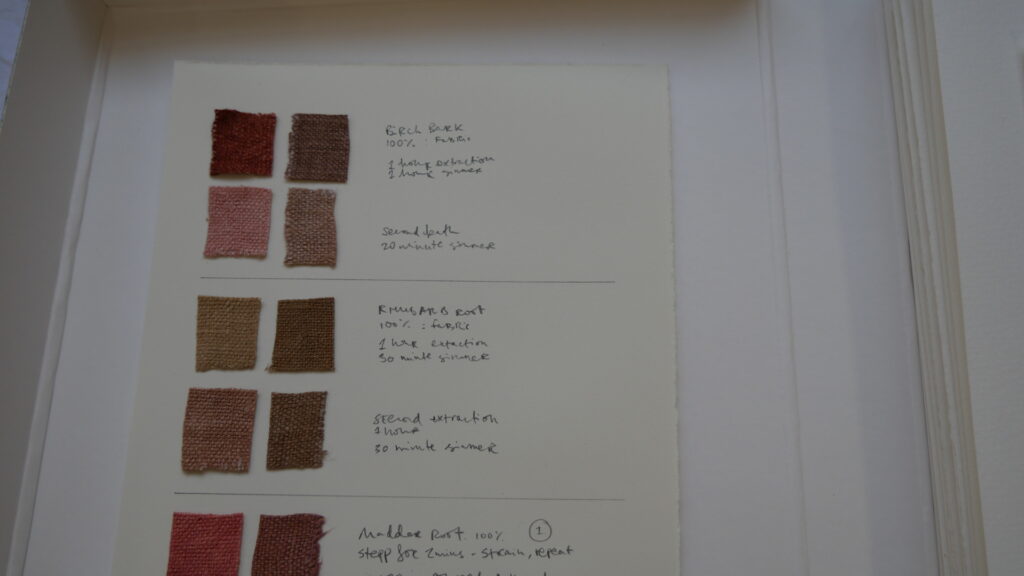
Pulling out another workbook, this one padded with beautifully woven linen, we’re now flicking through hot pinks and deep indigo swatches, past olive greens and corn yellows. “I’ll talk you through the process, shall I?” Daisy offers as she connects plant to pigments. “It’s easier than you might think. Anyone can make a home dye kit from things in a local charity shop or car boot and then it’s all just about getting out, looking at what’s about you and experimenting.”
X
Daisy’s “I’m not a very patient person but I do have patience for this” guide to natural dyeing
X
The first thing Daisy explains, is that dyeing depends on your fabric fibres as much as it does your foraged materials. “Wool and silk come from animal sources – they’re protein-based fibres – whereas linen and cotton come from plants so they’ll be cellulose-based. That’s important to note because while a pigment might transfer easily onto one fabric, it doesn’t necessarily lock well onto others.” That’s the reason most natural dyers, including Daisy, turn to mordants.
A mordant is a pre-dye treatment, which helps unlock the carrying capacity of natural fibres and ensures colours stay true after wear and washes. Most simply, mordants are a mixture of water and salts. Historically, these salts varied depending on what was geographically available but today the three most commonly used (aluminium, copper and iron) can be bought for £5-10 from most large craft or specialist art stores.
“Alum salts help achieve bright colours, coppers draw out blue tones and iron helps with darker notes so there’s a lot of colour variation you can get from just one natural dye. I know the salts can sound scientific and a little intimidating but people have actually been using minerals to prime their fabrics for hundreds of years. I was up in Shetland recently doing some research on the region’s historic wool textiles and there are records there from the 1700s describing fishermen whalers going out to trade specifically for mordant salts to make coloured Taatit rugs and fabrics to sell.
“It’s amazing the process was being used and prioritised so long ago and reminds you that natural dyeing isn’t just a twee hobby but part of our social history. That said, other organic substances like clubmosses, rhubarb leaves and soy, can also be used as mordent soaks so if you can’t find salts, mordants are still worth playing around with.”
When it comes to foraging your own dye materials though, Daisy says you don’t need to go far. In fact, some of the best dyes can be made from our native British trees. Oak and Birch are great examples of this where you can use leaves, barks and galls, to create a range of colours. Barks tend to produce paler pinks and silvers, leaves produce ochres, golds and yellows while Oak galls – irregular-looking growths which appear on oak branches – were historically used for ink due to their black-brown hues.
The dyeing process is, however, full of secrets. While some flowers look colourful, they may barely release pigment at all, whereas more unassuming plants can produce fantastic vibrancy. The extent of this experimentation can be seen hung in ribbons and patches all around Daisy’s studio.
“The colours can be so joyful but it’s not all about excess. This bright lime green swatch is from a type of moss that you’d only gather in really small quantities because moss has such an important role in ecosystems. Species use it to navigate territories and so I try to use majority fallen or dead materials as a guide rather than putting too much strain on a single living organism.”
It’s a reminder that foraging is not just about taking from the earth but about developing an understanding and lightness of touch as we live in relation to it. With that in mind, you’re ready to transform your wardrobe with Daisy’s no-fuss guide to natural dyeing.
- FORAGING
First things first, you’ll need to forage your ‘Dye Stuff’ – that’s the name dyers use for the raw organic ingredients they use to extract colours. If you’re just starting out, nettle leaves are a great option for green, khaki and tan shades, purple Buddleia flower heads are a reliable source for bright and warm yellows, dock leaves will produce green-toned yellows (with a spoonful of baking soda) and blue-greys (with an iron mordant), while the cones from Alder trees can be used for caramel browns and golds.
NOTE: The younger the plant the brighter the hue.
- MATERIALS
Before you begin dyeing you’ll also need to make sure your material is made from 100% natural fibres. You can check this by looking at your fabric label. Look for cotton, hemp, linen, wool or silk and experiment with yarn, handkerchiefs, ribbons or pillowcases to make sure you’re happy with the dye before trying larger items.
- SCOURING
The next step involves making sure your material is as clean as possible, with no pre-existing oils or stains that could disrupt the dyeing process. For those in the natural dyeing community, this process is called scouring but in simple terms, it just means giving your fabric a soapy scrub and a thorough rinse.
- MORDANTING
Mix your chosen mordant – metal salts, soy milk etc – with water in a bucket and stir thoroughly. Submerge your fabric in the solution making sure there is enough liquid for the fabric to move around in freely. Leave this mixture to soak overnight or simmer on a low heat for an hour to speed up the process. Remove and air dry.
NOTE: The general rule is for every 100g of fabric use roughly 1 tbsp of salt. If you want to be more precise aim for 10% of your fabric weight for alum salts, 5% for copper and 3% for iron. If using soy milk or other natural mordants the ratio of water to substance works better at 50% but experiment and record your own results!
- EXTRACTION
To extract colour from your flower, bark, root or leaf, the rule of thumb is to forage roughly the same weight as your chosen fabric. Place the plant matter fresh or dried (experiment for different hues) into your pot with plenty of water. Simmer on a low heat for an hour.
NOTE: if working with cones, soak these in cold water for a couple of days before heating for extraction.
- STRAINING
Filter out the plant matter by straining the liquid with a sieve. Save the coloured water which will become your ‘dye vat’ and compost your leftover natural material.
- DYEING
Place your fabric and coloured liquid into your pot and simmer on a low heat for 30-60 minutes. The longer you heat the dye vat, the more the colour will develop. This process can be done as a simple cold soak but will take up to 24 hours for the colour to transfer. With both techniques remember that colours will look darker while still wet and dry a few tones lighter.
NOTE: If silk and wool are in a vat with cotton and linen, they will suck the majority of the dye towards them.
- DRYING
Remove your fabric from the dye vat and air dry. If you want to add more pigment you can return it to the pot for a second round. Enjoy your naturally-dyed upcycled materials!
Daisy’s natural dyes, textile practices and research can be followed as part of her collaborative project Centre Half or check out Boss Morris and Cabinet 49 for ideas on how to style your newly dyed fabrics.
X