The strange and impish tales behind our common plants
Goosefoot? Lamb’s ear? Don’t worry, foragers are rarely hunting down what the names suggest
When a forager says goosefoot is tasty this time of year or that lamb’s ear couldn’t be more tender, you’d be forgiven for thinking pastoral pastimes have become barbaric. But whether they’re out seeking honesty, jack-by-the-hedge or some lady’s smock, those who forage are rarely hunting down the literal objects they describe. So where did these confusing names come from and what can they reveal about the histories, folklore and beliefs of our nature-loving forebearers?
Nowadays the stories behind our historic plants names are largely forgotten, swept away by an 18th century effort to systematise the unruly natural world with scientific Latin terms, and a 21st century disconnect with our living environments. For much of the foraging community however, these quirky and unsuspecting common names continue to carry the humour and experiences of the past.
These are the affectionate, and not-so-affectionate, tales behind some of our most charismatic plants.
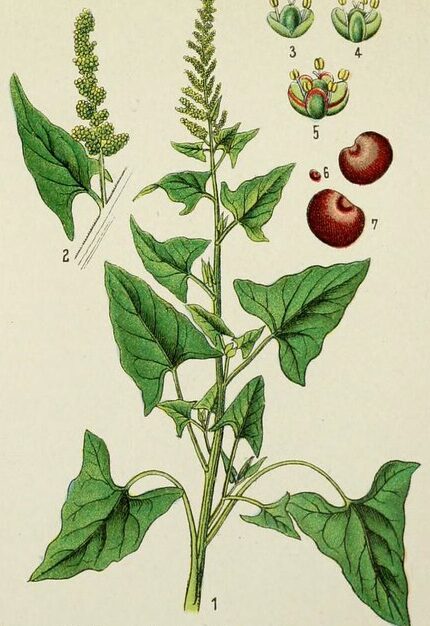
Goosefoot
Thought to have earned its name from its somewhat pond water smell and the resemblance between its water-repellent leaves and a goose’s foot. In some regions, goosefoot is also known by the name “fat hen” or “lambs quarters” because it was grown widely as a food source for pigs, sheep and chickens. The earliest recorded use of the term is 1777.
Goosefoot is a member of the buckwheat family and before spinach, it was used as a common British green. Its leaves are high in vitamin A, calcium, potassium and phosphorus and you can also eat the flower petals.
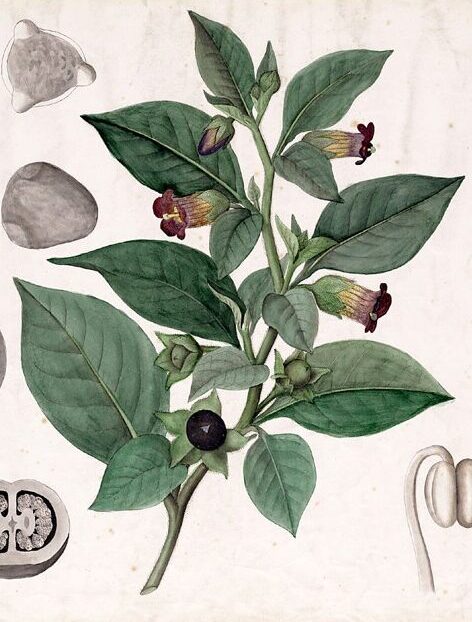
Nightshade
A plant with white flowers and black berries, named from the old English nihtscada which literally means ‘shade of night’. It is also thought the name may reflect how some members of the nightshade family grow best in the shade. Other names for the nightshade include ‘devil’s berries’, ‘naughty man’s cherries’ and ‘belladonna’ which literally means ‘beautiful lady’ in Italian.
In mythology, nightshade is connected with the Greek god Dionysus, a figure who represented wine and pleasure. Literature and legends often link the consumption of nightshades with witchcraft and revelry, with the side effects including pupil dilation, hallucinations, convulsions, rapid heart rate and death.
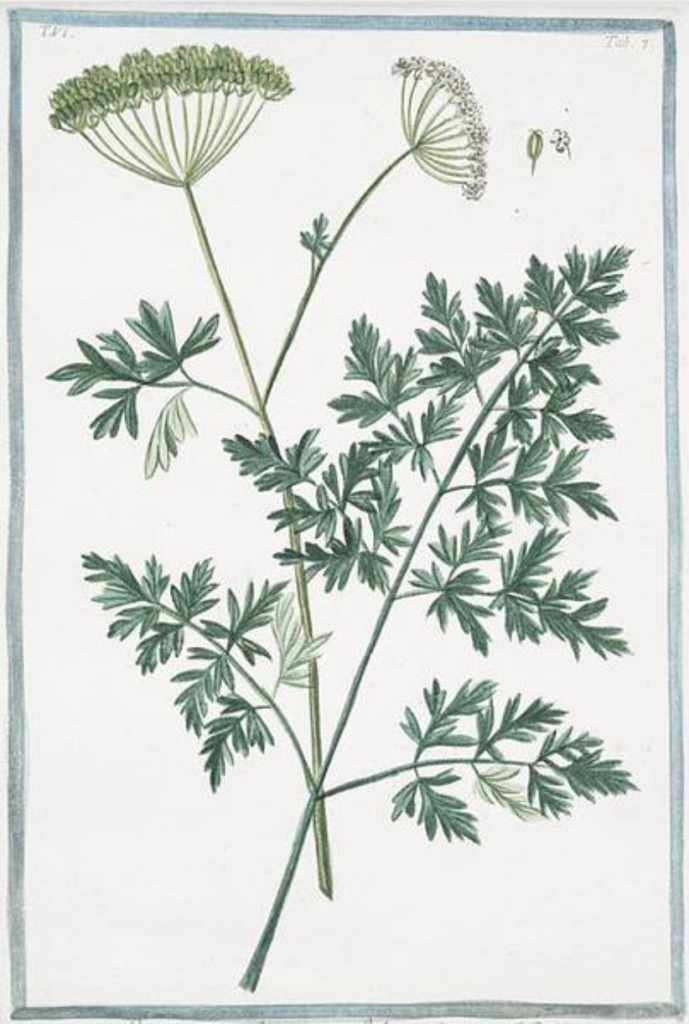
Cow Parsley
Thought to have gained its name due to its abundance and inferiority to true parsley. Its other common name, mother die, stems from a children’s folktale which warned that if you picked the plant, you would lose your mother. This story was said to deter children who might not be able to correctly differentiate between safely edible cow parsley and it’s similar looking but deadly counterpart, hemlock.
While hemlock has purple blemishes on hairless, round and hollow stems, cow parsley has hairy, ribbed and rigid stems with a more celery like stem cross-section. The overarching advice is, as always though, never eat a plant unless you are 100% sure of its identification.
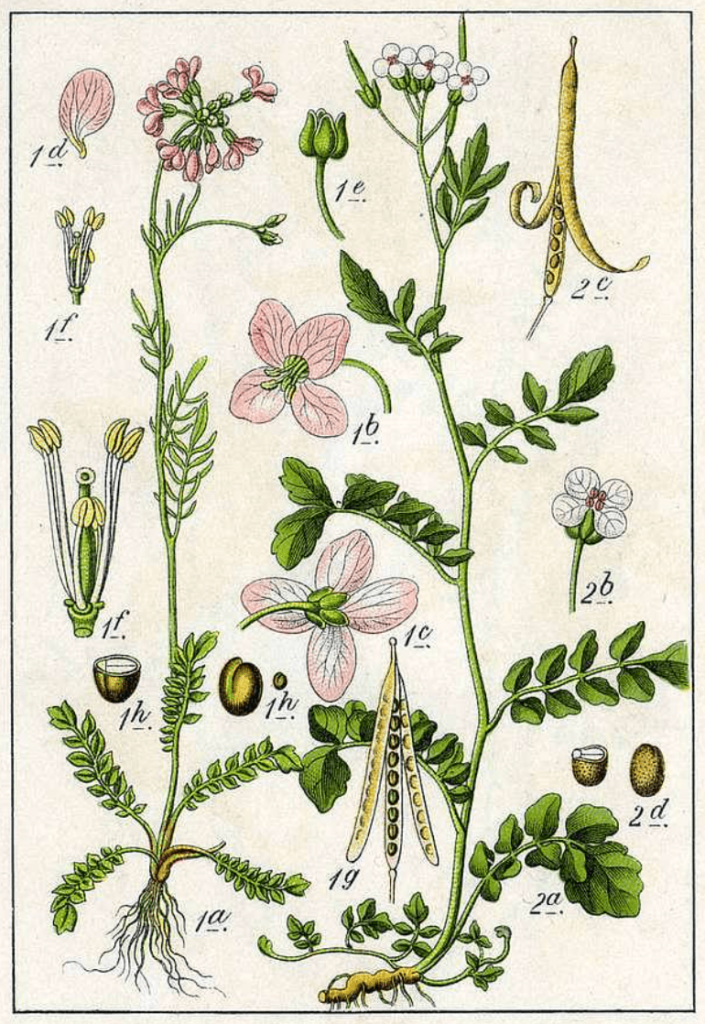
Lady’s Smock
Also known as the cuckoo flower or the water cuckoo because it tends to blossom around the time the cuckoo birds begin to sing and thrives in damp environments. The name lady’s smock however, is thought to derive from the fact the plant blossomed around Lady’s Day at the end of March, with the spring flowers also resembling the delicate pale under layers of women’s clothing which would be washed and seen hung out to dry in early spring after a break over Winter.
Lady’s smock is entirely edible but has a slight mustard heat to an otherwise cress-like flavour which makes it most commonly used as a garnish or a herb. It was also used to treat scurvy due to its high vitamin C content and is said to be good as a tea to alleviate menstrual pain.
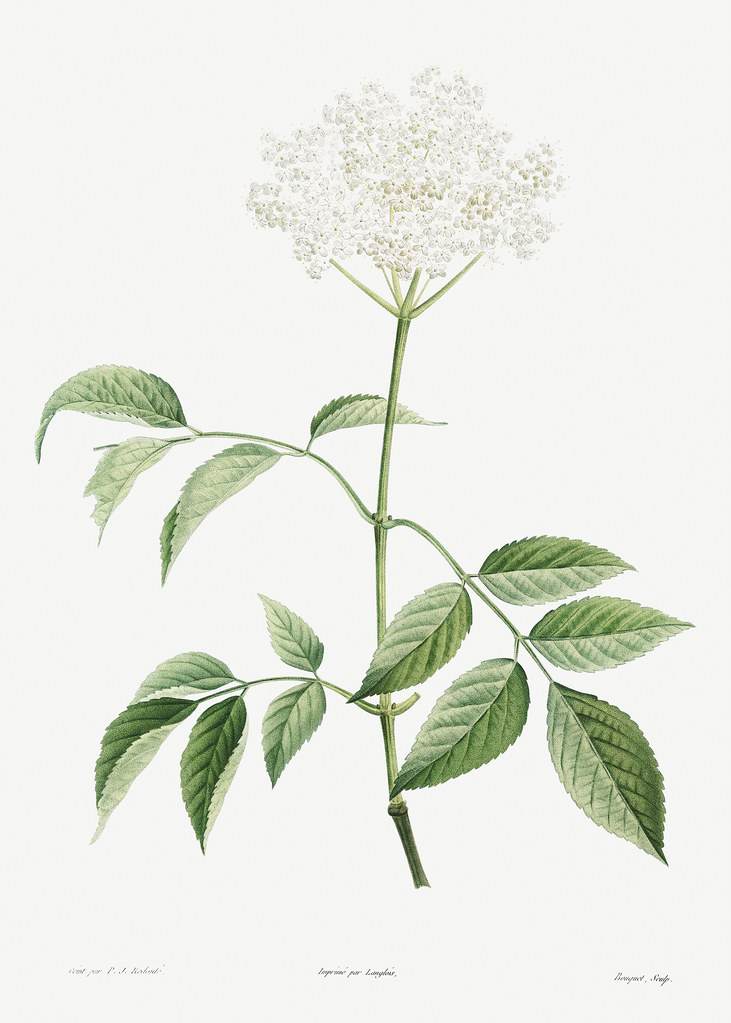
Elder
Best known for its summer flowers used to make cordials, sparkling wines and desserts but the name is said to come from its association with the end of the Pagan agricultural year when elderberry wine would be used to honour those who had passed on to the spirit world. This would take place around the time we now know as Halloween, and it was said at this time of year the connection between the realm of ancestors and the living was closest. In Scandinavian folklore the tree is also tied to a crone-like character, a dryad known as Hyldemöer or the “Elder Mother”. This mystical figure could offer you safe passage and protection but if her wood was taken without permission, you could be punished.
Beware that while the flowers are said to lower fever, and the berries treat cold and flu, the stems, leaves, wood and roots are toxic to humans. The berries should also be cooked, fermented or pickled before consuming.
Lamb’s Ear
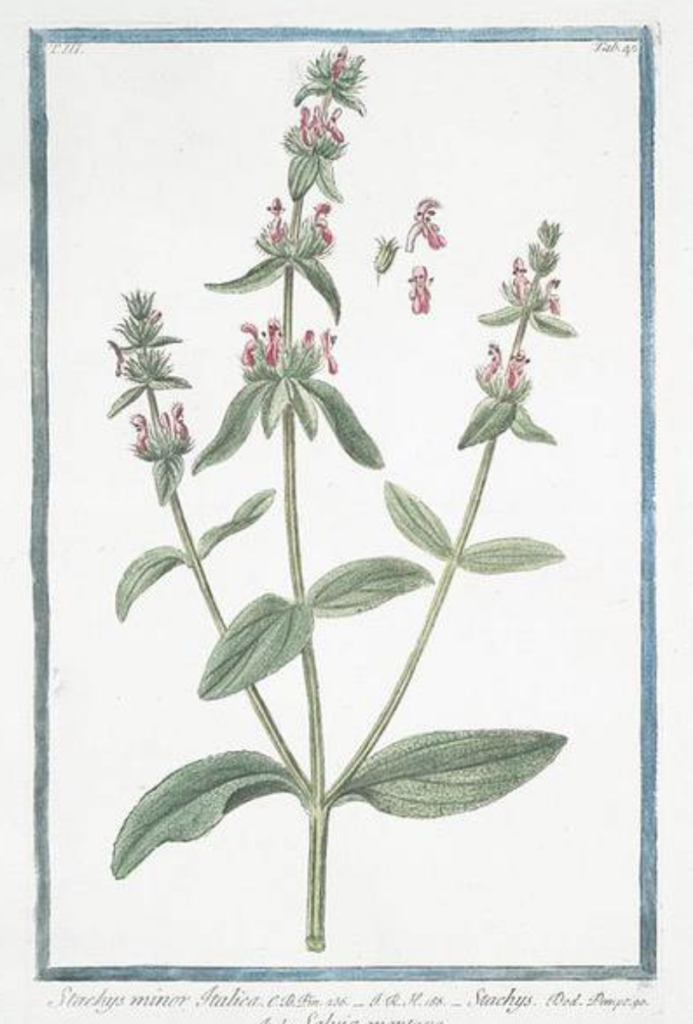
Lamb’s ear is actually a member of the mint family and the long hairs on the leaves prevent the plant from losing moisture in direct sunlight in its native Middle East. Its uses in foraging are largely medicinal where it has been used for its antibacterial and anti-inflammatory properties, for example to treat skin conditions and insect strings.
Earned its common name due to its elongated silvery leaves which have a soft, velvety texture similar to the ear of a lamb.
Jack-by-the-hedge
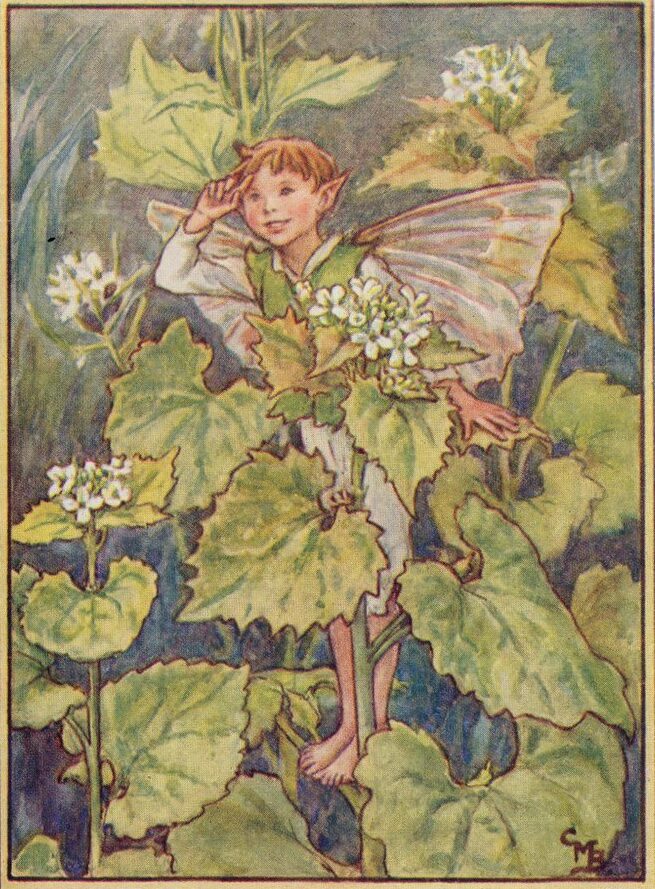
Commonly known as garlic mustard or poor man’s mustard for its strong taste and prevalence along shady boundaries of native hedgerows and woodlands. It is thought to have got its name either from the folkloric term “Jack” being synonymous with the ‘everyman’ and therefore the plant’s prevalence or from the strong smell it emits alluding to the “Jakes” or toilet.
You can eat all parts of jack-by-the-hedge, and the leaves can be used in salads, pesto’s and as seasoning in the same way you would use its more popular forager rival, wild garlic. Despite the similar taste however, this plant is part of the mustard family rather than the garlic. Medicinally, Jack-by-the-hedge has also been used to help relieve asthma and chewing the leaves has been said to relieve mouth ulcers.
Herb Robert
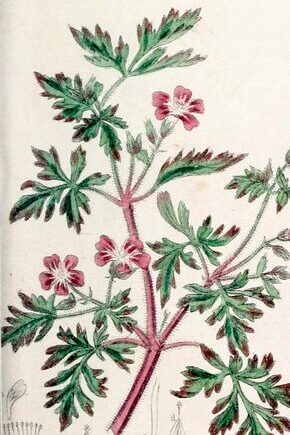
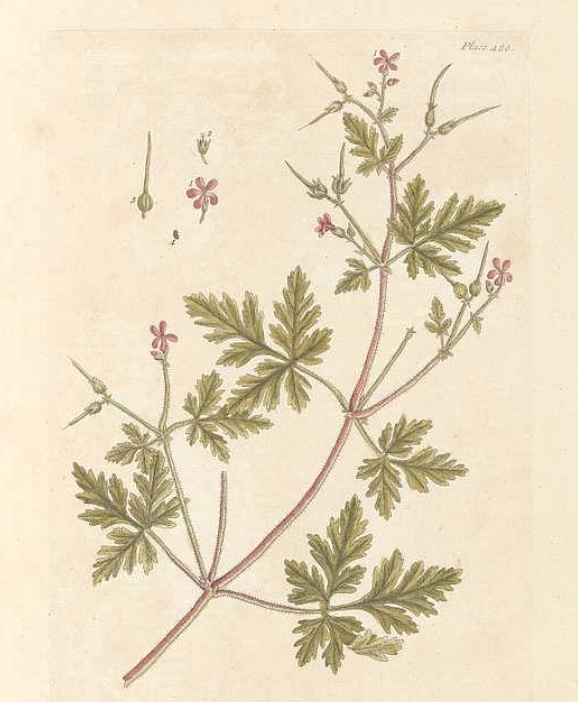
Said to have derived its name from Germanic folklore where a goblin, whose name can be found recorded as Rupert, Robin or Robert, went about causing mischief and playing pranks in people’s homes. This figure became the basis of the English “puck” or “goodfellow” character popularised in Shakespeare’s play A Midsummer’s Night Dream. When crushed between the fingers the plant gives off a smell of burnt rubber and it was thought that by planting Herb Robert outside your home the pungent scent could keep the goblins tricks at bay.
You can identify herb robert from its delicate pink flower and red stems with both the leaves and flowers being edible. As the plant grows and is exposed to more sunlight the leaves turn from green to red which led people to believe it could help cure blood related ailments and open cuts or sores. Today it is not used for any medicinal purpose but by rubbing the leaves on exposed skin it can keep mosquitoes away.
Honesty
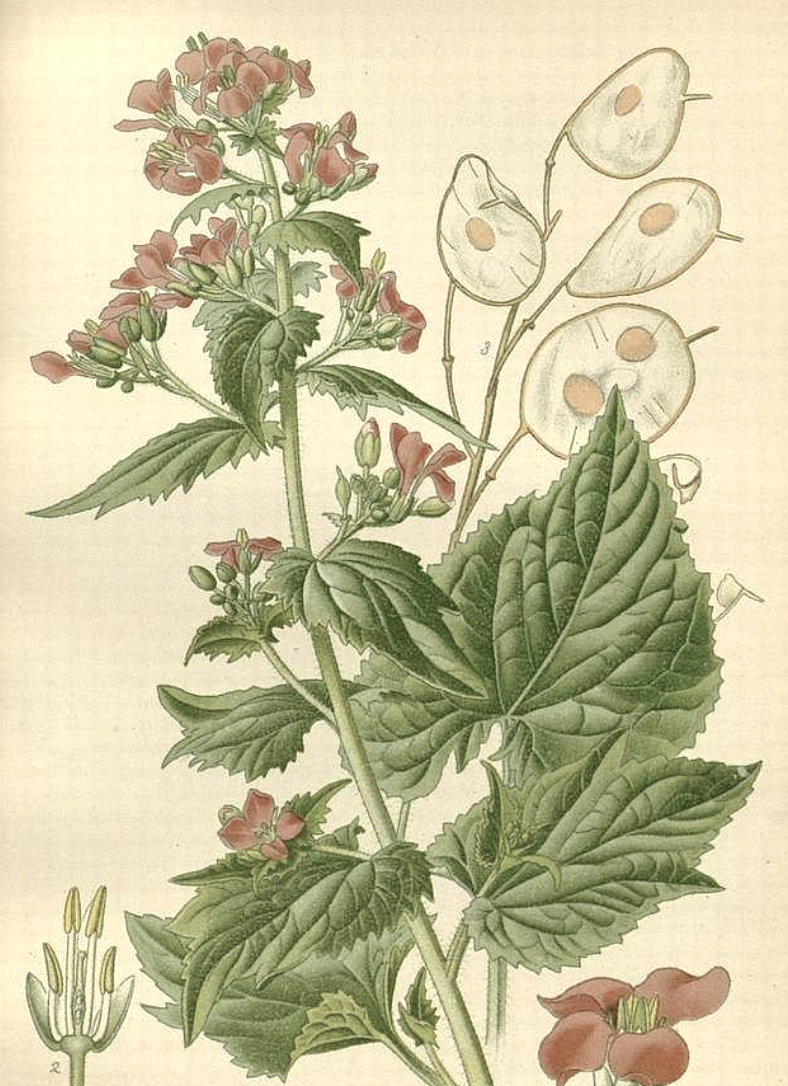
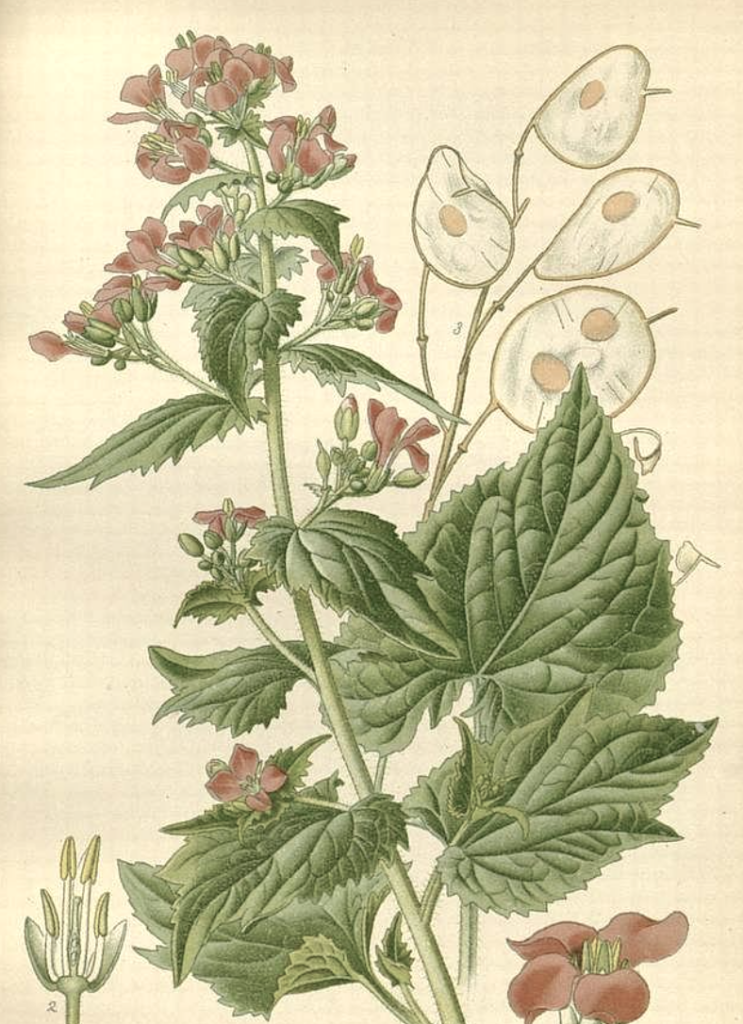
A purple flowering plant whose name owes to the revealing translucency, or “honesty” of its seed pods. These are found beneath the flower on the stem and are round and papery in texture. These coin-shaped pods also lend to their common name in Southeast Asia where it is known as the Money Plant.
All parts of Honesty can be foraged for eating, with the plant being part of the Brassica family. The roots can be roasted like potatoes and the leaves can be eaten raw or cooked for a cabbage flavour.
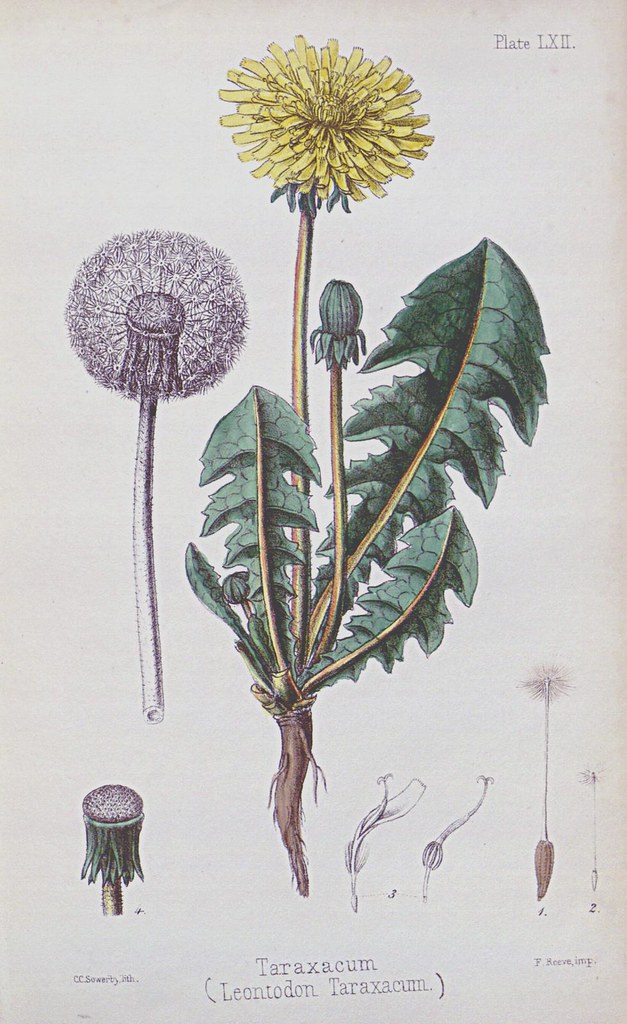
Dandelion
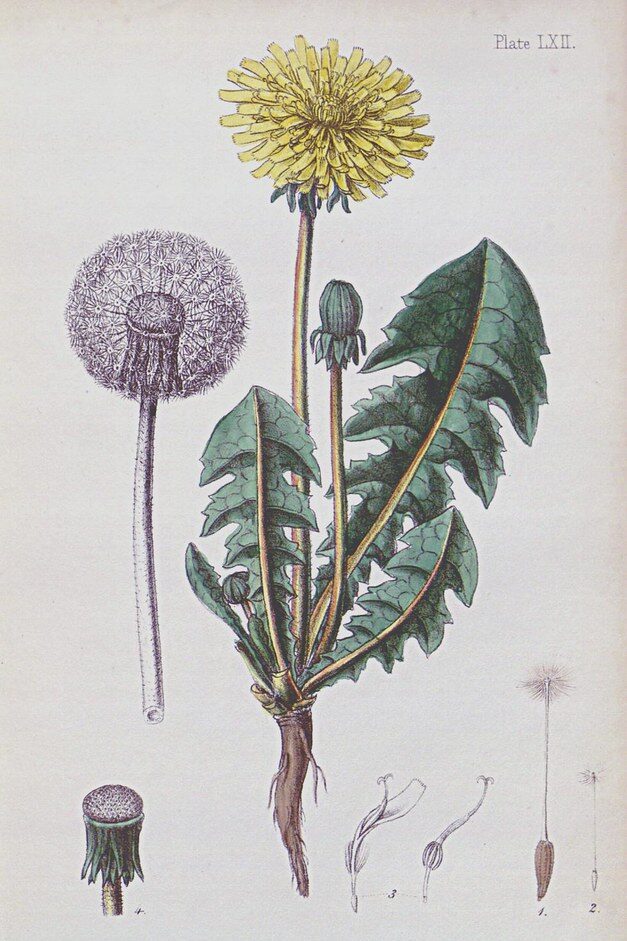
So called from the medieval Latin dens leonis, or “lion’s tooth”, thought to be named because of its jagged leave pattern. The earliest known use of the name is in the 15th century but historically the plant also had another common name, most popularly used by children. Instead of dandelion, the name was Piss-a-bed, so called because of the plants notable diuretic properties.
The leaves, flowers and roots are the most widely foraged items for eating in salads, teas, or cooking (the younger leaves have a similar function to spinach), and its medicinal uses centre around improved kidney and liver function.