
Author: Hafise Uslu

  • How metal music calms minds

    How metal music calms minds

    Image by Filip Andrejevic on Unsplash

    For decades, the stigma around metal music has led to many people to believe that metal music is satanic or the root of all evil, can such high energy music provide somebody‘s mind inner peace or comfort? Can it build community or understanding amongst those who listen or are engaged with the subculture?

    I interviewed one of my friends Aryan, who is heavily immersed in the metal genre and subculture, he has been a fan of System of a Down for quite awhile now, and considers them to be his favourite band. I asked him some questions about his connection to the metal genre and how he finds enjoyment from it.

    Q: Do you think that metal has been demonised by the mainstream media?

    A: Yes definitely, not just in terms of the mainstream media but historically it’s been viewed as satanic due to the satanic panic in the 80s people who didn’t understand the genre and judged it a lot. I don’t think it’s a recent thing that’s been happening. The impact of the satanic panic has left a negative perception of metal music, the legacy of this era continues to live on in the present.

    Q: Can such an intense, heavy genre be therapeutic in a way?

    A: Yes definitely, it can be therapeutic but I also think it can be cathartic in a way by allowing people to express their negative emotions, hearing violent bor disturbing lyrics, harsh sounds, can allow your mind to find release and to feel these messed up thoughts as a way of coping, this is true for punk music as well.

    Q: Do you find comfort in this genre? If not why might someone find comfort in it?

    A: Yes I do find comfort listening to this genre its one of my favourites, I find that i can express myself through the music i listen to tons of it daily, i feel like it’s super cathartic for me as it touches on sensitive subjects unlike a lot of other genres, similar to other alternative genres that discuss these heavy topics unlike mainstream genres, its a lot more visceral, raw and real, its a refuge for people who don’t want to conform to one way of being, a way of detaching from the mainstream and finding comfort in that, a way of rejecting the things about society that you don’t like in a musical way if that makes sense, its artists and bands saying to listeners “hey you aren’t alone” it makes people feel heard.

    Q: Can people find connection through this genre?

    A: I do think people can find connection through the genre because it is a community when it comes to genres like this, everyone likes rap or hip hop music, it has a cult following similar to metal but metal isn’t in the mainstream like rap is, almost everyone loves rap, I like certain artists, but metal isn’t as mainstream or widely accepted as rap is in the modern era.

    I also interviewed Dr Rachel McCarthy, a musicologist at Goldsmiths who researches the effects 21st century popular music and politics has on people. I asked her the same questions about how might metal music help people find belonging or comfort In a world where alternative genres are often judged.

    Q: Do you think that metal has been demonised by the mainstream media?

    A: I think that it has definitely been demonised by the mainstream media, because on the exterior, society perceives the genre as extreme, by the way certain members of the subculture dress, and its adopted fashion trends, also the harsh, loud music that was born out of the subculture definitely was a factor for it being demonised, especially since people part of this subculture dress outside the norm, alongside the era of the satanic panic instilling that ignorance.

    Q: Can such an intense, heavy genre be therapeutic in a way?

    A: It can help to comfort people mentally, it can also create a state that is out of the ordinary, it could create a meditative state, I’d even go far as to say that it is cathartic in a way, hearing all these raw screaming vocals can illicit a feeling of relief or comfort.

    Q: Do you find comfort in heavy genres such as metal? Or why might someone find comfort in it?

    A: Personally I don’t find comfort in these types of genres as I haven’t spent much time listening , I personally find comfort in much slower genres, with low energy rather than high, however I understand how an individual may resonate with heavy music such as metal, as I said previously i believe that certain people who find comfort in catharsis may find violent sounding music to balance their thoughts, or find acceptance within themselves.

    Q: Can people find connection through this genre?

    A: It can be a strong promoter of community, through the values they share or the fashion they wear, it creates a stable and safe environment for expression. Seeing artists or bands with friends can strengthen bonds. Listening to metal can be a deliberate act, a statement of expression, music from these genres are not typically in the charts/mainstream. It’s not going to be easy to get into, that’s why people who are into it have such strong bonds with one another within the community.

    A study from The University of Queensland founded that the heavy genre, rather than suggesting it outright causes anger issues, serves as an outlet to better manage anger and negative emotion, a better way to process anger if you will. The metal genre can serve as a cathartic way of releasing anger or sadness. However as we all know music is subjective and so is art as a whole and people’s experiences differ, what they use to cope, what draws them to peace. Metal can be comforting to one group of people, yet it can be disturbing to other groups.

    So, can metal music calm minds? Well, it depends on which mind we’re talking about, certain minds crave catharsis whereas others crave peace to calm down.
  • How to get better at public speaking

    How to get better at public speaking

    Public speaking, the bane of everyone’s existence, almost every stage of your life requires you to do it, when you bring your favourite toy to show and tell, your first group presentation in secondary school, your last ever presentation in university, or whichever job you have, it’s likely you’ll have to speak in front of a crowd or even a couple people. Giving your pitch at the company you work at or giving a speech at the Grammy’s (if you ever end up there), regardless of whichever stage you’re at in life, public speaking can be a daunting experience, riddling you with anxiety “what would everyone think?”, “Do I look stupid right now?”, “Is there something on my face?”, “Do I sound stupid?”.

    A study from the NIH suggests that public speaking is one of, if not the most common fear in the general population. With more than 61% of university students feeling anxious when public speaking. All of these thoughts tend to plague our minds when speaking, this little guide I wrote up here will attempt to soothe the jittery voice in your mind replaying the scary stares the crowd gives you.

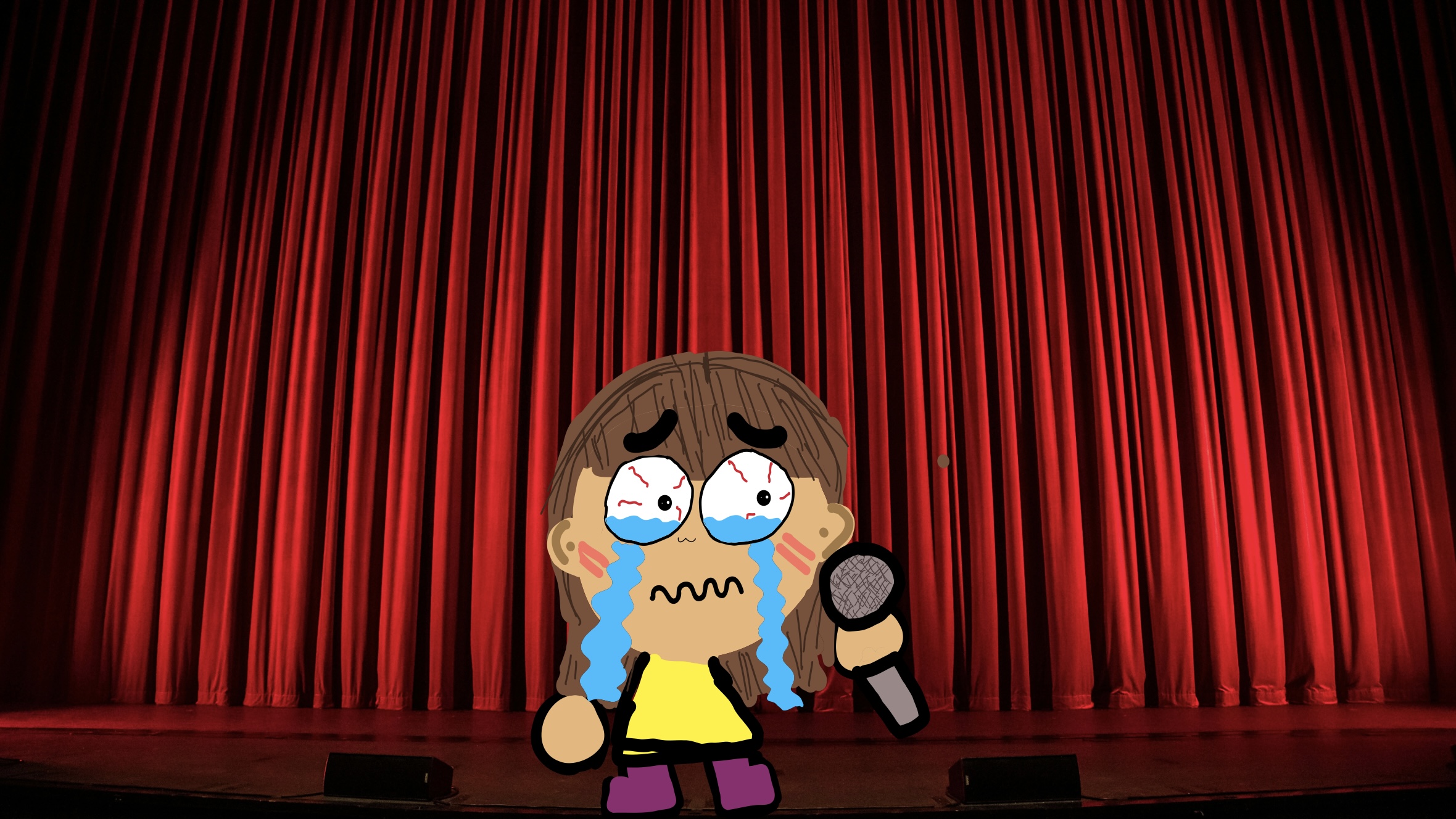
    Illustration by Hafise

    1.    Breathe

    I know I know…it’s cliche when someone tells you “Oh just breathe you’ll be fine,” but really, before you present, try shutting your eyes and inhaling through your nose and out through your mouth. This will ease your nerves; breathing disconnects your body from reality…it resets you in a way if you do it properly, a deep inhale through the nostrils and a deep exhale through the mouth can often ground you, I know it’s not as easy as it sounds but there’s no harm in giving it a try, always remember to take breaks if needed! Don’t push yourself too hard

    Photo by Brett Jordan

    2.    Swap the roles around

    Just think, even though you’re on stage or in front of a class, people think you’re bold for speaking up, they admire your determination to want to speak on stage, even if you may not appear the most confident, some people may still perceive you as confident, if they can then you can too! Just imagine you’re watching someone speak or perform on stage, and you immediately think to yourself “Wow they seem really confident,” which will in turn make you feel more confident, people’s perception of you is often positive, and is not as bad as you may think, so if you imagine yourself as a member of the audience, it may help to boost self-perception and self-image! Because you need to remember you are not as horrible as your mind tells you.

    Illustration by Unsplash

    3.    Don’t look anyone in the eye, dart between different people

    Fixating on eyeballs is often the root of all anxiety, feeling like all your hard work for this presentation is being judged harshly? If you don’t look them in the eyes, you may feel less pressure, no eyes mean no judgement, right? But you obviously don’t want to avoid any audience engagement at all, just don’t fixate on people’s eyeballs, it helps to reduce tension and prevent your mind from spiralling

    4.    Rehearse in front of trusted friends and family 

    Image by Hayley Murray

    You can take the rehearsal approach with your trusted friends and family, since it’s almost guaranteed they won’t judge you, well at least  I hope so, apart from if you have something on your face they definitely won’t judge you (I hope not) son even if you stutter or forget your script its no big deal you can just try again and that’s. All that matters in the moment. Practicing around family and friends can help to build confidence without feeling ashamed and you can improve speaking vastly by doing this method and if you make mistakes along the way you can easily identify them and fix them on the spot, not having to feel embarrassed in a pressured environment, your home is a safe place to freely mess up, mess up as many times as needed until you get it just right!

    And that just about sums up this guide, public speaking is such a common practice that almost every human being has to endure, to some it’s the worst thing you could ever imagine and to some it’s a fun activity, however we were all nervous once, everyone learns to become confident, nobody is born confident.

  • Are video games REALLY THAT bad for your mental health?

    Are video games REALLY THAT bad for your mental health?

    Image by JETSHOOTS.com

    Growing up, everyone has continuously heard the age-old debate are video games the root of all evil? Will they indoctrinate your children or worse…your children’s children? Are they truly harmful to the player’s mental health? Or can they be a source of pleasure, escapism…or even a hobby? Something that builds community? Well unfortunately I believe in the latter half, if you weren’t surprised by the way I was framing this introduction.

    However video games for me, and many others have served as a positive outlet for relieving stress after a long day, relieving sadness after a bad day, and have genuinely served as a foundation for a large majority of my friendships via online communities who discuss the same or similar games I am interested in (such as Final Fantasy and Yakuza to name a couple) even friends I have met through school or university who share similar interests in games as me have positively impacted my mental health, having another person who you know won’t judge you, won’t make you feel guilty or other for expressing your passion for a particular game. I feel like the self-worth of an individual deteriorates if there are people in their lives who judge their interests in gaming,

    Especially since gaming has had a historical stigma of being bad for children, it has been represented in the media as taboo and as an addictive drug in a kind of way. Despite the fact that things like video games CAN be enjoyed in moderation, just like anything in life, so immediately framing video games as this absolute evil undermines the positive impact it has had on the mental health of children and adults alike, as I mentioned previously, it can help build community and a sense of belonging, which is, in my opinion, a crucial element of a healthy mind, it’s all about balance, if all you’re doing is playing video games and not going outside or socialising with others then you’re definitely doing something wrong, if you neglect your basic needs of vitamin d, chatting with your friends and family and overall health and wellbeing in favour of beating your high score.

    I spoke with my mum about this topic, coming back with interesting responses, her having mixed feelings about whether video games are positive, or negative was particularly interesting to me,. Growing up she’d always complain that i play too many games. Her nuanced perspective was interesting to hear as growing up she’d always have a distrust for video games, particularly towards violent ones. I asked my mum “do you believe that video games have been demonised by the media?” And she claimed that they are definitely demonised for “the right reasons” as she claimed that it’s justifiable that video games are criticised by the media due to the influx and influence that violent video games have on young people throughout history. I understood her perspective, as I do agree with the notion that games with violence may be influential to young children, she expressed her concern over the mental wellbeing of younger children who are exposed to mature or violent themes, which is a fair point I must admit.

    However, on the contrary, I interviewed one of my friends who is on the opposite end of this discussion, I asked her the same question and she told me that “It’s up to the parents to moderate what their children are exposed to media wise, its not the fault of games who choose to comment on serious or violent topics to censor themselves in favour of being seen as kid friendly, video games are an art form, developers have the right to express themselves through themes that are not seen as socially acceptable or seen as taboo” While I agree with my friend, I simultaneously agree with my mum. I believe that two truths can be true at once, I have a neutral opinion on this matter, despite the fact that I am on the side who regularly plays video games.

    I spoke to Christopher Leech, who is a PhD student who is currently a researcher in the psychology of video games and mental health studying at Edge Hill University, his research specialises in the impact that video games have on mental health . I asked him “do you think video games could have a positive or a negative impact on the minds of young people?” He told me that “it could go both ways, as with any behaviour the person engaging in it, and social views on said behaviour frame it’s positive/negative value.

    Going to the gym, for example, is seen as hyper-positive, verses say the way drug use is viewed. Video games are the same. My research indicates that the impact is generally much, much more positive than negative” which I found particularly interesting, as I and many others have often been fed the narrative that video games do indeed inflict harm upon younger children, which I always found conflicting, even as a young adult, since video games have and are to this day a huge part of my life. I personally found video games to be a fixed special interest for me, rather than an addiction or something that would limit my social life and replace it with just gaming, it has always integrated with my life and never replaced anything.

    In my younger years, I had a great affinity for games, specifically Nintendo games, I remember the first Super Mario game I played, that was Super Mario Galaxy on the Wii, one of the first memories I ever had was Mario crushing turtles (how charming…).However, growing up with video games definitely helped me escape from the stresses of the real world, it moulded my mind, dragging me into a vibrant world of possibilities.

    Games brought me comfort mentally, I felt really connected to all the characters growing up and I genuinely felt like it provided me a great deal of comfort growing up, when I felt sad and when I still feel sad I turn to my favourite games for comfort, weirdly enough, they felt and still feel like a warm hug, I’m sure with anything that is comforting, like a warm bowl of soup on a wintery day, my favourite games feel like a comforting hug when I feel sad.

    I have friends who I have met over the same game that we’ve played, finding common ground with another human is one of the simplest, universal feelings. I asked Chris “can video games can help to feel a sense of belonging or community?” He told me that “People tend to enjoy things they find fun, and do them because they take something positive out of it thus communities can be formed over common interests” Which were great points about human socialisation and how connection between people can form solid, long-lasting friendships or relationships over such a simple talking point.

    I also asked my close friend (whom I met through mutual interests over games/music) the same question and she told me “Yes people can find community, they can find those who are as immersed in the game as you are, you can find fans who are far more dedicated to the games they play, rather than surface level fans who you have limited dialogue with” Which can serve a positive impact on an individual’s mental health as they feel safe to express their passions and feel positive reassurance from the community around them.

    Chris mentioned that “Building positive relationships over similar interest, more specifically video games is a great catalyst into forming close bonds, as video games are a physical and social activity, similarly, how gym goers can form close bonds over intense physical activity” which is absolutely accurate as gaming can be a social activity if you want it to be, even board games are a social event which can bring people closer, that’s why family game night is such a popular activity for most families to participate in, its simple yet effective, by building a community.

    I believe that video games have have evolved into something similar socially, video games such as the Mario Party series have blended real world board game elements such as dice and differing boards with Mario characters, to make it both fun for those who rarely or have never played a game and those who have played games before. Bonding two completely different groups of people together can create a positive impact

    Chris mentioned that “People tend to play games for fun, their spare time. People tend to enjoy things they find fun, and do them because they take something positive out of it. When an individual finds balance between video games and their social life, can serve as the foundation for positive mental health”