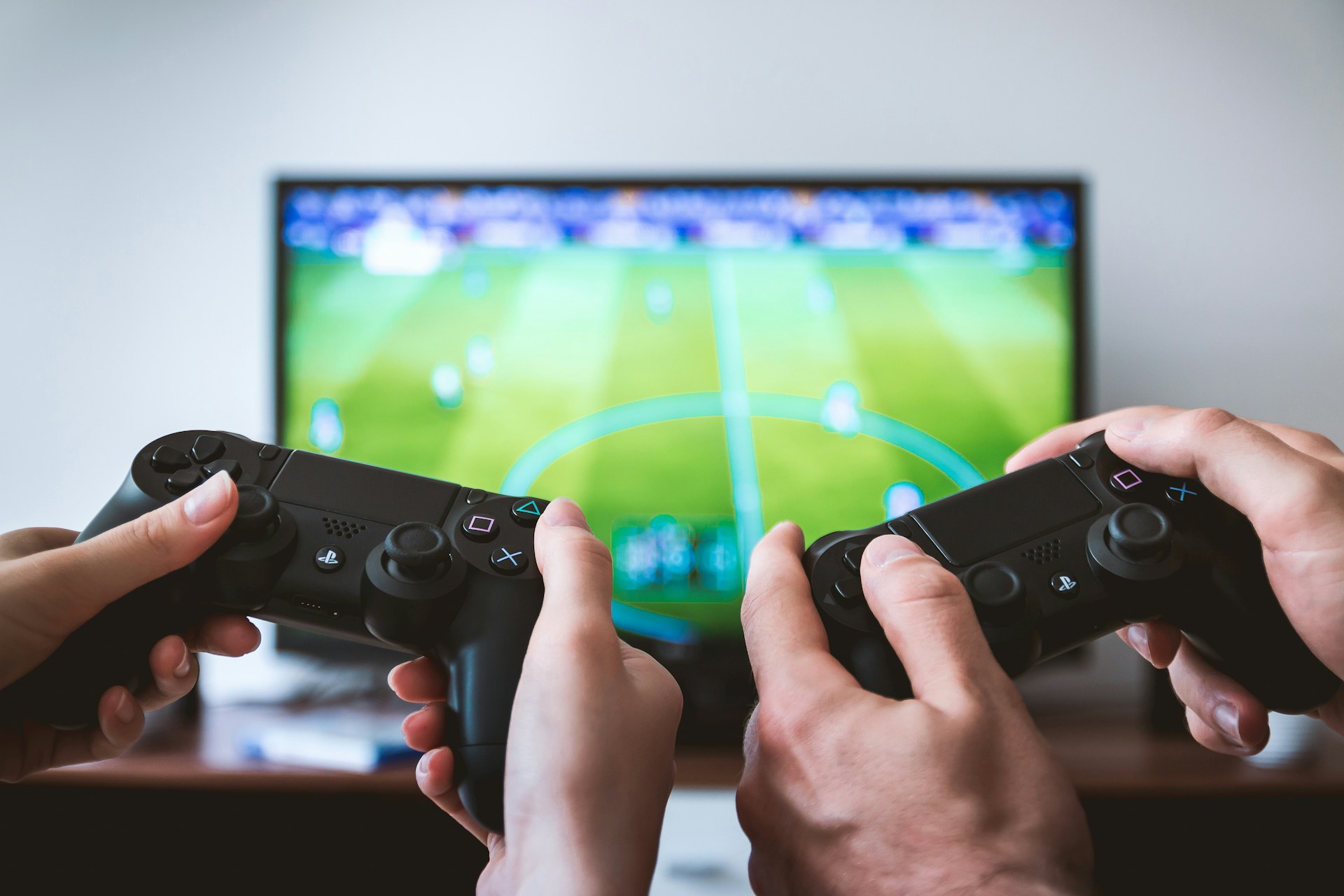
Image by JETSHOOTS.com
Growing up, everyone has continuously heard the age-old debate are video games the root of all evil? Will they indoctrinate your children or worse…your children’s children? Are they truly harmful to the player’s mental health? Or can they be a source of pleasure, escapism…or even a hobby? Something that builds community? Well unfortunately I believe in the latter half, if you weren’t surprised by the way I was framing this introduction.
However video games for me, and many others have served as a positive outlet for relieving stress after a long day, relieving sadness after a bad day, and have genuinely served as a foundation for a large majority of my friendships via online communities who discuss the same or similar games I am interested in (such as Final Fantasy and Yakuza to name a couple) even friends I have met through school or university who share similar interests in games as me have positively impacted my mental health, having another person who you know won’t judge you, won’t make you feel guilty or other for expressing your passion for a particular game. I feel like the self-worth of an individual deteriorates if there are people in their lives who judge their interests in gaming,
Especially since gaming has had a historical stigma of being bad for children, it has been represented in the media as taboo and as an addictive drug in a kind of way. Despite the fact that things like video games CAN be enjoyed in moderation, just like anything in life, so immediately framing video games as this absolute evil undermines the positive impact it has had on the mental health of children and adults alike, as I mentioned previously, it can help build community and a sense of belonging, which is, in my opinion, a crucial element of a healthy mind, it’s all about balance, if all you’re doing is playing video games and not going outside or socialising with others then you’re definitely doing something wrong, if you neglect your basic needs of vitamin d, chatting with your friends and family and overall health and wellbeing in favour of beating your high score.
I spoke with my mum about this topic, coming back with interesting responses, her having mixed feelings about whether video games are positive, or negative was particularly interesting to me,. Growing up she’d always complain that i play too many games. Her nuanced perspective was interesting to hear as growing up she’d always have a distrust for video games, particularly towards violent ones. I asked my mum “do you believe that video games have been demonised by the media?” And she claimed that they are definitely demonised for “the right reasons” as she claimed that it’s justifiable that video games are criticised by the media due to the influx and influence that violent video games have on young people throughout history. I understood her perspective, as I do agree with the notion that games with violence may be influential to young children, she expressed her concern over the mental wellbeing of younger children who are exposed to mature or violent themes, which is a fair point I must admit.
However, on the contrary, I interviewed one of my friends who is on the opposite end of this discussion, I asked her the same question and she told me that “It’s up to the parents to moderate what their children are exposed to media wise, its not the fault of games who choose to comment on serious or violent topics to censor themselves in favour of being seen as kid friendly, video games are an art form, developers have the right to express themselves through themes that are not seen as socially acceptable or seen as taboo” While I agree with my friend, I simultaneously agree with my mum. I believe that two truths can be true at once, I have a neutral opinion on this matter, despite the fact that I am on the side who regularly plays video games.
I spoke to Christopher Leech, who is a PhD student who is currently a researcher in the psychology of video games and mental health studying at Edge Hill University, his research specialises in the impact that video games have on mental health . I asked him “do you think video games could have a positive or a negative impact on the minds of young people?” He told me that “it could go both ways, as with any behaviour the person engaging in it, and social views on said behaviour frame it’s positive/negative value.
Going to the gym, for example, is seen as hyper-positive, verses say the way drug use is viewed. Video games are the same. My research indicates that the impact is generally much, much more positive than negative” which I found particularly interesting, as I and many others have often been fed the narrative that video games do indeed inflict harm upon younger children, which I always found conflicting, even as a young adult, since video games have and are to this day a huge part of my life. I personally found video games to be a fixed special interest for me, rather than an addiction or something that would limit my social life and replace it with just gaming, it has always integrated with my life and never replaced anything.
In my younger years, I had a great affinity for games, specifically Nintendo games, I remember the first Super Mario game I played, that was Super Mario Galaxy on the Wii, one of the first memories I ever had was Mario crushing turtles (how charming…).However, growing up with video games definitely helped me escape from the stresses of the real world, it moulded my mind, dragging me into a vibrant world of possibilities.
Games brought me comfort mentally, I felt really connected to all the characters growing up and I genuinely felt like it provided me a great deal of comfort growing up, when I felt sad and when I still feel sad I turn to my favourite games for comfort, weirdly enough, they felt and still feel like a warm hug, I’m sure with anything that is comforting, like a warm bowl of soup on a wintery day, my favourite games feel like a comforting hug when I feel sad.
I have friends who I have met over the same game that we’ve played, finding common ground with another human is one of the simplest, universal feelings. I asked Chris “can video games can help to feel a sense of belonging or community?” He told me that “People tend to enjoy things they find fun, and do them because they take something positive out of it thus communities can be formed over common interests” Which were great points about human socialisation and how connection between people can form solid, long-lasting friendships or relationships over such a simple talking point.
I also asked my close friend (whom I met through mutual interests over games/music) the same question and she told me “Yes people can find community, they can find those who are as immersed in the game as you are, you can find fans who are far more dedicated to the games they play, rather than surface level fans who you have limited dialogue with” Which can serve a positive impact on an individual’s mental health as they feel safe to express their passions and feel positive reassurance from the community around them.
Chris mentioned that “Building positive relationships over similar interest, more specifically video games is a great catalyst into forming close bonds, as video games are a physical and social activity, similarly, how gym goers can form close bonds over intense physical activity” which is absolutely accurate as gaming can be a social activity if you want it to be, even board games are a social event which can bring people closer, that’s why family game night is such a popular activity for most families to participate in, its simple yet effective, by building a community.
I believe that video games have have evolved into something similar socially, video games such as the Mario Party series have blended real world board game elements such as dice and differing boards with Mario characters, to make it both fun for those who rarely or have never played a game and those who have played games before. Bonding two completely different groups of people together can create a positive impact
Chris mentioned that “People tend to play games for fun, their spare time. People tend to enjoy things they find fun, and do them because they take something positive out of it. When an individual finds balance between video games and their social life, can serve as the foundation for positive mental health”