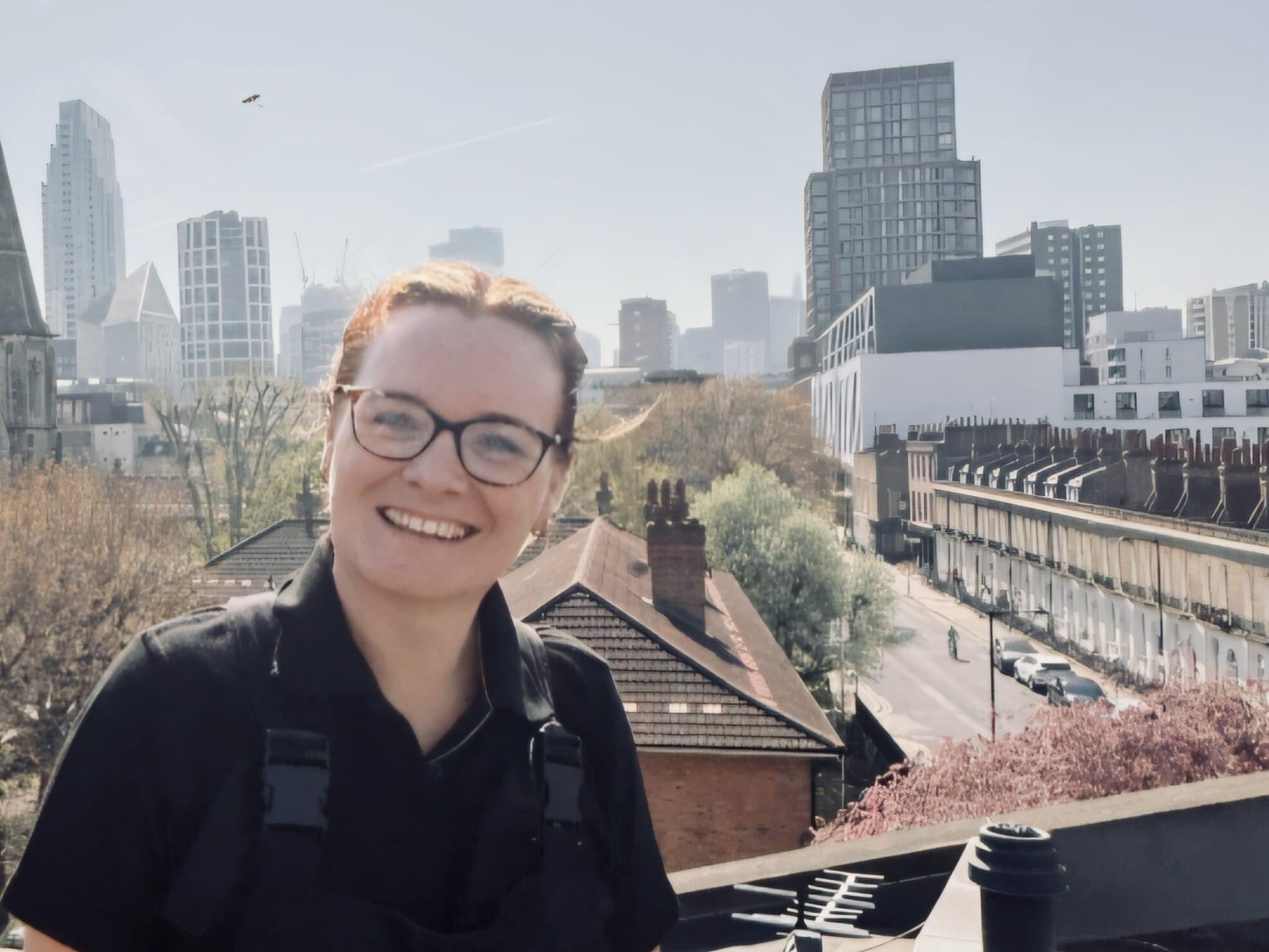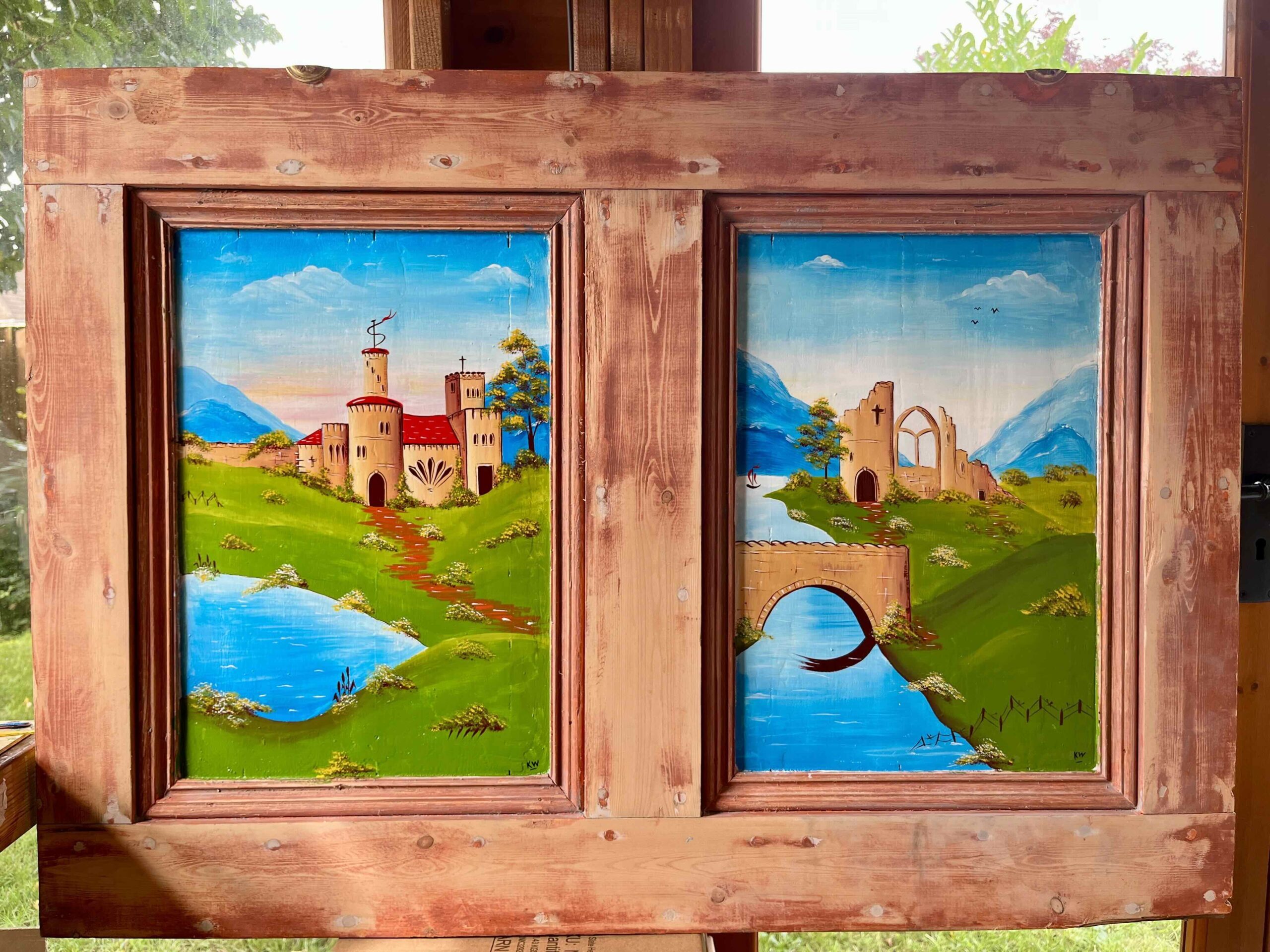
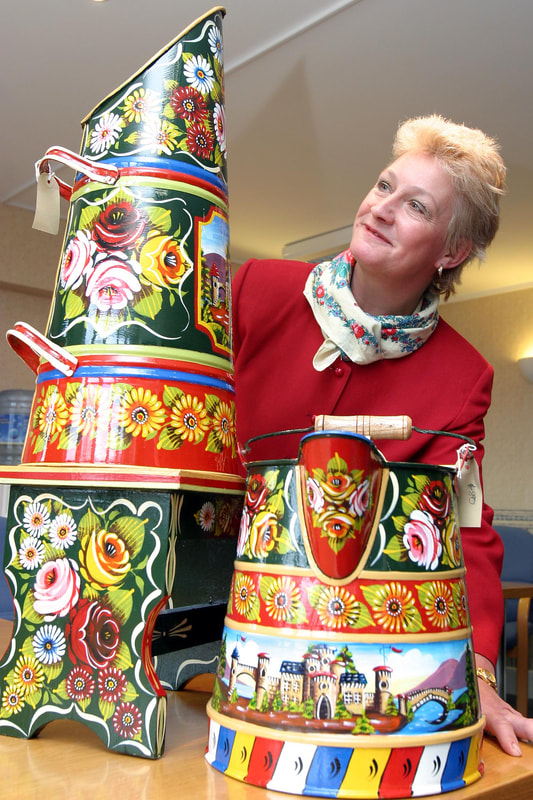
If you’re lucky enough to walk the scenic canals of the Black Country, you may come across the colourful work of Julie Tonkins,72, or Kerri Williams, 50. Depending on the day, they might be decorating boats, signs or watering cans with the traditional motifs of roses and castles.
The pair originally met when Julie used to teach classes on canal art painting and Kerri was one of her students. She has since become Julie’s assistant and now also teaches canal art classes. Julie says she paints as a “lucrative hobby”, whereas Kerri makes her living from canal art and boat painting.
The Heritage Crafts Association has classified canal art and boat painting as an endangered craft, estimating that there are 11 to 21 practicing professionals today, whose main income comes from this art form.
Although it is unclear where the rose and castle motifs came from, Julie, who lives in Netherton, Dudley, explains that there is a widely held belief that the designs originated within the boater community. Historically, boaters and bargemen have been discriminated against alongside Roma and Gypsy groups, even though they come from different communities. They are now known under the collective term GRTSB (Gypsy, Roma, Traveller, Showmen and Boaters). Signifying their ethnic and cultural traditions and the associated crafts.
The Heritage Crafts charity describes boaters as “today’s long distance lorry driver, with set routes, regular employment and steady wages”. Due to the isolating nature of the profession, a community formed andgrew into a recognisable class of people.
Tony Lewery, folk art historian and canal painter, speculates that the roses and castles motif “may be a leftover Victorian commercial art nurtured by the anachronistic culture of the canals to survive as an exotic species in the modern world,” he says. Going on to explain, “but it could equally possibly be a foreign implant. There are vaguely similar styles of folk art in Scandinavia and Germany, and surprisingly similar styles in Turkey and Bangladesh… whilst many people recognise a connection with the Gypsies’ culture and their elaborate caravans. It is still a mystery. Whatever the origins, this most delightful of British folk arts is surviving quite well and still giving pleasure.”
With only the painted images that have been left behind, the lack of a written record makes it difficult to know the true origins of the motifs. Julie says, “They couldn’t read or write, but they [boats people] could understand patterns. So, by looking at the roses and castles, they could know where a boat had come from and know its history.”
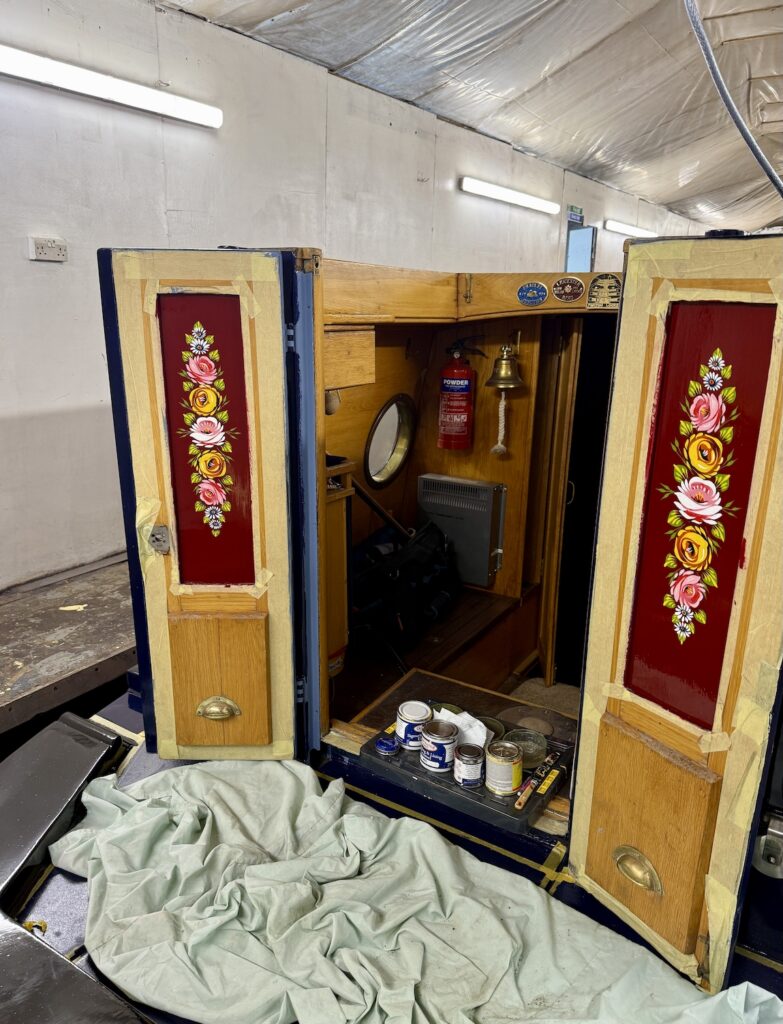
Julie thinks that the castle scenes of canal art may reflect what the boats people may have seen during their journeys, but the rose motif has a murkier origin story.“We don’t quite know where they came from, but we believe they might have started in The Potteries [Stoke-on-Trent]. The people in The Potteries offered to paint people’s boats, and the factories were under the canals, which would’ve given them an income.”
Julie’s teaching days may be over now, but Kerri is holding the paintbrush to make bold strokes for the future. Julie prefers “to follow and copy the old masters and take reference from the past. We don’t reinvent canal art.” Kerri, however, is not afraid to deviate from the old masters. “I think in order to keep this tradition alive, you have to embrace the modern world,” says Kerri, “if we stuck to our guns and only did super traditional work, it would die out.”
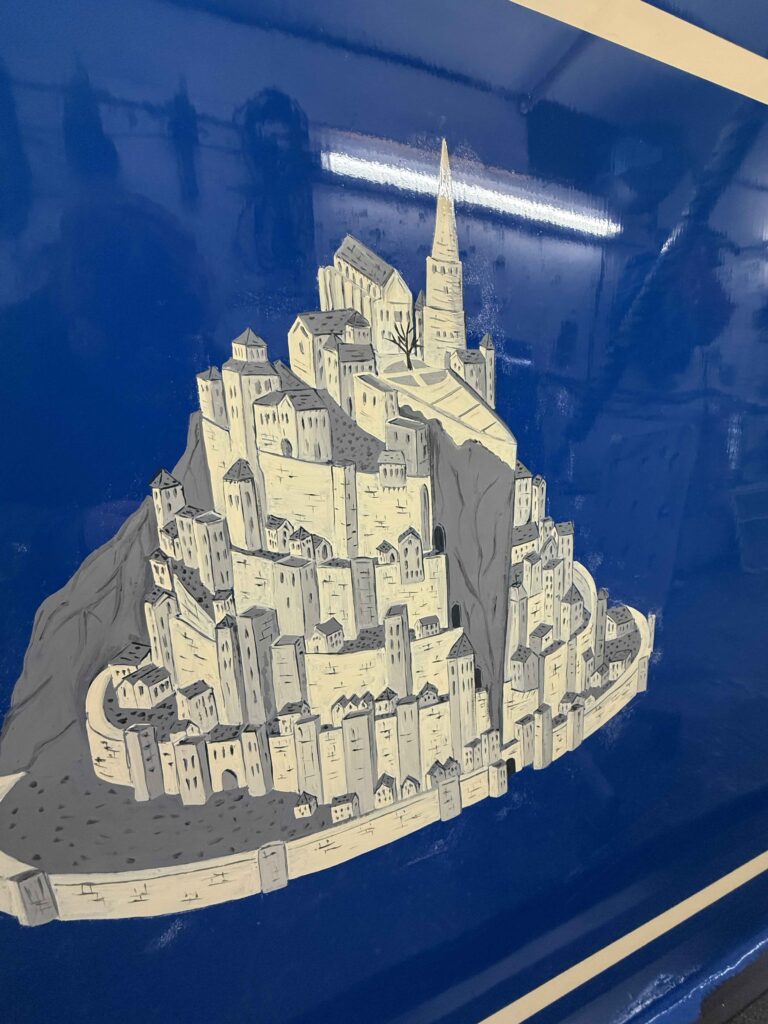
Part of embracing modernity for Kerri is talking to her customers, “it starts with the people. I very rarely do sketches or anything like that, it’s more of a conversation.” Kerri laughs about a client for whom she recently painted a boat. They wanted the traditional rose motifs, but they wanted to adapt the castle motif with a modern twist: “they didn’t want a traditional canal art castle. They wanted one from Lord of The Rings.” Infusing canal art and boat painting with a dash of modern influence and focusing on people and their stories, is all part of the process for Kerri.
Although they may have differing creative processes, what Julie and Kerri have in common is a determination to keep the endangered craft alive. Julie may not incorporate fantasy castles into her work, but her adoration of the history canal art and boat painting is clear.. “It’s all part of a very English history, and we don’t make enough of our history in my opinion,” Julie says. Her passion for the rich history of this art formis why Julie spends hours painting. Julie starts her creations with a chalk pencil sketching out rich landscapes filled with castles and roses, laying out her gloss and matte paints and then picking up her paintbrushes. “I’ve never actually timed myself on how long it takes me to paint things, but because I’m now retired… it doesn’t really matter because time is my own,” Julie says.
Before Julie and Kerri found their way calling in canal painting, they both worked more conventional jobs. Julie worked for a housing association as a development officer and Kerri was working in the IT industry. Kerri refers to this period in her life as “soul destroying” and says, “When my daughter was born, I thought, there’s more to life than this; and that’s when I decided to take up crafting full time.” Julie also gave up her full-time job to become a canal artist, saying: “While I don’t make the money I used to earn in a full-time job, my life has been so much richer and more fun.”
While Heritage Crafts estimates the start of canal art in the 18th century Julie disagrees. “We can’t know when it started,” she says. “The boats people were illiterate, so there are very few written records. Different people have got different ideas on how or why they think it started but in reality, we don’t know.” Kerri concurs with Julie, tracing the history of canal art is akin to “educated guesswork”, but she is willing to undertake guesswork to ensure the art forms future. Julie explains that the mysterious past of canal art and boat painting “leaves everything open to interpretation, it’s down to the individual and what they think.” Julie describes the debate and says that “quite often I have been pulled up by one of my colleagues saying, ‘you’ve got that wrong’ and they tell me what they think, but in reality, we really don’t know.” The elusive history of canal art and boat painting is also something Kerri ponders when she talks about the craft, “it’s more than the technique of how to paint a rose or a castle. It’s the whole cultural heritage behind it, why it’s been done and who did it.” By looking at trends and changes of the time, Kerri says, “we can kind of work out why roses and castles came about, but no one can say for sure because nobody knows.”
Passionate about preservation, Julie and Kerri are determined not to allow the canal art trade to become extinct, and part of this was turning their passion into teaching. Teaching helps to keep the craft alive by passing on techniques to others. “I think it’s very important that we keep these traditions going. I know there’s a lot of endangered crafts happening now so I do all I can,” Julie says. “I was always surprised that people who knew very little about the canals were so keen to come onto my course and learn about the roses and castles and be given a history lesson at the same time,” Julie recalls.
Kerri thinks there’s more to the job than painting, canal art and boat painting is as much about the art as it is about the history behind it. “A lot of cultural heritage is passed down verbally, so I see it as my duty of care to pass on how to paint but also the cultural heritage,” Kerri says. “I think it is part of my job to tell these stories.”
The tides may be turning for canal art and boat painting. Through her classes, Kerri is hoping to “find someone who’s younger than me so that I can teach them how to do it properly as a profession, to carry it on after I’m long gone.” Just as Julie taught Kerri, Kerri would now like to hand the paintbrush to a new apprentice to save canal art and painting from drowning. More people want to escape the mundane 9 to 5 and see what is on the canals, “the rising focus on heritage crafts and potential jobs is starting to appeal to a younger generation now,” says Kerri. This means that hopefully the future of canal art and painting is secure, as the next generation picks up their paintbrushes.
Featured Photo Credit: Kerri Williams