
Written by Nandini Khurana
The psychology behind romanticising killers

“I don’t care what he’s done. I love him for who he is,” said Doreen Lioy when she married convicted murderer Richard Ramirez while he was on death row in the 1980s. Their relationship existed almost entirely through letters and visits separated by thick prison glass. Yet it culminated in marriage, later explored in the documentary Richard Ramirez: The Night Stalker Tapes. Lioy’s case is extreme, but not unique. It raises a persistent question: why are some people romantically drawn to violent criminals?
A name for the attraction
This phenomenon is known as hybristophilia – a term used in psychology to describe sexual or romantic interest in individuals who commit crimes. Psychologists sometimes distinguish between passive and active forms. Passive hybristophilia may involve fantasy or fascination with notorious offenders, often from a distance. Active hybristophilia, by contrast, involves pursuing real relationships with individuals known to have committed serious crimes, including through prison correspondence or visits. While the latter is far less common, both forms reflect how criminality itself can become part of perceived appeal.
While often portrayed as rare or sensational, researchers suggest elements of this attraction appear more widely, particularly within cultural narratives that frame dominance and aggression as desirable traits. According to Dr Jess Taylor, a psychologist specialising in trauma and abusive relationships, social conditioning plays a key role. Writing in publications including Grazia and The Independent, she argues that women are often exposed to messages that present controlling or dominant male behaviour as attractive rather than harmful.
This influence can begin early. Repeated exposure to certain relationship dynamics – whether through media, family environments or social expectations – may shape how behaviour is interpreted. Actions that signal risk can be reframed as confidence, authority or emotional intensity.
“The world sees danger, but I feel safety”
Hannah, 22, describes her own experience of being drawn to someone she knew had done serious wrongs. “He could be unpredictable,” she says. “Sometimes he’d raise his voice or say things that made me uneasy, but I didn’t see him the way other people did.”
Despite recognising troubling behaviour, she felt an emotional pull.
“I knew how he treated other people, and that should have been enough to walk away,” she explains. “But with me, it felt different. I kept thinking there was another side to him.”
Her reflections show the internal conflict often reported in such situations.
“I didn’t ignore it completely,” she says. “I just told myself it wasn’t the whole picture.”
“At times I felt scared, but it wasn’t constant. And when it wasn’t there, everything else felt more intense.”
“I didn’t really talk about it with friends because I knew how it would sound,” she adds. “It’s easier to justify it to yourself than explain it out loud.”
Part of that reasoning involved separating behaviour from identity.
“I think I focused more on how he was with me than what he’d done generally,” she says. “Looking back, that probably mattered more than I wanted it to.”
“The world sees danger, but I feel safety. That’s the hardest thing to explain to people.”
Charm, perception and misinterpretation
Psychology research suggests that traits associated with confidence can easily be misread.
“Charisma can easily be confused with trustworthiness,” says Harika Bhutani, a psychology intern. “When someone appears confident and composed, people often assume they are competent or admirable, even when their behaviour suggests otherwise.”
This aligns with established findings such as the halo effect, where one positive trait shapes overall perception. In practice, this means that confidence, attractiveness or authority can overshadow warning signs. Jhanvi John, another psychology intern, highlights the role of storytelling.
“Many narratives try to understand the mind of the criminal,” she says. “While that can be important for research and prevention, it can also unintentionally make the offender appear mysterious or compelling.”
“When that happens, audiences may focus more on the personality of the criminal than on the victims.”


The “rescuer” mindset
Not all attraction is rooted in fascination. Research published in Deviant Behaviour has identified patterns sometimes described as “rescuer syndrome”. Studies involving prison staff observations, including work by Chloé de Oliveira and Juan-Pablo Robledo, found that some women formed attachments to offenders not out of admiration, but from a belief they could help or reform them. Among a small observed group, most participants framed their involvement in terms of care or responsibility rather than romance. In several cases, their language reflected a sense of duty, similar to caregiving roles, rather than emotional excitement or attraction. This reflects a shift away from the idea of thrill-seeking attraction towards something more familiar: caregiving instincts redirected into harmful contexts.
The role of media and digital culture
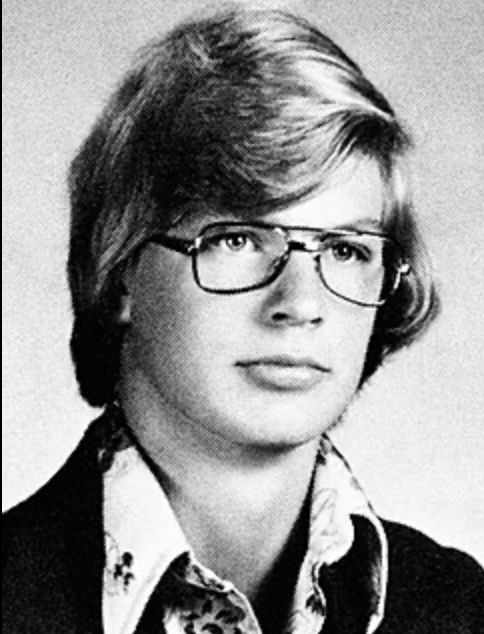
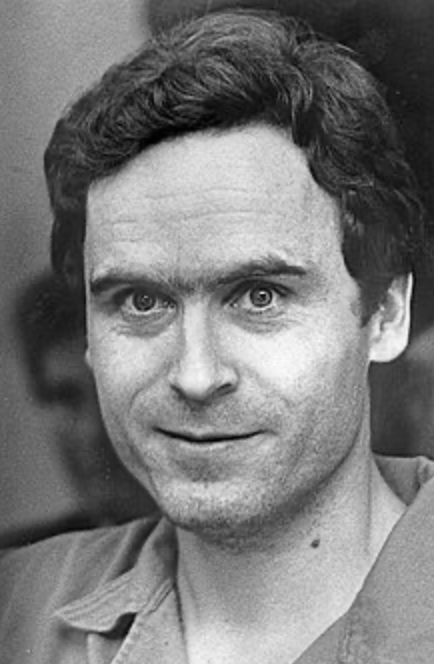
Modern media plays a significant role in shaping perception. Figures such as Jeffrey Dahmer and Ted Bundy are frequently reintroduced through documentaries, dramatisations and social media content. On platforms like TikTok, short-form videos often present these individuals with stylised edits, music and selective storytelling. This can create a sense of intrigue that overshadows the reality of their crimes.
Algorithms also play a role in reinforcing this exposure. Once a user engages with similar content, platforms are likely to recommend more of it, creating repeated contact with the same figures. Psychological research has long shown that familiarity can increase liking, a concept known as the “mere exposure effect”. In this context, repeated viewing may gradually soften perceptions. True crime content has also expanded rapidly through podcasts and streaming services. Series such as Serial helped popularise long-form storytelling around real cases, often focusing heavily on perpetrators.
Research consistently shows that women make up a large portion of true crime audiences. Some experts suggest this interest stems from a desire to understand risk and recognise warning signs. Others argue that the focus on offenders can unintentionally shift attention away from victims, particularly when narratives centre on personality rather than harm.
The psychology behind the appeal
Part of the explanation lies in personality research. The concept of the Dark Triad, introduced by Delroy Paulhus and Kevin Williams, describes three traits often linked to manipulative or harmful behaviour: narcissism, Machiavellianism and psychopathy. These traits can present outwardly as charm, confidence and emotional control, particularly in initial interactions. This can make individuals appear socially skilled or even appealing, despite underlying risk.
More recent research expands this into the “Dark Tetrad”, adding sadism. Across all four traits, a lack of empathy remains central, allowing harmful behaviour without emotional restraint. In controlled or limited interactions, these characteristics may be mistaken for positive qualities. Calmness can be read as stability, detachment as strength, and persuasion as intelligence. Without a broader context, first impressions may not reflect reality.
Final reflections
Interest in crime is not new, but its scale has changed. What was once an occasional fascination is now a constant exposure across multiple platforms. Stories are retold, reshaped and shared at speed. In that process, attention can drift towards those who commit harm, rather than those who experience it.
Hannah reflects on this tension.
“I don’t think people set out to feel this way,” she says. “It just builds slowly, and by the time you question it, you’re already attached.”
Her experience mirrors a broader pattern. Emotional attachment does not always follow logic, particularly when shaped by perception, repetition and personal context. The way crime is presented matters. The framing of offenders as complex or compelling can influence how they are understood, sometimes at the expense of those affected by their actions. Cases like Lioy’s continue to draw attention decades later, not only because of the crimes themselves, but because of the relationships that form around them.
Understanding why these attachments develop does not justify them. But it does reveal how easily perception can shift, and how narratives, whether personal or public, can shape what people choose to see.