
Written by Olie Ma
Yasmin Benoit is widely regarded as one of the most visible and influential public voices on asexuality in the UK and beyond. A British model, writer and award-winning ace activist, she has helped push asexuality and aromanticism into mainstream conversation through media work, public speaking, and policy-focused advocacy. In a culture where romance and sex are still treated as the default measure of adulthood, her work insists on visibility that leads to real understanding and inclusion. KISS KISS Magazine spoke to her about what she is working on now, what misconceptions persist, and what meaningful progress should look like.
KISS KISS Magazine: Could you share what projects you’re currently working on?
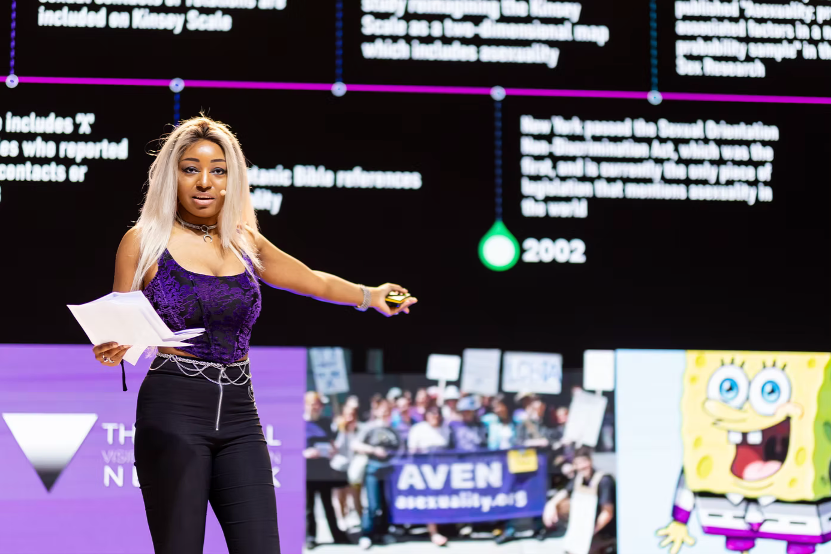
Yasmin: February was Aromantic Awareness Week and LGBT History Month, so I have been doing work around examining aromanticism through an asexual lens and looking at where asexuality sits within queer theory. March has mostly been planning for April and International Asexuality Day. I am working on a policy brief with Rights International on asexual rights in the US and globally, including places like India and African countries, wherever we can find data. I am also doing research work with the Human Rights Campaign in the US, analysing data they are collecting.
KISS KISS Magazine: Some people assume asexual people do not really struggle or need the same support as other LGBTQIA plus groups. How do you respond?
Yasmin: We all know heteronormativity has a wide impact. It affects anyone who does not fit a very rigid framework. Asexuality is also considered unconventional and not straight. We have very similar issues in mental health, in pathologisation, and in corrective rape. Our statistics are on par with, if not slightly higher than, other queer groups because we exist under the same system. It makes no sense that we could say that there is a harmful system but also say that one non-straight group is immune to it, because that’s not how discrimination works.
KISS KISS Magazine: What do you think is the most persistent public misconception about asexuality in the UK, and why does it remain so difficult to shift?
Yasmin: People mainly assume it means something is physically or mentally wrong with you. They frame it as something biological, like a hormonal imbalance or a reproductive problem, or as a mental health problem, or a side effect of a mental health problem. There is also the idea it is a personality problem, or that it is about your social views, that you are against sexuality on the basis of your values. Those explanations have the same connecting theme.
KISS KISS Magazine: You’ve spoken in different settings about the hashtag #ThisIsWhatAsexualLooksLike. Could you tell us how the idea first came about?
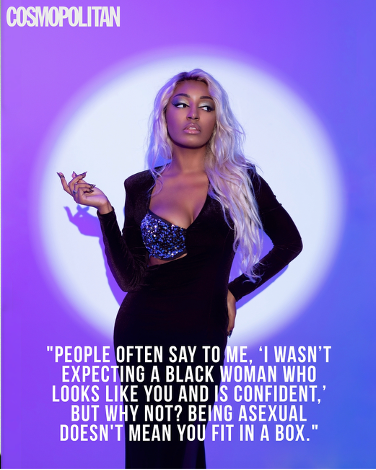
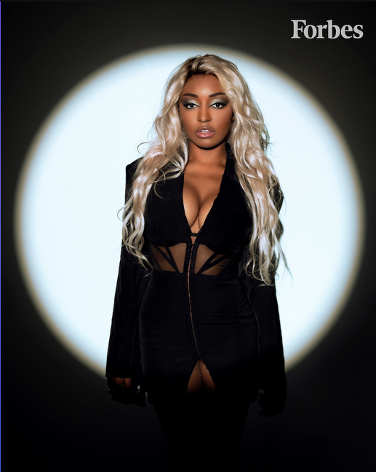
Yasmin: It came mainly from people telling me I do not look asexual, because they think there is a very particular asexual look. There was also a slogan years ago from feminism, This Is What A Feminist Looks Like, because people think feminists have a certain look and are a certain type of person. I borrowed that phrasing. People said you do not look asexual, and I was like this is what asexual looks like. Partly because the media represents asexuality in a very particular way, and also because it is a very whitewashed orientation. I was trying to challenge that. But I think a lot of people kind of boiled it down to, like she’s saying, you could be asexual and wear lingerie, which was the most simplistic version of it. It was much more like intersectional than that. But self-expression definitely did come into it to a degree as well.
KISS KISS Magazine: How do race, gender, and class shape asexual visibility and misrecognition, and which intersectional conversations do you feel are still missing or underdeveloped?
Yasmin: Anything race-related is still underdeveloped, including within asexual spaces and Pride spaces in general. We were getting somewhere around 2020, then it faded. Now we are in a very conservative era. When people feel they are running out of resources, they give what they have to people more like themselves. Things that were already on the fringes, like asexuality and Blackness, get pushed further out. It is also a problem that people think being marginalised in one way means they cannot be discriminatory, so they do not put effort into not being discriminatory, and it ends up being them.
KISS KISS Magazine: Does being from a minority background make it harder to self-identify as asexual?
Yasmin: I think it is harder because things are not aimed at you. You are not reflected in what you see. When I first discovered asexuality, I was only seeing white people talk about it, white characters, white content creators, and conversations in very white, young, British and American spaces. When I did come across it, I did not feel included because I was not seeing anyone who looked like me. I wondered if it was meant for me. In some cultures, it is not really a conversation. Also, with asexuality, you can fly under the radar a bit easier, so if you are an ethnic minority, you may have less inclination to give yourself a label that could heighten discrimination if you can get away with not doing it. People think we are already in difficulty, why make it worse?
KISS KISS Magazine: If someone comes out as asexual, what are the most supportive responses, and what are the most harmful or unhelpful ones?
Yasmin: The helpful way, maybe, is to ask: ‘What does that mean for you?’ Every experience is different, and personal definitions are different. It is a very wide spectrum in behaviours, when it comes to what attractions you do experience, and what you do or do not want to participate in. A lot of people approach it with their own preconceived ideas. When I came out, people said, ‘no you are not, you must be this, it must mean this, so that means you do this and you do not do that.’ Suddenly, there were value judgments and preconceived ideas. It made me stop coming out until I felt I was in a better environment. It can make people feel doubted, not believed, or like they are problems.
KISS KISS Magazine: What is one principle journalists should follow when covering asexuality?
Yasmin: Take a less voyeuristic approach. Nothing about us without us. A lot of people write for clicks and ad revenue. They use a clickbait headline that does not align with the article, and they do not consult asexual people. Some media now ask questions to stir controversy rather than seek answers. People also do not include actual asexual people in articles or depictions, or in the creative process. Then you rely on people outside the community to decide what matters and how we want to be depicted, but they do not know. It becomes a missed opportunity.
KISS KISS Magazine: What are the most pressing issues facing the asexual community in the UK right now?
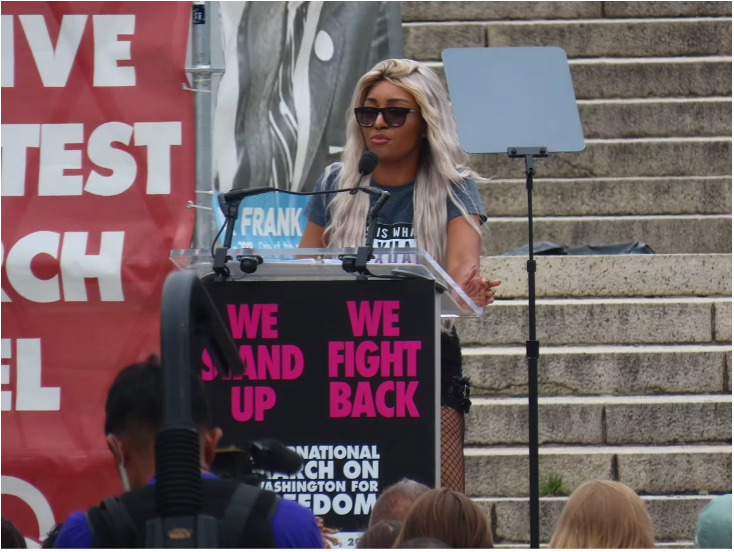
Lack of inclusion in policy anywhere. There is nothing in education saying we should be in the curriculum. There is nothing in many workplaces about protections against discrimination. There is nothing in hate crime law, nothing in the Equality Act. We exist in a blind spot. When queer communities are under attack, asexuality gets caught in it, too. People push awareness, but there is backlash that comes with awareness.
I’ve always been like, but what happens after the awareness? Like what happens when everybody knows about us? We’ve seen the trans community, which is of a similar size to the asexual community; they spent a long time trying to get awareness, and now everyone’s talking about them. At least they are included in laws.
We do not have the same recognition that we don’t even have lgbt organizations that are funding and discussing our causes, or including us in the rooms, whereas at least people in different communities are aware that, like the trans community, for example, is under attack and thus trying to help. We don’t even have that.