
London is full of things to do, but have you ever considered going to a football match one of them? For many, it might feel obvious activity to do. But for even more people, football is a closed-off community that does not allow new members in.
I have never been a football fan. Never cared about teams, players, leagues, or outcomes. I can even go as far to say that I didn’t even care when Sweden in 2018 made it to the quarter-final in the World Cup (their best placement ever). For many, football is something they love because it was part of their life when growing up. In my family, no one cared about football. Please, ask my mother who Cristiano Ronaldo is, and she will probably guess the Prime Minister of Spain. But I have been happy that way, not caring.
Until I moved to North London. The impact football has over this part of town is hard to escape. Living a 20-minute walk from the Emirates Stadium, the home of Arsenal, changed my perspective, and now I want in. Whenever there is a game people from all over the world flood to the otherwise rundown Holloway Road. They gather in pubs before the game and wear red t-shirts to show their support. They march together towards the stadium with a shared hope that Arsenal will win.
I want to be part of that, whatever it is. A family? A community? I want to be rooting for something so much and scream when they score a goal. Maybe even hug a stranger? I want to hate Tottenham (their biggest rival) with passion and bond in a dark pub over how shit they are.
But I can’t. Or can I? Is it possible for people who have no experience or history with football to enjoy the sport? Could we who just want to be part of something learn to like it? Is going to football games an activity that should be on your London to-do list even if you are like me and don’t consider yourself a football fan? Well, I went to a game to find out.
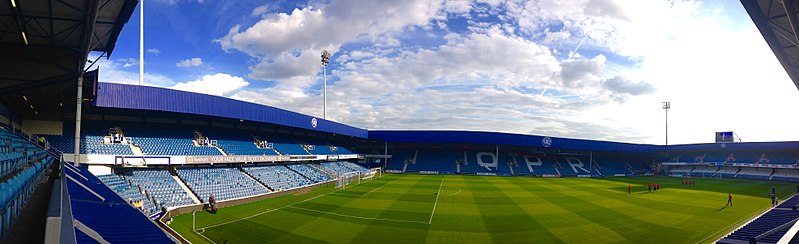
So I went to an Arsenal game? No. One factor to consider is getting tickets. Many of these games are expensive, and you often need a membership at one of the clubs to even be able to purchase tickets. But London is full of half-good teams whose tickets don’t cost an arm, a leg and your firstborn child. My friend and I decided to go to the Queens Park Rangers (QPR) vs Rotherham match. Both teams compete in the EFL Championship, the second tier in the English league system. QPR was founded in 1882, and its home arena Loftus Road is located in Shepherd’s Bush.

The experience
With a certain fear, there was a kind of excitement as we got to the stadium. Everyone we passed was dressed in white and blue – the club colours. We soon realised we had booked seats right behind one of the goals. Sitting about 10 metres away, where the players were actively trying to shoot, developed a fear I didn’t know existed. Until the game had started, we had to go and hide in the bar, drinking beer.
“It’s not that bad. Sometimes it can get bad outside, on the streets but it’s mostly just fun. It’s always safe. I go with my family,” explained Guy. I spoke to him and his son Tom about safety at football games. Their whole family are Rangers supporters and have always been. “I was brought up in the area, around Hammersmith. My dad and uncle used to go, then eventually I got to go. I like the tradition.”
But is football safe?
I’m not talking about getting hit in the head by a football – but for me, football is almost synonymous with violence. I had seen the Vice documentary about the rival teams Celtics and Rangers (different Rangers) before coming to the game and was familiar with the hooligans.
‘Hooligan’ was a term coined for the ‘wild and unruly’ football fans back in the 1960s. Some also called it ‘the British disease’ – whatever you prefer. But that is mostly a thing of the past. The 1980s were some tough years for English football, clubs had no money, and violence at the games even resulted in deaths, which in turn resulted in the English teams being banned from playing in the European leagues. But in 1992 the Premier League was created and the selling of television rights resulted in clubs taking home an incredible amount of money. The rights for the Premier League in 1992 was £200 million, now that number has gone up to about £5 billion. Football cleaned up, and so did the fans. Sure, it can still be violent, like when teams in the same area meet up in a derby. But causing trouble at a game can cause you to be personally banned from ever attending a game again. No fan wants that. I would say we never felt scared, other than by being hit by a football in the head. But I believe that’s only a fear I have.
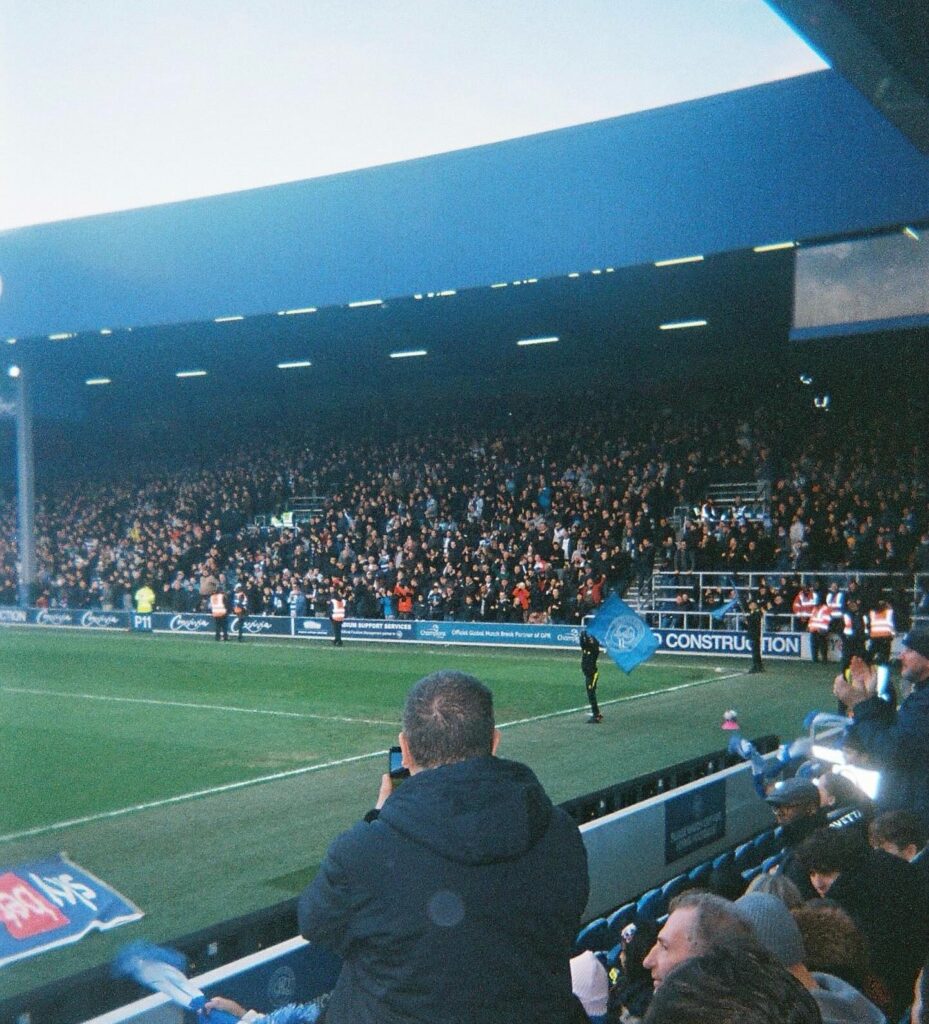
With two overpriced beers downed, we made our way to our seats. The atmosphere was great, just as I had imagined. People were excited, cheering and screaming. That was until five minutes in when Rotherham (the away team) scored the first goal. Then the atmosphere kind of died. But something interesting started happening in me. As time went by and they didn’t manage to score a goal, I found myself saying things like “Omg come on then!”
I think it was the fact that around 18,000 people gasped at any sign of movement of the ball. If a player was even close to scoring, people started standing up in their seats, making weird sounds, anticipating that a goal might be close. There was also a lot at stake since Rangers hadn’t won against Rotherham since 2020. It was easy to blend into the atmosphere and excitement of the game.
Even though we enjoyed ourselves, something in me felt we were misplaced. Looking around, we didn’t see any other female supporters. A few girlfriends, wives and mothers. Where are all the girls? Is football still so dominated by male fans? I thought it had changed?
“I think they feel like they don’t belong. Like it’s a thing for men and it wouldn’t be fun for them. When you think about it, wouldn’t anyone enjoy a game, like you don’t even have to support any of the teams,” commented Florence, who I met during half-time. She was there with her friend and told me that even though she would not consider herself a fan, she still enjoyed it. “You don’t have to be super invested, just the atmosphere is great.”
Even though it might have changed a little bit, there is still a long way to go. Amy Drucqueris is the founder of This Fan Girl – an organisation to highlight female supporters. The idea was to take pictures of “real” female supporters and upload them to Google. Now they support all sorts of female football related things.
“What clubs need to do in order to attract more female fans is just talk to them. They exist, they are there. The gender imbalance is still there, not only at the games but anywhere in football. We need more women in football presenting, working as photographers and on the boards of the clubs. It sends the message that they are welcome.”
She also feels that a misconception that people have about female fans is that they are not the same. “There isn’t one type of football fan. They are different ages and come from different backgrounds. Some people love to dress up, while others love to get involved with their clubs in a more fan-led way.”
The verdict
In the second half, things started to pick up and QPR scored. Now it was 1-1. Things started to happen when we realised that we could win. The supporter’s chanting was intensifying, and the guy behind us really took it upon himself to cheer as he spent the rest of the game standing up, screaming in our ears.
I believe football is a different form of fandom. You are part of the team. Without the supporters, there would be no club. Players come and go, if they don’t perform they get replaced by someone who can. But don’t feel bad, they have plenty of money to dry their tears. If you compare it to being a fan of a singer, where are you when that concert is over? You go home and it’s over. For a football fan, the show is never over. Whether they win or lose you are there. Some of the fans I met had been fans for over 50 years.

More girls or people who identify as non-football fans should go more. It might feel like they don’t belong but that’s not true. At the end of the game, every supporter is equally appreciated. Sure you might not know as much, but you can still enjoy a game. So if you’re thinking you might want to go to a match, I would say just go. It’s a fantastic community to be part of. I believe we need something to root for in life, excluding personal things. You wonder how the match ended? QPR scored another goal and won 2-1 and we got to walk away feeling like we were part of something.