

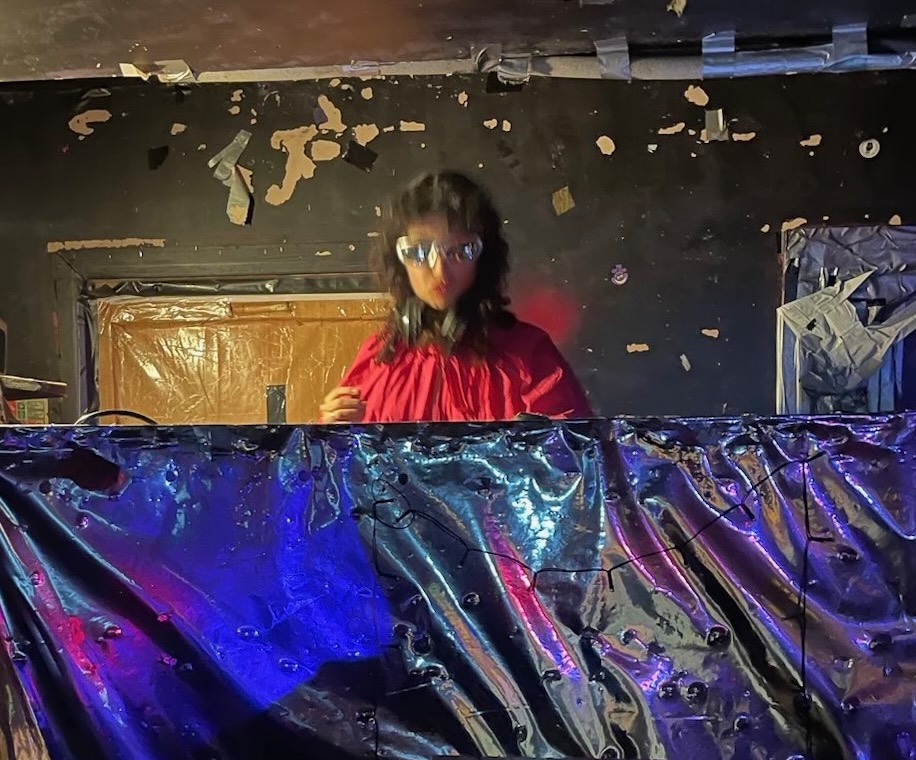
Carolin Meyer is a multidisciplinary artist & DJ based in London. Meyer’s work deploys sound, video, sculpture, music, performance, collage, writing and found objects to create multi-sensory and immersive artistic interventions. Shaped by her experience of transracial adoption at birth – from Kurdish Yazidi to German – she is primarily interested in embodiment and the body, and deeply committed to making socially engaged work that is viscerally affective. Other topics of interest are identity, racialisation, techno-social transformations and other hot button issues, such as isolation in COVID times.
What drew you to DJing?
Initially, it was the joy of sharing music with others, the communal aspect of it and the way in which people come together to have a good time and move their bodies. I enjoy the release and wanted to share that joy. It’s also about identity, forming one’s own identity through musical taste and the call-and-response mechanism of other people identifying back with me through the music.
How does your background and experience as a multidisciplinary artist influence your approach to DJing?
It influences it in the sense that I approach DJing as an effective transfer, just like I approach making artwork as effective. It is always about sharing, whichever medium – music or visual art – with an audience. It is also about surprising people and speaking to their memories, which is something I do with my art. I try and make multisensory art that reaches people and I feel music is the ultimate way to reach people and their senses, and above all make them dance. There is definitely a massive influence and exchange between the two.
What do you like the most about DJing in London?
I like the most about London that there is such a diverse group of people living here banded together by the high rent prices and other harsh economic ways the city/government seems to want to drive us out. It is a very welcoming community as well, which allows for experimentation. Nothing of that is driven by the city or the current government though, but all charity-and community-driven. It’s not about hedonism, but about the basic right to dance, come together and have a good time. I think London does that like no other, only due to its people. This has changed though since Brexit, due to rent prices and dwindling of spaces to dance. But the more it changes, the more people push back and occupy every last place to dance – even old disused public loos or police boxes such as the Camberwell Kabinett, which is not used for dancing as it’s too small, but for exhibitions.
Where have been your favourite places in London that you have DJed?
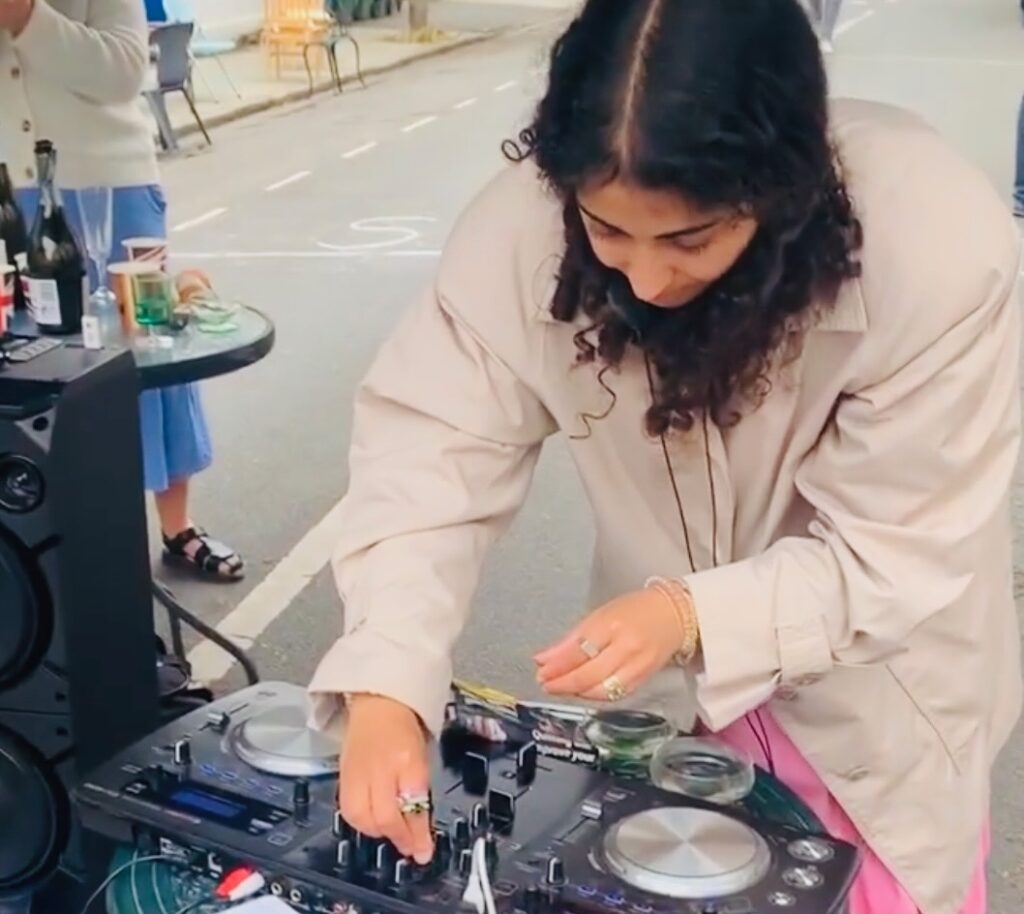
My favourite places so far have been in smaller settings at privately organised parties such as a Christmas party at my work in Greenwich. I enjoy playing for friends and friends of friends the most. I also enjoy playing at Bunker in Deptford as it’s quite an intimate little club with lots of history for Goldsmiths students and beyond. Additionally, I really enjoyed playing at Grow Tottenham during a gig of a friend.
You say you link DJing to your academic research. How so ?
I think DJing is like crate digging, as another artist, Lotte Andersen, once said. It’s like excavating what is already there and making something new. In a more practical sense, music as research is a concept I am trying to apply to academic research. I ask myself how we can use music to do research. Especially the ecstatic participation that occurs on the dancefloor, when we can ideally be less self-conscious and in our bodies, but more part of a whole, is what I think can be beneficial to embodied research. Arguably, being less in your body leads to less embodied research, but it depends on the research subject perhaps, but more so it can enable research that is free from social markers but not blind to them.
And finally, what music do you play that‘encourages us to be less self-conscious and out of our body’?
I think it’s important to be silly. So, I always aim to play songs that everyone can feel relaxed around and that make people smile because they are so unexpected. For example, playing a song from childhood as in kid’s songs connecting our past to our present. It’s also about a certain high-energy vibe that is achieved by high piano notes or powerful voices such as in Ride on Time by Black Box. It’s about making people comfortable and showing them that the music is not there to alienate them, but to make them feel like they can relax and enjoy themselves.