
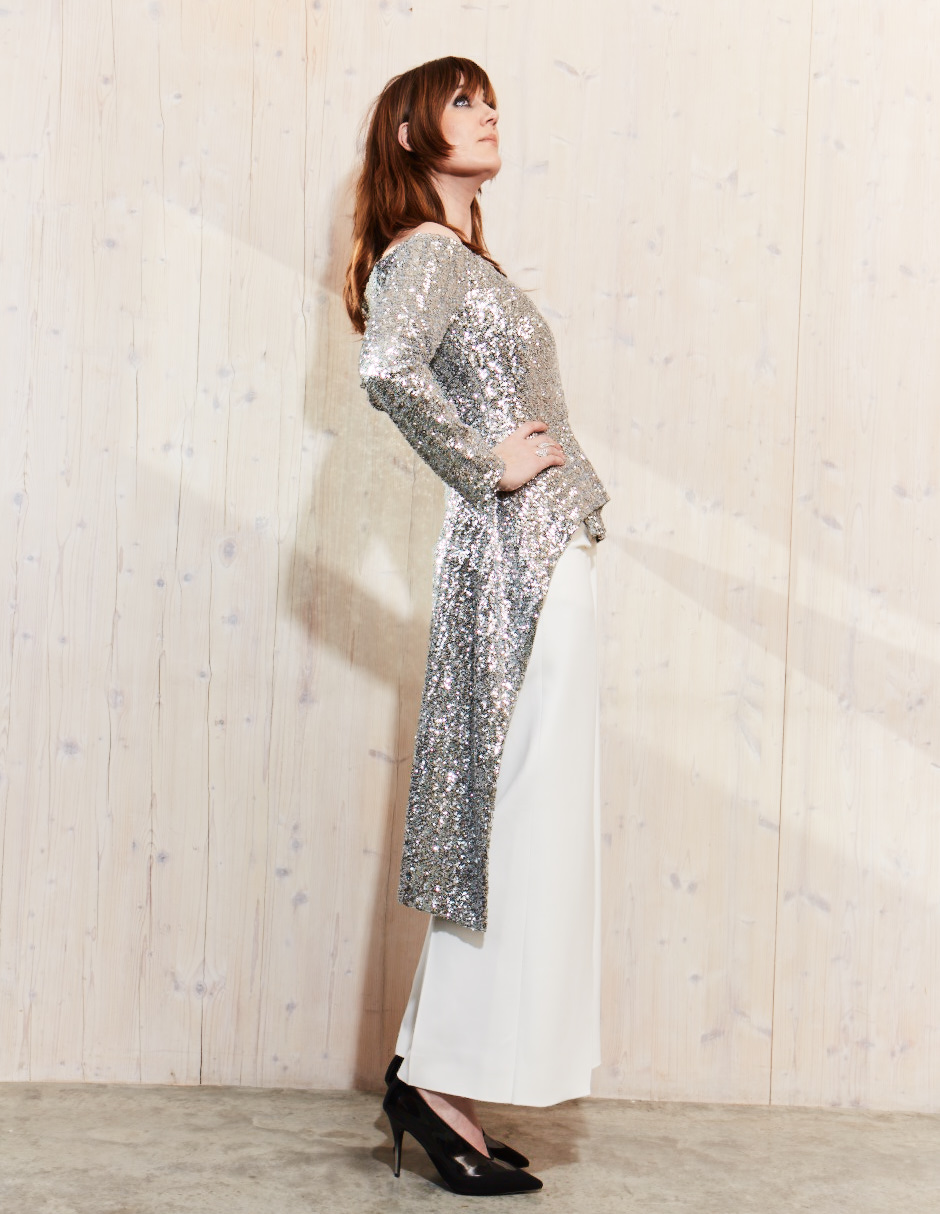
In the art of green glamour, fashion with a conscience, and the future of creativity, we meet former Vogue editor, Mary Fellowes.
“The best ideas rarely come from one’s own ecosystem, you have to cross-pollinate.”
For Mary Fellowes, fashion is more than just an industry—it’s a conversation, a cross-cultural dialogue, and an ever-evolving canvas for creativity. With an illustrious career spanning multiple editions of Vogue, including her tenure as Fashion Director for Vogue Turkey, Mary has navigated the exhilarating chaos of fashion’s frontlines, but beneath the glamour, it’s her insatiable curiosity and deep sense of purpose that fuel her work.
Born in 1979, Mary Fellowes is a distinguished British stylist, writer, and consultant with a career spanning over two decades in the fashion and media industries. Hailing from a family with notable connections – her father, Thomas Fellowes, and mother, Rosamund van Cutsem – Mary has established herself as a prominent figure in her own right.
After completing her fashion degree at Central Saint Martins, Mary began her career in 2000 by assisting the renowned stylist Isabella Blow. She then joined the fashion department at ES Magazine before moving to British Vogue. In 2007, The Economist appointed Mary as the first-ever Fashion Editor for their cultural publication, Intelligent Life (now known as 1843). From 2012 to 2017, she continued her freelance styling for various international editions of Vogue, Harper’s Bazaar, Esquire USA, and Interview. With over two decades of experience, she has collaborated with 11 international editions of Vogue, styled runway shows in London and Tokyo, and her clientele includes prominent figures such as Olivia Colman, Naomi Ackie, Elizabeth Olsen, and the Duchess of Sussex.
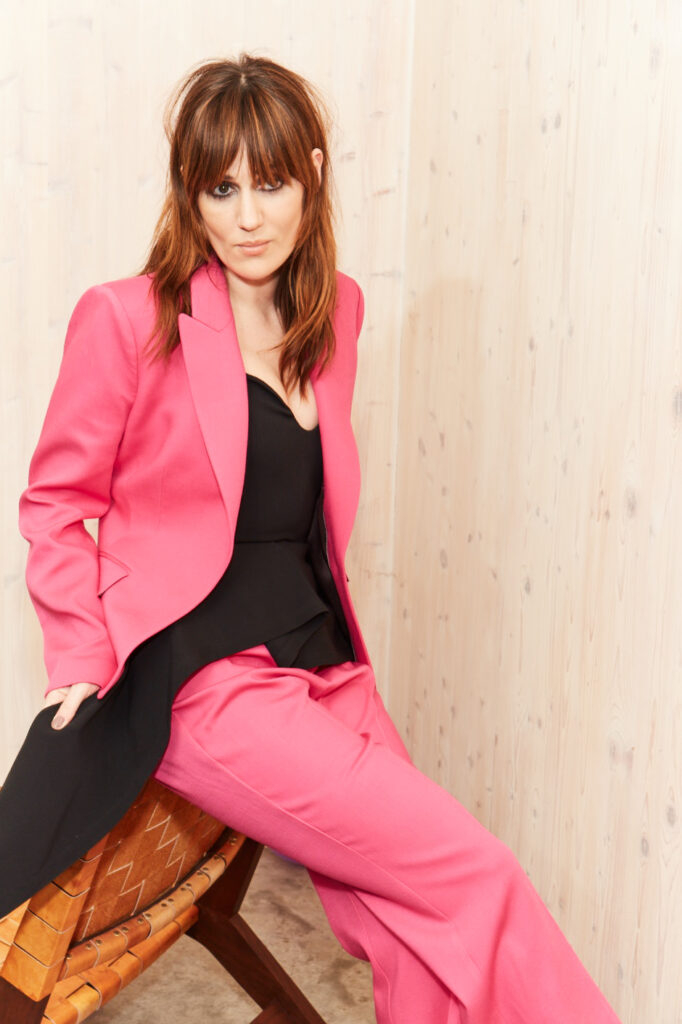
In 2021, Mary founded GreenWith Studio, a sustainability consultancy dedicated to providing green solutions for fashion and luxury brands. Under her leadership, the studio has guided numerous companies toward more sustainable practices, emphasizing the importance of future-proofing in the $2 trillion fashion sector. Notably, GreenWith Studio has achieved B Corp certification, reflecting its adherence to the highest standards of social and environmental performance. Mary’s influence extends beyond consultancy. In 2022, she authored a comprehensive 35,000-word white paper for the British Fashion Council, examining the pivotal role of technology in promoting circular economies within the fashion industry. This seminal work underscores her dedication to fostering systemic change through innovative solutions.
The Reality Behind the Fantasy
Fashion’s glossy exterior often belies the unpredictable, sometimes gritty, reality behind the scenes. Mary recalls a particularly surreal shoot in the Turkish mountains, where she found herself responsible for safeguarding six-figure couture gowns—inside a cattle truck. “The only thing they left inside was a rope—usually used to tie livestock,” she says, laughing. “That rope became my clothing rail.” She improvised, covering the straw-covered floors with makeshift tablecloths and transforming the unlikely space into a functional wardrobe. Moments like these—equal parts absurd and exhilarating—define the industry’s reality for her.
Yet, it’s this unpredictability that she thrives on. In Azerbaijan, determined to capture a cover-worthy shot near a breathtaking monument, she negotiated with a local shepherd to borrow a World War II army truck to transport the team across a river that had unexpectedly flooded overnight.
“The model went green at one point, but we made it across,” she says pragmatically. For Mary, it’s these moments—solving problems on the fly, embracing the unexpected—that make fashion thrilling.
“I’d fly into Istanbul with 10 huge trunks filled with clothes, and then there’d be absolute mayhem at the airport, suitcases flying in all directions. It was madness. And the lack of glamor is what I found more enjoyable.”
She spoke about how she disliked sitting in the front row at fashion shows and having her photograph taken, and was instead much happier when she was getting her hands dirty on a shoot. “Being creative and using my hands and my eyes and being on set. That was really the best bit.”
As a sustainability changemaker, attending Cambridge’s Sustainable Leadership course and subsequently founding GreenWith Studio, a sustainability consultancy, and partaking in events such as The Blue Earth Summit as a panellist, Mary now looks back and thinks about her carbon footprint when flying to her set locations and styling shoots. “It was horrific in hindsight,” she says. “But at the time, I was just doing my job, trying to empower and inspire developing countries who quite rightly felt it was their time to have a moment of luxury in fashion. I felt there was purpose and impact in my work.”
Sustainability and the Future of Fashion
A staunch advocate for ‘fashion circularity’, which refers to keeping clothing and other fashion items in use for as long as possible, rather than letting them be thrown away, by reusing, recycling, upcycling and taking advantage of second hand items, Mary sees the next wave of fashion as a radical rethinking of materiality and consumption. “Your generation,” she tells young creatives, “will be the ones to solve the problems you’ve inherited.” She envisions a future where material science innovations, —whether cactus leather or closed-loop textiles, —redefine the industry. Yet, she also believes creativity thrives under limitations: “Some of the greatest moments in fashion history were born out of crisis—whether it was Dior’s New Look collection after wartime rationing as a way to celebrate femininity and optimism, or the rise of punk in response to socio-economic struggle.”
For Mary, the future will be about utilising creativity. “I think upcycling will continue to be a really big thing, and reappropriating second hand or preloved or circular items, to still be able to find your own self expression and to be able to express your style. I think what creativity looks like to me, is innovation.” Mary expressed the importance of the younger generation embracing the innovation around material science for design. “It’s going to be about the new, creative ways to upcycle, whether that be the next cactus leather, or the next fibre that’s a yarn.”
Advice to Young Creatives
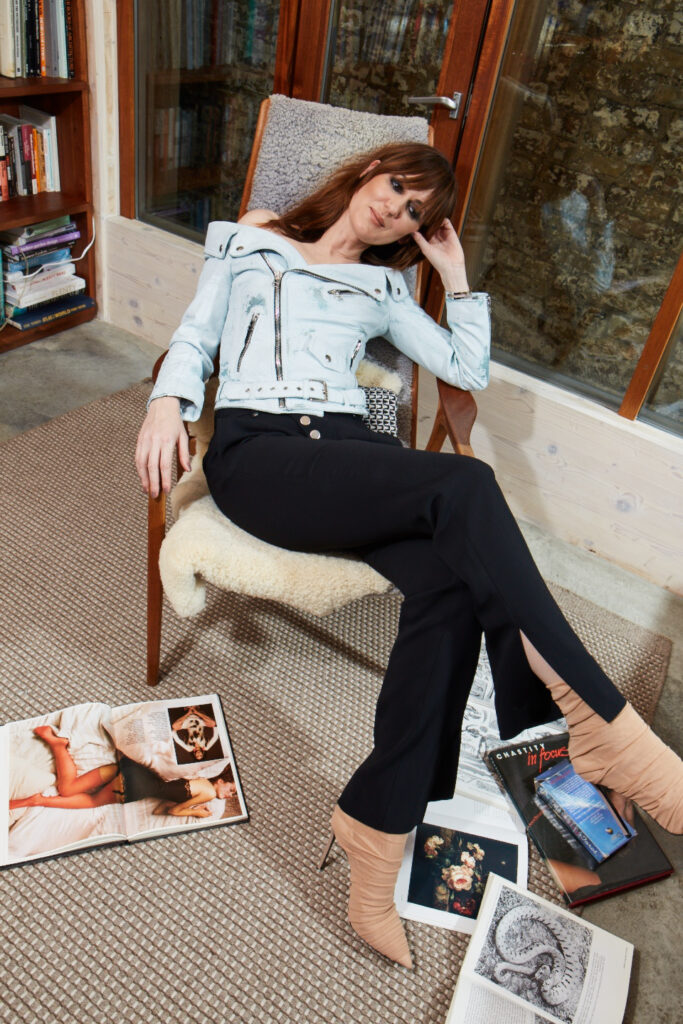
To stay inspired, she champions curiosity as the ultimate creative fuel. Whether exploring the backstreets of Whitechapel, diving into independent art books, or striking up conversations in unexpected places, she remains constantly engaged with the world around her. “How do I stay inspired? I stay absolutely curious. The best ideas rarely come from one’s own ecosystem,” she says. “You have to cross-pollinate.”
For those seeking to carve out their own space in an oversaturated industry, Mary’s advice is both practical and philosophical: Stay independent in your vision, embrace curiosity, and don’t be afraid to get your hands dirty—sometimes, quite literally. Whether it’s repurposing forgotten fabrics or navigating a remote location shoot from the back of a cattle truck, the essence of creativity lies in the unexpected.
“At the end of the day,” she says, “fashion is about storytelling. And the best stories are the ones you never saw coming.”
A Manifesto for the Future
Mary’s vision for the future of fashion is not just about saving the planet, but about reshaping the very idea of what fashion is. She believes that Generation Z holds the key to unlocking a fashion future that doesn’t take from the Earth’s resources. She wants to be clear: our influence is in our “superpowers”: our creativity, our innate digital fluency, and our fearless commitment to the change we want to see. This isn’t just about redesigning fashion; it’s about creating a movement, a revolution, and taking back our future.
“It has to be a revolution,” Mary asserts. “You need to be the change you want to see. You hold the power, you have unprecedented digital native skills, and you have no fear to use your voices to advocate. Your superpowers are tools to get the future back. And you have the purchasing power to demand it.”
“Hey decision-makers,” she challenges, “Gen Z wants their future back.”
Take a look at our piece on ‘The Positives of AI in Fashion‘ next!