By Phoebe Shin
In the middle of East London, where creativity is on every street, Central Saint Martins College (CSM) has been the go-to for groundbreaking global fashion. CSM graduates include world-famous fashion designers such as Alexander McQueen and Phoebe Philo. It’s a place like no other.
Within CSM’s student body, there is a new generation flipping the industry upside down and integrating sustainability into their work. Have you come across bacteria-printed textiles or modular garments before? Yoon-Ji Jang shares the wonders of a new approach to sustainable fashion. Truly passionate, she believes this is the most innovative and forward-thinking approach to style.
Today, Revival spoke with Yoon-Ji Jang, a student studying for a BA in fashion design. Specialising in womenswear at CSM, we got her take on pre-loved fashion and ethical design.
What first inspired you to explore sustainable fashion?
YJ: I was raised in Seoul, South Korea, and there wasn’t anything but fast fashion. While its convenience was thrilling, the resulting waste was concerning. After moving to London and joining CSM, I met people who were redefining their approach to fashion—designers utilising deadstock, exploring biodegradable materials, and even using bacteria-printed textiles. This profoundly changed my viewpoint as both a designer and a consumer. Fashion was not just about aesthetics but responsibility as well.
Sustainability is a broad concept. How do you approach it in your own work?
YJ: I usually try to take a multi-layered approach. The first thing I focus on is choice of materials. I prioritise deadstock fabrics and natural dyes. Then, construction. I design modular garments that can be adapted over time rather than discarded.
This project is a skirt as a deconstruction of a motorcycle leather jacket I upcycled. My dad and I are huge fans of motorcycle rides, which is why we have a collection of vintage jackets at home. Racing jackets are usually designed with logos full of sponsors to show off their branding. I simply wanted to turn this into a flashy skirt.
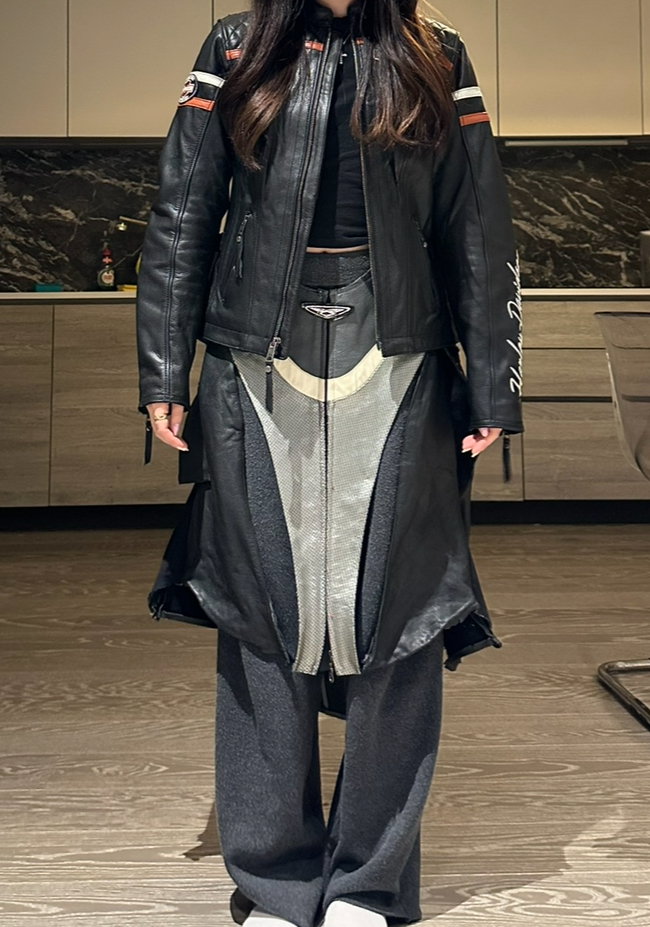
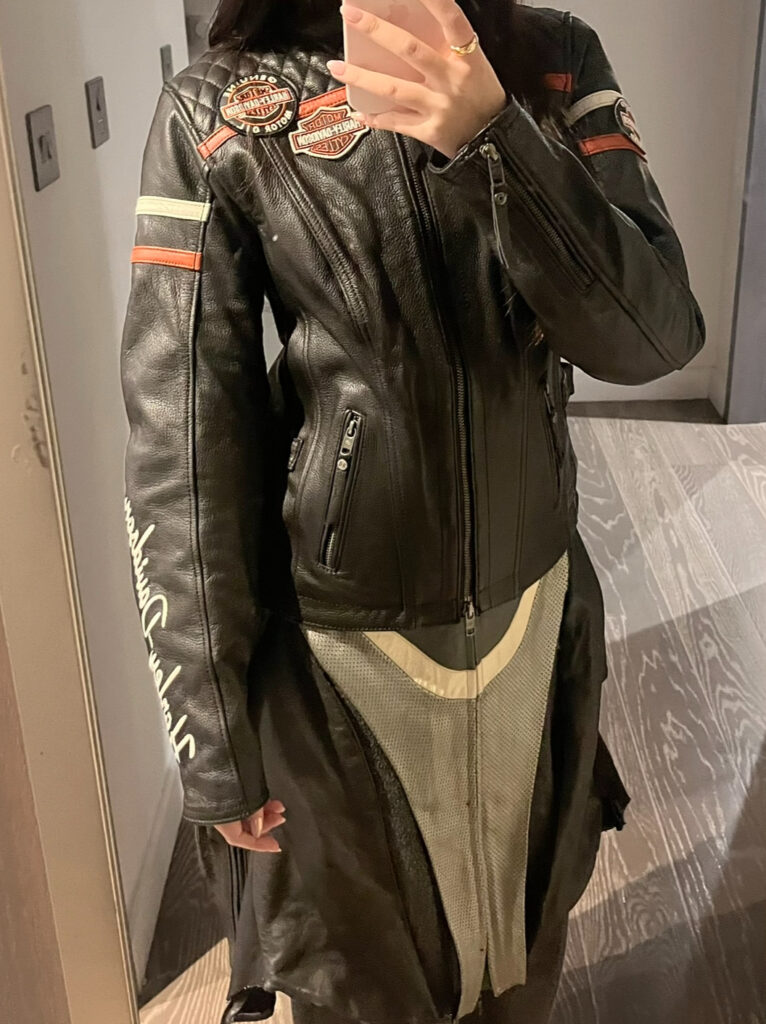
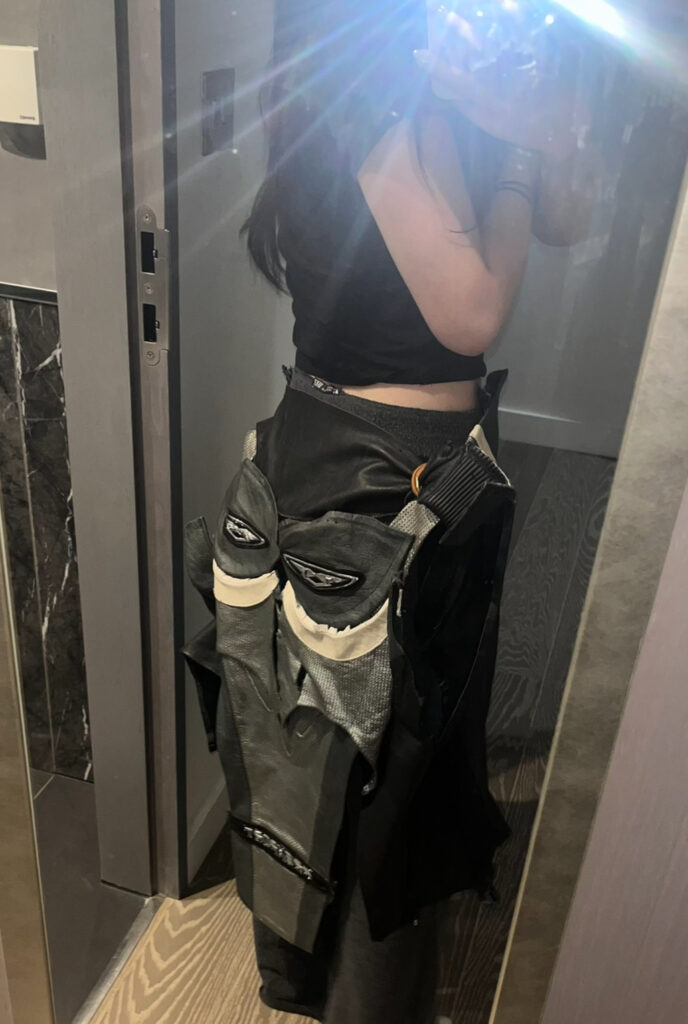
Photos by Phoebe Shin
So, what I want to deliver with this project is to start small. Think of sustainability as simple changes you can make instead of seeing it as a huge challenge.
Then, how do you put into practice sustainability as a mere consumer, not a designer?
YJ: For me, living in London, it seems like the easiest way is to go vintage shopping or to archive sales. Whenever I go shopping, I spend most of my time in Shoreditch and Hackney. South East London is my go-to spot since it offers the most charming vintage pieces. I think sustainability is a shift in a mindset – wearing vintage clothes, using Vinted or Depop to reducing waste.
Plus, the people in South East London are often fashion enthusiasts, which makes it so enjoyable and inspirational to admire their outfits as they stroll by.
What’s your usual style like?

YJ: Here is the example style I typically choose, which I discovered from Ava’s Instagram. I prefer to combine various styles instead of limiting myself to one. During winter, I enjoy pairing scarves and sweaters with different patterns, as shown in the photos. Rather than creating a cohesive look, I prefer a mix of colours and patterns. This is why I usually pick up a lot from vintage stores.
Image credit: instagram @ava_ark
Almost all the clothes I’m wearing on the right are from vintage shops such as Here After and Reign Vintage in South East London!

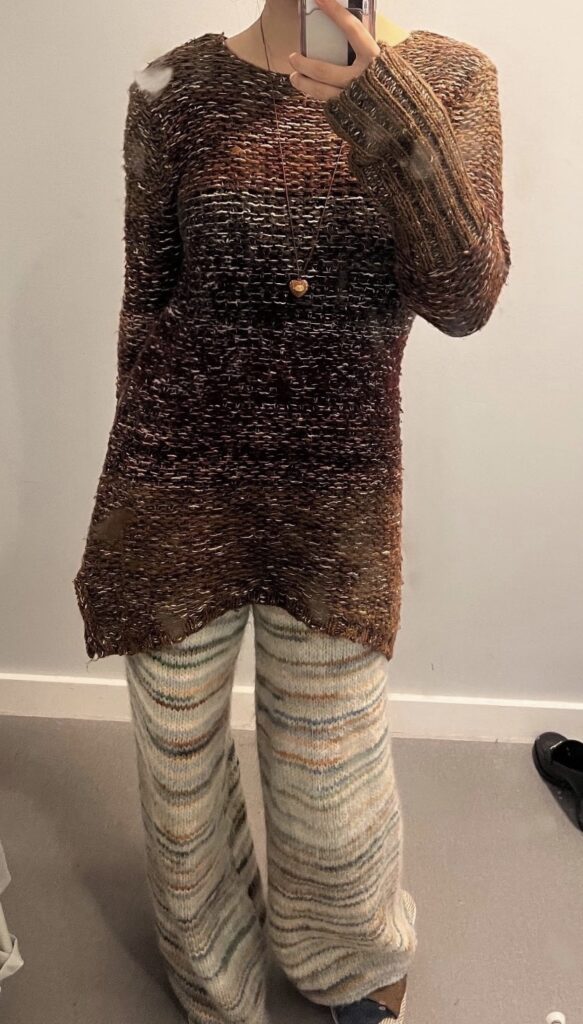

Photos by Yoon-Ji Jang
Looking ahead, what excites you about the future of sustainable fashion?
YJ: So much! Technology is opening incredible doors to the fashion industry. But beyond materials, I’m looking forward to the reshaping of ownership models, like clothes rental and virtual fashion. The younger generations are demanding accountability, and that’s pushing brands to be honest. It’s a truly sensational time to be in fashion, and I’m honoured to be a part of this transition with CSM.