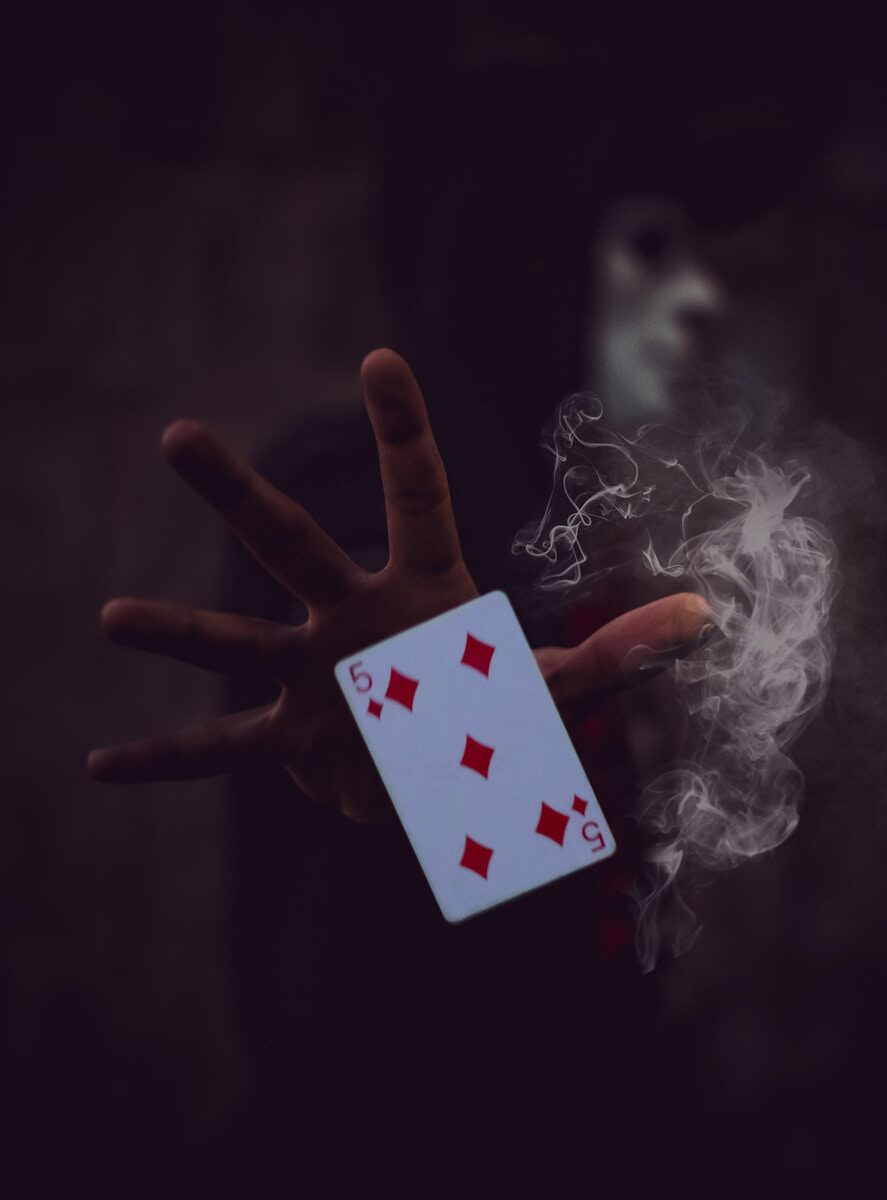
Andrew Lin and the art of close-up magic in a city bar
The lights in the city bar are never fully bright. They glow softly against glass and wood, blurring the edges of faces and hands. Music hums in the background. Conversations overlap. Nothing feels staged. It is in this half-lit atmosphere that Andrew Lin steps forward, a deck of cards already resting in his hands.
At ineteen years old, about 170 centimetres tall, with long hair tied loosely behind his head, Andrew does not look like a traditional magician. There is no dramatic costume, no theatrical voice. He approaches a table, smiles, and begins to move the cards between his fingers. The movements feel casual, almost ordinary. Then something disappears.
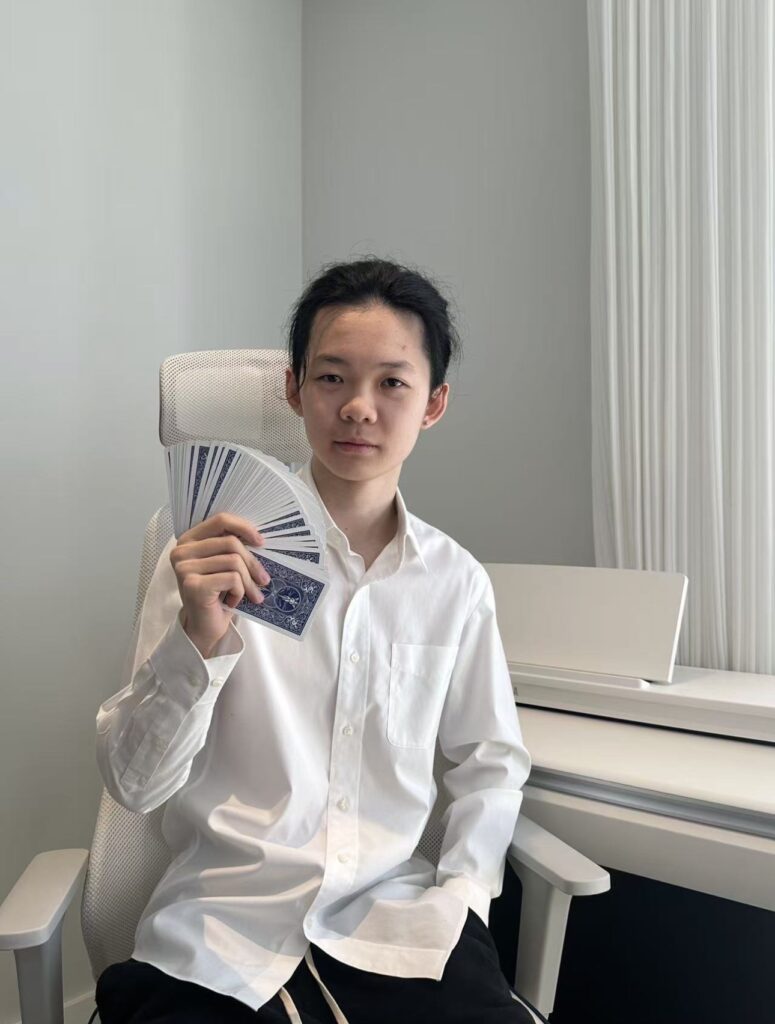
Andrew works part-time as a close-up magician in a bar in Suzhou. There is no stage to protect him, no spotlight to isolate him from his audience. Customers sit only inches away, confident that they can see everything. That confidence is exactly what his magic quietly challenges.
“In lower light, there are definitely psychological hints,” Andrew tells me. “Some movements can be more hidden.” The dim environment softens details and makes attention easier to guide. But darkness is not essential. “Even when it’s bright, I can still use other methods for misdirection.” For him, misdirection is not just about making people look away. It is about shifting their sense of timing.
“Misdirection means using everything to make the audience not see when the trick actually happens. You let them miss that moment. You shift their timeline. It can be psychological, it can be rhythm. Even a small joke can relax the atmosphere and guide attention.”
The trick, in other words, hides in time rather than space. Andrew often searches for eye contact during a performance. “Most of the time, I look for eye contact to guide someone’s sight,” he says. That brief connection becomes a subtle tool. People follow where he looks. Their focus adjusts naturally, without feeling forced. Sometimes, certain tricks require avoiding eye contact, but usually it is this shared gaze that anchors the experience.
I ask whether alcohol or music changes how people watch. “In some way, yes,” he says, “but even without that, I can guide them. It’s more about the atmosphere.” The city bar itself becomes part of the performance. Magic arrives unexpectedly, interrupting casual conversation. Andrew chose this environment partly because customers are generous with tips, but also because the surprise feels stronger here.
“Magic is more important when it’s sudden,” he explains. “That’s when it creates that unexpected feeling.”
There are moments, he admits, when he can sense the shift. “That happens often. As long as you let them believe what they already believe.” Magic does not force belief; it works with it. The audience wants to trust their eyes. They assume that if they are close enough, they will notice everything. The success of the performance depends on preserving that confidence—until it quietly collapses.
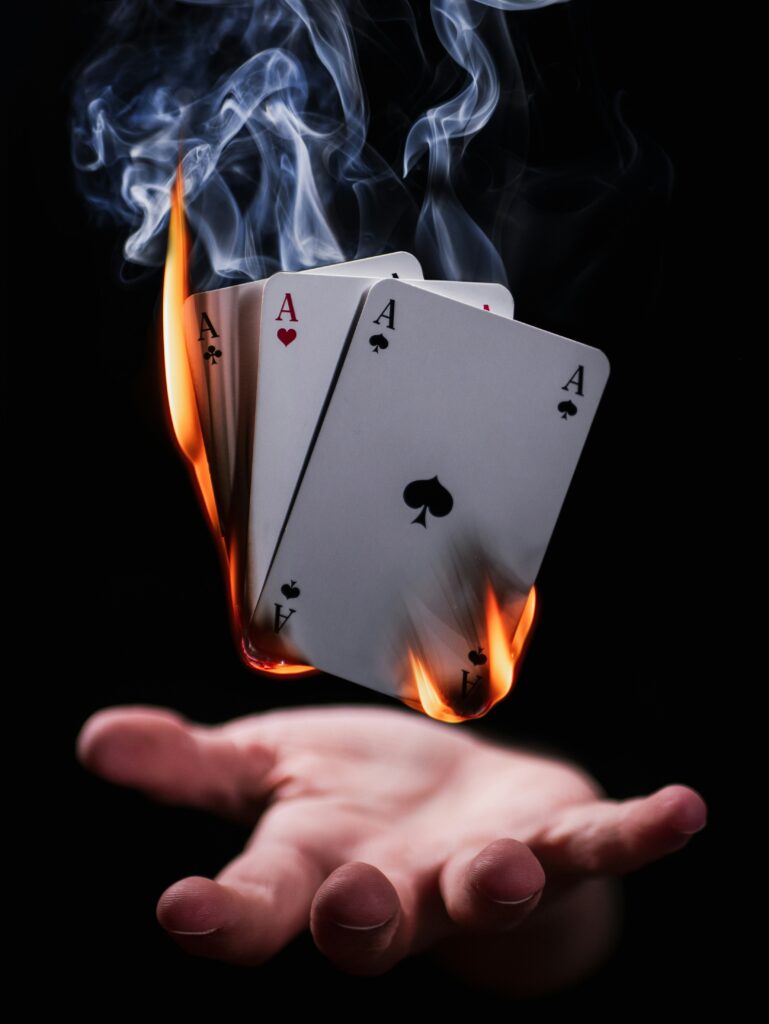
Watching Andrew perform, it becomes clear that nothing looks extraordinary. A pause. A slight change in posture. A casual joke that makes the table laugh. The gestures feel natural. That is precisely why they work. In a world saturated with edited videos and digital effects, Andrew’s magic happens face-to-face, without screens. Yet even here, vision can be redesigned.
In the low light of the city bar, as another card vanishes between his fingers, the audience leans forward again, certain they are watching carefully. What disappears is not just a card. It is their certainty. For a brief second, their eyes begin to doubt themselves.
Leave a Reply